
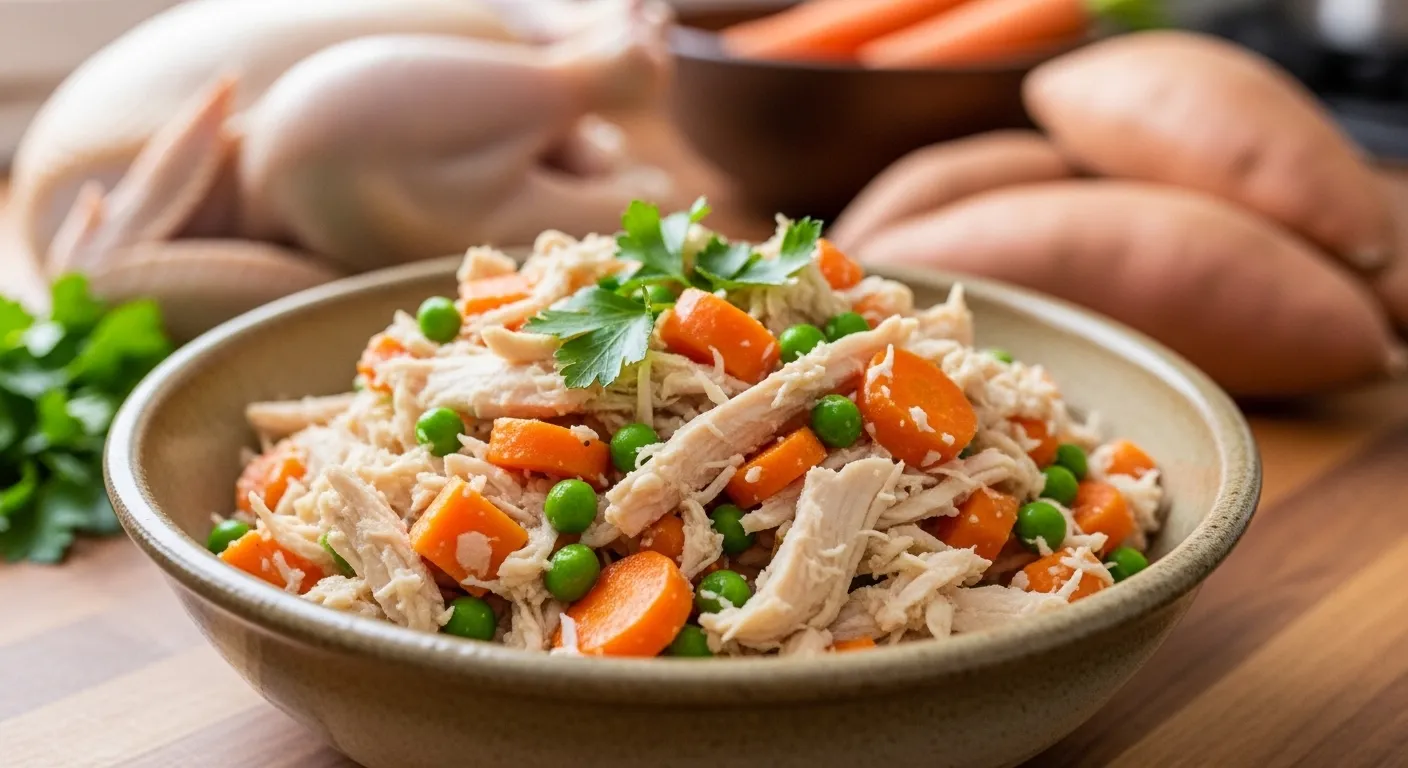
Homemade Grain-Free Chicken Dog Food Recipe Your Dog Will Love
Preparing a meal for your loyal companion is special. You want the best for your furry friend. Seeing their tail wag with excitement is the ultimate reward.
Choosing a grain-free chicken dog food recipe lets you control your pet’s health. You pick fresh, wholesome ingredients. This means no mystery fillers.

Switching to homemade grain-free dog food is rewarding. You don’t need to be a pro chef to make healthy meals. This guide makes it easy, so your pup stays healthy. Let’s start this healthy journey together today.
Why Choose Homemade Grain-Free Meals
Are you tired of confusing labels on dog food bags? Making your own dog food might be the answer. Many pet owners feel store-bought food doesn’t meet their dog’s needs. By cooking at home, you can give your dog the best grain-free dog food they need.
Understanding Canine Dietary Sensitivities
Many dogs have hidden allergies that cause itchy skin, dull coats, or upset stomachs. Cooking at home lets you avoid common fillers that cause these problems. Identifying these sensitivities early can greatly improve your dog’s health.
Removing grains from their diet can help heal a sensitive gut. Your dog will likely have more energy and look healthier. This way, you can see how each ingredient affects them.
The Benefits of Fresh, Natural Ingredients
Choosing a natural grain-free dog food made at home gives you peace of mind. You control the quality of the chicken, veggies, and fats in their meals. This is incredibly rewarding for owners who want the best for their pets.
Even with top grain-free dog food brands, you can’t control how long the food sits on shelves. Homemade meals let you control freshness and nutrients. By using whole foods, you’re investing in your dog’s health and happiness.
Essential Grain Free Dog Food Ingredients
When making a homemade meal, the ingredients you pick are key. A grain-free chicken dog food recipe needs to be full of nutrients. Choose fresh, whole foods to keep your pet healthy every day.
Selecting High-Quality Chicken Sources
Protein is the base of your dog’s diet. It helps keep muscles strong and energy up. Look for lean, human-grade chicken breast or thighs. These have the amino acids your dog needs.
Stay away from processed meats with bad additives or too much salt. Freshness is key for poultry. This ensures your dog gets the best protein. Always remove extra fat to make the meal easy to digest.
Choosing Safe Vegetables and Healthy Fats
A natural grain-free dog food needs colorful veggies for vitamins and fiber. These help with digestion and a strong immune system. Choose ingredients safe and good for dogs.
Here are some good options:
- Sweet potatoes for energy and fiber.
- Fresh spinach for iron and vitamins.
- Carrots for crunch and beta-carotene.
- Coconut or fish oil for omega-3 fatty acids.
Supplements to Ensure Nutritional Completeness
Even with great whole foods, a healthy grain-free dog food might need supplements. Homemade diets can miss some minerals or vitamins. Consulting with a professional helps find what your dog needs.
Consider adding these for a complete diet:
- Calcium supplements to balance phosphorus in meat.
- Vitamin E or B-complex for skin and coat.
- Probiotics for a healthy gut.
- Taurine for heart health in many breeds.
Preparing Your Grain-Free Chicken Dog Food Recipe
Setting up your workspace is the first step to making a homemade diet for your dog. When you have a clear plan, every grain-free chicken dog food recipe you make is safe and nutritious. Keeping things organized helps you stay consistent, which is key to your dog’s health.
Gathering Your Kitchen Equipment
Start by getting all the tools you need before cooking. The right equipment makes making an easy grain-free dog food recipe easier and more fun. Make sure you have these important items in your kitchen:
- A large stainless steel stockpot for boiling or steaming.
- High-quality digital kitchen scales for precise measurements.
- A sharp chef’s knife for chopping fresh vegetables.
- A sturdy cutting board dedicated to food preparation.
- A set of airtight containers for storing finished meals.
Measuring Ingredients for Optimal Balance
Being precise is key when using grain-free dog food ingredients. Dogs need a certain mix of proteins, fats, and vitamins. Use a digital scale for accurate measurements, not measuring cups.
Consistency is important for your pet’s health. Changing the ingredient ratios can affect the meal’s nutritional value. Always check your measurements to keep your dog healthy.
Safety Precautions When Handling Raw Poultry
Handling raw meat needs strict hygiene to keep you and your pet safe. Treat your grain free dog food ingredients like your own dinner. Wash your hands with warm, soapy water after touching raw chicken.
Clean all surfaces, knives, and cutting boards after touching poultry. This prevents cross-contamination. A clean kitchen means your homemade meals are healthy and safe for your dog. Safety is the most important thing when cooking.
Step-by-Step Cooking Instructions
Making healthy grain-free dog food is easier than you think. Follow a simple process to give your pet balanced meals. These steps keep the food fresh and tasty for your dog.
Boiling and Shredding the Chicken
Put chicken breasts in a big pot with enough water to cover them. Heat the water until it boils, then lower the heat. Cook until the chicken is soft and easy to shred.
After cooking, let the chicken rest for a bit. Then, use a fork to shred it into small pieces. This makes the chicken easy for your dog to eat.
Steaming Vegetables to Retain Nutrients
Steaming is the best way to cook veggies for an easy grain-free dog food recipe. It keeps vitamins and minerals in the veggies. Here’s how to steam them right:
- Wash and chop veggies into small, even pieces.
- Put them in a steamer basket over boiling water.
- Cover the pot to keep the steam in.
- Cook until the veggies are tender but still bright.
Combining Ingredients and Cooling the Batch
Once chicken and veggies are ready, mix them in a big bowl. Make sure everything is well mixed, like in an organic grain-free dog food recipe. This way, your dog gets a balanced meal.
Let the mix cool down to room temperature before serving. Never serve hot food to your pet. It can hurt their mouth. Once it’s cool, you can portion it out and serve it with love.
Storage and Serving Best Practices
Handling your meals right keeps them safe and good for your dog. Making homemade grain free dog food means it should stay fresh. Keeping it fresh is key to keeping the nutrients in.
Proper Refrigeration and Freezing Techniques
For a few days, keep meals in airtight containers in the fridge. They stay good for up to three days. Always check for any signs of spoilage before serving.
Freezing is great for longer storage. Freeze in portions for weeks. This way, you only thaw what you need, saving food and keeping it fresh.
Determining Appropriate Portion Sizes
Finding the right amount of food depends on your dog’s needs. Age, current weight, and daily activity level matter a lot. An active puppy needs more than a sleeping senior dog.
Ask your vet for a starting point for calories. Then adjust based on your dog’s health. Monitoring their weight regularly helps ensure they get the right amount of food.
Transitioning Your Dog to Homemade Food
Changing your dog’s diet should be slow to avoid upset stomachs. Mix a little new food with old over seven to ten days. Gradually add more new food and less old food.
This slow change lets your dog’s digestive system adapt well. If your dog seems uncomfortable, slow down the change. Being patient helps your dog adjust better.
Balancing Nutrition for Long-Term Health
Even with the best grain-free dog food, watching your pet’s health is key. A balanced diet is a lifelong job. It needs constant attention to your dog’s changing needs.
Consulting with Your Veterinarian
Always see your vet before changing your dog’s diet. They can check if your homemade food meets AAFCO standards for your dog’s age.
Your vet can also do blood tests. This checks if your dog is getting the right nutrients. This partnership is crucial for catching any nutrient issues early.
Monitoring Your Dog’s Weight and Energy Levels
Watch your dog’s weight and energy closely. If they gain weight or seem tired, adjust their food right away.
Tracking these signs is like checking the top grain-free dog food brands. Keeping a consistent log of your dog’s weight helps you make better choices for their health.
Avoiding Toxic Foods for Dogs
Your kitchen can be dangerous if you’re not careful. Some foods are toxic to dogs and must be avoided in your recipes.
Keep these foods away from your dog:
- Grapes and raisins, which can cause sudden kidney failure.
- Onions and garlic, as these can damage red blood cells.
- Chocolate, which contains stimulants that are dangerous for canine hearts.
- Xylitol, an artificial sweetener often found in peanut butter.
Knowing these dangers keeps your homemade meals safe and healthy for your pet.
Conclusion
Switching to a homemade grain-free diet is a big step for your pet’s health. You get to choose every ingredient in your dog’s food. This means you can avoid bad stuff in many commercial foods like Purina or Blue Buffalo.
Using fresh chicken and healthy veggies makes a big difference. Your dog will likely have more energy and a shinier coat. They’ll also digest better because of the good food.
Start making changes in the kitchen to help your dog’s health. Keep track of how they react to different foods. If you have questions, talk to your vet.
Preparing meals for your dog brings you closer together. It’s a rewarding way to make sure they live a long, healthy life. Start cooking today and see your dog thrive.


