
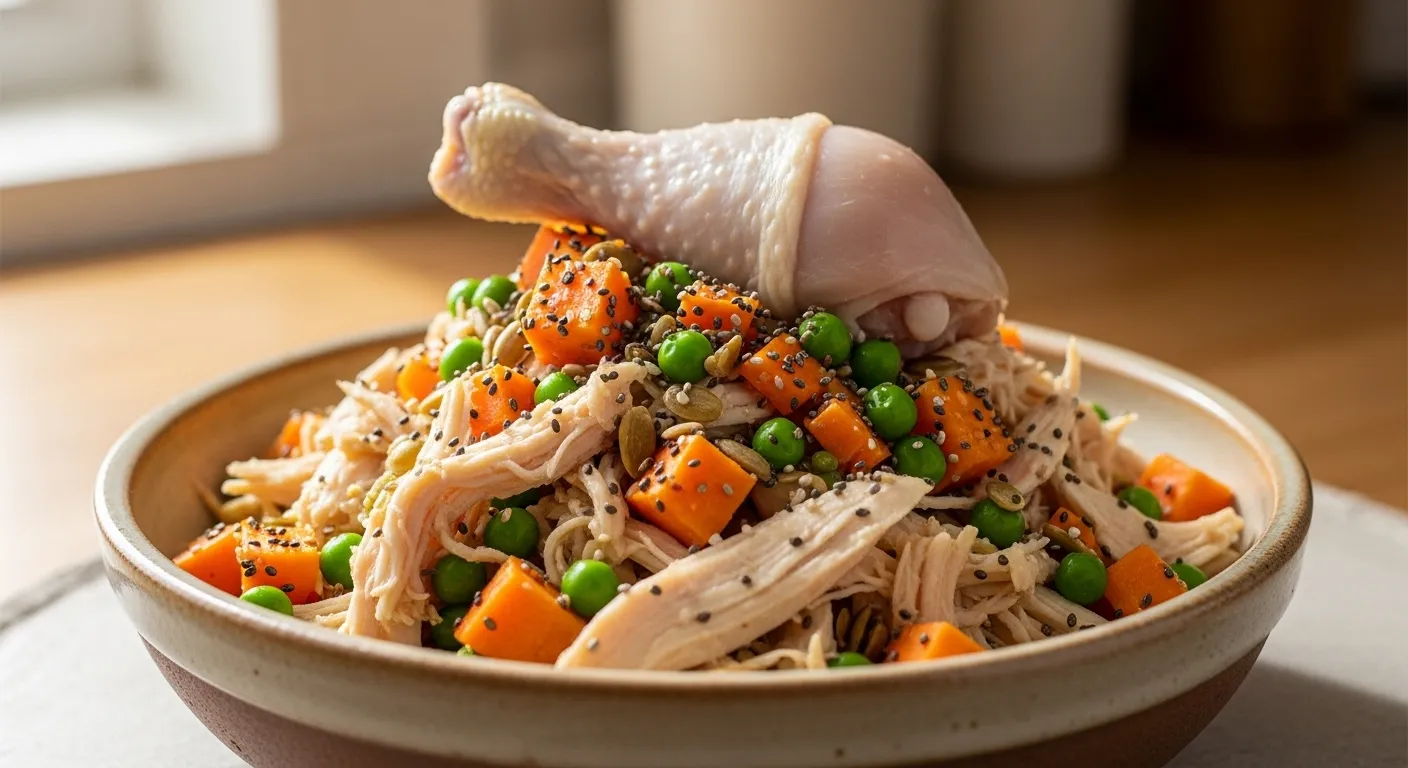
6 Chicken Dog Food Ideas for Healthy and Happy Pets
There’s nothing like a wagging tail when you come home. Our pets are more than just animals; they’re part of our families. Seeing your best friend thrive is every owner’s dream.
Many of us are concerned about the quality of kibble. Making fresh, healthy meals at home can make a big difference. Your pet might have brighter eyes, more energy, and a shinier coat.

Controlling your pet’s diet can lead to a happier life. We’ve got 6 chicken dog food ideas that are easy to make. They’re nutritious and delicious, so your pup will love every meal.
Understanding the Benefits of Chicken in Your Dog’s Diet
Chicken is key for your dog’s health and happiness. It’s a lean protein that gives energy for play and helps with body functions. Choosing natural chicken dog food means your pet gets the best fuel at every stage of life.
Why Chicken is a Preferred Protein Source
Dogs love chicken, making it perfect for picky eaters. It’s also highly digestible, so your dog can easily get the nutrients they need. This is good for their digestive system.
Vets often suggest chicken because it’s good for several health areas:
- Muscle Development: High-quality protein helps build and maintain lean muscle mass.
- Tissue Repair: Essential nutrients assist in healing and maintaining healthy skin and coat.
- Energy Levels: It provides a steady source of fuel for daily activities and exercise.
- Weight Management: Lean chicken helps dogs maintain a healthy body condition.
Nutritional Value and Amino Acids
Chicken’s real strength is its amino acid profile. These are crucial for a strong immune system and good metabolism. By feeding natural chicken dog food, you give your dog the essential nutrients for long-term health.
These amino acids help control hormones and make enzymes. A balanced diet with these nutrients keeps your dog active, alert, and happy. It’s a simple way to invest in your pet’s future.
6 Chicken Dog Food Ideas for Balanced Nutrition
Want to make your dog’s diet better? Start with these 6 chicken dog food ideas. Making homemade chicken dog food recipes lets you pick what your pet eats. These easy chicken dog food meals use whole foods for your dog’s health.

Classic Chicken and Rice Bowl
Ingredients and Preparation
The chicken and rice dog food recipe is loved by many. Boil chicken breast until it’s done, then shred it. Mix it with cooked rice for a meal that’s easy on your dog’s stomach.
Chicken and Sweet Potato Power Meal
Why Sweet Potatoes are Great for Digestion
Sweet potatoes are full of nutrients. They help with digestion and keep your dog full. Adding lean protein makes these chicken and sweet potato dog treats or meals great for energy.
Chicken and Garden Vegetable Medley
Selecting Dog-Safe Vegetables
Mixing chicken and vegetable dog food adds vitamins and minerals. Use green beans, peas, or zucchini. But avoid onions and garlic, as they’re toxic to dogs.
Homemade Chicken and Quinoa Feast
Benefits of Quinoa as a Grain Alternative
Quinoa is a good gluten-free option. It has essential amino acids and protein, great for active dogs. Rinse quinoa well before cooking to remove bitterness.
Chicken and Pumpkin Digestive Support
Using Pumpkin for Gut Health
Pumpkin helps with dog digestive issues. Add plain, canned pumpkin to your chicken meal. It soothes the gut and improves stool quality.
Chicken and Carrot Crunchy Treats
Simple Baking Instructions
Make healthy chicken dog treats at home. Mix shredded chicken with grated carrots and oat flour. Bake at 350°F until they’re firm. Your dog will love the crunchy texture.
Essential Safety Tips for Preparing Homemade Chicken Meals
Making homemade chicken dog food recipes needs careful steps to keep your pet safe. Cooking for your dog is rewarding, but safety first is key. Your dog’s well-being is always the top priority when cooking.

Avoiding Toxic Ingredients
Many foods safe for humans are bad for dogs. Onions, garlic, chives, and leeks can harm your dog’s blood. Sweeteners like xylitol are also very bad for dogs.
Always check food labels before cooking. Keep a list of safe foods in your fridge. If unsure, don’t add it to your dog’s meal.
Proper Cooking Temperatures for Poultry
Raw chicken can have Salmonella, which is bad for you and your dog. Cook the chicken to 165°F to make it safe. A digital meat thermometer is the best way to check.
Don’t give your dog raw or undercooked poultry. Thorough cooking kills harmful bacteria. This keeps your dog from getting sick.
Removing Bones and Skin
Removing bones is a must. Cooked bones can splinter and hurt your dog. Always check the meat for bones.
Also, take off the chicken skin. It has too much fat, which can cause pancreatitis. By following these homemade chicken dog food recipes carefully, you ensure a safe meal for your dog.
Incorporating Vegetables and Grains for Optimal Health
When you make natural chicken dog food, finding the right balance is key. Protein is important, but your pet also needs vitamins and minerals. Adding veggies and grains makes sure your dog gets a full, healthy meal every day.
Balancing Macronutrients in DIY Meals
It’s crucial to get the right mix when you make diy chicken dog food at home. You need to balance protein, carbs, and fats to keep calories in check. Properly measured meals give your dog the energy they need for play and rest.
Choose high-quality grains like brown rice or quinoa. They give energy without making your dog gain too much weight. This balance helps your dog stay healthy and full of energy.
The Role of Fiber in Canine Digestion
Fiber is key for a healthy gut in dogs. Carrots, green beans, and pumpkin help with digestion. A happy tummy comes from a diet rich in fiber.
These plant-based foods also help your dog feel full and satisfied. This stops overeating and keeps digestion smooth. Fiber is a big help in homemade dog food.
Consulting Your Veterinarian Before Changing Diets
Always talk to your vet before changing your dog’s diet. Every dog is different, based on age, breed, and how active they are. Professional guidance makes sure your diy chicken dog food is good for your pet.
Your vet can spot any nutritional gaps and suggest fixes. They might recommend supplements or tweaks to keep your pet healthy. Taking this extra step gives you peace of mind as a pet parent.
Storing and Serving Your DIY Chicken Dog Food
Keeping your homemade pet food fresh is key. It ensures every meal stays nutritious. Proper storage is essential to keep your pet safe. Whether it’s a full meal or healthy chicken dog treats, follow these steps for an easier routine.
Safe Refrigeration and Freezing Practices
Cool meals quickly before refrigerating. Store your diy chicken dog food in an airtight container for up to three days. Freezing is best for longer storage to preserve nutrients.
Freeze meals in individual bags or containers to avoid thawing and refreezing. Label containers with the date for easy rotation. This ensures your dog gets the freshest meals.
Portion Control for Different Dog Sizes
Dogs have different caloric needs based on size, age, and activity. Calculate the exact portion size before cooking. Use a kitchen scale for consistent nutrition.
Small breeds need less, while larger dogs need more. Remember to subtract healthy chicken dog treats calories from their main meal. This prevents weight gain and keeps them healthy.
Transitioning Your Dog to New Foods
Introducing new foods needs patience. A sudden change can upset your dog’s stomach. Start by mixing a small amount of diy chicken dog food with their current kibble.
Slowly increase the new food over seven to ten days. Watch for signs of discomfort. If you see any, slow down the transition. Consistency is crucial for a smooth transition.
Conclusion
Making meals at home is a great way to help your pet stay healthy. You get to choose what goes into their food every day.
Using high-quality chicken and the right nutrients is key. Even small changes can make a big difference in their energy and coat.
By choosing quality food, you’re setting a strong foundation for a long life together. Always watch how your pet reacts to new foods.
Talk to your vet to make sure these meals are right for your dog. They can help keep your homemade food safe and effective.
Share your favorite chicken recipes with other pet owners. Your stories can help them care for their pets better.


