
7 Cheap Homemade Dog Food Ideas for Every Budget You’ll Love
You look into those soulful eyes and know your furry companion deserves the best. Providing high-quality nutrition shows your love. But rising grocery costs make it hard.
You want your pet to stay healthy and full of energy without spending too much. This is a big challenge.

You can make healthy meals in your kitchen. Choose simple, nutrient-rich ingredients. This way, you control what your pet eats.
Managing your household expenses and keeping your pet healthy is possible. It just needs a bit of planning.
In this guide, we share practical strategies for balanced meals. These ideas work for both seasoned cooks and beginners. They help support your pet’s health for the long term. Let’s start this journey to better nutrition together.
Understanding the Basics of Canine Nutrition on a Budget
Starting with healthy dog food on a budget means knowing what your pet needs. You don’t need pricey commercial brands to meet AAFCO standards. By using whole ingredients, you can make budget-friendly dog food that fits your dog’s needs.
Essential Nutrients Your Dog Needs
Every meal must have proteins, fats, and carbs. High-quality protein is key for muscles and immune health. Healthy fats are good for skin, and vitamins boost overall health.
Calcium is vital for strong bones and teeth. Make sure your recipes have the right mineral balance. Consistency is key when balancing these nutrients at home.
Safe Ingredients vs. Toxic Foods
Many human foods are safe for dogs, but some are not. Avoid onions, garlic, grapes, and chocolate, as they are toxic to your pet. Always check your ingredients before cooking.
Choose safe, nutrient-rich foods like lean meats, cooked eggs, and dog-friendly veggies like carrots or green beans. Keep a list of safe foods to ensure a healthy dog food on a budget without risking your dog’s health. If unsure, it’s safer to skip an ingredient.
7 Cheap Homemade Dog Food Ideas for Every Budget
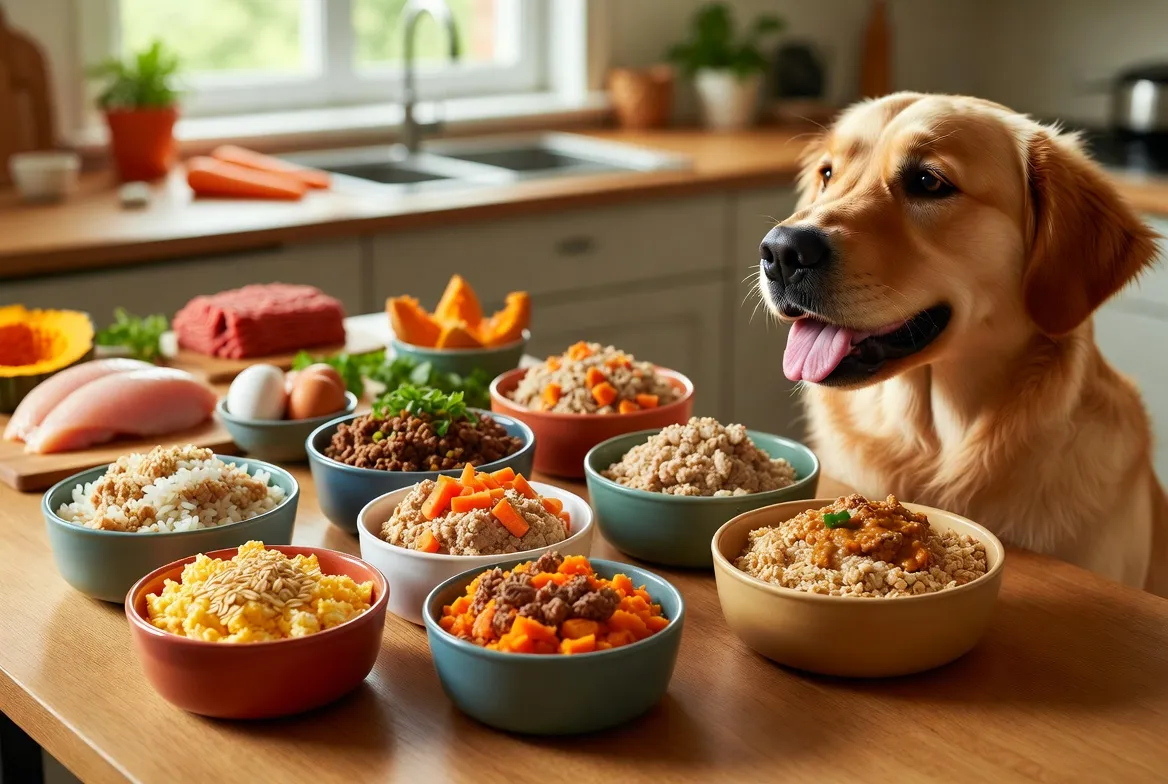
Explore these 7 cheap homemade dog food ideas for every budget to give your dog quality nutrition. Making meals at home lets you control what your dog eats and saves money. These easy dog food recipes use simple, healthy ingredients that won’t empty your wallet.

Ground Turkey and Sweet Potato Mash
This mix is loved for being easy on the stomach and full of vitamins. Brown lean ground turkey and mix it with mashed sweet potatoes. It’s a top dog food recipe for dogs with sensitive stomachs.
Budget-Friendly Brown Rice and Chicken Bowl
Chicken is a cheap, great protein when bought in bulk. Mix cooked chicken breast with brown rice and steamed peas. This meal gives your active dog the energy they need all day.
Hearty Beef and Vegetable Stew
Use cheap beef like chuck roast and slow-cook it with carrots and green beans. This stew is full of nutrients and loved by picky eaters. It’s a favorite easy dog food recipe for busy owners.
Lentil and Carrot Protein Powerhouse
Lentils are a cheap, plant-based protein. Cook them with chopped carrots for a meal rich in fiber. It’s great for owners looking for meat-free alternatives for their dog’s diet.
Egg and Oatmeal Breakfast Scramble
Eggs are a high-quality protein you might already have. Scramble them with oatmeal for a quick, nutritious breakfast. It’s a simple and nutritious way to start your dog’s day.
Canned Sardine and Pumpkin Delight
Canned sardines are full of omega-3 fatty acids and are cheap. Mix them with canned pumpkin for a healthy meal. Your dog will enjoy the savory flavor of this easy meal.
Lean Pork and Green Bean Medley
Lean pork is often on sale, making it a budget-friendly choice. Cook pork with steamed green beans for a balanced, low-fat dinner. These dog food recipes keep your pet full without costing a lot.
Sourcing Affordable Ingredients Without Sacrificing Quality
Creating a healthy diet for your dog doesn’t have to be expensive. You can give your pet great food without breaking the bank. Just a few changes in your shopping can help you keep costs down while keeping your dog happy and healthy.
Buying in Bulk at Wholesale Clubs
Shopping at places like Costco or Sam’s Club can really help. Buying things like brown rice, oats, or frozen veggies in big lots saves money. It’s a key way to get affordable pet food all the time.
- Purchase large bags of grains to store in airtight containers.
- Look for bulk frozen vegetable medleys that lack added salt.
- Split large packages with friends or family to save even more.
- Check the unit price on labels to ensure you are getting the best deal.
Utilizing Seasonal Produce
Fruits and veggies are cheaper and more nutritious when they’re in season. Matching your dog’s meals to the current harvest boosts their health. This way, your budget-friendly dog food stays fresh and affordable all year.
Visit farmers’ markets late in the day. Vendors often give discounts on leftover produce. Adding these seasonal items to your dog’s diet keeps costs down and adds variety.
Finding Discounted Proteins at Local Butchers
Your local butcher is a great place for affordable pet food ingredients. They often have “trim” or “end cuts” that are safe and nutritious but not as pretty. These are usually much cheaper than the usual cuts.
Getting to know your butcher can save you money. Just ask if they have any bulk protein or discounted organ meats for your dog. You’ll be amazed at the savings from choosing these over expensive, pre-cut meats.
Meal Prep Strategies to Save Time and Money
Efficient meal prep makes cooking for your pet easy and fun. Spend a bit of time each week. This way, your pet gets great food without daily cooking stress.

Batch Cooking and Portioning Techniques
Batch cooking saves time in the kitchen. Cook big batches of proteins and grains at once. Then, make meals in minutes all week.
Use a kitchen scale to portion meals into containers. This ensures your dog gets the right calories every day. Here are some tips for portioning:
- Use silicone muffin tins to freeze individual serving sizes.
- Label every container with the date to track freshness.
- Keep a variety of pre-portioned proteins to rotate flavors easily.
Safe Storage and Freezing Methods
Proper storage keeps your dog’s food safe and fresh. Most meals stay good in the fridge for up to three days. The freezer is best for longer storage.
Freeze food with as little air as possible to avoid freezer burn. Store extra homemade dog treats in the freezer for a quick snack. Always thaw frozen food in the fridge, not on the counter.
Managing Your Weekly Grocery Budget
Stay within your budget by planning and shopping smart. Buy ingredients in bulk and use seasonal sales. Plan meals around what’s on sale to avoid impulse buys.
Keep track of your spending to find the best value recipes. Consistency is key for your dog’s health and your wallet. With practice, fresh, healthy meals will be affordable and rewarding.
Essential Supplements for Homemade Dog Diets
Even with fresh meals, your dog might miss some nutrients. You want to give affordable pet food, but whole foods alone might not be enough. Adding specific supplements ensures your dog gets all the nutrients they need.

Calcium Sources for Bone Health
Calcium is absolutely critical for strong bones and healthy teeth in dogs. If your recipes don’t have enough bones, you need a good calcium source. Ground eggshells or calcium carbonate powder are cheap and work well.
Adding Omega-3 Fatty Acids
Omega-3 fatty acids are key for skin health and a shiny coat. They also reduce body inflammation. Adding fish oil or flaxseed oil to your affordable pet food is a smart move.
Multivitamin Considerations for Long-Term Health
It can be hard to get every nutrient from food alone. A good canine multivitamin is an essential safety net for your dog’s health. Always talk to your vet to pick the right supplement. This way, you make a lasting and affordable pet food plan for your dog.
Transitioning Your Dog to Homemade Meals
Starting your dog on homemade food is exciting. But it’s important to do it slowly. Your dog’s stomach needs time to adjust to new foods. Patience is truly your best friend during this time.
The Gradual Mixing Method
Switching diets slowly is the best way. It prevents upset stomachs and helps your dog get used to new tastes and textures.
- Days 1-3: Mix 25% of your diy dog food with 75% of their current food.
- Days 4-6: Serve a 50/50 split of the old and new meals.
- Days 7-9: Increase to 75% homemade and 25% old food.
- Day 10: Offer 100% of your homemade recipe.
Monitoring Your Dog for Digestive Changes
Watch your dog closely as you introduce new meals. Every dog is different. Observing their behavior is vital for a smooth transition.
Look for these signs to see if the diy dog food is working:
- Consistency and frequency of their stool.
- Changes in daily energy levels or playfulness.
- Any signs of skin irritation or excessive itching.
- General appetite and enthusiasm during mealtime.
When to Consult Your Veterinarian
If your dog shows signs of sensitivity, stop the transition right away. Always reach out to your veterinarian if you’re worried about your dog’s health.
Getting advice from a vet ensures your homemade diet is safe and balanced. Your vet can provide peace of mind as you make this change.
Common Mistakes to Avoid When Cooking for Pets
Making diy dog food is rewarding, but it can be tricky. It’s important to avoid mistakes that might harm your pet’s health. Taking care of your dog’s diet is a big responsibility. You must make sure every meal is balanced and safe.
Over-relying on Starchy Fillers
Many people use too many grains or starchy veggies like potatoes. These are cheap but not very nutritious. Too much starch can make your dog gain weight and mess with their blood sugar.
Ignoring Proper Protein-to-Vegetable Ratios
It’s crucial to get the right mix of meat and veggies. Too many veggies can mean your dog misses out on important amino acids. Always put high-quality proteins first in your diy dog food recipes. This helps keep muscles strong and energy up.
The Dangers of Seasonings and Additives
It’s tempting to add flavor to your pet’s food, but many things are toxic. Onions, garlic, chives, and xylitol are deadly in small amounts. Be very careful with homemade dog treats too. They often have additives safe for humans but not pets.
- Always check labels for hidden xylitol.
- Avoid using salt or onion powder.
- Stick to plain, whole-food ingredients.
- Consult your vet before adding new supplements.
Tools and Equipment for Efficient Dog Food Preparation
Preparing easy dog food recipes at home is easy. The right tools make it quick and clean. Efficiency is the key to making homemade pet nutrition a part of your life.
Must-Have Kitchen Gadgets
For quick and effective meal prep, focus on a few key tools. These tools help you process ingredients fast and ensure the right portions for your dog.
- Digital Kitchen Scale: Precision is vital for balanced nutrition. Weighing ingredients ensures you follow your recipes accurately.
- Food Processor: This tool is perfect for finely chopping vegetables or blending proteins into a uniform texture.
- Slow Cooker or Instant Pot: These devices allow you to cook large batches of stews or grains with minimal supervision.
- Silicone Spatulas: These are essential for scraping every bit of food out of your mixing bowls without scratching your cookware.
Choosing the Right Storage Containers
After cooking your easy dog food recipes, proper storage is key. You want to keep nutrients fresh and food safe for your dog all week.
Invest in high-quality containers that seal airtight. Glass containers are often preferred because they don’t absorb odors and are easy to sanitize. Always check that your containers are BPA-free to keep your pet safe from harmful chemicals.
If you freeze portions, choose freezer-safe bags or containers. Labeling your containers with the date of preparation helps you track freshness. This way, your dog always gets a delicious and healthy meal.
Customizing Recipes for Different Life Stages
Your dog’s needs change as they grow. From a playful puppy to a wise senior, their diet must change too. By adjusting your dog food recipes, you give them the right support for their age and lifestyle.
Adjusting Caloric Needs for Puppies
Puppies need lots of calories for fast growth. They need nutrient-dense foods with lots of protein and healthy fats. These meals must be balanced for bone and brain growth in the early months.
Managing Weight for Senior Dogs
As dogs get older, their metabolism slows down. This makes it important to manage their weight. You can make your dog food recipes higher in fiber and lower in calories. Keeping them at a healthy weight helps their joints and keeps them active.
Special Considerations for Active Breeds
High-energy breeds need different food than calm pets. They need more carbs and protein for their busy days. Watch their body condition and adjust your dog food recipes to keep them energized and strong.
Conclusion
Controlling your dog’s food creates a strong bond with them. Making healthy dog food on a budget means you can use quality ingredients without spending too much.
You know how to pick fresh proteins and healthy veggies for your dog. Every meal you make shows you care about their health.
Being consistent is key to success. A routine ensures your dog gets the right food every day. Soon, making healthy dog food will feel natural, not hard.
Try making homemade meals this week to see the change in your dog’s energy. Share your best recipes with others to keep the ideas coming. Your hard work improves your dog’s life a lot.


