
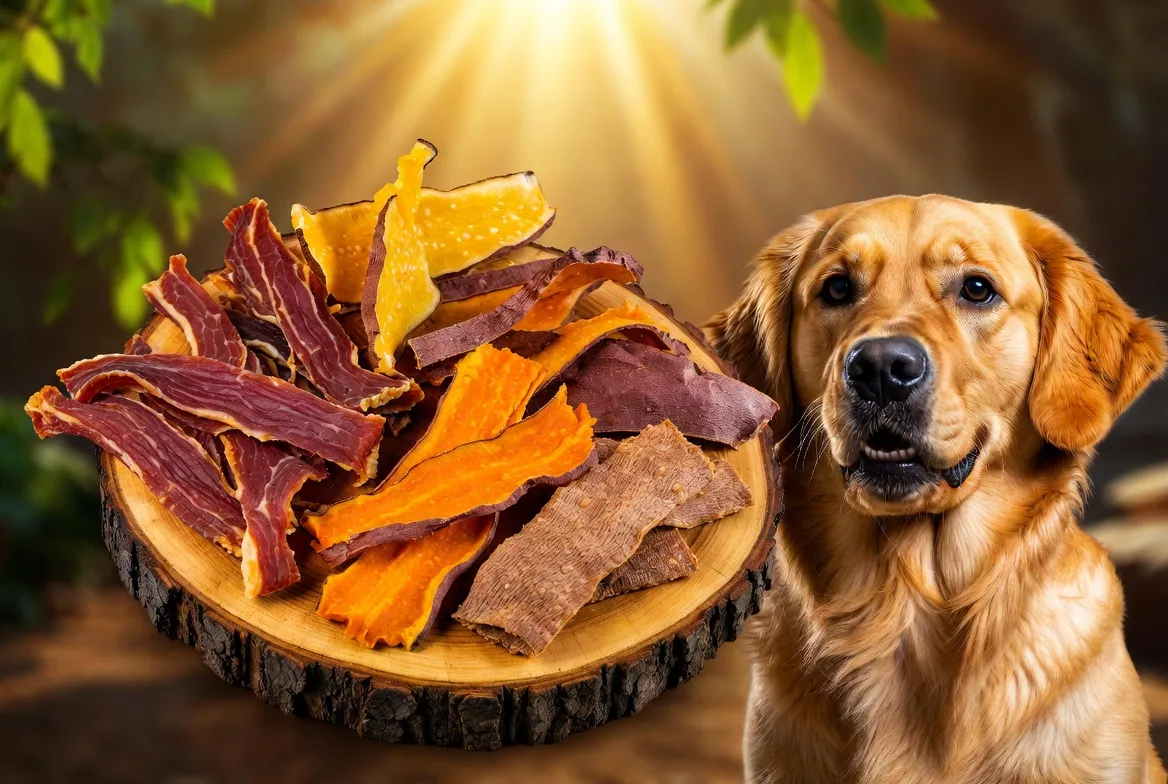
6 Dehydrated Dog Treat Recipes for Long-Lasting Chews
There’s nothing like seeing your pet’s tail wag when you give them a snack. You want the best for them, but store-bought treats often have unnecessary preservatives and fillers. These are things you’d rather not give your pet.

Making your pet’s food is a rewarding experience that brings you closer. By making these treats at home, you make sure they get only the best. Every bite is full of good stuff that helps keep your pet healthy.
Making these treats is easy and very satisfying. We’ll show you how to do it, so you can make snacks that keep your dog happy and busy. Your kitchen will become a wholesome bakery where love and quality are in every treat you make.
The Benefits of Making Homemade Dehydrated Chews
When you make homemade dog treats, you control your pet’s health. You don’t have to worry about what’s in store-bought treats. You know exactly what your pet eats.
Choosing natural dog treats means no artificial stuff. Many treats have fillers and chemicals. But you can make safer treats at home.
Dehydrating food keeps nutrients in. You control the heat to keep enzymes and vitamins in. This means your pet gets the best from their food.
Spending time in the kitchen makes your dog healthier. Making homemade dog treats shows you care. Natural dog treats help your dog stay well and happy.
Essential Equipment and Safety Tips for Dehydrating
Creating healthy homemade dog treats needs the right tools and safety steps. Preparing your space well means every treat is good for your pet.

Choosing the Right Food Dehydrator
Look for a dehydrator with adjustable temperature settings and a timer. These are key for dehydrator dog treats. They help ingredients dry right without losing nutrients.
A good airflow system ensures all trays dry evenly. A reliable machine makes making treats easier and more consistent.
Sanitation and Storage Best Practices
Keeping things clean is crucial to stop bacteria during drying. Always wash your hands, boards, and knives before starting.
After drying, let treats cool down before storing. Use airtight containers or vacuum-sealed bags to keep them fresh and dry.
Ingredients to Avoid for Dog Safety
Not all human foods are safe for dogs. Be careful with what you use. Avoid xylitol, a sweetener that’s highly toxic to dogs.
Also, don’t add too much salt. Too much sodium can harm your pet. Choose ingredients wisely to make treats safe and healthy.
6 Dehydrated Dog Treat Recipes for Long-Lasting Chews
It’s easy to make healthy, long-lasting chews at home. You can pick the right ingredients for 6 dehydrated dog treat recipes for long-lasting chews. These snacks are perfect for any chewer, whether they nibble gently or chew hard.
Different ingredients make the treats last longer. This keeps your pet busy for more time. Using dehydrated dog treats is great for keeping your dog’s mind sharp and their urge to chew satisfied. Making these treats yourself means you control the quality of each bite.

These recipes are easy for beginners but still give great results. They’re also cheaper and don’t have artificial preservatives like many store treats. Here are some benefits to think about:
- Enhanced Durability: Beef makes the treats last longer.
- Digestive Support: Vegetables with fiber help your dog’s gut stay healthy.
- Mental Engagement: Chewing releases happy chemicals for your dog.
- Nutrient Density: Dehydrating keeps important vitamins and minerals in the treats.
- Customizable Sizes: You can make the treats as thick or thin as your dog needs.
Learning these recipes means your dog gets safe, tasty, and dehydrator dog treats that are good for them. Start making these treats today. Your dog will love the crunchy, homemade rewards.
Beef Jerky Strips for Dental Health
Watching your pup enjoy a homemade pet treat is the best. Beef jerky strips are great for cleaning teeth. They help remove plaque and tartar from your dog’s gums.

Selecting Lean Beef Cuts
Start with the right ingredients for long-lasting jerky. High fat content can spoil the jerky.
Choose lean cuts of beef to avoid too much grease. Good choices include:
- Eye of round roast
- Top sirloin
- Bottom round
Preparation and Slicing Techniques
Proper preparation makes the jerky tough but safe. Always slice the meat against the grain.
Make the strips about 1/4 inch thick. Too thin, they break easily. Too thick, they dry unevenly.
Dehydration Time and Temperature Settings
Getting the right texture takes patience and the right heat. You want to dry the meat without cooking it too much.
Follow these tips for the best results:
- Set your dehydrator to 145°F to 155°F.
- Dehydrate for 6 to 10 hours, depending on the thickness.
- Check for a leathery, flexible texture that does not snap when bent.
After drying, let the strips cool. Then, store them in an airtight container. These homemade pet treats will keep your dog busy and healthy.
Sweet Potato Chews for Digestive Support
Making chews from sweet potatoes is easy and good for your dog’s stomach. These colorful veggies are full of nutrients that help your dog stay healthy. Making them at home means your pet gets healthy dog chews without bad stuff.

Why Sweet Potatoes Make Great Chews
Sweet potatoes are full of fiber, which helps your dog’s digestion. They are also dense, making a satisfying, long-lasting chew for your pet. Plus, they are low in fat and full of vitamins, making them a better choice than store snacks.
Slicing for Optimal Texture
To get the right texture, slice your potatoes carefully. Try for strips that are about a quarter-inch thick. This helps them dry evenly and keeps them safe for your dog.
- Wash and scrub the skins thoroughly before slicing.
- Use a sharp mandoline for consistent thickness.
- Remove any bruised or damaged sections of the vegetable.
- Pat the slices dry with a paper towel to speed up the process.
Enhancing Flavor with Natural Additives
Adding a bit of cinnamon can make these treats more appealing. Dogs love the smell of cinnamon. It turns these premium snacks into something your dog will look forward to.
Stick to natural, unsweetened additives to keep your healthy dog chews safe. Don’t use xylitol or too much sodium. These tweaks make the treats tasty and good for your pet’s health.
Dehydrated Chicken Feet for Joint Health
Many pet owners are finding out how great homemade chicken foot chews are. These diy pet snacks are full of good stuff for your dog’s joints. Making them yourself means no bad stuff in the treats.

Sourcing Quality Chicken Feet
First, find fresh, top-notch chicken feet. Look at local butchers or pet stores with raw, human-grade chicken. Choose organic or pasture-raised to avoid bad stuff.
Make sure the feet are clean and look good before buying. Freshness is key for a safe, tasty snack.
Cleaning and Pre-treatment Steps
Getting the feet ready is crucial. Start by rinsing them well under cold water. Use a soft brush to clean between the toes.
After rinsing, dry the feet with paper towels. Dryness is important to avoid spoilage. Once dry, put them on dehydrator trays.
Achieving the Perfect Crunch
To make them crunchy, set your dehydrator to 145°F to 155°F. This kills bad bacteria and keeps the good stuff in. Dry them for 12 to 24 hours, depending on size and machine.
They’re done when hard and snap when pressed. Store them in a cool, dry place in an airtight container. Your dog will love these special treats.
Salmon Skin Rolls for Shiny Coats
Making your own salmon skin rolls is easy and very good for your pet. These diy pet snacks are a great treat that also helps your dog’s health. By making them yourself, you avoid bad additives and give your dog the best nutrition.
Benefits of Omega-3 Fatty Acids
Salmon skins have lots of Omega-3 fatty acids. These fats are crucial for a soft, shiny coat and less skin inflammation in dogs. They also help with itchy skin and boost the immune system.
Rolling and Securing the Skins
To make the treat last longer, roll the skins into tight cylinders. This makes the snack last longer and keeps your dog busy. Use food-grade twine or tuck the ends in to keep them together on the dehydrator trays.
Managing Odor During the Dehydration Process
Fish can smell very strong while drying, which might be too much in a small kitchen. Use a well-ventilated area or an outdoor space for your dehydrator. This keeps your home smelling good while you make these healthy diy pet snacks for your dog.
Beef Liver Crisps for High-Value Training
Want to make your training sessions better? Try homemade beef liver crisps. They have a strong smell that keeps your dog focused. These easy dog treat recipes make a better reward than store-bought biscuits.
Nutritional Profile of Beef Liver
Beef liver is a superfood for dogs. It has lots of protein, iron, and B vitamins. These nutrients boost your dog’s energy and health.
Portion Control and Feeding Guidelines
Remember, dogs love liver, but too much is bad. Liver has a lot of Vitamin A, so don’t give too much. Use these crisps only for training, not as a meal.
Make the pieces small, like a pea. This keeps your dog motivated without eating too much.
Storage Tips to Maintain Crispness
Keep your snacks fresh by storing them right. Let the liver cool down after drying. Then, put it in an airtight container.
Store them in a cool, dry place for up to two weeks. In humid areas, keep them in the fridge. This keeps them crunchy.
Apple and Carrot Rings for Low-Calorie Snacking
Managing your dog’s weight doesn’t mean they can’t enjoy tasty snacks. These easy dog treat recipes offer a fun snack that’s low in calories. They keep your pup happy without adding extra calories.
Preparing Fruits and Vegetables for Dehydration
Choose fresh, organic produce for the best quality. Wash all apples and carrots well to remove dirt and pesticides.
Take out the seeds and core from apples, as they’re bad for dogs. You can peel carrots if you like, but the skin adds fiber for digestive health.
Creating Durable Rings for Chewing
Slice apples and carrots into rounds about a quarter-inch thick. A mandoline slicer helps make them all the same size. This ensures they dry evenly.
Make the rings firm and durable by drying them out. This makes them crunchy like regular chews but healthier.
Combining Flavors for Picky Eaters
Mixing apples’ sweetness with carrots’ crunch is great for picky eaters. A little cinnamon dust on the rings is safe for dogs and smells good.
These easy dog treat recipes are great for owners who want to reward their dogs often. Making these snacks at home lets you control what your pet eats. This way, they get only the best nutrition.
Conclusion
Learning these six recipes lets you give your dog better, safer snacks. You can now make treats that meet their health needs and taste preferences.
By making homemade pet treats, you avoid bad additives and fillers. You choose every ingredient yourself.
Creating the best snacks means using love, patience, and quality ingredients. Try different recipes to see what your dog likes best.
Share your homemade treats with other pet owners. This way, everyone can enjoy healthy snacks together. You’ll know exactly what your dog eats every day.


