
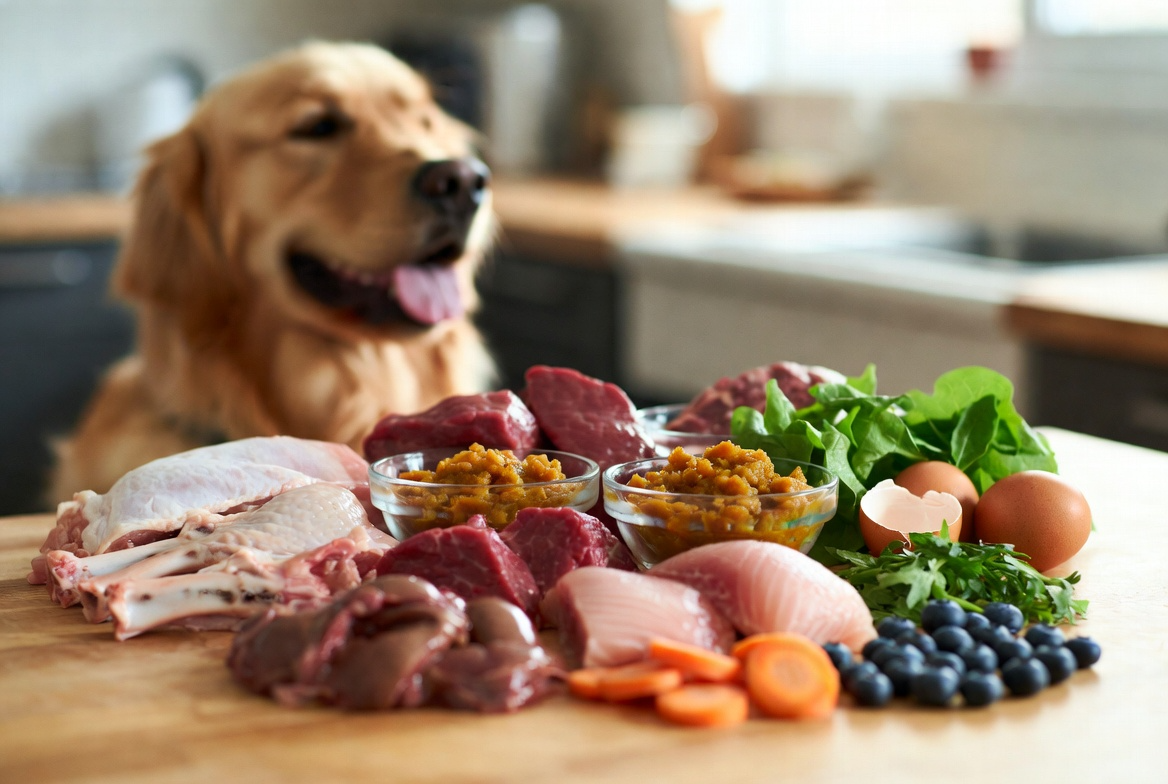
6The Ultimate Raw Dog Food Recipe Guide for Beginnersa
You look into your pet’s eyes and see a loyal friend. You want to give them the best nutrition for their energy and happiness. Starting fresh meals can seem hard, but it’s a great way to improve their health.

This beginner’s guide helps you understand dog nutrition easily. We make cooking meals simple and worry-free. You’ll learn how to pick the best ingredients for your pet’s meals.
With the ultimate raw dog food recipe guide for beginners, you’ll grasp the basics of feeding your dog right. Whether you’re new to fresh feeding or ready to begin, this guide has what you need. Let’s start this journey together to make sure your pet is happy and healthy every day.
Understanding the Basics of Raw Feeding
Exploring raw feeding for dogs means knowing what your dog needs to be healthy. This method gives dogs food that matches their natural diet. It’s a move away from processed foods to what their wild ancestors ate.
Why Many Owners Choose a Raw Diet
Many pet owners switch to natural diets for their dogs’ health. They see big improvements in their pets’ energy and health. This change can make a big difference in your dog’s life.
Here are some reasons for choosing a raw diet:
- Shinier coats and healthier skin.
- Increased energy levels throughout the day.
- Better dental health and cleaner teeth.
- Smaller, less frequent, and less odorous stools.
Essential Nutritional Components for Dogs
To feed your dog well, you need to know about balanced meals. It’s not just about meat. A good diet has the right mix of nutrients for your dog’s health.
A top-notch raw dog food plan should have these key parts:
- High-quality muscle meat: The main source of amino acids.
- Organ meats: They’re like a natural multivitamin, full of minerals.
- Edible bone: It’s where calcium and phosphorus come from for strong bones.
- Healthy fats: They’re important for brain health and energy.
Before starting, do your homework. Learning about raw feeding helps keep your pet safe and healthy. Consistency and quality are key for a happy dog.
Safety First: Handling Raw Meat Properly
Starting raw feeding for dogs means keeping safety first in the kitchen. Fresh meals need clean prep to keep everyone healthy. Clean habits make a natural diet safe and enjoyable.

Preventing Cross-Contamination in Your Kitchen
Stopping cross-contamination is easy with the right tools. Always handle raw pet food like you would raw chicken or beef for dinner.
Here’s how to keep your kitchen clean:
- Use a dedicated cutting board for your dog’s meals, made of non-porous material.
- Sanitize countertops and utensils with hot, soapy water or a food-safe disinfectant right after.
- Wash your hands with soap for twenty seconds after touching raw ingredients.
- Keep raw meat away from human food in the fridge to avoid contact.
Safe Storage and Thawing Techniques
Storing meat right keeps it fresh and safe from bacteria. When you feed your dog raw, control the meat’s temperature always.
Don’t thaw meat on the counter, as it grows bacteria. Here’s how to handle it safely:
- Thaw frozen meat in the fridge in a sealed container or bag.
- Store meat in the coldest fridge part, usually the bottom shelf, for a steady temperature.
- Use airtight containers to stop juices from leaking.
- Throw away food left at room temperature for over thirty minutes.
Being organized keeps your home safe while feeding your pet well. Consistency makes this safe and rewarding daily.
The Ultimate Raw Dog Food Recipe Guide for Beginners
Getting the right mix in your dog’s diet is key for their health. Making meals at home lets you control what they eat. 6The Ultimate Raw Dog Food Recipe Guide for Beginners helps make sure your dog gets all the nutrients they need.
The Importance of Balanced Ratios
For your dog to stay healthy, you need to mix muscle meat, organ meat, and bone just right. Experts often suggest the 80/10/10 rule. This means 80% muscle meat, 10% organs, and 10% bone.
Being consistent is crucial when learning these ratios. If you don’t give enough calcium or vitamins, your dog could get sick. The ultimate raw dog food recipe guide for beginners makes it easy to keep the right balance.

Calculating Portions Based on Your Dog’s Weight
Figuring out how much to feed your dog depends on a few things. A good start is to feed 2% to 3% of their ideal weight each day. But, you should adjust this based on how active they are and their metabolism.
Active dogs need more food to keep their energy up. Older dogs or those moving less might need less to avoid getting too heavy. Always watch your dog’s weight and change their food amounts as needed to keep them healthy.
Essential Ingredients for Homemade Raw Meals
Learning to make homemade dog food starts with good ingredients. The quality of what you use affects your dog’s health and energy. Choose fresh, healthy items for a happy, healthy pet.

Selecting High-Quality Muscle Meat
Muscle meat is the main protein in natural dog food. Look for fresh cuts without additives or preservatives. Good proteins help your dog’s muscles and metabolism stay strong.
Here are some good protein sources:
- Grass-fed beef
- Pasture-raised chicken
- Wild-caught fish
- Lean turkey breast
The Role of Organ Meats in Nutrient Density
Organ meats are full of nutrients, like vitamins A, D, and B-complex. They add important vitamins not found in muscle meat. Variety is key to get all the minerals your dog needs.
Use a mix of organs for a balanced diet. Liver and kidneys are great, but introduce them slowly. They help your dog’s immune system and organs work well.
Incorporating Edible Bone for Calcium
Calcium is key for strong teeth and bones. Use raw, edible bones instead of supplements. Never use cooked bones because they can hurt your dog.
Choose soft bones like chicken necks or duck frames. This mix of meat, organs, and bones makes a complete diet for your dog.
Simple Raw Chicken and Vegetable Blend
This chicken and vegetable blend is easy for beginners. It uses chicken as the main protein, which most dogs like. Starting your raw feeding journey with this meal makes you feel more confident in the kitchen.

Ingredients You Will Need
For a balanced meal, use high-quality ingredients. Fresh veggies add fiber and antioxidants for your pet’s health.
- 2 pounds of raw chicken (including bone-in pieces like wings or frames)
- 4 ounces of chicken liver or other secreting organs
- 1 cup of finely chopped carrots
- 1/2 cup of fresh, steamed spinach
- 1 tablespoon of high-quality fish oil for Omega-3s
Step-by-Step Preparation Instructions
Being efficient and safe is key in meal prep. Follow these steps to keep your kitchen clean while making these healthy dog food recipes.
- Thoroughly sanitize your workspace and wash your hands before handling any raw meat.
- Grind or finely chop the chicken, including the bone, to ensure your dog can consume it safely.
- Mix in the finely chopped carrots and steamed spinach until the ingredients are evenly distributed.
- Add the organ meat and fish oil, stirring the mixture thoroughly to ensure a consistent nutrient profile.
- Portion the food into individual containers based on your dog’s daily caloric needs and freeze them for later use.
Always remember to thaw your portions in the refrigerator overnight. Serving fresh, properly prepared meals is a wonderful way to show your love for your canine companion.
Beef and Berry Nutrient-Rich Recipe
You can make your dog’s diet better by mixing high-quality beef with fresh berries. These dog food recipes help keep your pet healthy and full of energy.

Why Beef is a Staple Protein
Beef is a nutrient-dense protein that’s great for homemade meals. It has iron and zinc, which help your dog stay energetic and have healthy skin.
Choosing good cuts means your pet gets the amino acids they need. This keeps them strong and active every day.
Adding Antioxidants with Fresh Berries
Adding fresh, safe berries to your meals boosts nutrition. Blueberries and raspberries are perfect because they’re full of antioxidants.
These antioxidants help your dog’s immune system and keep cells healthy. Adding these fruits to your dog food recipes is a tasty way to protect your pet. It’s a simple way to keep your dog healthy for a long time.
Turkey and Spinach Power Bowl
Looking for dog food recipes that are balanced? Lean turkey and leafy greens are great. They offer a gentle, nutritious meal for pets with special diets. High-quality ingredients mean your dog gets the best nutrition.
Benefits of Lean Turkey for Sensitive Stomachs
Lean turkey is a fantastic protein choice for dogs with sensitive stomachs. It’s lower in fat than other red meats. This makes it easier for your dog to digest without upset.
Switching to lean turkey can help with bloating or gas. It’s a clean, reliable base for dog food recipes you can make at home. Your dog will quickly get used to this simple, healthy protein.
Preparing Leafy Greens for Better Digestion
Spinach is full of vitamins, but it needs to be prepared right for your dog. Raw leaves are hard for dogs to digest. Steaming or lightly pureeing the greens makes them easier to digest.
Blending spinach into a fine consistency helps your dog digest it better. This step ensures your dog food recipes are healthy without upsetting your dog’s stomach. Adding these greens to your homemade meals boosts your pet’s health.
Transitioning Your Dog to a Raw Diet
Switching to raw dog food needs careful planning. Your dog’s stomach must get used to new foods and textures. Taking your time helps keep your dog happy and healthy.
The Gradual Transition Method
Begin by mixing a little raw food with their old diet. Start with 25% raw and 75% old food for a few days. If they do well, you can increase the raw food over two weeks.
Being consistent is key to success. Start with simple proteins in the first week. When they get used to it, you can add more variety.
Monitoring Your Dog’s Digestive Health
Watch your dog closely during the transition. Check their stool every day. Firm and consistent stools mean they’re adjusting well.
Also, notice their energy and mood. If they seem uncomfortable or upset, slow down the transition. Good quality raw dog food and patience will make the transition smooth.
Common Mistakes to Avoid When Feeding Raw
Many pet owners face challenges when starting a raw diet for dogs. It’s important to know how to avoid mistakes to keep your pet healthy. This beginner’s guide will help you overcome these early hurdles.
The Dangers of Nutritional Imbalances
Feeding only one type of protein is a big mistake. Dogs need a mix of nutrients that one food can’t give. Without a balanced diet, they can get serious health deficiencies.
Variety is the key for a healthy dog. Mix proteins like beef, turkey, and chicken. Don’t forget to include organ meats, as they are like multivitamins.
Why You Should Avoid Cooked Bones
Never give cooked bones to your dog. They become brittle and can splinter. This can hurt your dog’s insides badly.
Stick to raw, meaty bones that fit your dog’s size and chewing style. Your dog’s safety depends on following these rules. Avoiding these mistakes makes your dog’s diet safer and healthier.
Supplements to Enhance Your Raw Recipes
Improving your homemade dog food recipes needs a few smart additions. These help make sure your dog gets all the nutrients they need. They add an extra layer of support for your pet’s health.
Adding Omega-3 Fatty Acids
Omega-3 fatty acids are key for your dog’s health. Adding fish oil to your homemade dog food can make their skin and coat healthier. These fats also help with joint health and reduce swelling in active dogs.
The Benefits of Kelp and Probiotics
Kelp is a natural source of iodine, important for the thyroid. Adding it to your homemade dog food gives your dog essential minerals. It’s important to add these nutrients regularly.
Probiotics are also vital for a healthy gut. A good gut helps your dog digest food better. This supports their overall health and well-being.
Consulting with Your Veterinarian
Your vet is key to your dog’s health. Before changing your dog’s food, talk to your vet. This makes sure the new food is right for your dog.
When to Seek Professional Advice
If your dog has health issues or food allergies, see your vet. They can spot risks in natural dog food before you start. Talking to your vet is important for your dog’s care.
Look for these signs in your pet:
- Persistent digestive upset or changes in stool quality.
- Unexplained weight loss or sudden weight gain.
- Chronic skin irritation or frequent ear infections.
- Lethargy or a noticeable decline in energy levels.
Customizing Recipes for Specific Health Needs
Every dog is different. Your vet can adjust recipes for your dog’s needs. They might change your natural dog food for better health.
Working with your vet helps you improve your dog’s diet. You can watch your dog’s health together. Your vet wants to help you feed your dog well.
Conclusion
Switching to a raw diet is a big step for your dog’s health. You now know how to make meals that keep your pet healthy and happy.
Success comes from using the best ingredients and sticking to a routine. Even small changes can make a big difference in your dog’s energy and coat.
Getting advice from a vet is key as you make these recipes better. Your vet can check on your dog’s health and make sure they get the right food at every age.
Be proud of the care you give your dog through homemade meals. Your hard work helps your dog live a full and joyful life. Share your stories with other pet owners to help everyone keep their dogs healthy.


