
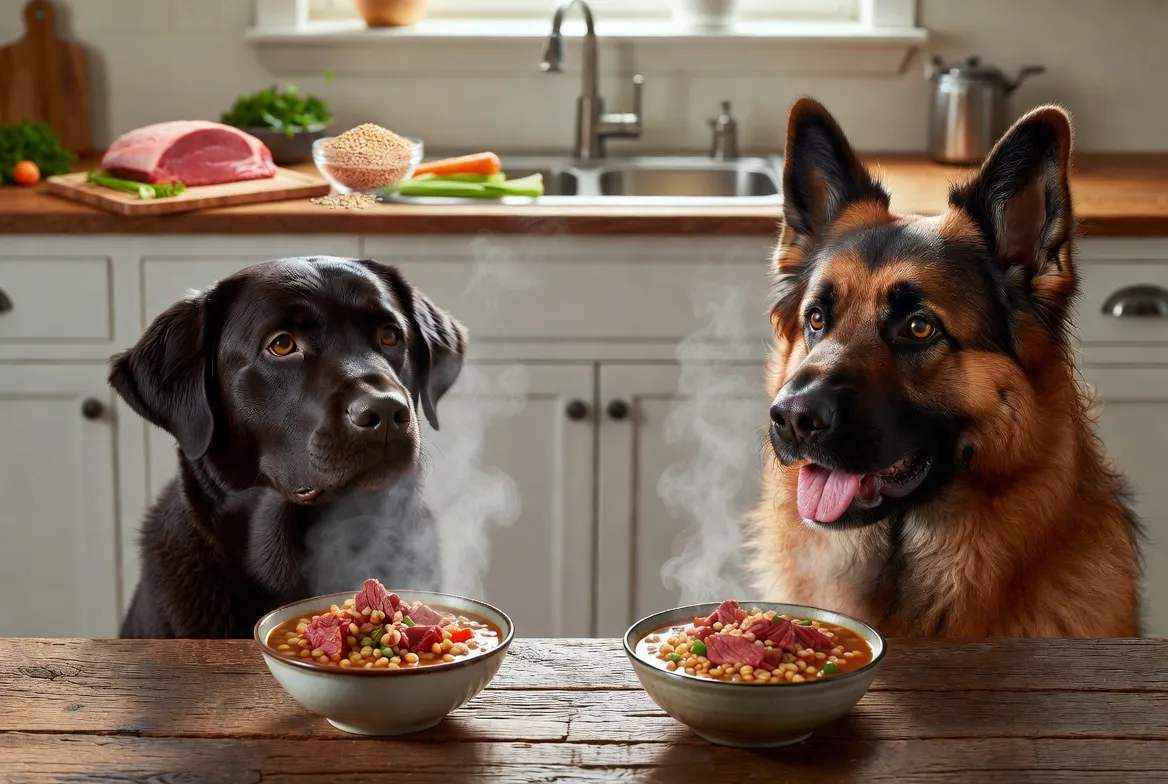
Beef Barley Soup for Dogs Simple Tasty and Healthy
Last winter, my golden retriever, Max, seemed to lose his spark. He was slow during walks and didn’t want to eat his kibble. I decided to make fresh, healthy meals for him.
The change was amazing. Soon, his coat shone, and he had lots of energy. This showed me how important good food is for their happiness.

By trying healthy dog recipes, you can make a big difference. A great start is Beef Barley Soup for Dogs. It’s easy to make and full of vitamins your pet needs. Cooking at home gives your pet gift of vitality and health.
Why Homemade Meals Benefit Your Canine Companion
Controlling your dog’s diet is a great gift. Preparing homemade dog food lets you know exactly what they eat. This ensures they get the best fuel for their adventures.
https://www.youtube.com/watch?v=HtSjQxZVe2k
Understanding Canine Nutrition Beyond Kibble
Kibble is often processed too much, losing important nutrients. Looking into canine nutrition shows many kibble brands use fillers and not good proteins. Switching to fresh food means avoiding bad additives.
You can make meals fit your dog’s needs. This move helps you control what they eat. It keeps them away from harmful preservatives that can harm their health.
The Advantages of Fresh, Whole-Food Ingredients
Feeding your dog fresh ingredients makes them healthier. You’ll see a better coat, more energy, and better digestion. Prioritizing real food means a happier, longer life for them.
Choosing fresh produce and lean meats is a smart choice. These foods are full of vitamins and minerals. They help keep your dog’s immune system strong. Switching to homemade dog food shows you care about their health.
Essential Nutritional Components for Dog-Friendly Soups
When you make dog-friendly soups, you help your pet’s health. Knowing about canine nutrition lets you give more than just fillers. You make sure each spoonful boosts your dog’s energy.

The Role of Lean Proteins in Muscle Maintenance
Lean proteins are key for your dog’s muscles. They help keep muscles strong and fix them after play. Using chicken breast or lean beef gives your dog the amino acids they need.
These proteins also give your dog the energy for daily activities. Choosing lean proteins helps avoid extra fats that can make your dog gain weight. This keeps your dog agile and energetic all their life.
Why Barley is a Superior Grain for Dogs
Barley is better than many fillers in commercial foods. It gives your dog steady energy and keeps them full between meals. It also has essential minerals for good metabolism.
Unlike refined grains, barley keeps its nutrients. It’s easy on your dog’s stomach and gives them the complex carbs they need. Your dog gets consistent fuel from this healthy grain.
Incorporating Fiber-Rich Vegetables for Digestion
Vegetables are key for balanced dog-friendly soups. They add vital fiber for a healthy gut and regular digestion. Adding colorful veggies also gives your dog important vitamins for their immune system.
Good canine nutrition needs fiber for nutrient absorption. Carrots, green beans, or leafy greens make your soup tasty and healthy. Your dog will love the variety and health benefits in every bowl.
Selecting High-Quality Ingredients for Beef Barley Soup for Dogs
When making Beef Barley Soup for Dogs, the key is the ingredients. Giving wholesome nutrition shows you care. Choose top-quality ingredients for your dog’s health.
Choosing the Right Cuts of Beef
Picking the right protein is crucial for your dog’s health. Opt for lean beef to avoid too much fat. Remove any fat before cooking for a healthier meal.
- Sirloin or top round are great lean options.
- Low-fat ground beef is good for quick meals.
- Make sure the meat is fresh and stored right.
Sourcing Organic and Pesticide-Free Produce
Using natural ingredients for dogs reduces harmful chemical intake. Pesticides in regular produce can harm your pet. Organic veggies are the safest choice.
Focus on these organic items for a healthy diet:
- Organic carrots for beta-carotene.
- Fresh, pesticide-free celery for hydration.
- Seasonal greens without synthetic fertilizers.
The Importance of Low-Sodium Broth
Many broths have too much salt and additives bad for pets. Use low-sodium broth to keep your dog’s heart healthy. Look for natural ingredients for dogs or make your own.
Make sure your broth doesn’t have onions or garlic, which are toxic. These steps ensure your soup is safe and tasty for your dog.
Safety First: Ingredients to Avoid in Homemade Dog Food
Making homemade dog food is more than just picking healthy stuff. You must know what to avoid. Some kitchen items can harm your dog. Your dog’s safety is the most important part of the cooking process.
Toxic Alliums: Why Onions and Garlic are Dangerous
The allium family, like onions and garlic, is toxic to dogs. Even a little can hurt their red blood cells and cause anemia. Never include these items in your recipes, as they are always dangerous.
Hidden Dangers in Common Seasonings
Many human seasonings are bad for dogs. Too much salt can cause dehydration or poisoning in small breeds. Spices like nutmeg or chili powders can also be toxic.
Choose natural ingredients for dogs like simple, whole foods. Avoid spice blends with hidden additives or onion powder. Keeping your ingredient list simple is the safest path to a healthy meal.
Avoiding Artificial Preservatives and Additives
Commercial additives like BHA, BHT, and artificial dyes are bad. They can cause health problems and have no nutritional value. Always check labels if using store-bought items in your homemade dog food.
Using fresh, whole foods keeps your natural ingredients for dogs safe and healthy. Your commitment to quality will pay off in your dog’s long-term health and happiness. Always check your pantry before cooking.
Preparing Your Kitchen and Equipment
A clean kitchen is key for making homemade pet food. Before starting, make sure your kitchen is ready. This keeps your pet safe and your diy dog meals clean.
Sanitizing Your Cooking Space
First, clear your counters and clean them with a safe pet disinfectant. It is crucial to keep raw meat and veggie areas separate. Always wash your hands well before and after cooking.

Use special cutting boards for pet food to avoid mixing with human food. A clean workspace makes cooking stress-free and fun.
Essential Tools for Batch Cooking
The right tools make cooking faster and easier. Good tools help you cook well and store food for later. Here are the must-haves:
- A large, heavy-bottomed stockpot for even heat.
- Sharp chef’s knives for cutting veggies and meat.
- A reliable digital scale for exact portions.
- Airtight glass containers for safe storage.
- Silicone spatulas to get every bit of food.
These tools help you make consistent, healthy food for your pet. Organization is key for making homemade pet food easy and clean.
Step-by-Step Guide to Cooking Beef Barley Soup for Dogs
Making Beef Barley Soup for Dogs is easy and ensures quality. By following a clear plan, you can make wholesome meals your pet will love. Keeping your cooking method consistent helps keep the nutrients in the food.

Preparing and Browning the Beef
Begin by cutting lean beef into small cubes. Heat a pot over medium heat with a bit of water or oil. Browning the meat is key to keeping juices in and flavor up.
Simmering the Barley to Perfection
After browning the beef, add barley and low-sodium broth to the pot. Bring it to a boil then lower the heat. Patience is key as barley needs time to soften for easy digestion.
Adding Vegetables at the Right Time
Adding vegetables at the right time is crucial. Add them in the last twenty minutes of cooking. This way, they keep their essential vitamins and minerals and don’t get mushy.
- Wash all produce thoroughly before chopping.
- Cut vegetables into uniform sizes for even cooking.
- Monitor the liquid levels to prevent the soup from drying out.
- Stir occasionally to ensure all ingredients combine well.
Cooling and Final Consistency Checks
Once cooking is done, remove the pot from heat right away. Let the soup cool to room temperature before serving. Safety is your top priority, so always check the temperature.
Make sure the soup is thick but still easy to eat. If it’s too thick, add a bit of warm water or broth. Taking these final steps ensures your homemade meal is safe and tasty for your dog.
Proper Portioning and Serving Suggestions
It’s as important to give the right amount of food as it is to use good ingredients. When making dog-friendly soups, aim for the right mix of nutrients. This helps keep your pet at a healthy weight and promotes long-term health.
Calculating Daily Caloric Needs
Every dog needs a certain number of calories, based on their age, breed, and how active they are. Talk to your vet to find out how many calories your dog needs each day. Knowing these numbers helps you adjust the soup serving size right.
Don’t forget that treats and snacks add to your dog’s daily calorie count. Subtract those calories from their main meal to avoid weight gain. Keeping a routine is key to your dog’s health.
Serving as a Topper or a Complete Meal
These recipes are versatile for your dog’s meals. You can add the soup as a tasty topper to their kibble. This is great for dogs who are picky eaters. Or, you can serve it as a full meal if it’s balanced and nutritious.
If you serve it as a full meal, make sure it has the right mix of protein, grains, and veggies. Mixing things up keeps meals fun and provides important hydration. Make sure the soup’s consistency is right for your dog’s size and how they chew.
Monitoring Your Dog’s Reaction to New Foods
When introducing new foods, watch your dog closely. Start with a small amount of your dog-friendly soup to see how they react. Look out for signs of upset stomach, like loose stools or gas.
Also, watch their energy and coat condition for a few weeks. If your dog shows signs of allergies or discomfort, stop the new food right away and talk to your vet. Your careful watch makes sure these nutritious soups for dogs are safe and enjoyable for them.
Storing and Freezing Your Homemade Dog Soup
Follow these tips to keep your dog meal ideas fresh. This way, every bowl stays as good as when you first made it.
Safe Refrigeration Practices
Let your soup cool down before putting it in airtight containers. Glass or BPA-free plastic works best. Keeping air out is essential to keep it fresh.
Put these containers in the coldest part of your fridge. Use what you need within three to four days for the best taste.
Freezing Techniques for Long-Term Storage
Freezing is great for big batches of dog meal ideas. Use silicone molds or freezer-safe bags for individual portions.
This way, you can serve just what you need without thawing everything. Remember to label each container with the date. This helps you keep track of how long it’s been stored, up to three months.
Thawing and Reheating Safely
When you’re ready to serve, thaw a portion in the fridge overnight. This slow thaw keeps the soup’s texture and taste better.
If you’re in a rush, thaw the bag in cool water. Then, warm it up gently on the stove or in the microwave. Make sure it’s lukewarm for your dog’s comfort.
Adjusting the Recipe for Specific Dietary Needs
Your dog might need special diet changes as they age or face health issues. Every dog is different, and making healthy dog recipes just for them is great. You can tweak your dog meal ideas to fit your pet’s unique needs.
Modifications for Senior Dogs
Senior dogs have slower metabolisms and might have dental problems. Cooking the barley longer makes it softer and easier to digest. Also, adding more veggies and less meat helps keep their calorie intake down.
Managing Weight with Portion Control
Keeping your dog at a healthy weight is key for their joints and energy. Use a kitchen scale for exact portion sizes. Consistent portion control helps you adjust their food if needed.
Addressing Common Food Sensitivities
If your dog has stomach or skin issues, they might be sensitive to something. Try replacing beef with turkey or fish to see if it helps. Keeping a simple food diary helps you find the best ingredients for your dog.
Conclusion
Cooking for your pet makes mealtime special. You can now make healthy, tasty meals that keep them strong.
Choosing to make your pet’s food means you know exactly what they eat. This keeps them safe from bad stuff in store-bought food.
Homemade meals bring you closer to your dog. Serving them fresh beef barley soup is more than just food.
Try new recipes with fresh ingredients to keep your dog interested in their food. These homemade meals can help with digestion and energy.
Share your best recipes with other dog owners. Your effort to feed your dog well makes a big difference in their health.


