
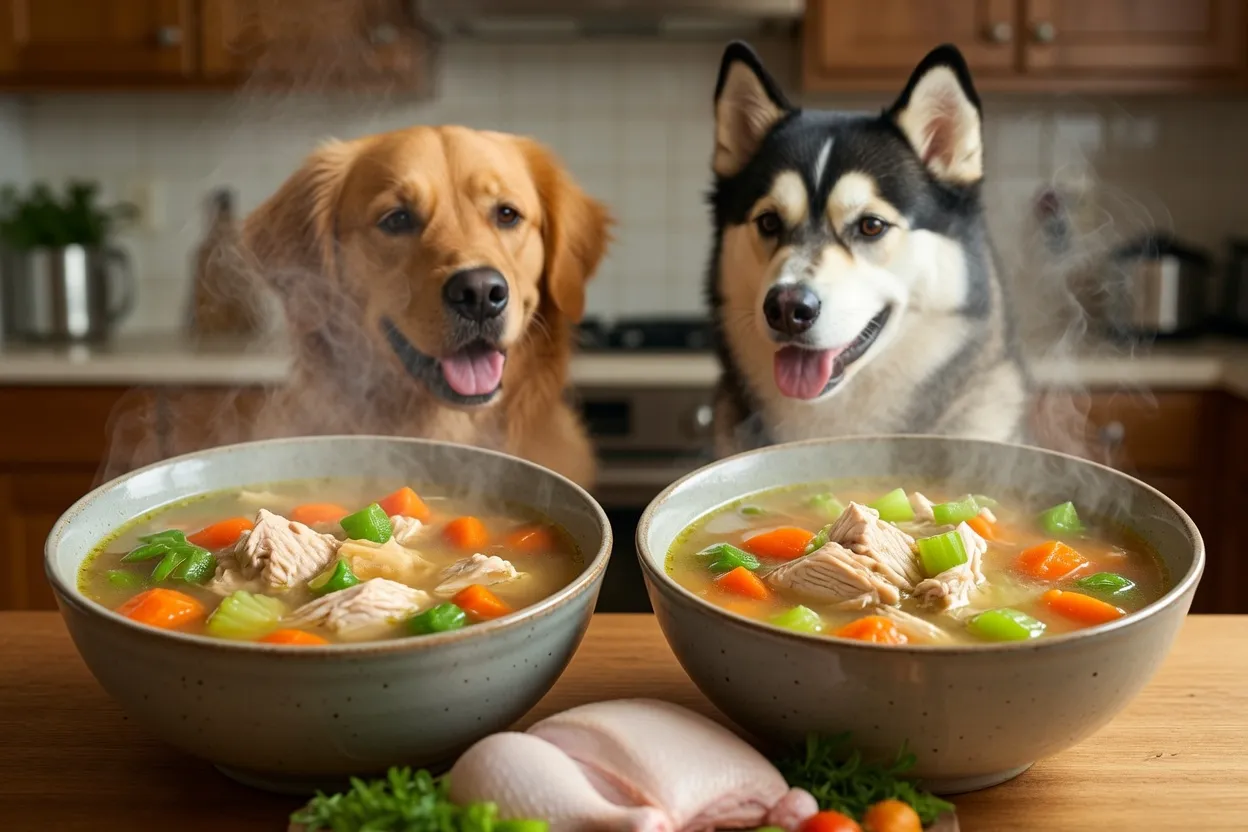
Chicken Soup for Dogs Easy Recipes and Health Tips
When your furry friend greets you with a wagging tail, it’s a special moment. It shows they love you unconditionally. Making homemade meals is a great way to show your love and care for their health.

Nutrient-dense ingredients make your pet’s meals more than just food. They provide the best nutrition. Learning to make Chicken Soup for Dogs is a simple way to improve their health.
This guide will help you learn about cooking for your dog. It doesn’t matter if you’re new or experienced. Making Chicken Soup for Dogs at home is a rewarding experience. Let’s start this journey to better your pet’s health together.
Understanding the Nutritional Benefits of Homemade Dog Food
Many pet owners are choosing fresh, home-cooked meals for their dogs. Making homemade dog food lets you pick the best ingredients. This can make your dog’s coat shiny, improve digestion, and boost energy.
Why Chicken Soup is Excellent for Canine Hydration
Drinking enough water is key for dogs, but many don’t drink enough. A warm chicken soup can help them drink more. The broth’s water helps keep your dog hydrated, which is crucial in summer or after exercise.
If your dog is hard to get to drink, the smell of chicken soup will help. This makes sure they stay hydrated without needing to be reminded. Staying hydrated is good for their kidneys and joints, keeping them healthy.
Essential Nutrients Your Dog Needs in a Bowl
Making a balanced meal is more than just adding protein. It’s about mixing vitamins and minerals too. When you focus on canine nutrition, you help your dog live a long, healthy life. Every meal should be made with care to meet your dog’s needs.
To make sure your homemade dog food is complete, add these important things:
- High-quality proteins like chicken breast for muscle maintenance.
- Healthy fats such as fish oil to support skin and coat health.
- Fiber-rich vegetables like carrots or green beans for digestive regularity.
- Essential vitamins found in leafy greens to boost the immune system.
Knowing these nutritional basics is a big step in improving your dog’s health. Providing a balanced diet is the best thing you can do for your loyal friend.
Safety First: Ingredients to Avoid in Your Dog’s Soup
When cooking for your dog, safety is key. Homemade meals are great, but watch what you add. Follow dog diet tips to keep your pet healthy and happy.

Toxic Foods That Must Never Enter the Pot
Some kitchen items are extremely dangerous for dogs. Don’t add these to your soup. They can harm your dog’s health:
- Onions, garlic, and chives: They can damage your dog’s red blood cells and lead to anemia.
- Grapes and raisins: Even small amounts may cause sudden kidney failure.
- Xylitol: This artificial sweetener, often found in peanut butter or sugar-free products, is highly toxic and can cause a life-threatening drop in blood sugar.
- Macadamia nuts: These are known to cause weakness, tremors, and overheating in dogs.
Safe Vegetables and Herbs for Canine Consumption
After removing dangerous items, focus on safe ingredients. These are key for dog diet tips.
Safe additions to your soup include:
- Carrots: Great for a satisfying crunch and full of beta-carotene.
- Green beans: Low in calories, rich in fiber, and dogs love them.
- Parsley: A small amount of fresh parsley can help freshen your dog’s breath.
- Basil: This herb is safe and adds a nice aromatic touch to your homemade broth.
Always wash your vegetables before cooking. Using these safe ingredients makes your pet’s meal delicious and nourishing every time.
Preparing Your Kitchen for Homemade Chicken Soup for Dogs
Getting your kitchen ready is key for making safe and healthy homemade chicken soup for dogs. Start by clearing your counters and cleaning all surfaces. This makes sure your kitchen is clean and ready for cooking.
When making healthy meals for dogs, you need to pay close attention. It’s important to follow food safety rules.
Selecting High-Quality Protein Sources
The quality of your ingredients is crucial for a great recipe. Choose organic or antibiotic-free chicken for the best nutrition. High-quality protein is important because it helps keep your dog’s muscles strong and healthy.
Make sure the chicken looks fresh before cooking. Don’t use meat that’s discolored or smells bad. Using top-quality chicken means your healthy meals for dogs will be full of nutrients.
Proper Storage and Food Safety Practices
After cooking your homemade chicken soup for dogs, how you store it is just as important. Bacteria can grow fast if food sits out too long. Cool the soup quickly and put it in airtight containers within two hours.
Here are some tips for keeping your soup fresh:
- Keep portions in the fridge for up to three days.
- Freeze extra batches in freezer-safe bags.
- Write the date on every container to keep track of freshness.
- Thaw frozen soup in the fridge, not on the counter.
Keeping up with strict hygiene habits stops cross-contamination. This keeps your kitchen safe. Proper storage means every bowl stays fresh and tasty.
Step-by-Step Guide to Making Basic Chicken Soup for Dogs
Making a healthy meal at home shows your dog love. When you make Chicken Soup for Dogs, you pick the best ingredients. This means your pet gets only the best, healthiest food.
Gathering Your Ingredients and Equipment
Start by clearing your space and getting your tools ready. You’ll need a big stockpot, a sharp knife, and a cutting board. Keeping things clean is essential for safety.
Choose fresh, boneless, skinless chicken breasts and safe veggies like carrots or green beans. Using top-quality ingredients makes your homemade chicken soup for dogs both healthy and tasty.

Boiling and Shredding the Chicken Safely
Put the chicken in your pot and cover it with water. Make sure the water covers the meat. Then, bring it to a gentle boil and lower the heat to simmer until it’s cooked.
After the meat is tender, take it out and let it cool on a clean plate. Use two forks to shred the chicken into small pieces. These are easy for your dog to chew and digest.
Combining Vegetables and Broth for Maximum Flavor
Put the shredded meat back in the broth with your chopped veggies. Let it simmer until the veggies are soft. This helps keep nutrients and flavor in.
Let the soup cool down before giving it to your pet. Serving Chicken Soup for Dogs at room temperature is safest. It makes sure your furry friend gets a comforting and healthy meal.
Advanced Dog-Friendly Soup Recipes for Picky Eaters
If your dog doesn’t like regular meals, it’s time to get creative. Even picky pets can enjoy new tastes and textures. These dog-friendly soup recipes make mealtime exciting for them.

Adding Healthy Grains Like Brown Rice or Quinoa
Grains add bulk and energy to your dog’s diet. Brown rice and quinoa are good because they’re easy on the stomach. They also have lots of fiber, keeping your dog full and happy.
Here are some tips for using these dog meal ideas:
- Always cook grains until they’re soft and easy to digest.
- Mix the grains into the warm broth to soak up the flavors.
- Start with small amounts to see if your dog likes the new texture.
- Don’t add salt or seasonings to the grain mix.
Incorporating Superfoods for Immune Support
Adding superfoods to your dog’s meals boosts their health. These foods have antioxidants that help their immune system. By changing up the superfoods, you keep the meals interesting and nutritious.
Here are some superfoods to try in your soup:
- Blueberries: They’re full of antioxidants for healthy cells.
- Kale or Spinach: Chopped greens add vitamins and minerals.
- Chia Seeds: They’re rich in omega-3s for a shiny coat.
- Pumpkin Puree: It’s good for digestion and adds creaminess.
Using these dog meal ideas ensures your pet gets a balanced diet. Start with one new ingredient at a time to see how they react. With these simple steps, you can make a simple meal into a gourmet feast your dog will love.
Managing Portion Sizes and Feeding Schedules
Keeping your dog at a healthy weight starts with knowing their caloric needs. Proper portion control is essential to prevent obesity. It ensures your pet stays active throughout their life. When you explore new dog meal ideas, always remember that consistency is key to a balanced diet.
Calculating Daily Caloric Needs for Your Breed
Every dog is unique, and their energy needs vary. You must consider your dog’s breed, age, and activity level. A high-energy working breed needs more calories than a senior dog who loves to lounge.
Consulting with your vet is the best way to find out how much to feed your dog. They can help you figure out the exact calories needed for an ideal body condition. Once you know this, you can adjust your portions to keep your dog healthy and happy.
How Often to Serve Homemade Soup as a Meal Topper
Deciding how to add your homemade creations to your dog’s diet is fun. You can use your chicken soup as a tasty meal topper. It encourages picky eaters and adds hydration. It’s important to make sure these additions don’t exceed ten percent of your dog’s daily calories.
If you want to use your soup as a complete meal, it must be nutritionally balanced. Most owners find it safest to use these recipes as a topper. This way, you can manage your dog’s weight while giving them a tasty treat.
Addressing Common Canine Health Issues with Diet
Seeing your pet’s food as medicine makes caring for them easier. The right food can be a therapeutic tool for your pet’s health. Simple dog diet tips can greatly improve your pet’s daily life.
Soothing Upset Stomachs with Bland Chicken Broth
When your dog has a tummy upset, they need a gentle fix. A simple, homemade chicken broth can calm an upset stomach. It’s easy to digest and keeps your dog hydrated.
Make sure the broth has no onions, garlic, or too much salt. Serving it warm can help your dog feel better fast. It’s a highly effective way to keep them hydrated and help them eat again.
Supporting Senior Dogs with Joint-Friendly Ingredients
As your dog gets older, their joints need extra care. Adding natural, anti-inflammatory ingredients to their food can help. Turmeric or a little ginger can significantly relieve joint pain.
These ingredients help your senior dog stay comfortable and mobile. Focusing on joint-friendly nutrition is a key dog diet tip for their long-term health. It helps your loyal friend live a better life for years.
Transitioning Your Dog to Homemade Meals
Starting your dog on homemade meals is a big step. It’s important to do it slowly. Their stomach needs time to get used to the new homemade dog food.
A gradual change helps avoid upsetting their stomach. This makes the transition smoother for them.
Avoiding Digestive Upset During Diet Changes
Start with a seven- to ten-day transition period. Begin by mixing 25% of their old kibble with your new recipe. If they do well, slowly add more fresh food and less kibble.
By the second week, they should be fully adjusted. Consistency is key to keep their gut healthy. If they seem uncomfortable, slow down the transition.
Monitoring Your Dog’s Reaction to New Ingredients
Watch how your dog feels as you introduce homemade dog food. Look for changes in their stool. Loose stools mean the transition is too fast.
Also, check their energy and coat. If they itch, have red spots, or seem tired, it might be an ingredient issue. Tracking these reactions helps find the best diet for them.
Expert Tips for Enhancing Canine Nutrition
Improving your pet’s health can be done by mixing homemade meals with top-notch kibble. It’s not about replacing their whole diet with fresh food. Many owners succeed by adding fresh food as a nutritious topper or part of their meal.
Balancing Homemade Meals with Commercial Kibble
When adding fresh food, make sure the diet stays balanced. Kibble is made to meet nutritional standards, so it’s a solid base for your dog’s meals. If you replace too much kibble with fresh food, you might miss out on important nutrients.
A good rule is to keep fresh food at 10% to 20% of your dog’s daily calories. This way, you get the benefits of fresh foods while keeping the complete nutritional profile of kibble. Always watch your dog’s weight and energy to make sure the balance is right for them.
When to Consult Your Veterinarian About Diet
Getting expert advice is key for your dog’s nutrition. Before changing their diet, talk to your vet. They can check if your homemade additions fit your dog’s health history and current needs.
Your vet can also tell you if your dog needs special supplements. Proactive communication helps ensure your efforts support your dog’s health. Remember, your vet is your best ally in the world of canine nutrition and health.
Conclusion
Preparing meals for your dog strengthens your bond. You know how to pick the best proteins and veggies for them. Every meal you make shows you care about their health.
Good nutrition is key for your dog’s happiness at any age. You know exactly what they eat. Making small changes can make a big difference in their energy and joy.
Try a new recipe this weekend to improve your dog’s diet. See how they like the fresh flavors. Your effort to use quality ingredients will make them healthier and happier.


