
Guinea Pig Care Guide: Everything You Need to Know
Getting a small, squeaky friend is a moment full of pure joy. You want your new friend to feel safe, loved, and at home from the start.
Getting ready is key to a happy life. By following a detailed guinea pig care guide, you can handle the early days with confidence.

Knowing the basics early can prevent common mistakes. This guide is your main resource for all care questions and daily tasks.
We’ll cover important guinea pig care tips to help your pet do well in its new home. With the right info, you can create a strong bond. This bond will bring joy to you and your furry friend for many years.
Setting Up the Perfect Habitat
A good home is key for happy, healthy guinea pigs. They need lots of room to play and explore.
Follow guinea pig care tips to keep them safe and active. A well-thought-out space lets them run and jump like they do in the wild.
Choosing the Right Cage Size
Guinea pigs need lots of space to stay fit. A pair should have at least 7.5 to 10 square feet.
Don’t get small cages from pet stores. More space means less boredom and keeps them healthy.
Selecting Safe Bedding Materials
The cage floor must be soft and absorbent. Choose dust-free options to keep their lungs safe.
Paper or kiln-dried aspen shavings are great. But stay away from cedar or pine, as they can harm your pets.
Essential Habitat Accessories
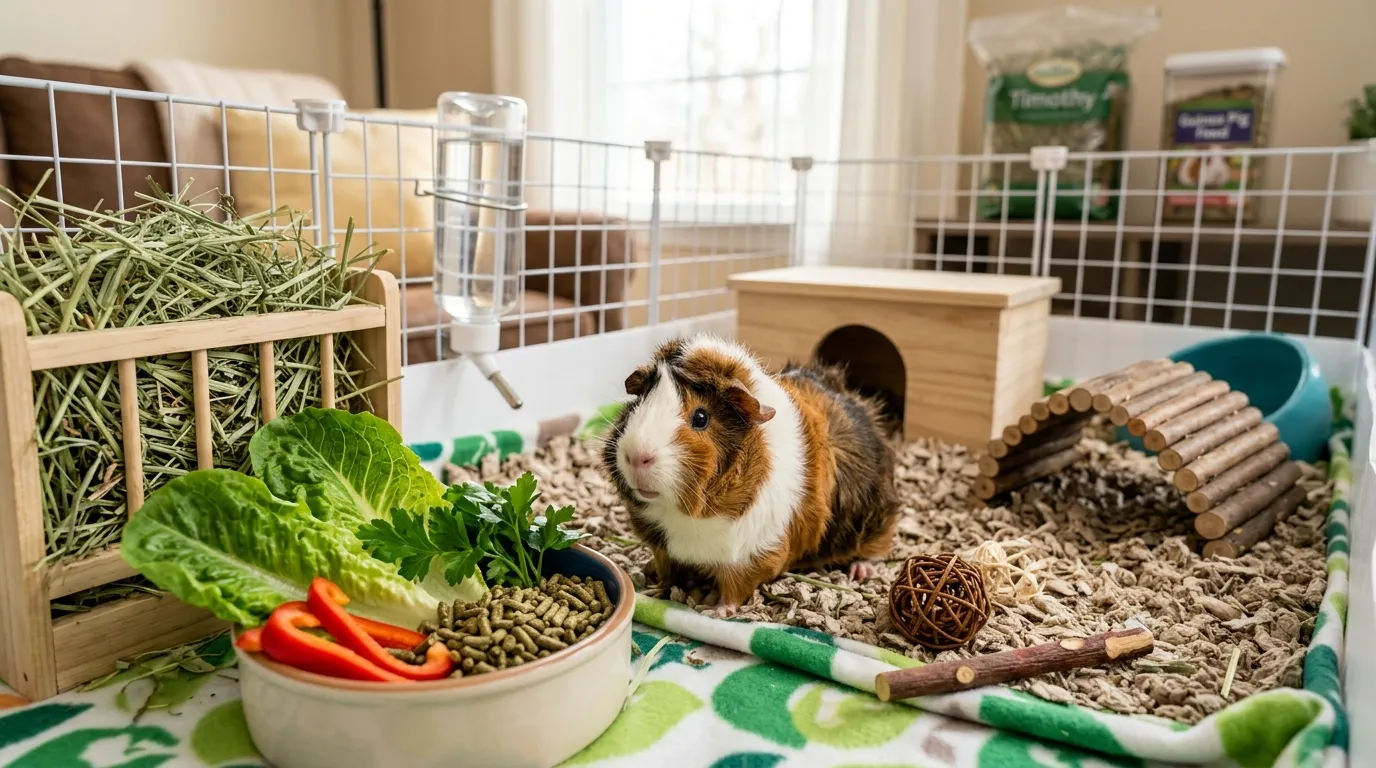
Your guinea pig habitat setup needs things for safety and fun. Every cage should have a cozy hideout for shy times.
Also, add a strong hay rack to keep food clean. And make sure there’s a reliable water bottle for fresh water. This is important for their guinea pig care tips.
Providing a Proper Diet for Guinea Pigs
Feeding your guinea pig right is more than just food from the store. It’s the key to a long, healthy life. Their home setup is important, but what they eat matters more for their health.
The Importance of Unlimited Timothy Hay
Timothy hay is crucial for your pet’s health. It keeps their digestive system working well. Make sure they always have fresh hay.
Hay also helps their teeth. Since their teeth grow all the time, chewing hay stops them from getting too long. Good hay should be most of what they eat.
Fresh Vegetables and Vitamin C Requirements
Guinea pigs need Vitamin C, which they can’t make themselves. You must give it to them with fresh veggies every day. Bell peppers, kale, and parsley are great choices.
Always wash veggies well before giving them to your pet. Try different veggies to find what they like best. This ensures they get all the nutrients they need.
Pellets and Water Maintenance
Pellets are a good supplement to hay and veggies. Choose plain, guinea pig-specific pellets. Avoid ones with seeds or colors, as they’re not as healthy.
Don’t forget about fresh water. Check their water bottle every day. Keeping them hydrated is simple but very important for their health and happiness.
Mastering Grooming and Hygiene
Grooming is key for guinea pigs’ health, not just looks. A proper diet for guinea pigs keeps them healthy inside. But, grooming keeps them safe from skin problems and comfy. It also helps you bond and watch for health changes.
Brushing Techniques for Different Coat Types
How often and what tools you use depends on your guinea pig’s coat. Short-haired ones need a soft brush weekly to clean up. Long-haired ones need daily brushing to avoid painful hair tangles.
- Use a small, soft brush for short-haired breeds.
- Utilize a metal comb for long-haired varieties to reach the undercoat.
- Always brush in the direction of hair growth to keep your pet calm.
- Check for hidden skin irritations or parasites during every session.
Safe Nail Trimming Procedures
Long nails can hurt and make it hard for indoor pets to move. Trim your guinea pig’s nails every four to six weeks. Safety is the top priority when doing this at home.
- Hold your pet securely in a towel to keep them calm.
- Identify the “quick,” which is the pink blood vessel inside the nail.
- Clip only the clear tip of the nail to avoid hitting the sensitive quick.
- Keep styptic powder nearby just in case you accidentally cause minor bleeding.
Bathing Guidelines and When to Avoid It
Many owners are surprised to learn that frequent baths are usually unnecessary. Guinea pigs are naturally clean and groom themselves. Too much bathing can dry out their skin and cause irritation.
Only bathe if your pet is dirty or has a medical need. Use a shallow basin with warm water and a mild, small-animal-safe shampoo. Dry them well with a soft towel to avoid getting cold.
Understanding Guinea Pig Behavior and Socialization
To really connect with your pet, you need to learn their language. Watching guinea pig behavior lets you see the world from their point of view. They share their feelings with you through sounds and body language.
Interpreting Common Vocalizations
Your pet uses sounds to tell you what they want. A loud, high-pitched wheek means they’re excited for food or treats. It’s their way of saying they’re happy to see you.
A low, vibrating purr can mean different things. If they’re relaxed, they’re happy and comfortable. But if they’re stiff or vibrating hard, they might be upset or scared.
Building Trust Through Gentle Handling
Building a bond takes patience and calmness. Always move slowly to avoid scaring them, as they are naturally scared animals. Doing grooming for guinea pigs helps build trust and keeps their coat healthy.
When picking them up, make sure to support their whole body. This makes them feel safe. Consistency is key. Over time, they’ll see your touch as safe and loving.
The Necessity of Social Companionship
Guinea pigs need friends because they are herd animals. They do best with a buddy to play with and sleep next to. Keeping one alone can make them lonely and stressed.
In the wild, they rely on their group for safety and comfort. Having a friend keeps them active and happy. Social companionship is essential for their well-being and happiness.
Monitoring Guinea Pig Health
Guinea pigs hide signs of illness until they’re very sick. Being proactive helps keep your pet healthy. Catching small problems early stops big emergencies.
Identifying Signs of Common Guinea Pig Illnesses
Spotting common guinea pig illnesses early is key. Look for breathing issues like wheezing. Also, watch for changes in eating habits, like weight loss or drooling.
Notice if your pet seems tired, has crusty eyes, or has different stool. If they’re quiet or not moving, they might be sick. Early action is best for these sensitive animals.
Routine Wellness Checks at Home
Regular home checks keep your guinea pig healthy. Weigh them weekly with a digital scale. A big weight drop means trouble.
Check their coat for bald spots or bugs. Look at their eyes, ears, and nose for dirt. These checks help your pet feel safe and trust you more.
Finding an Exotic Animal Veterinarian
Not all vets know how to care for small rodents. You need a exotic animal veterinarian. They know how to handle guinea pigs’ special needs.
Ask shelters or pet owners for vet suggestions. Make sure the vet knows about common guinea pig illnesses. Having a vet you trust gives you peace of mind.
Following This Guinea Pig Care Guide: Everything You Need to Know
Being consistent is key to a happy pet and success. A structured routine makes daily tasks easier and supports your guinea pig’s health. This guinea pig care guide helps build habits for a long, healthy life.
Creating a Daily Care Routine
Start with simple, daily tasks at the same time. Fresh hay, water checks, and vitamin-rich veggies are important. Spot cleaning the cage daily keeps it clean and comfy.
Make time for socializing. Gentle petting or quiet watching builds trust and security. A regular schedule reduces stress and boosts well-being.
Weekly Deep Cleaning Schedules
Deep cleaning once a week is crucial for a clean habitat. Remove bedding and disinfect the cage base. This keeps it fresh and prevents bacteria.
Check cage accessories for wear or damage. Replace them to keep your pet safe and comfy. A clean environment is vital for guinea pig health.
Long-Term Commitment and Enrichment
Being a pet owner means patience and dedication. Seeing it as a long-term commitment helps provide ongoing enrichment. Safe toys like wooden chews or tunnels are great for mental stimulation.
Give daily floor time in a safe area for exercise. This guinea pig care guide covers everything to keep your pet active and happy. Variety in their environment prevents boredom and strengthens your bond.
Conclusion
Good care for your guinea pig means giving them the right food, a clean home, and lots of social time. Your hard work helps them live a long, happy life.
Watching for changes in your guinea pig’s behavior helps you understand them better. They talk to you in their own way with sounds and body language. By noticing these signs, you get closer to them every day.
It’s also important to watch out for illnesses in guinea pigs. Catching problems early can make a big difference. Keeping an eye on your pet’s health keeps them happy and active for a long time.
You’re now ready to be an amazing owner. The time you spend with your pet creates a strong friendship filled with happiness. Enjoy every moment with your furry friend.


