
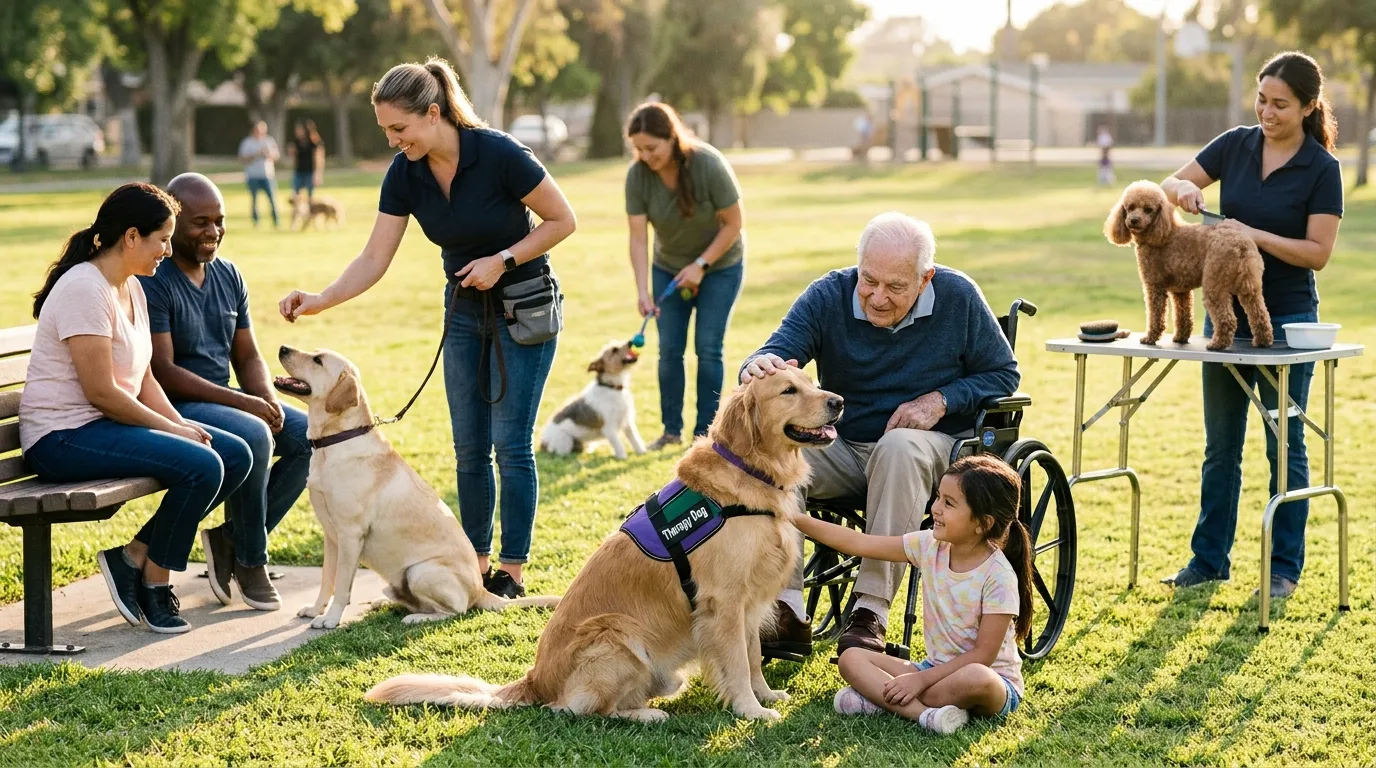
10 Therapy Dog Training Tips for a Happy, Healthy Pet
Have you ever looked into your companion’s eyes and felt a deep bond? Many dream of sharing that comfort with others who need it. Starting service work is a profoundly rewarding journey that strengthens your bond with your pet.
But success needs more than love; it needs careful preparation. By following these 10 therapy dog training tips, your pet stays happy and strong. They help those in need. Proper training creates a safe space for your pet to grow emotionally and physically.

Setting clear expectations early builds trust. This guide gives you the therapy dog training tips you need. Let’s see how to prepare your loyal companion for a life of service and joy.
Building a Strong Foundation for Therapy Work
Getting your pet ready for therapy dog work is key. Before starting training, make sure your pet is ready for the challenges ahead. A good therapy dog is confident, calm, and reliable in public.
Understanding the Role of a Therapy Dog
A therapy dog is not the same as a service animal or emotional support animal. Therapy dogs are social ambassadors. They give comfort and affection to many people in public places.
Your dog needs to be okay with strangers in places like hospitals or schools. A good therapy dog is friendly, relaxed, and loves people. They also handle surprises well.
The Importance of Temperament Testing
Temperament testing is a must for therapy dog hopefuls. It checks if your dog has the natural patience and emotional stability needed. Not every dog is right for this job, and that’s okay.
Experts look for certain behaviors during these tests. They make sure the dog and people are safe. They check how the dog reacts to strangers, loud noises, and being touched by others.
By doing these tests, you make sure your training is based on a realistic and safe evaluation of your dog. This helps you and the people you help have a great experience.
10 Therapy Dog Training Tips for Success
These 10 therapy dog training tips will help you build a strong, supportive partnership with your canine. Preparing your pet for volunteer work is a rewarding journey. It requires patience, consistency, and a clear plan. By following these steps, you can ensure your dog remains focused and responsive in any environment.
Focus on Positive Reinforcement Techniques
The best therapy dog training techniques rely on rewards rather than punishment. Using positive reinforcement therapy dog training builds a deep sense of trust. When your dog associates training with treats and praise, they become eager to learn and perform.
Mastering Essential Therapy Dog Commands
Reliable therapy dog commands are the backbone of safe volunteer visits. Teach your dog to respond instantly to cues like “sit,” “stay,” “down,” and “leave it.” These commands ensure your dog remains under control even when they are excited to meet new people.
Prioritizing Consistent Daily Practice
Short, frequent training sessions are far more effective than long, sporadic ones. Consistency helps your dog retain new skills and reinforces good habits. Make it a goal to practice your therapy dog training tips for at least ten minutes every single day.
Developing Calm Behavior in Distracting Environments
Therapy dogs often work in busy hospitals or schools filled with unexpected noises. Practice in various locations to help your dog stay relaxed. These therapy dog behavior tips focus on keeping your pet grounded regardless of the surrounding chaos.
Teaching Gentle Interaction Skills
A therapy dog must learn to interact softly with patients of all ages. Teach your dog to accept petting calmly without jumping or mouthing. Gentle handling is a vital skill that ensures every interaction remains safe and pleasant for everyone involved.
Building Confidence Through Exposure
Exposing your dog to new sights, sounds, and surfaces helps them become a well-rounded companion. A confident dog is less likely to become startled or stressed during a visit. Take your time introducing new experiences to ensure your dog feels secure.
Practicing Impulse Control Exercises
Impulse control is essential for preventing unwanted behaviors like chasing or grabbing items. Use games that require your dog to wait for a release command before eating or playing. This builds the self-discipline needed for professional therapy work.
Establishing Clear Communication Cues
Your dog looks to you for guidance during every session. Use consistent hand signals and verbal cues to communicate your expectations clearly. When your dog understands exactly what you want, they feel more relaxed and confident in their role.
Managing Energy Levels During Sessions
Even the most well-trained dog can get tired or overstimulated. Monitor your dog’s body language to identify signs of fatigue or stress early. Knowing when to take a break is a key part of responsible therapy dog training tips.
Ensuring Regular Rest and Recovery
Volunteer work is mentally demanding for your canine partner. Always provide plenty of downtime and quiet space after a session. Proper rest allows your dog to recharge, ensuring they remain happy and healthy for their next visit.
Advanced Socialization Strategies
Effective therapy dog socialization training makes your pet a confident friend anywhere. Therapy dogs visit places like hospitals and schools. They must stay calm in new places.
Getting your dog ready for these situations helps them feel calm. This way, they can comfort others.
Exposing Your Dog to Diverse Equipment and Surfaces
Your dog will meet many textures and objects. It’s key to introduce them slowly. This builds their resilience.
Practice walking on different surfaces. This includes slippery floors and uneven paths. It helps your dog feel steady.
- Introduce metal ramps and stairs to build confidence.
- Expose your dog to loud, sudden noises in a controlled setting.
- Practice walking near moving objects like carts or automatic doors.
- Use positive reinforcement to reward calm behavior around new items.
Interacting Safely with Different Age Groups
A good therapy dog adapts to all ages. Kids are full of energy, while older folks move slower. Training helps your dog be gentle and patient with everyone.
Always watch over your dog during these interactions. If they seem unsure, give them space. Reward them for staying calm. This strengthens your bond.
Maintaining Composure Around Medical Devices
Medical settings have lots of strange equipment. Things like wheelchairs can startle dogs. Introduce these items at home to help your dog get used to them.
Begin by placing a wheelchair in a room and rewarding your dog for ignoring it. Then, move the device while your dog stays still. These therapy dog socialization training steps make your dog a reliable comfort for others.
Mastering Therapy Dog Obedience Training
Every therapy dog team needs reliable obedience. When you’re in a busy place, your dog must listen right away. This keeps everyone safe and comfortable.
Spending time on therapy dog obedience training makes your dog feel safe and sure. It creates a stable environment for them.
Refining Reliable Recall and Stay Commands
A strong recall is key for safety. You need to call your dog back quickly, no matter what’s happening. Start practicing these essential skills in quiet spots first.
The “stay” command is also crucial. It helps keep order during visits. Here are some tips for success:
- Start with short times and slowly increase.
- Practice at different distances to build reliability.
- Use a consistent word to end the command.
- Give calm behavior high-value treats or praise.
Heeling Properly in Crowded Spaces
Walking in crowded places needs your dog to stay close and not pull. This stops them from hitting things or getting caught up with people. You want them to watch you, not the surroundings.

Practice walking in different ways, like figure-eights or sharp turns. This keeps your dog focused on you. Learning these therapy dog commands ensures your pet stays with you.
Ignoring Food and Distractions on the Floor
Public areas often have dropped food or interesting things. Teaching your dog to “leave it” is important. This stops them from looking for food when you’re busy helping others.
Start by placing a low-value item on the floor and rewarding your dog for looking at you. Then, use more tempting items as you get better. Regular practice with these therapy dog commands keeps your dog professional and focused.
Navigating Therapy Dog Training Classes and Certification
After your dog learns the basics, finding the right path for certification is key. Professional help ensures you and your pet are ready for volunteer work. Investing time in the right program is the most important step you can take.
Finding Reputable Therapy Dog Training Near Me
When looking for therapy dog training near me, find instructors who focus on service or therapy. A good trainer uses positive methods and knows what therapy animals need. Look for therapy dog training classes at local kennel clubs or through groups like the AKC.
Ask trainers about their success and how they socialize dogs. A good trainer will share their methods and show you how they handle distractions. Trust your instincts when picking a mentor who fits your goals.
Preparing for the Official Certification Evaluation
The evaluation tests your dog’s calm in different places. Practice commands in public to make sure your dog listens, even when it’s busy. Consistent practice is crucial for passing the test.
Evaluators look for a strong bond between you and your dog. Focus on clear communication and staying calm during practice. Remember that your dog looks to you for cues on how to react to new people.
Understanding Organizational Requirements and Standards
Each national registry has its own rules for therapy dog training certification. Check the specific standards of the organization you choose before the evaluation. These groups have strict rules about health, age, and behavior.
Knowing these rules early saves time and stress. Most organizations need proof of vaccinations and a clean health record from your vet. Staying organized with your paperwork makes the final steps easier.
Maintaining Your Pet’s Physical and Emotional Health
Keeping your dog healthy is key to your volunteer journey. Their success depends on supporting their physical and emotional needs. This is crucial for every session.
When your pet feels truly supported, they stay happy and reliable. Their health is what keeps them enjoying their work for years.
Monitoring Stress Signals During Volunteer Work
Dogs, even seasoned ones, can get tired or anxious in busy places. It’s important to know your dog well. Using therapy dog behavior tips helps spot when they need a break.
Look for signs like lip licking, yawning, or turning away from people. These are quiet hints they need space or a rest.
If you see these signs, it’s time for a break. Respecting your dog’s boundaries builds trust. It also prevents burnout, keeping their volunteer work positive.
Providing Proper Nutrition and Veterinary Care
A healthy body means a calm mind. A good diet gives your dog the energy to do their job well.
Regular vet visits are also crucial. They help catch health issues early. Keeping up with vaccinations and exams keeps your dog in peak physical condition for their work.
Being observant and proactive helps apply these therapy dog behavior tips. A healthy, happy dog is the heart of every successful therapy visit.
Conclusion
Training a therapy dog creates a special bond that changes lives in your community. This journey needs patience and a strong commitment to your pet’s emotional health.
You have the key tools to help your dog succeed. Every practice session builds trust between you and your dog. This trust is the base for all positive moments you share with others.
Groups like the Alliance of Therapy Dogs offer great help for those ready to start. Contact local chapters to see how your trained pet can bring comfort to hospitals, schools, or nursing homes.
Your hard work brings happiness to people in tough times. Keep showing your dog kindness and support. The good you do will be felt far beyond any place you visit.
Begin your journey today by setting small, reachable goals for your next training session. Your future as a therapy dog team starts with choosing to make a difference.


