
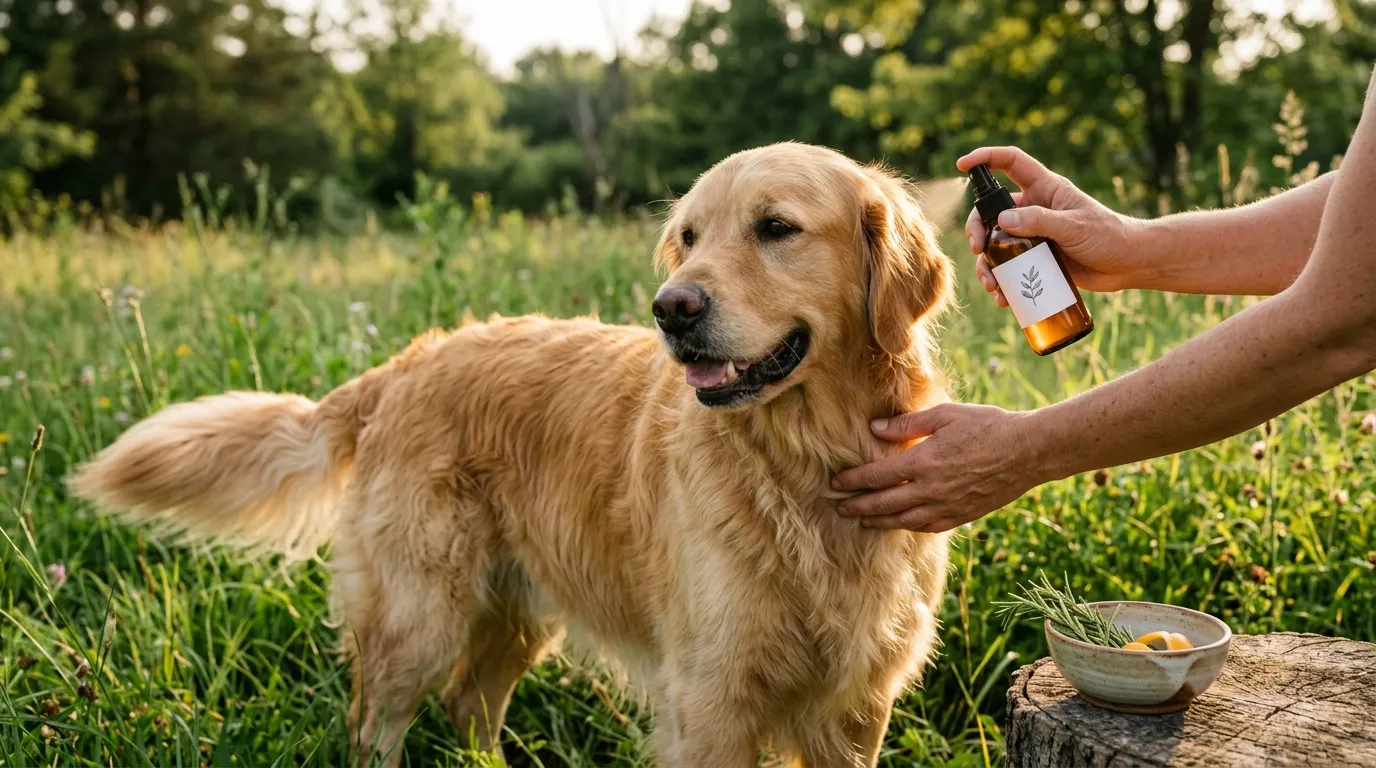
Easy Homemade Tick Remedy for Dogs to Keep Them Safe
Nothing beats a sunny day outdoors with your dog. You love their wagging tails and the joy in their eyes. They explore new trails with you.
But you worry about dangers in the grass. Keeping your dog safe from pests is very important. It’s key to having many happy years together.

Choosing natural ways to keep your dog healthy is reassuring. Making a homemade tick remedy is easy. It helps keep ticks away.
With gentle, effective ingredients, you protect your dog’s health. This small act of love is very important. It makes a big difference in your daily life. Let’s find out how to keep your dog safe and happy all year.
Understanding the Risks of Ticks for Your Dog
Keeping your dog safe from ticks is key. These tiny pests can carry serious illnesses that harm your pet’s life. Using a ticks on dogs home remedy is a good way to fight them off.
Common Tick-Borne Diseases in the United States
Ticks spread many dangerous diseases in the U.S. Lyme disease causes pain, fever, and tiredness in dogs. Rocky Mountain spotted fever is another big risk, leading to serious problems if not treated fast.
It’s important to catch and prevent tick problems early. Using natural tick prevention for dogs keeps your pet safe. Knowing about these diseases helps you spot symptoms early.
Identifying High-Risk Areas in Your Yard and Neighborhood
Ticks love certain places like tall grasses, woods, and damp leaf piles. These spots are perfect for ticks to hide and wait for a host.
Even neat lawns can have ticks if they’re near wild areas. Always check your pet after they play outside. Using a ticks on dogs home remedy adds extra protection.
Being proactive is the best way to protect your pet. Using natural tick prevention for dogs lets them enjoy the outdoors safely. Keep your yard clean to reduce tick risks.
Essential Ingredients for a Homemade Tick Remedy for Dogs
Choosing the right essential oils for tick prevention in dogs is key for a safe outdoor time. Making a homemade tick remedy for dogs lets you control what touches your pet. It’s important to pick quality and safety to keep your dog healthy and happy.
Selecting Safe Essential Oils for Canines
Not all plant extracts are safe for pets. You must be careful. Look for high-quality, therapeutic-grade oils to avoid skin problems or bad reactions. Dilution is key when using these strong natural substances.
Why Rose Geranium and Cedarwood are Effective
Rose geranium and cedarwood are known for their tick-repelling properties. These oils have compounds that ticks don’t like, hiding your dog’s scent. Cedarwood oil is great because it stops ticks without harming most dogs.
Carrier Oils and Bases for Your Spray
You can’t put concentrated oils on your pet because they’re too strong. A carrier base spreads the active ingredients evenly. Using a homemade tick spray for dogs requires a good base for safety and effectiveness.
Benefits of Using Apple Cider Vinegar or Distilled Water
Many pet owners like using apple cider vinegar or distilled water as the base. These ingredients are good for your dog’s skin:
- Apple cider vinegar balances the skin’s pH, making it less appealing to pests.
- Distilled water keeps the repellent strong by avoiding impurities.
- These bases are non-toxic and don’t leave a greasy feel.
- They mix well with essential oils, keeping them suspended.
Step-by-Step Guide to Creating Your DIY Tick Repellent
You can make a safe, effective shield for your dog in your kitchen. Making a diy tick repellent for pets is rewarding. It lets you control what touches your pet’s coat.
Gathering Your Supplies and Equipment
First, make sure you have everything ready on a clean surface. You’ll need a high-quality glass spray bottle. Plastic can react with essential oils.
Also, have a small funnel and measuring spoons ready. Precision is key for natural extracts to keep your pet safe.
Mixing Your Natural Tick Prevention Solution
Start by pouring carrier oil into the glass bottle with the funnel. Add essential oils drop by drop, following your recipe.
After mixing, fill the bottle with distilled water. Close it tightly and shake well. This makes your homemade tick spray for dogs ready to use.
Measuring Ratios for Small vs Large Breeds
When mixing, safety is key. Smaller dogs need a stronger dilution than larger ones.
For toy or small breeds, use one to two drops of essential oil per cup of carrier liquid. Larger dogs can handle a bit more, but start conservative to avoid irritation.
Proper Storage to Maintain Potency
To keep your natural tick prevention for dogs strong, store it in a cool, dark place. Sunlight and heat can weaken essential oils.
Always mark your bottle with the date you made it. If it smells bad or changes color, throw it away. Make a new batch for your pet.
Proper Application Techniques for Maximum Protection
Learning how to apply your homemade solution is key to keeping your pet safe outside. The ingredients are important, but how you apply them matters a lot. Consistency is truly the key to keeping ticks away.
How to Apply the Spray Safely
Start by lightly misting your dog’s coat while brushing in the opposite direction. This gets the solution to the skin where ticks hide. Make sure the coat is damp but not wet to avoid discomfort.
Avoiding Sensitive Areas Like Eyes and Ears
Be very careful around your dog’s face. Never spray directly at the head to avoid eye, nose, and mouth irritation.
- Apply the spray to a clean cloth or your hands first.
- Gently wipe the product onto the outer ear flaps and around the neck.
- Avoid the inner ear canal to prevent moisture buildup.
- Use a soft brush to distribute the scent around the muzzle area safely.
Frequency of Application During Peak Tick Season
In spring and summer, ticks are most active. Reapply your diy tick repellent for pets before going outside. For dogs that spend a lot of time outside, apply every two to three days to keep the scent strong.
Combining Sprays with a Homemade Tick Collar for Dogs
For dogs that love long hikes, one layer of protection might not be enough. Many owners use a spray and a homemade tick collar for dogs together. The collar keeps the neck and shoulders safe, while the spray covers the rest of the body.
This two-step approach keeps your pet safe in high-risk areas. By using both methods, you create a strong shield for your pet all year round.
Safe Tick Removal and Post-Bite Care
Even with the best prevention, you might find a tick on your pet. Knowing how to handle it is key to ticks on dogs at home. Staying calm helps keep your pet relaxed.
Tools Needed for Effective Tick Removal
Before starting, get the right tools for a clean and quick process. Having everything ready helps avoid delays while your dog is still.
- Fine-tipped tweezers or a specialized tick removal tool.
- Rubbing alcohol or an antiseptic wipe for the bite site.
- Disposable gloves to protect your own skin.
- A small container with a lid to dispose of the tick.
Step-by-Step Removal Process to Prevent Infection
Removing a tick from your dog needs patience and care. Avoid squeezing the tick’s body to prevent bacteria from entering your dog’s blood.
- Put on your gloves and part your dog’s fur to expose the tick clearly.
- Use the tweezers to grasp the tick as close to the skin as possible, right at the head.
- Pull upward with steady, even pressure without twisting or jerking.
- Once removed, clean the bite area thoroughly with an antiseptic wipe or soap and water.
Never use petroleum jelly, nail polish, or heat to remove the tick. These methods are not effective and can increase the risk of infection by causing the tick to regurgitate fluids.
Monitoring Your Dog for Symptoms After a Bite
After removing the tick, watch the bite site for a few days. It’s normal to see a small bump or slight redness, but it should fade quickly.
Look for signs of illness like lethargy, loss of appetite, or limping. If you see these symptoms or if the bite site becomes severely inflamed, call your vet right away. Early detection is crucial to keep your pet healthy and happy.
Conclusion
Keeping your dog safe from pests is all about being aware and caring consistently. You now know how to make plant-based solutions to protect your dog from ticks. These simple steps help keep your pet safe on every outdoor trip.
Success in keeping ticks away naturally depends on your effort to check and apply these solutions regularly. Using top-quality ingredients keeps your dog comfortable and safe from harmful chemicals. You can keep your pet healthy all year round.
Always watch for any changes in your dog’s behavior or skin after they’ve been in tall grass or woods. Your hard work greatly improves their health over time. Share your homemade remedies with others to help keep dogs safe and happy everywhere.


