
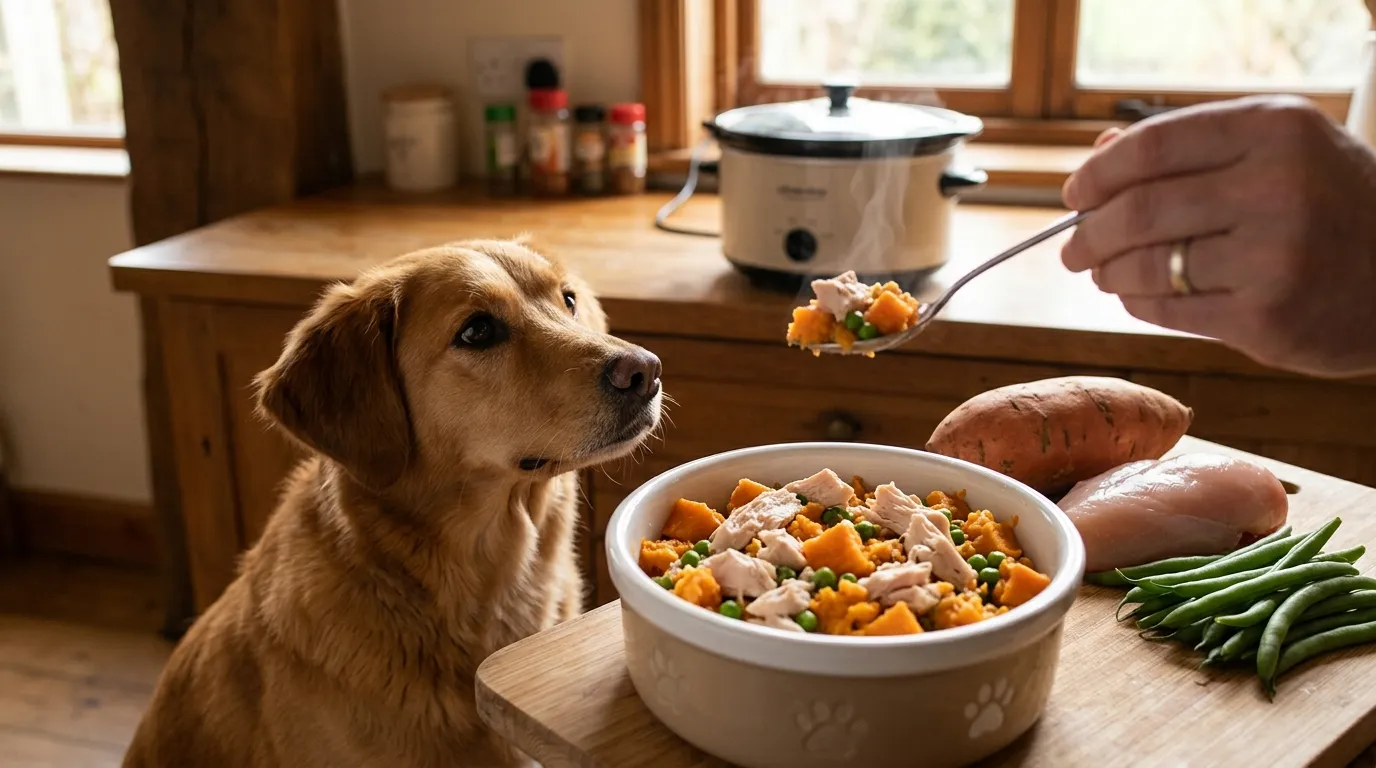
How to Make Chicken Sweet Potato Non-Prescription DIY Dog Food
There’s nothing like the bond with your loyal friend. You want to give them the best, with every meal full of love and good nutrition. Many pet owners are choosing homemade food for their pets’ health.

Making a homemade meal shows you care. Use chicken and sweet potato for a balanced meal. This way, you avoid bad stuff in store-bought food.
Going the non-prescription route is rewarding for your pet’s health. This recipe is a natural way to keep your pet healthy every day. Cooking for your pet is easy and makes you both happy.
Understanding the Benefits of Homemade Dog Nutrition
Many pet owners are finding out how fresh, whole foods help their dogs. Switching from processed kibble lets you control what your pet eats every day. Choosing homemade dog food means your pet gets good nutrients without bad stuff.
Why Choose Natural Ingredients Over Commercial Options
Switching to natural dog food can really help your pet. Owners often see a noticeable shine in their dog’s coat and more energy. Plus, fresh foods are easier for dogs to digest, leading to better health.
Commercial foods often lose important nutrients in processing. Making meals at home means your dog gets all the good stuff from whole foods. This simple change can make your dog feel better and more comfortable.
The Role of Chicken and Sweet Potato in Canine Health
Chicken and sweet potatoes are key in a good dog food. Chicken is a great source of lean protein, helping muscles and tissues stay strong. It gives dogs the amino acids they need to stay active.
Sweet potatoes are full of complex carbs and fiber. They give sustained energy all day, unlike bad fillers. Together, chicken and sweet potatoes make a balanced diet that supports your dog’s health.
Essential Ingredients for Your Chicken Sweet Potato Non-Prescription DIY Dog Food
Choosing the right ingredients is key to a great dog food recipe. Making food at home lets you control what your dog eats. Fresh, whole foods give your pet the best nutrition without bad stuff.
Selecting High-Quality Protein Sources
Protein is important for your dog’s muscles and energy. Use lean chicken cuts like breasts or thighs to keep fat low. This way, you avoid bad stuff in regular dog food.
- Choose organic or pasture-raised chicken.
- Make sure the meat has no added sodium or marinades.
- Take out all bones to avoid choking.
Choosing the Right Sweet Potatoes and Vegetables
Sweet potatoes are full of fiber and vitamins for your pet. Pick organic sweet potatoes to avoid pesticides. Fresh veggies add important nutrients for a strong immune system.
Here’s how to prepare your veggies:
- Wash them well under cold water.
- Peel the skin if needed.
- Steam or boil until soft to mash.
Safe Cooking Oils and Fats for Dogs
Healthy fats are good for your dog’s brain and skin. The right oils in your dog food recipe can make their coat shiny and boost energy. Look for oils with omega-3 and omega-6 fatty acids.
Try adding these fats:
- Fish oil: Good for heart health and reducing inflammation.
- Coconut oil: Soothes skin and has antimicrobial properties.
- Flaxseed oil: A plant-based option for healthy skin.
Start with small amounts of new fats to help your dog’s stomach adjust. By picking each ingredient carefully, you make a meal that really helps your pet stay healthy.
Safety Guidelines and Nutritional Balance
Preparing homemade meals for your dog is more than just using fresh ingredients. It’s about safety and balance. Every pet has special health needs that must be met before changing their diet. Following strict guidelines helps your furry friend do well on their new diet.
Consulting with Your Veterinarian Before Changing Diets
Always talk to your local vet before starting. A vet-approved dog food plan is best for your pet’s health. Your vet will check if your recipe is right for your dog’s age, breed, and how active they are.
Foods to Avoid When Preparing Homemade Meals
Some human foods are bad or even toxic for dogs. You must avoid these to keep your dog safe. Check your pantry for these:
- Onions and garlic in any form
- Xylitol, often found in peanut butter
- Grapes and raisins
- Chocolate or caffeine
- Macadamia nuts
Understanding Macronutrient Ratios for Dogs
A balanced meal needs the right mix of protein, fats, and carbs. Even cooked meals need careful planning to avoid missing nutrients. Protein is key for muscle health.
Healthy fats give your dog energy for play and thinking. Carbs, like sweet potatoes, add fiber and vitamins. By keeping these precise ratios, you give your pet a complete, vet-approved diet.
Step-by-Step Preparation of the Chicken and Sweet Potato Base
Making your own dog food recipe at home is rewarding. It lets you ensure your pet gets the best nutrition. This simple guide will help you make a healthy base for your dog.
Preparing and Cooking the Chicken Safely
Choose high-quality chicken breasts or thighs. Make sure to remove all skin and excess fat. Safety is your top priority, so cook the meat to 165°F to kill harmful pathogens. You can boil it in water or bake it without seasonings or oils.
Let the chicken cool completely before handling. Then, shred it into small pieces. This makes it easy for your dog to chew and digest. Your dog food recipe will be safe and tasty for your furry friend.
Boiling and Mashing Sweet Potatoes
Sweet potatoes are great for dogs because they’re full of fiber and vitamins. Peel and cut the potatoes into cubes for even cooking. Boil them until they’re tender, which takes about 15 to 20 minutes.
Drain the water and mash the potatoes with a fork or potato masher. Proper mashing helps your dog absorb nutrients better. If it’s too thick, add a bit of cooking water to get the right texture.
Combining Ingredients for a Balanced Texture
Now, mix the shredded chicken with the mashed sweet potatoes. Fold them together until the mixture is even. This makes a nutritionally consistent base for your homemade dog food.
Make sure the mix is cool before serving it to your pet. This consistent texture ensures your dog enjoys every meal and gets the balanced diet they need. Consistency is truly the key to a successful homemade feeding routine.
Incorporating Healthy Additives and Supplements
Making healthy dog food is more than just chicken and potatoes. These basics give energy and protein but lack many nutrients. Adding special additives ensures your dog gets all the nutrients they need every day.
Adding Leafy Greens for Fiber and Vitamins
Spinach, kale, or collard greens are great for your dog’s food. They’re full of essential vitamins and fiber for good digestion. Steam or lightly cook these greens to help your dog digest them better.
Adding a bit of finely chopped greens is a nutritional boost. It helps fill the gaps in your dog’s diet. This ensures they get the antioxidants they need for health.
The Importance of Calcium and Mineral Supplements
One big mistake in homemade diets is forgetting calcium. Chicken and sweet potatoes don’t have much of it. So, you need a good calcium supplement for strong bones. Calcium is key for muscles and bones.
Talking to your vet is the best way to find out how much supplement your dog needs. Don’t guess, as the right balance is crucial. A balanced supplement keeps your pet safe from nutritional problems.
Natural Flavor Enhancers Dogs Love
If your dog is picky, try natural flavor enhancers. A little nutritional yeast or bone broth can make a big difference. These not only taste good but also add B vitamins and minerals.
Stay away from commercial seasonings and salt, as they’re bad for pets. Use dog-safe herbs like parsley or a bit of turmeric for flavor. These natural ingredients make meals tasty and healthy, something your dog will look forward to.
Proper Portioning and Storage Techniques
After making your homemade pet food, it’s important to keep it fresh and right-sized. This helps avoid obesity and keeps your pet at a healthy weight. Serving the same amount every time is key to a healthy life for your dog.
Calculating Daily Caloric Needs for Your Dog
Every dog needs different amounts of food based on their age and how active they are. Talk to your vet to find out how many calories your dog needs each day. Watching your dog’s body condition helps you know if you need to change their food amount.
Dogs that are very active need more food than older, less active dogs. Always use a kitchen scale to measure food. This way, your dog gets the right mix of nutrients in every meal.
Safe Refrigeration and Freezing Methods
Storing your homemade pet food right is key to keeping it safe from bad bacteria. You can keep it in the fridge for up to three days in airtight containers. Freezing is best for longer storage to keep it fresh.
Freeze the food in single servings. This makes it easy to thaw only what you need for a meal. Remember to label the containers with the date so you know how long it’s been stored.
Reheating Homemade Meals Without Losing Nutrients
When it’s time to eat, you want the meal to be tasty and full of nutrients. Don’t use high heat, as it can ruin the vitamins and minerals in your homemade pet food. Instead, warm it gently by adding a bit of warm water or letting it sit at room temperature for a few minutes.
If you must use a microwave, use a low setting and stir well to avoid hot spots. Always check the temperature with your finger to make sure it’s not too hot for your dog. A warm, tasty meal will make your dog excited for mealtime.
Transitioning Your Dog to a Homemade Diet
Switching to homemade dog food is exciting. But, it needs a slow, steady start. Your dog’s stomach is used to its old food, so sudden changes can upset it. A careful approach helps your dog get used to new, healthy meals.
The Gradual Mixing Method
The best way to introduce new food is a gradual mixing schedule over seven to ten days. Start by mixing 25% of the new food with the old on the first few days. If your dog does well, slowly add more new food and less old food.
By the end of the second week, your dog should eat only the new homemade dog food. This slow change lets their gut get used to the new food without stress. Consistency is key during this time to make the transition smooth.
Monitoring Your Dog for Digestive Changes
Watch your dog closely during the transition. Look for signs like loose stools, gas, or less appetite. These signs mean you might need to slow down the change.
Notice their energy levels too. A healthy dog should be playful and alert while eating new homemade dog food. If problems persist, talk to your vet to make sure the food agrees with your pet.
When to Adjust the Recipe Based on Weight and Energy
Every dog is different and their needs can change. If your dog’s weight changes, you might need to adjust the food’s portion sizes. A small change in calories can help keep their weight right.
Watch if your dog seems tired or sluggish. They might need more energy-rich food. Regular vet visits will help you adjust the recipe to keep your dog happy and healthy.
Conclusion
Controlling your pet’s diet is key to a happy life. Making fresh chicken and sweet potato meals lets you know what they eat. This way, you build a strong bond and give them the best food.
Being consistent is crucial when feeding homemade meals. Always talk to your vet to make sure the food is right for your pet. They can give you tips on how to adjust the food as your dog grows or changes.
Keeping your dog safe and healthy is important. Use fresh ingredients and store food properly to avoid problems. Small changes can make a big difference in their energy and coat.
Keep learning about how to keep your pet healthy. Knowing the latest dog nutrition tips helps you be a better advocate for them. Your effort to choose quality food makes a big difference in their life.


