
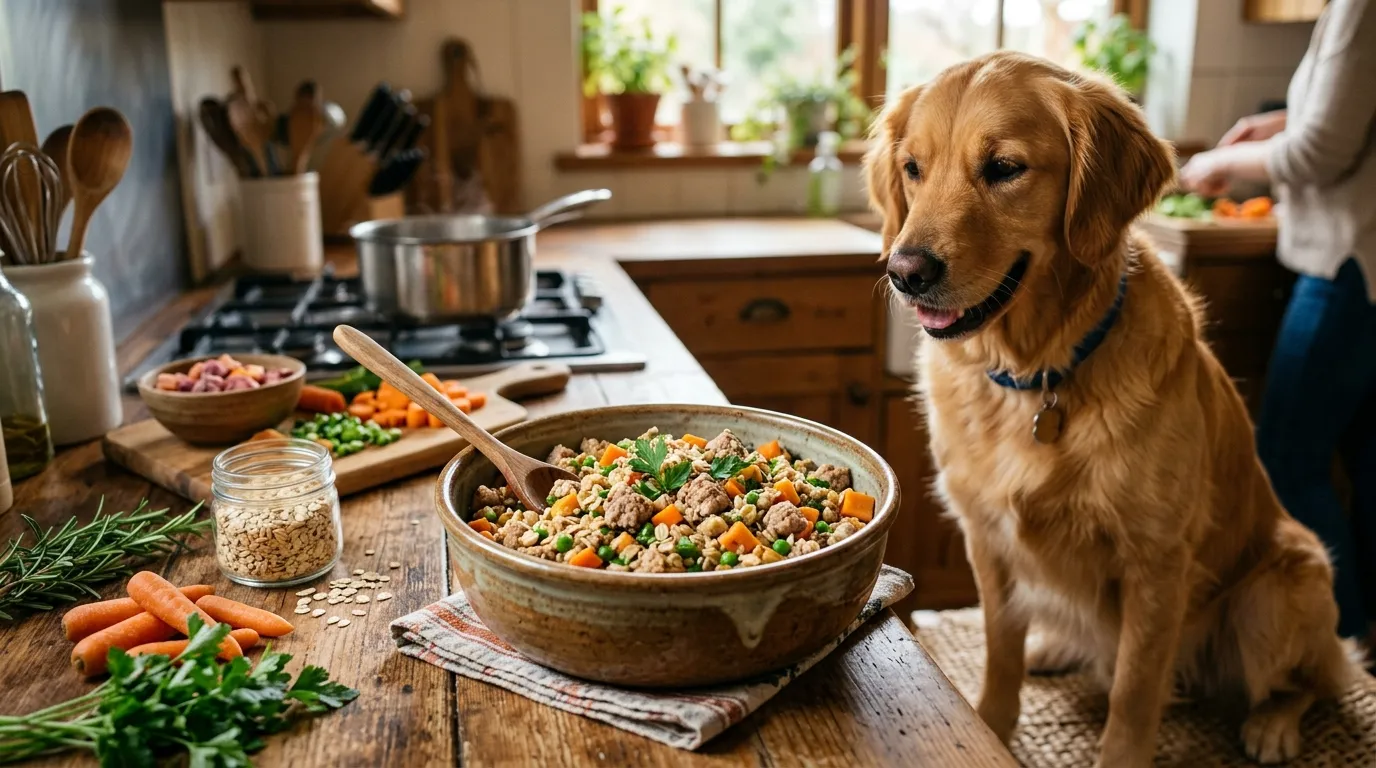
Homemade Turkey Oatmeal Dog Food Recipe for Healthy Pets
We all see our furry friends as part of the family. Seeing them thrive fills our hearts with joy every day. You want the best for your loyal friend, including their daily food.
Choosing homemade turkey oatmeal dog food lets you control every ingredient. Making meals at home means your pet gets only the best nutrients. This simple, healthy dog food recipe keeps your pet away from bad fillers and helps them stay full of energy.

Controlling what goes into their bowl shows you care. Using wholesome ingredients helps your pet stay healthy for a long time. Let’s see how simple it is to make a meal that keeps your dog happy and strong.
The Nutritional Benefits of Turkey and Oats for Dogs
When you make diy dog food, you control what your pet eats. Choosing the right ingredients is key for your dog’s health and happiness. Lean proteins and whole grains are the best for a happy dog.
Why Turkey is a Lean Protein Choice
Turkey is a great protein source for dogs. It’s low in fat and high in quality. This helps dogs stay healthy and strong.
Turkey is easy for dogs to digest. It’s better than heavy meats. It gives dogs the protein they need without extra calories. It’s a key part of diy dog food.
The Digestive Advantages of Oatmeal
Oatmeal is a super ingredient for dogs. It’s full of soluble fiber, which helps with blood sugar and digestion. Homemade dog food with oats is gentle on the stomach.
Oats give dogs energy slowly. This keeps them full and happy. Adding oats to your dog’s diet helps their gut health and keeps them feeling great.
Essential Ingredients and Safety Precautions
When you make food for your dog, you need to watch out for safety and quality. Switching to natural dog food means giving your pet good food and avoiding bad stuff. This way, every meal helps your dog stay healthy for a long time.
Selecting High-Quality Natural Ingredients
The key to a good organic dog food recipe is using the right ingredients. Use fresh, safe proteins and whole grains for the best nutrition. Organic foods help avoid bad chemicals.
When you buy food, look for labels that show it’s good quality. Whole foods have more vitamins and minerals than processed foods. Choosing natural ingredients makes a diet that really helps your dog’s health.
Ingredients to Avoid in Homemade Dog Food
Not everything in your kitchen is safe for dogs. Some foods that are okay for people can hurt dogs. It’s very important to know which foods to avoid.
Toxic Foods for Canines
Some foods are very bad for dogs and can even be deadly. Keep these foods away from your cooking:
- Onions, garlic, and chives, which can damage red blood cells.
- Grapes and raisins, known to cause sudden kidney failure.
- Chocolate and caffeine, which contain stimulants dangerous to canine hearts.
- Xylitol, an artificial sweetener often found in peanut butter and sugar-free snacks.
Common Additives to Steer Clear Of
Also, avoid processed additives that don’t add any good to your dog’s food. Many fillers can cause allergies or upset stomachs. Stick to simple, known ingredients in your organic dog food recipe. Avoid artificial colors, too much salt, and chemical preservatives like BHA and BHT. Your dog will do better without these bad things.
Homemade Turkey Oatmeal Dog Food Preparation
Efficient meal prep is key to a consistent diy dog food routine. Organize your workspace first to save time and ensure safety. These small steps help you focus on making healthy meals for your pet.
Gathering Your Kitchen Equipment
Before cooking, make sure you have the right tools. Having everything ready reduces stress. You’ll need a few basic items for your homemade turkey oatmeal dog food:
- A large stockpot for boiling or simmering ingredients.
- A sharp chef’s knife for precise vegetable preparation.
- A sturdy cutting board that is easy to sanitize.
- Measuring cups and a digital kitchen scale for accuracy.
- A large mixing spoon or spatula for combining ingredients.
Preparing Your Turkey and Vegetables
The quality of your ingredients is crucial. Always rinse fresh vegetables under cool water first. This step is vital for your diy dog food.
Proper Cleaning and Chopping Techniques
When chopping vegetables, aim for uniform sizes. Smaller pieces are easier for dogs to digest. Always remove stems, seeds, or tough skins that are hard for your pet to chew.
Measuring Ratios for a Balanced Meal
Precision is key for a healthy diet. Use a digital scale to measure your homemade turkey oatmeal dog food accurately. Follow your recipe ratios to ensure your dog gets the right nutrients in every serving.
Step-by-Step Cooking Instructions
Making a vet-approved dog food recipe at home is easy. Just follow these steps. You’ll make homemade dog food with oats that’s safe and nutritious for your pet.
Cooking the Turkey Base
First, put ground turkey in a big, non-stick skillet on medium heat. Cook it until it’s fully browned and no pink is left. Don’t add oils or seasonings that might upset your dog’s stomach.
After the turkey is browned, drain the fat. Keep only the lean protein for a heart-healthy, easy-to-digest meal.
Preparing the Oatmeal and Vegetable Blend
While the turkey cools, boil your oats in water until they’re soft and fluffy. Steam your chopped veggies until they’re tender but still colorful and full of essential nutrients.
Cook the grains and veggies separately. This keeps each ingredient perfect, making the meal more appealing to your pet.
Combining and Cooling the Mixture
Mix the cooked turkey with the oatmeal and veggie blend in a big bowl. Stir until everything is well mixed, for a consistent texture.
Let the mix cool completely to room temperature before serving it to your dog. This step prevents burns and makes sure the food is comfortable for your pet to eat.
Adding Essential Supplements and Vitamins
To finish your vet-approved dog food recipe, add vitamins and mineral supplements after it cools. This keeps the nutrients strong and effective.
By following these steps, your homemade dog food with oats will meet all AAFCO nutritional standards. This careful method gives your dog a balanced diet for long-term health and energy.
Storage and Serving Guidelines
Keeping your homemade pet food fresh is key. It keeps every meal as good as the first day. When you make a organic dog food recipe, storing it right is crucial for your pet’s health.
Proper Refrigeration and Freezing Techniques
Cool meals fast before refrigerating. Store them in airtight containers for up to three days. Make sure the seals are tight to stop moisture loss and bacteria.
Freezing is great for longer storage. Use freezer-safe bags or containers for individual servings. This way, you can thaw only what you need, keeping your organic dog food recipe fresh for weeks.
Determining Daily Portion Sizes
Finding the right food amount is key for your dog’s weight. Use your pet’s age, weight, and activity level to guide you. Ask your vet for a starting point for calories.
Check your dog’s weight often. If they’re gaining or losing, adjust the food amount. Being consistent is important for a healthy diet at home.
Transitioning Your Dog to a New Diet
Changing diets should be done slowly. Mix the new food with their old diet over seven to ten days. This helps avoid stomach problems and helps your pet get used to the organic dog food recipe.
Look for signs of upset stomach or less appetite. If your dog seems uncomfortable, slow down the change. Being patient will help your dog enjoy their new, healthy meals.
Adjusting for Sensitive Stomachs and Allergies
Creating a balanced diet for a dog with food sensitivities is rewarding. Many pets do well on standard recipes, but others need a special approach. Understanding your dog’s unique needs is key to providing the best nutrition at home.
Identifying Common Food Sensitivities
Many pets show signs of digestive issues or skin problems after eating certain foods. Signs include chronic itching, frequent ear infections, or persistent gas. If your pet shows these symptoms, they might need dog food for sensitive stomachs with fewer, better ingredients.
Keep a log of what your dog eats and how they react. This helps you find out what causes their discomfort. By figuring out the culprits, you can choose the right ingredients for their meals.
Customizing the Recipe for Specific Needs
If your dog reacts to certain proteins or grains, you can change the recipe. For example, if turkey is a problem, try a different lean protein. Making homemade dog food for allergies lets you control every ingredient, avoiding irritants.
For a dog with a sensitive stomach, simplify the recipe. Use easier-to-digest foods like sweet potatoes or quinoa. Small, thoughtful adjustments can make a big difference in your dog’s comfort and energy.
Consulting with Your Veterinarian
Before changing your pet’s diet, talk to a vet. They can tell if your dog has a true allergy or just an intolerance. They’ll also help create a vet-approved dog food recipe that’s right for your dog.
Your vet might suggest supplements or blood tests to ensure your homemade meals are balanced. Working with a vet ensures your pet gets the nutrients they need without harm. Professional oversight is crucial for safe and effective meals for your furry friend.
Conclusion
Controlling your dog’s diet is key to a happy life. Making healthy dog food at home lets you know what they eat.
Choosing good ingredients gives you peace of mind. It keeps your dog away from bad fillers in store-bought food.
Your dog needs you to make healthy choices. Small changes can make a big difference in their energy and coat.
Watch how your dog reacts to new foods. Talk to other pet owners to share tips on keeping dogs healthy.
If you have questions, ask your vet. They can help make sure your dog’s meals are safe and balanced.


