
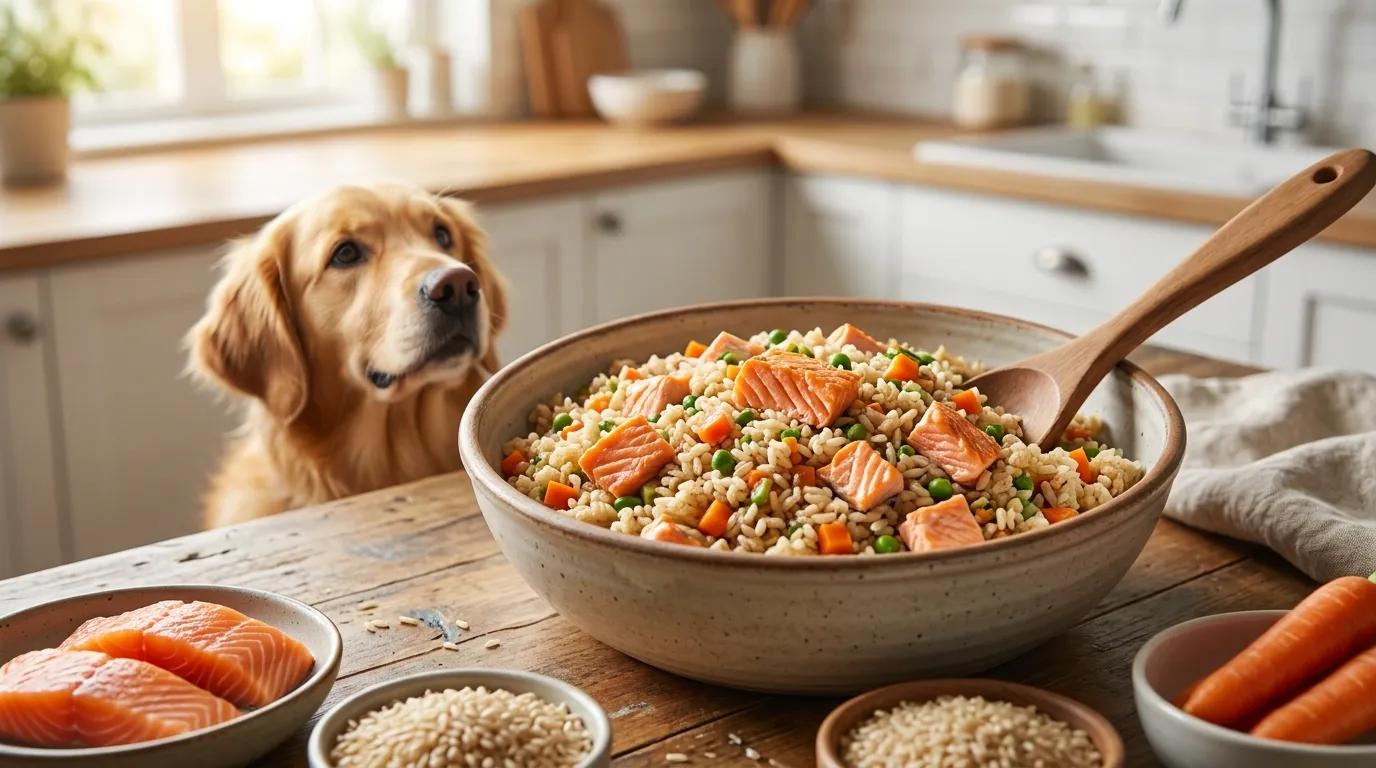
How to Make Easy Salmon Brown Rice Dog Food at Home
We all want the best for our furry friends. They are more than pets; they are family members. They deserve vibrant health and lots of energy.
Preparing meals at home lets you control what your pet eats. Using fresh fish gives them important nutrients. This helps avoid bad additives in kibble.

Making a balanced diet at home shows your love. This nutritious recipe is key for your dog’s health. Taking care of their nutrition means more happy years together. Let’s see how to make a meal your dog will love.
Why Homemade Salmon and Brown Rice is Great for Your Dog
Feeding your dog salmon and brown rice is very good for them. You can control what they eat when you make meals at home. This mix is a nutritious dog food that helps keep your pet healthy.
Health Benefits of Salmon for Canines
Salmon is full of good stuff for dogs. It has omega-3 fatty acids that boost their immune system. These fats also make their skin and coat shiny and less itchy.
Salmon also has lots of protein. This helps keep your dog’s muscles strong. Adding salmon to their food makes them more energetic and healthy.
The Role of Brown Rice in a Balanced Diet
Brown rice is great for dogs. It’s a gentle source of complex carbohydrates that gives energy slowly. This keeps your dog’s energy steady all day.
Brown rice is also easy to digest and full of fiber. It helps your dog’s digestive system work well. With salmon, it makes a tasty and nutritious dog food that meets all their needs.
Essential Ingredients and Safety Precautions
Creating a safe kitchen for your dog is key. It’s about using healthy ingredients for dogs in every meal. Your dog relies on you to make choices that keep them healthy and full of energy.
Selecting High-Quality Salmon
Always pick fresh, human-grade salmon for your pet. This avoids harmful parasites or bacteria. Buy fillets from trusted places to ensure quality.
Preparing Brown Rice Safely
Brown rice is great for fiber, but it needs careful cooking. Cook it until it’s very soft. Never add salt, butter, or oils to the water, as they can upset your dog’s stomach.
Ingredients to Avoid in Homemade Dog Food
Not all kitchen items are safe for dogs. Some common foods can be dangerous or even deadly. Knowing these risks is crucial when choosing ingredients for your dog’s meals.
Common Toxic Foods for Dogs
Keep certain foods out of your kitchen to keep your dog safe. These foods are highly toxic and should never be in your homemade meals:
- Onions and shallots
- Garlic and chives
- Grapes and raisins
- Macadamia nuts
- Chocolate or caffeine
By avoiding these harmful foods, you make a secure and healthy space for cooking. Always check your ingredients before cooking to keep your dog safe and happy.
Easy Salmon Brown Rice Dog Food Recipe
Making an easy salmon brown rice dog food is easy once you know what your pet needs. Cooking at home lets you control the quality of what your dog eats. This homemade dog food recipe is simple to make and packed with nutrients for your dog.
Measuring Your Portions
It’s important to measure food right to keep your dog at the right weight. You need to figure out how many calories your dog needs each day. Too much food can make your dog fat, and too little can make them tired.
First, talk to your vet to find out how many calories your dog needs. Then, divide that number by how many meals you give your dog. Using a kitchen scale helps you measure the right amount every time.
Recommended Vegetable Additions
Adding healthy ingredients for dogs to their meals is great for their health. Vegetables add fiber, antioxidants, and minerals that a simple protein and grain mix might miss. Make sure to wash and chop any vegetables well before adding them.
Adding Carrots and Spinach for Vitamins
Carrots are full of beta-carotene, which is good for your dog’s eyes and immune system. Steaming them makes them easier to digest. Spinach is also a superfood, packed with iron and vitamins A, C, and K.
Remember, a little bit of spinach and a few carrot slices are enough for most dogs. These greens make a simple meal into a feast full of nutrients that your dog will enjoy.
Optional Supplements for Complete Nutrition
Even with a great homemade dog food recipe, some dogs might need extra help. You could add a dog-specific multivitamin or fish oil for extra Omega-3s. These extras make sure your dog gets all the nutrients they need.
Always check with your vet before adding new supplements to your dog’s diet. They can tell you if your homemade dog food recipe needs extra calcium or minerals. These small steps help keep your dog happy, healthy, and full of energy.
Step-by-Step Preparation Guide
Learning to cook is key to a great homemade dog food recipe. A careful method makes sure each meal is healthy and safe for your pet.
Cooking the Brown Rice
Rinse your brown rice well under cold water. This removes extra starch. Use two parts water to one part rice for soft, digestible grains.
Boil the water, then lower the heat to a simmer. Cover the pot and cook until the water is gone, about forty-five minutes.
Preparing the Salmon Fillets
While the rice cooks, prepare your protein. Poach or bake the salmon until it’s flaky and tender.
Removing Bones and Skin
This step is critically important for your pet’s safety. Inspect the cooked salmon for bones and remove them all to avoid choking or internal damage.
Also, remove the skin. It’s hard for some dogs to digest. Cleaning the fish well makes this homemade dog food recipe safer for your pet.
Combining and Cooling the Ingredients
When the rice and salmon are done, mix them in a big bowl. Fold the salmon into the rice until it’s spread out evenly.
Let the mix cool down completely before serving. Serving hot food can hurt your dog’s mouth and cause discomfort.
Check the temperature with your finger to make sure it’s just warm. This final step makes a perfect homemade dog food recipe your dog will enjoy.
Proper Storage and Serving Suggestions
After making salmon and rice for your dog, it’s important to store it right. Keeping your kitchen creations fresh helps keep your pet healthy. Follow these easy steps to manage your dog-friendly meal ideas with confidence.
Refrigeration Guidelines
Use the fridge for food you’ll eat in a few days. Store it in airtight glass or BPA-free plastic containers. This keeps moisture and flavor in. Try to use it within three days for the best taste.
Freezing Batches for Later Use
Freezing is great for saving time with dog-friendly meal ideas. Portion the food into single servings before freezing. This method prevents waste and keeps meals ready.
- Use freezer-safe bags or small containers for easy stacking.
- Label each container with the date of preparation.
- Thaw frozen portions in the refrigerator overnight before serving.
- Avoid refreezing food that has already been thawed.
How to Transition Your Dog to New Food
Changing your dog’s diet needs patience. A gradual transition is safest. Sudden changes can upset their stomach.
Here’s a simple plan for a smooth change over seven to ten days:
- Days 1-3: Mix 25% homemade food with 75% old food.
- Days 4-6: Serve a 50/50 split of both meals.
- Days 7-9: Offer 75% homemade food and 25% old food.
- Day 10: Serve 100% of your new homemade recipe.
Watch your dog closely during this time. If your pup seems happy and energetic, you’re on the right track.
Ensuring Nutritional Balance and Variety
Making a nutritious dog food plan is a journey. It changes as your pet grows or gets more active. Consistency is key, but adding variety keeps your dog healthy.
Consulting Your Veterinarian
Before changing your dog’s diet, talk to your vet. They check if your homemade food is right for your pet. They help make sure your nutritious dog food stays safe and works well.
At vet visits, discuss important topics. These help your dog stay healthy:
- Current weight and body condition score.
- Any signs of digestive upset or skin sensitivities.
- Adjustments needed for seasonal activity changes.
- Blood work results to monitor nutrient levels.
Rotating Proteins and Grains
Feeding the same food every day can cause problems. Switching proteins and grains adds variety. This keeps your dog’s diet balanced and mealtime exciting.
Variety is the spice of life, for dogs too. New proteins like turkey or white fish prevent allergies. A diverse diet has many benefits:
- Prevents nutrient gaps by offering diverse food sources.
- Reduces the risk of developing specific food intolerances.
- Keeps your dog engaged and interested in their bowl.
- Supports a healthy immune system through varied antioxidants.
Always introduce new foods slowly to avoid upset stomachs. With vet advice and a varied menu, your homemade nutritious dog food will keep your dog happy and healthy.
Conclusion
Making your own pet food is a great way to show your dog you care. Using fresh salmon and brown rice gives them top-notch nutrients. This helps them stay full of energy and healthy all their life.
Keeping your dog safe is key. Always check where your ingredients come from. Talk to your vet to make sure your dog gets the right food. This way, you can try new recipes without worry.
You can now make healthy meals for your dog. Try out different recipes to keep dinner exciting for them. Using quality ingredients is good for your dog’s health. Start making food for your dog today and feel good about what they eat.


