
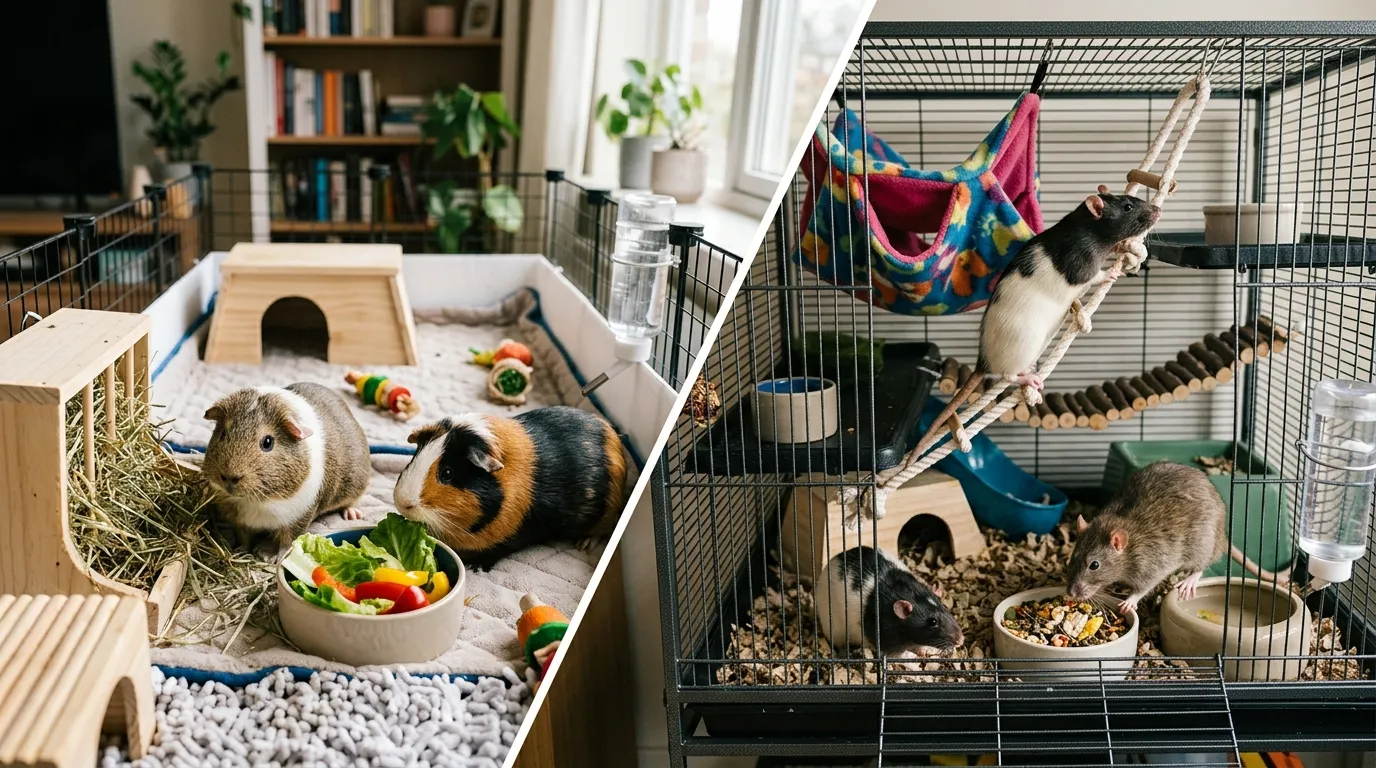
Guinea Pigs vs Rats as Pets: Pros, Cons, and Care Tips
Bringing a small animal into your home is a heartwarming experience. It changes your daily routine for the better. Whether you want a quiet companion or an intelligent friend, the bond is special.
Choosing between guinea pigs vs rats as pets can feel overwhelming. You want the perfect match for your lifestyle. Both species have unique personalities and needs that need careful thought.

We know you want the best for your future companion. This guide looks at the main differences in temperament, housing, and social needs. We aim to make your research easier by exploring these charming small mammals.
Our goal is to make you feel confident and ready to welcome a new family member. Let’s go through the key details together. This way, you’ll find the right fit for your home.
Understanding the Differences Between Guinea Pigs vs Rats as Pets
Starting a comparison guinea pigs vs rats shows they’re very different pets. They have different needs and traits. Knowing these helps you be a good pet parent.
It’s key to know the differences guinea pigs and rats as pets have. Each needs a special kind of care. This ensures a happy home for them.
Temperament and Social Needs
Guinea pigs are gentle but can be skittish. They need patient socialization to feel safe. They like quiet and predictable routines.
Rats, on the other hand, are very smart and curious. They bond deeply with people. They love to learn tricks and interact a lot.
Lifespan and Health Considerations
Think about the time you’ll spend with your pet. Guinea pigs live 5 to 7 years. They need regular vet visits for health issues like vitamin C deficiency and dental problems.
Rats live 2 to 3 years. They can get respiratory infections and tumors. Keeping them healthy is important.
Space Requirements and Activity Levels
These pets need more space than you might think. They get stressed and sick in small cages. They need room to move and play.
Guinea pigs need a big, flat area to roam. Rats love to climb and need vertical spaces. Giving them enough room keeps them active and happy.
Pros and Cons of Keeping Guinea Pigs
Choosing guinea pigs as pets means welcoming a gentle and vocal companion into your daily life. These small animals are known for their endearing personalities and unique ways of communicating with their owners.
Advantages of Guinea Pig Ownership
One of the primary benefits of keeping these animals is their sociable and calm temperament. They often form deep bonds with their human caretakers, providing a sense of comfort and companionship.
Many owners find their vocalizations, such as soft purrs or excited squeaks, to be incredibly charming. Because they are generally docile, they are often considered a great choice for families looking for a manageable pet.
Common Challenges for Guinea Pig Owners
While they are delightful, keeping guinea pigs as pets requires a dedicated approach to their daily care. Owners must be prepared to invest time in maintaining a healthy environment and meeting specific biological needs.
Dietary Needs and Vitamin C Requirements
A critical aspect of their health is nutrition, as these animals cannot synthesize Vitamin C naturally. You must provide a diet rich in fresh vegetables and high-quality pellets fortified with this essential nutrient.
Failure to provide enough Vitamin C can lead to serious health issues like scurvy. Always consult with a veterinarian to ensure your pet receives a balanced and nutritious diet every single day.
Grooming and Maintenance Demands
Proper hygiene is another responsibility that comes with ownership. You will need to perform regular nail trims to prevent discomfort and ensure your pet can move around easily.
- Brush long-haired breeds frequently to prevent painful matting.
- Check ears and eyes for any signs of irritation or debris.
- Maintain a clean cage to prevent respiratory issues.
- Monitor their weight to ensure they stay in good physical condition.
By staying consistent with these grooming tasks, you help your pet live a happy and healthy life. Consistent care is the secret to a long-lasting friendship with your furry friend.
Pros and Cons of Keeping Rats as Pets
Fancy rats are often called pocket dogs. They are smart and can learn tricks. They even know their names and can solve mazes.
Why Rats Make Excellent Companions
Rats are very loving. They love to be close to people and enjoy gentle touch. They are very social and can become part of the family.
- They are highly trainable and can learn simple commands.
- Their grooming habits make them surprisingly clean animals.
- They are quiet, making them ideal for apartment living.
- They exhibit complex problem-solving skills during playtime.
Potential Drawbacks of Owning Rats
There are challenges to owning rats. You need to be ready for their needs. Knowing these helps you and your pet have a good time together.
Short Lifespan and Emotional Impact
Rats don’t live long, usually two to three years. This can be very sad for owners. You must enjoy every moment with them.
The Importance of Social Interaction
Rats need friends to be happy. They get stressed and lonely without others. Always keep them in pairs or groups.
Step-by-Step Guide to Setting Up the Perfect Habitat
Choosing pet guinea pigs or rats means creating a safe and fun home. A good habitat is key for a long, healthy life. Use quality materials and design to make your pet feel safe and happy.
Selecting the Right Cage Size and Material
The cage is your pet’s main home. So, size and air are crucial. Pick cages with solid floors to protect their feet. Use materials like powder-coated metal or plastic that are easy to clean and safe from chewing.
Good air flow is important to avoid breathing problems. Don’t use glass aquariums because they can trap bad air. Instead, choose wire-topped cages for excellent air circulation and safety.
Essential Bedding and Enrichment Items
Choosing the right bedding is as important as the cage. Use paper-based or kiln-dried aspen shavings to keep it clean. Stay away from cedar or pine shavings because they can harm pet guinea pigs or rats.
Adding enrichment items is crucial for a happy pet. Include:
- Hideouts and tunnels for privacy and security.
- Chew toys made of untreated wood to keep teeth healthy.
- Platforms or ramps for exercise.
- Foraging toys that hide treats to mimic natural behaviors.
Safety Tips for Free-Roaming Time
Letting your pet roam free is great for exercise. But first, do a thorough safety check of the room. Remove electrical cords, toxic plants, and small objects that could be swallowed or chewed.
Always watch your pet closely during free time to avoid accidents. If you’re worried, use a portable playpen for a controlled environment. This makes playtime safe and fun for everyone.
Daily Care and Maintenance Routines
Learning how to care for your pets daily is key. It’s important to keep them happy, active, and healthy. This is true for both guinea pigs and rats.
Feeding Schedules and Nutritional Balance
Both need the right mix of food to stay healthy. Guinea pigs love unlimited high-quality hay and veggies rich in vitamin C. Rats, being omnivores, enjoy a mix of lab blocks, lean proteins, and fresh veggies.
It’s crucial to keep their diet consistent. Make sure they always have fresh, clean water. Use heavy ceramic bowls to prevent spills and keep them hydrated.
Cleaning Protocols for a Healthy Environment
Keeping their home clean is vital to avoid health problems. Clean their cage every day to remove waste and old food. This helps keep the air clean.
Do a deep clean once a week. Scrub the cage with safe cleaners and change the bedding. A clean home is essential for both pets.
Monitoring Health and Recognizing Signs of Illness
Small pets hide when they’re not feeling well. So, you must watch them closely. Look for signs like less eating or less activity. If they seem tired or stop grooming, they need immediate vet care.
Regular weigh-ins can spot health issues early. When comparing guinea pigs versus rats, find a vet who knows exotic animals. Being alert to changes helps you care for them better.
Conclusion
Getting a new pet is exciting and comes with big responsibilities. You now know the good and bad of guinea pigs and rats. The right choice depends on your home and what you like.
Consider how much time you have for pets and keeping their homes clean. Guinea pigs are calm, while rats are smart and fun. Choose based on what fits your life best.
Look at your home’s size and how easy it is to care for pets. Whether you prefer a guinea pig’s sounds or a rat’s tricks, both need love. Pick what you can do best to keep them happy.
You’re all set to welcome a new pet into your life. Look for pets at shelters or from good breeders. With the right care, your pet will be happy and healthy.


