
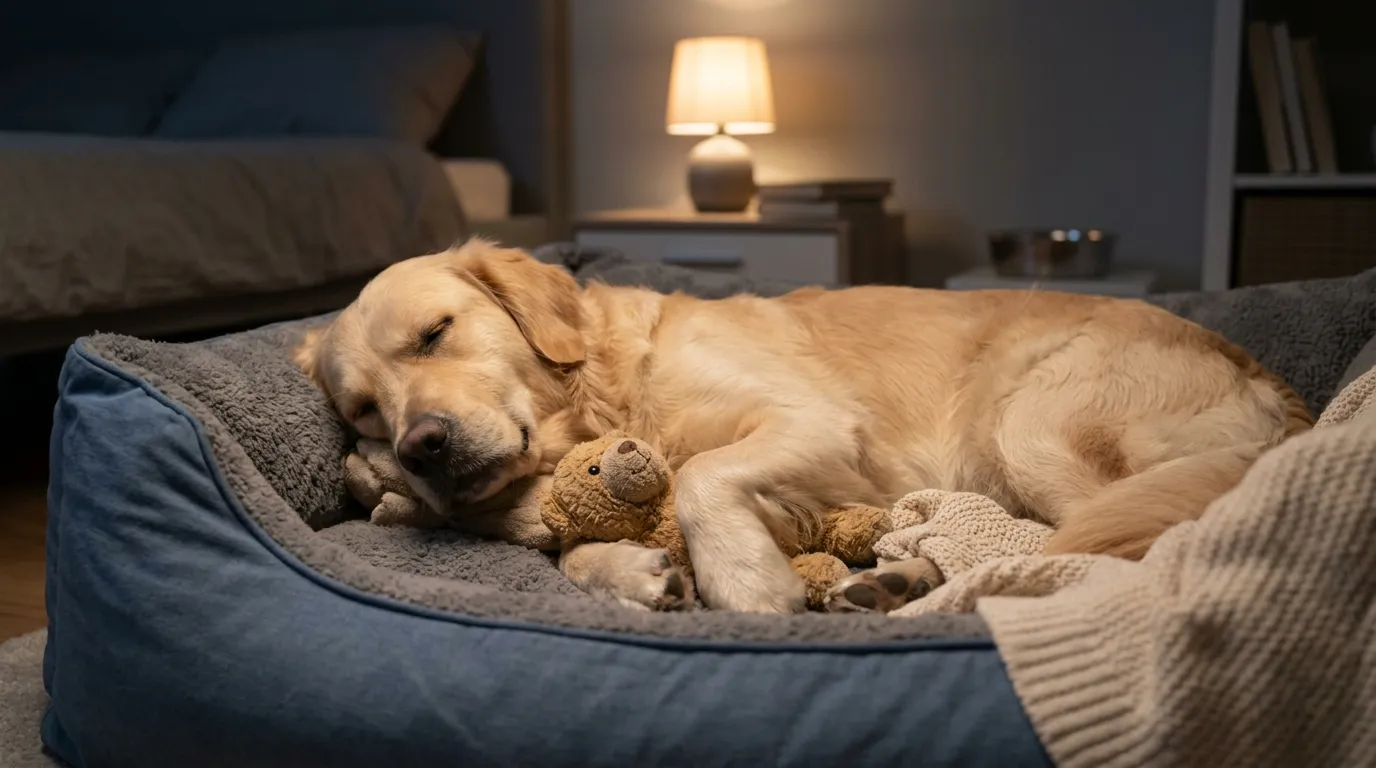
How to Make Your Dog Sleep Through the Night Tips That Work
Do you wake up at odd hours because of a restless pup? You’re not alone in this tiring experience. Many pet owners face interrupted sleep, affecting their mood and daily tasks.
Quality rest is key for a happy, healthy home. When everyone sleeps well, your bond with your pet grows stronger. Learning how to make your dog sleep through the night can change your home life.

Key Takeaways:
- Prioritize a consistent evening schedule.
- Create a calm environment for rest.
- Strengthen your bond through better habits.
Understanding Your Dog’s Sleep Needs
Getting to know your dog’s sleep cycle is key to a quiet night. Dogs don’t sleep like humans do. They need 12 to 14 hours of sleep each day to be their best.
Recognizing Normal Canine Sleep Patterns
Dogs sleep in short naps all day, not just at night. They might sleep after a meal or in the afternoon. This is normal and helps them stay ready to play.
Watching these sleep patterns is important. Dogs have different sleep types, like short naps and deep sleep. Puppies and older dogs need more sleep than active adults.
Factors Influencing Sleep Quality
Many things affect how well your dog sleeps. Using tips for better dog sleep can help a lot. Some dogs are naturally more active and hard to calm down.
Comfort and fun activities also matter for good sleep. If you want to improve dog’s sleep patterns, think about these:
- Physical exertion: A tired dog sleeps better.
- Mental engagement: Puzzle toys and training are great for the brain.
- Routine consistency: A regular schedule helps their internal clock.
By understanding these natural patterns, you can tell if your dog is just tired or if there’s a health issue. Consistency is the best way to keep your dog happy and well-rested.
How to Make Your Dog Sleep Through the Night: A Step-by-Step Routine
You can change your dog’s sleep habits with a simple nightly routine. Many owners find that consistency is the key to helping their pets relax after a long day. A predictable routine helps your dog sleep through the night without stress.
Establishing a Consistent Bedtime Schedule
A reliable schedule is the base for a good night’s sleep. By creating a bedtime routine for your dog, you show them when the day ends. Try to take your dog out for their last bathroom break at the same time every evening.
Being consistent reduces anxiety and sets clear expectations for your pet. When your dog knows what to expect, they settle into their bed quietly. Predictability is a powerful tool for any pet owner looking to improve their dog’s sleep quality.
Implementing a Calming Pre-Sleep Ritual
Before bed, do a low-energy activity that signals the end of play. Dimming the lights and keeping noise down helps. This transition period helps your dog move from active to restful.
Consider a short, gentle grooming session or a quiet moment of affection. Avoid high-energy games or loud noises during this time. A calm environment is key for a full night of sleep.
Using Positive Reinforcement for Quiet Nights
Training your dog to sleep through the night needs patience and the right motivation. When your dog stays quiet and settles into their bed, give them a small, healthy treat or calm praise. This positive reinforcement teaches your pet that staying in their bed is rewarding.
Avoid giving attention to whining or pacing, as it can encourage the behavior. Instead, wait for a moment of silence before offering your approval. With time and consistent practice, your dog will learn that quiet nights mean happy mornings for everyone.
Optimizing the Sleeping Environment
A peaceful sleeping area is key to ensuring a restful night for your dog. When your pet feels comfortable and safe, they sleep better. By paying attention to their surroundings, you help them wake up feeling good.
Choosing the Right Bedding for Comfort
The right bed is the start of a good night’s sleep. For older dogs or those with joint problems, orthopedic memory foam beds are great. They help ease pressure and reduce stiffness in the morning.
Think about your dog’s sleep style when picking bedding. Some like bolsters for security, while others prefer flat mats for stretching. The right bed is a key dog sleeping tip for their health.
Creating a Secure and Quiet Sleeping Space
Dogs like cozy, enclosed spaces. Make a special corner or crate for them. Keep it away from busy areas to avoid sudden noises.
If your home is loud, a white noise machine can help. It blocks out sounds like cars and household noise. A quiet space helps your dog know it’s bedtime.
Managing Light and Temperature Levels
Light can mess with your dog’s sleep cycle. Keep their sleeping area dark or dim. Blackout curtains or a light cover can help.
Temperature is also important. Dogs like it cool, so avoid heaters and drafts. A comfortable, cool space helps them sleep all night.
Managing Daytime Activity and Diet
A well-structured day is key for a good night’s sleep for your dog. Many owners don’t know that their dog’s nighttime behavior comes from their day. By using these tips for better dog sleep, your dog will sleep better at night.
The Importance of Physical Exercise
Physical activity helps burn off energy that might cause pacing or whining at night. A tired dog sleeps better because their body wants rest after being active. Consistency is key, so give your dog moderate exercise all day, not just before bed.
Walking or playing fetch helps set your dog’s internal clock. Regular exercise keeps muscles healthy and the mind ready for sleep. Choose activities that fit your dog’s breed and age to ensure they’re tired by evening.
Mental Stimulation to Prevent Nighttime Restlessness
Physical and mental tiredness are both important for good sleep. If your dog is bored during the day, they might get restless or anxious at night.
Try brain games like puzzle toys, scent work, or short training sessions. These activities challenge your dog and make them feel mentally satisfied. A stimulated brain is less likely to seek trouble or noise at night.
Adjusting Feeding Times and Water Intake
When you feed and give water is important for promoting better sleep for your pet. Eating too close to bedtime can cause stomach issues or the need to go outside. It’s best to stop feeding at least three hours before bedtime.
Also, watch how much water your dog drinks in the evening to avoid midnight trips outside. While your dog needs water, limit big gulps before bed. Proper planning of their diet will keep them comfortable and asleep until morning.
Addressing Common Nighttime Disruptions
Even the most well-behaved dogs can wake up at night. You might have a good routine, but things can still go wrong. By training your dog to sleep through the night, you can handle these problems easily.
Handling Separation Anxiety at Night
Separation anxiety can make dogs whine, scratch, or pace at night. It’s sad to see them upset. But, staying calm helps them feel better. You can make them feel safer with things that remind them of you.
- Place a piece of your worn clothing in their bed to provide a familiar scent.
- Use a white noise machine to mask sudden sounds that might trigger anxiety.
- Consider a pheromone diffuser near their sleeping area to promote natural relaxation.
- Gradually increase the distance between your bed and theirs over several weeks.
Managing Potty Breaks for Puppies and Seniors
Puppies and senior dogs can’t hold their bladder all night. You need to help them without making it a big deal. Being quick and quiet is important to keep them sleepy.
When you take them out, keep it quiet and dark. Don’t talk or play. Guide them back to bed fast. This shows them night is for sleeping, not playing.
Dealing with Nocturnal Barking or Pacing
If your dog barks or paces, they might need something. Don’t ignore them. Try to figure out why they’re restless. Often, a small change can help a lot in keeping them calm at night.
Here are some reasons for nighttime activity:
- Excess energy: They might need more exercise in the late afternoon.
- Environmental changes: Look for drafts, cold spots, or outside noises.
- Health discomfort: Pacing could mean they’re in pain or have a tummy issue.
- Boredom: A tough chew toy can keep them occupied quietly.
When to Consult a Veterinarian
Persistent sleep issues in dogs often point to hidden health concerns. These need a professional touch. While many owners use canine sleep solutions at home, some situations need a vet’s help. If your pet’s behavior changes suddenly, it’s best to check their health first.
Identifying Signs of Underlying Health Issues
Watch your dog for physical signs that might keep them awake. Chronic pain, like arthritis or dental issues, can make it hard for them to sleep. If your dog is pacing, whining, or having trouble finding a comfy spot, it’s a warning sign.
Sudden changes in sleep patterns can mean metabolic or hormonal problems. If your dog wakes up a lot to pee or seems really tired during the day, see your vet right away. These signs might mean diabetes or kidney disease, which need tests to diagnose.
Discussing Sleep Disorders in Dogs
Some dogs have sleep disorders that look like behavioral problems. Conditions like canine sleep apnea or narcolepsy are rare but need a vet’s diagnosis. These disorders stop your pet from getting deep, restful sleep.
If you think your dog has these issues, keep a log of their nighttime behavior. Share this with your vet. They can offer canine sleep solutions, like medicine or therapy. Getting help early keeps your pet happy, healthy, and well-rested for years.
Conclusion
A peaceful home starts with a well-rested dog. You have the power to change your evenings. Stay patient and keep your training consistent.
Small changes in your daily habits can make a big difference for your dog. A structured routine is key for better sleep. Mix physical activity with a calm space for success.
Your hard work strengthens your bond with your dog. A well-rested dog is happier and more energetic. This effort is a foundation for their long-term health.
Keep watching your dog and change your approach as needed. Every effort tonight makes your home quieter and more peaceful. Enjoy the quiet with a fully rested and happy dog.


