
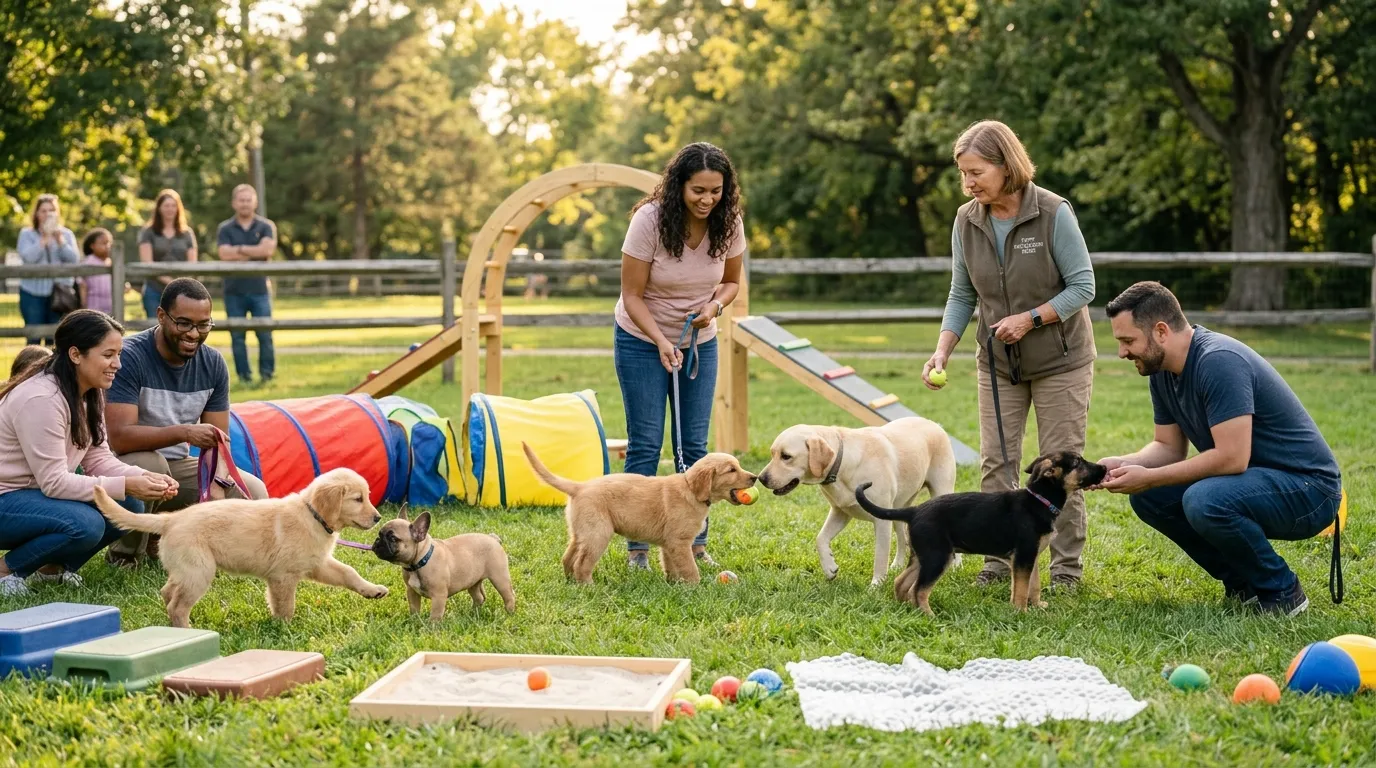
Beginner’s Guide to Puppy Socialization Tips for Success
Bringing a new furry friend home is truly magical. You might feel excited and a bit nervous. This beginner’s guide to puppy socialization will help you through those early weeks.

Early development is key to a happy dog. Introducing your pet to new things builds trust and strength. It’s a journey that shapes their personality for years.
We’ve gathered simple puppy socialization tips for new owners. These tips help your dog feel safe while learning. Follow these steps for a lifetime of happiness and success for your dog.
The Importance of Puppy Socialization
Learning about the importance of puppy socialization is key to raising a happy pet. It means showing your puppy different sights, sounds, and experiences safely. This helps them explore the world with wonder, not fear.
Understanding the Critical Socialization Window
Puppies have a crucial developmental phase called the critical socialization window. It happens between three and sixteen weeks. During this time, their brains soak up new info like sponges.
This short period shapes your puppy’s view of the world. Positive interactions are vital for their growth. Missing this time makes it harder to teach them new things later.
Long-term Behavioral Benefits
The importance of puppy socialization lasts long after the first few months. Regular exposure to different places helps your puppy become calm and confident. These early lessons help them handle new situations better.
Dogs that are well-socialized adapt well in many places. They stay relaxed and friendly in busy parks or when guests come over. This confidence lasts a lifetime.
Preventing Future Anxiety and Aggression
Early exposure helps prevent future problems. It builds trust and familiarity, reducing fear-based reactions. Common issues like anxiety and aggression often come from not being exposed early enough.
When puppies see new things as safe, they feel secure. This proactive approach makes sure your dog feels safe. It strengthens the bond between you and your pet.
A Comprehensive Beginner’s Guide to Puppy Socialization
Learning to socialize a puppy is rewarding. It builds a foundation for a lifetime of confidence. By following a structured plan, your puppy will feel secure in an ever-changing world. This beginners guide to puppy socialization helps you navigate these early weeks with ease and clarity.
Step One: Creating Positive Associations with New Environments
The world is full of sights, sounds, and textures that can seem overwhelming to a young dog. To learn how to socialize a puppy effectively, you must introduce these elements slowly. Always pair new environments with high-value treats to create a sense of safety.
- Start with quiet areas like your backyard or a calm driveway.
- Gradually move to busier sidewalks or parks as your puppy gains confidence.
- Allow your puppy to sniff and explore at their own pace without pressure.
Step Two: Introducing Your Puppy to Different People
Meeting new people is a vital part of your dog’s development. You want your puppy to view strangers as a source of joy rather than a threat. Consistency is key when inviting friends or family members to interact with your pet.
- Ask guests to sit on the floor to appear less intimidating.
- Encourage gentle petting and offer treats for calm behavior.
- Ensure that interactions remain short and positive to avoid overstimulation.
Step Three: Safe Exposure to Other Animals
Socializing with other animals requires careful planning to ensure safety. Focus on meeting calm, vaccinated adult dogs that can teach your puppy appropriate social cues. Never force an interaction if your puppy seems fearful or hesitant.
Step Four: Handling Exercises and Grooming Desensitization
Preparing your puppy for routine care is just as important as meeting new friends. By starting early, you make future visits to the groomer or vet much less stressful for everyone involved.
Teaching Your Puppy to Accept Touch
Begin by gently touching your puppy’s paws, ears, and tail while they are relaxed. Use a soothing voice and reward them with small treats for staying calm. This practice helps them become comfortable with being handled by strangers or professionals.
Getting Comfortable with Veterinary Equipment
You can simulate a clinic visit at home to reduce anxiety. Practice placing your puppy on a stable table or scale and reward them for standing still. Positive reinforcement during these sessions ensures that your puppy associates medical equipment with rewards rather than fear.
Essential Puppy Socialization Checklist and Milestones
Getting through the first four months with your puppy is easier with a plan. Keep things organized to make sure your puppy meets lots of new sights and sounds. This is their most impressionable time.
Tracking Progress During the First Sixteen Weeks
Using a puppy socialization checklist helps you keep track of your dog’s growth. Try to introduce new things every day to boost their confidence.
Keep a simple log to mark off puppy socialization milestones your pet reaches. This shows where they might need more help or encouragement.
Common Surfaces and Textures to Explore
Puppies need to get used to different grounds to avoid being hesitant later. Introduce them to various surfaces in a positive way:
- Smooth indoor surfaces like tile or hardwood.
- Soft textures such as thick rugs or carpet.
- Outdoor terrain including gravel, wood chips, and grass.
- Metal grates or uneven pavement found in urban areas.
Exposure to Household Sounds and Objects
Your home has many strange noises that can frighten a young dog. Gradual exposure helps them stay calm when these sounds are on.
Begin by playing recordings of common sounds softly while giving treats. Gradually make the sounds louder as your puppy shows relaxed body language around things like vacuum cleaners and doorbells.
Navigating Public Spaces Safely
Bringing your puppy out into the world helps them socialize and adapt. Always choose quiet, low-traffic places for your first few trips.
Go for short, positive visits to pet-friendly stores or parks. Remember, quality interactions are more important than the number of people or animals your puppy meets in one day.
Best Practices for Puppy Socialization Techniques
Learning puppy socialization techniques is all about changing how you think. It’s not about seeing lots of new things. It’s about how they handle those experiences.
Prioritizing Quality Over Quantity
Focus on the quality of interactions. Make sure your puppy feels safe and supported. One good meeting with a friendly person is better than many stressful visits to a busy park.
Choose calm, controlled places for your puppy to explore. Let them go at their own pace.
Reading Your Puppy Body Language
Understanding your dog’s body language is key. Watch their posture and tail to see if they’re having fun or feeling stressed.
Signs of Confidence and Curiosity
A happy, curious puppy shows clear signs. Look for these:
- A relaxed, wagging tail held at a neutral height.
- Soft, blinking eyes and an open, “smiling” mouth.
- Moving forward toward new objects with a bouncy, loose gait.
- Willingness to take treats or play with toys in the new environment.
Identifying Overstimulation and Fear
If your puppy gets too much, they might shut down or get defensive. Watch for these signs to know it’s time to take a break:
- Tucked tail or a stiff, frozen body posture.
- Excessive panting or yawning when not tired.
- Lip licking or avoiding eye contact with people or other animals.
- Trying to hide behind your legs or pulling away from the stimulus.
Using High-Value Rewards for Positive Reinforcement
Keep high-value treats ready for training. These puppy socialization tips work best when you reward brave behavior right away. Use small pieces of boiled chicken or soft training treats to make new things seem good.
Safety Precautions Before Full Vaccination
Balance socializing with health safety before your puppy is fully vaccinated. Avoid places like dog parks or pet store floors. Instead, invite vaccinated, calm adult dogs to your home or carry your puppy in a sling to see the world safely.
Following these best practices for puppy socialization will help your pet grow into a well-adjusted adult. Stay patient, keep sessions short, and always put your puppy’s comfort first.
Conclusion
Your journey to raise a happy dog starts with positive experiences. Every new thing your puppy sees shapes their personality.
Being patient is key in the early months. Watch your puppy to see what they like and what scares them.
You’re building a strong bond with your puppy. This bond grows when you focus on calm, rewarding moments together.
Make training fun to keep your puppy excited to learn. Use treats from Zuke’s or Wellness to keep them motivated.
Work hard to give your dog a safe, interesting place to live. Your efforts now will make your dog happy for years.
FAQ’s
When is the most critical time to start following a beginner’s guide to puppy socialization?
A: The most important time is between 3 and 16 weeks. Puppies are very open to new things during this period. Starting early helps prevent future problems and ensures they grow well.
What are the most effective puppy socialization techniques for shy dogs?
A: For shy pups, use “low-pressure exposure.” Let them watch from a safe distance. Reward them with treats like Zuke’s Mini Naturals for showing interest. Always go at their pace to avoid scaring them.
How to socialize a puppy safely before they have finished all their vaccinations?
A: You can start early without waiting for all vaccinations. Carry them in a Sherpa carrier to busy places. Hosting playdates in your backyard with vaccinated dogs is also safe and helpful.
What items should be included on a comprehensive puppy socialization checklist?
A: Your checklist should include many experiences. This includes walking on different surfaces and hearing various noises. The American Kennel Club suggests exposing them to many new, positive situations before four months.
What are the key puppy socialization milestones I should look for?
A: Look for milestones like calm curiosity around strangers and quick recovery from loud noises. Comfort during handling is also important. These signs show your dog is growing confident.
Why is the importance of puppy socialization emphasized so much by trainers?
A: It’s crucial because it shapes a dog’s mental health. Well-socialized dogs are less likely to have anxiety or aggression. Early socialization leads to a happier, easier life for your dog.
What are the best practices for puppy socialization when introducing other animals?
A: Always supervise and leash introductions. Use a strong harness like Ruffwear. Start with calm dogs and end on a positive note with a favorite toy.
What are some quick puppy socialization tips for busy owners?
A: Even busy owners can socialize their puppies. Take them on short trips to pet stores or sit on a bench for a few minutes. Consistency is key, even if it’s just a few minutes a day.


