
8 Poodle Puppy Training Tips Every New Owner Should Know
Bringing home a new curly-haired friend is a moment full of joy and excitement. You’re starting a rewarding journey with a breed known for its remarkable intelligence and love to please. These dogs quickly become the heart of a home, giving endless love and loyalty to their families.

Creating a consistent routine is key to raising a well-adjusted adult dog. Good puppy training is the base for a happy life together. It helps your new friend understand what’s expected at home. By using clear communication, you’ll build a lifelong bond. This guide gives you the key knowledge to feel ready for the adventure ahead.
Understanding the Poodle Mindset
To succeed with your new puppy, look beyond the curls. Poodles are very smart, making them great at poodle training. Knowing how they see the world helps you bond and succeed in the long run.
Why Poodles Excel at Learning
Poodles are naturally curious and love solving problems. With treats or praise, they learn fast. They enjoy poodle obedience training, making it fun for both of you.
Consistency is the key to their success. They notice your body language and tone quickly. Short, fun sessions keep them focused and prevent boredom.
The Importance of Early Socialization
Poodle care is more than just health and grooming. Early socialization is crucial for confidence and adjustment. Introduce your puppy to new things early to avoid fear and anxiety.
Early socialization boosts your dog’s emotional health. A well-socialized Poodle is calm in busy places, making poodle training easier. Remember, poodle care is a journey of trust that lasts a lifetime.
Focus on poodle obedience training early to ensure a lifetime of companionship. Your puppy will explore the world with curiosity, not fear. This approach keeps your Poodle happy, confident, and well-behaved.
8 Poodle Puppy Training Tips for Success
Raising a Poodle puppy is an exciting journey. It needs a structured approach. Follow these 8 poodle puppy training tips for a confident adult dog. Remember, consistency and kindness are key.
Utilize Positive Reinforcement Techniques
Positive reinforcement training is the best way to shape your puppy’s behavior. Reward good actions with treats, praise, or play. This method avoids punishment.
Mastering Potty Training Consistency
Potty training is a big challenge. But, a strict schedule makes it easier. Take your puppy outside often, after meals, naps, or play. This helps them learn where and when to go.
Implementing Crate Training Early
A crate is a safe, cozy space for your Poodle. It helps with housebreaking and anxiety. Make it comfortable with soft blankets and toys. Never punish your puppy in the crate.
Teaching Basic Commands with Patience
Start with simple commands like “sit,” “stay,” and “come.” Keep training short, five to ten minutes. End on a positive note with affection.
Managing Excessive Barking
Poodles bark to communicate. Find out why they bark and redirect their energy. Teach them the “quiet” command for a calm home.
Preventing Separation Anxiety
Poodles need human interaction. Practice leaving them alone to ease their distress. Give them a puzzle toy or treat to associate your absence with something good.
Leash Training for Daily Walks
Leash training takes time and patience. Start indoors with the collar and leash. Reward your puppy for walking by your side.
Grooming Desensitization During Training
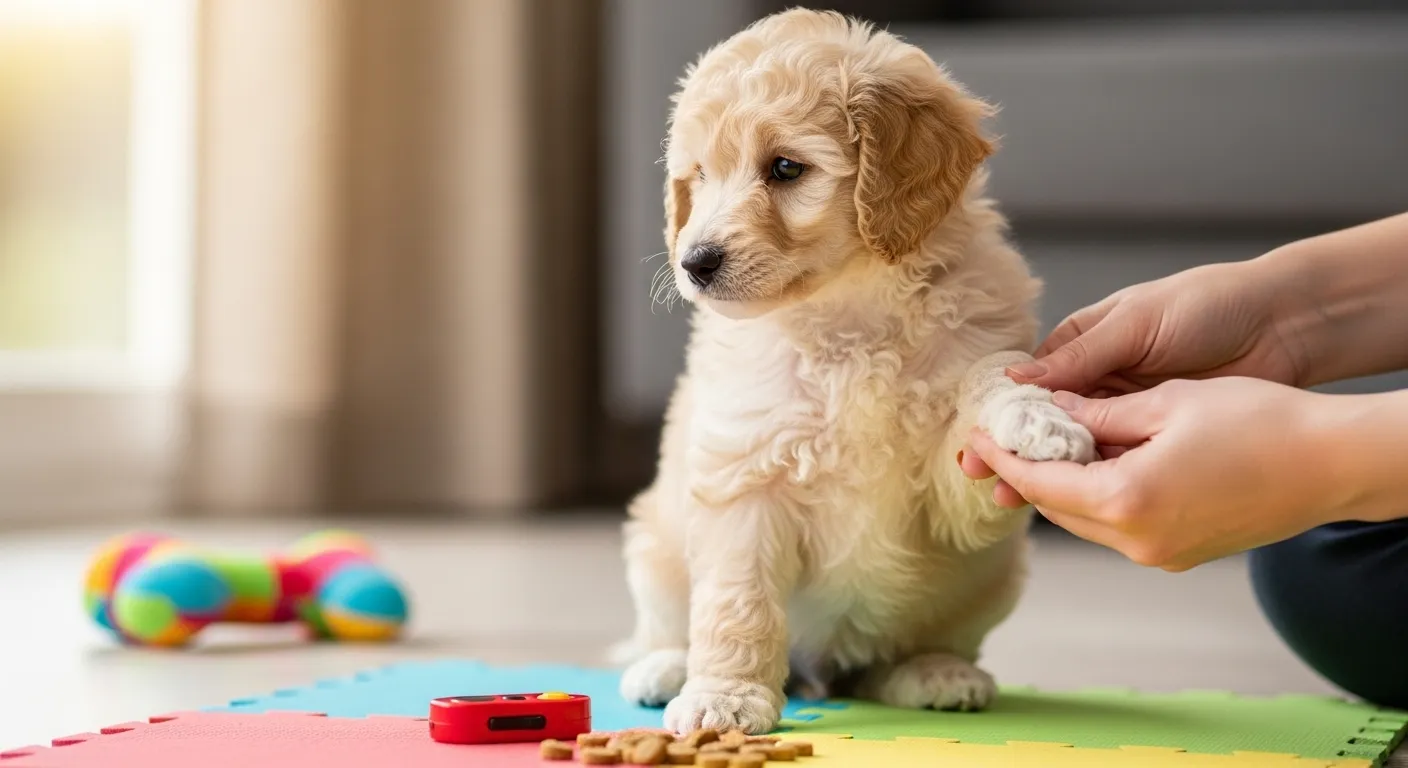
Get your Poodle used to grooming early. Touch their paws, ears, and tail gently while giving treats. This makes grooming stress-free and enjoyable for them.
Establishing a Consistent Training Schedule
Having a daily routine makes learning easier for everyone. A young dog needs a predictable environment to feel secure and learn well. A strong training schedule for poodle puppy development is key for success.

Creating a Daily Routine for Your Puppy
A structured day helps your puppy know what to expect. Divide your day into blocks for basic needs. Consistent habits in puppy training build confidence.
Here’s a sample day structure:
- Morning: Potty break, breakfast, and a short training session.
- Mid-day: Playtime, then a nap in a crate or quiet area.
- Afternoon: Walk for socialization and quick command review.
- Evening: Dinner, calm time, and a final potty break before bed.
Balancing Playtime and Training Sessions
Managing a young dog’s energy is crucial. Balance play with quiet puppy training to keep them sharp. If your puppy is restless, they need a break or nap.
Keep training sessions short and positive. A good training schedule for poodle puppy includes downtime. Alternating activity and rest helps your puppy learn without getting overwhelmed.
Consistency is key to progress. A routine helps your puppy anticipate and reduces anxiety. Stay patient, keep your goals clear, and enjoy watching your Poodle grow into a well-mannered friend.
Addressing Common Poodle Behavioral Challenges
Dealing with a puppy’s phase needs patience. Poodles may act out as they learn. Good poodle care means seeing these times as normal. They can be managed with the right approach and a calm attitude.

Handling Nipping and Mouthing
Puppy nipping is how they explore. If your puppy bites your hands or clothes, stay calm. Use positive reinforcement training to teach them that gentle play is good. Biting means play stops.
Give a soft toy when your puppy mouths your fingers. This teaches them what’s okay to chew. Being consistent helps them learn fast.
Redirecting Destructive Chewing Behaviors
Destructive chewing comes from boredom or teething. Good poodle behavior training gives them safe chew toys. If they chew on furniture, calmly stop them and give a toy.
Supervision is key during this time. Watch them or use a crate or playpen. This keeps them safe and helps them grow into well-behaved dogs.
Conclusion
Raising a Poodle is joyful and challenging. It needs your patience and clear talk with your pet.
Using these dog training tips helps you start strong. You make a safe place for your pet to learn.
Keeping a regular training schedule is key. It helps your dog know what to do. This makes them grow up well.
Training your Poodle is a journey that gets better over time. Every small win builds trust and respect.
Enjoy watching your Poodle become a loving family member. Share your journey with others to learn more.


