
8 German Shepherd Puppy Training Tips You Need to Know
Bringing home a new puppy is a moment full of joy and excitement. You’re starting a rewarding journey with one of the smartest and most loyal breeds. Watching your puppy explore their new home is a memory that will last forever.
Raising such a smart animal needs patience and a clear plan. Early training is key to making sure your puppy grows up well-behaved and confident. By starting a routine early, you build a strong foundation of trust and clear communication. This strengthens your bond for years.





If you feel overwhelmed, don’t worry. You’re not alone in this journey. By following these 8 German Shepherd puppy training tips, you can handle the challenges of development easily. Let’s help you make those early days smooth and harmonious with your new best friend.
Establishing a Consistent Routine for Your German Shepherd Puppy
When you start training German Shepherd puppies, being consistent is key. These smart dogs do well when they know the rules. A predictable home makes them feel safe and secure as they learn.
The Importance of Predictability
Predictability helps your puppy understand what you expect. Knowing when to eat, play, and rest lowers their stress. This calmness helps them learn new things better.
A steady routine also spots problems early. If your puppy knows the day’s plan, they won’t get into trouble. Consistency is truly the cornerstone of a well-behaved friend.
Setting a Daily Schedule for Feeding and Potty Breaks
Managing your puppy’s needs with a strict schedule works best. Feeding them at the same times helps their digestion. This makes potty training easier because you know when they need to go.
Here’s how to keep your puppy on schedule:
- Establish set meal times to regulate digestion.
- Take your puppy outside right after they wake up.
- Schedule outdoor breaks after meals and play.
- Keep your evening calm to get ready for bed.
By focusing on these habits, you’re training German Shepherd puppies to understand their world. This structured way builds a strong base for good behavior and trust.
Mastering Crate Training for Safety and Comfort
A crate is a safe space for your German Shepherd puppy. It helps them feel calm and safe. This is key when you can’t watch them.
Choosing the Right Crate Size
Choosing the right size is crucial for your puppy’s comfort. The crate should be big enough for them to move around. But, it should not be too big.
Many people like crates with a removable divider panel. This lets you change the size as your puppy grows. Starting small helps keep the crate clean.
Making the Crate a Positive Space
Make the crate a happy place for your puppy. Add soft bedding and fun toys. Positive reinforcement helps a lot.
Feed your puppy in the crate with the door open. Hide treats inside to encourage them. Consistency and patience are key to a happy crate experience.
Essential Socialization Strategies for a Well-Adjusted Dog
Proper German Shepherd puppy socialization is key to raising a happy German Shepherd. Introduce your dog to many situations early. This helps them feel confident and stable.
This early exposure prevents fear when they meet new things later. It’s a smart way to keep them calm and happy.
Exposing Your Puppy to New Environments
Your puppy needs to see, hear, and feel different things. Take them on short walks in new places. This helps them get used to different environments.
Be consistent when exploring new places. This means walking on different surfaces like gravel or grass. It also means being careful on slippery floors.
Introduce your puppy to common sounds like vacuums and doorbells. Make these experiences positive by giving treats or praise. This helps them stay calm in a busy home.
Start slow when introducing new things. This way, your puppy can handle new experiences without getting too stressed.
Positive Interactions with People and Other Pets
It’s important to help your puppy meet new people. Let them meet people of all ages and looks. This helps them stay calm and friendly.
Always watch over these meetings to keep your dog safe. This way, they know they’re in a good place.
When meeting other animals, keep things calm and controlled. Use positive reinforcement to show them that other pets are friends. This helps your puppy see the world as a fun place to explore.
Implementing Effective 8 German Shepherd Puppy Training Tips
When you focus on 8 German Shepherd puppy training tips, you unlock your dog’s full potential. This is through clear communication. The intelligent breed thrives when they understand what you expect from them.
By choosing methods that build trust, you create a foundation for a lifetime of companionship.




Using Positive Reinforcement Techniques
Positive reinforcement is the most effective way to shape your puppy’s behavior. Instead of punishment, you reward your dog for good choices. This encourages your German Shepherd to repeat good actions.
They learn quickly when you provide immediate feedback. Consistency is key. Rewarding a behavior right away helps your puppy connect it with your positive response.
The Role of Clicker Training
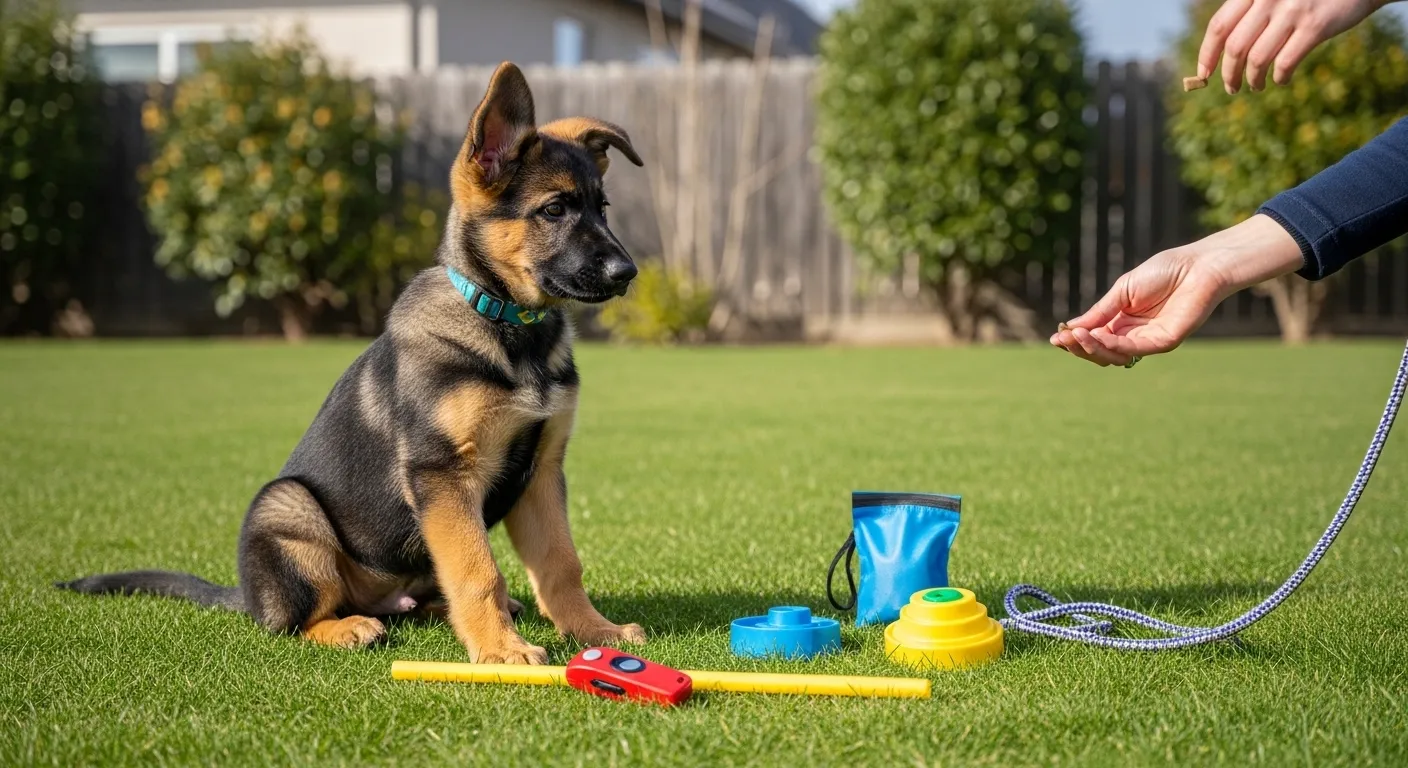
Clicker training is a precise communication tool. It helps you mark correct behaviors instantly. The distinct sound of the clicker tells your puppy, “Yes, that is exactly what I wanted you to do!”
This method is great for teaching complex commands or refining movements. It removes the ambiguity of verbal praise alone. It makes learning clear, fast, and enjoyable for your growing German Shepherd.
Managing Common German Shepherd Puppy Behavior Issues
Your new puppy loves to explore with their teeth. This German Shepherd puppy’s behavior might be tough, but it’s part of growing up. Stay patient and keep teaching your dog good habits.
Addressing Nipping and Biting
Puppies play by biting, which can hurt. Teach them that biting is not okay. Skin is sensitive.
Here are some effective techniques to stop nipping:
- Make a high-pitched “ouch” sound to mimic a littermate’s reaction.
- Immediately stop play and ignore the puppy for a few seconds.
- Offer a soft toy as an alternative target for their mouth.
- Reward your puppy when they choose to lick instead of bite.
Redirecting Destructive Chewing
Destructive chewing is common in German Shepherd puppy behavior. It’s often due to teething or boredom. You want to protect your home and give your puppy something to chew on.
Keep your puppy supervised and give them different textures to chew. Here are some helpful tips to save your furniture:
- Rotate their toys frequently to keep them interested.
- Use bitter apple spray on furniture legs to discourage chewing.
- Provide durable rubber toys that can withstand heavy chewing.
- Ensure your puppy gets enough mental stimulation to prevent boredom.
Consistency is key. By teaching your puppy what not to chew, you keep them safe and happy.
Focusing on Basic Obedience and Command Training
Obedience training is key to a happy life with your German Shepherd. By training German Shepherd puppies early, they become well-mannered and safe. This builds a strong bond between you and your pet.
Consistency is crucial when teaching new skills. Keep training sessions short and fun. Patience is your best tool during these early stages.

Teaching Sit, Stay, and Come
To teach “sit,” hold a treat near your puppy’s nose and move it up. As they follow the treat, their bottom will lower. Reward them with the treat and praise when they sit.
The “stay” command needs slow building. Ask your puppy to sit, hold your hand out, and take a step back. If they stay still, reward them for their excellent focus.
For “come,” use an enthusiastic tone to get your puppy to run to you. Start in a quiet area to ensure success. This skill is crucial for German Shepherd puppy obedience training and safety.
Leash Training Basics
Start leash training inside where it’s less distracting. Let your puppy get used to the collar and leash before going outside. Positive reinforcement makes them think the leash is fun.
If your puppy pulls, stop walking and wait for them to look at you. Reward them when the leash is slack and continue walking. This teaches them to walk calmly.
Prioritizing Physical and Mental Stimulation
Keeping your energetic puppy busy is crucial for German Shepherd puppy care. These dogs are athletic and have sharp minds. They need daily challenges to stay happy.
Without enough to do, puppies might chew furniture or dig. Structured activities help them use their energy in good ways.
Engaging Your Puppy with Puzzle Toys
Interactive puzzle toys are great for keeping your dog busy. They make your puppy think critically to get treats. This is more tiring than a walk.
Use treat-dispensing balls or snuffle mats to make meals fun. This keeps your pet from getting bored and teaches them to solve problems.
Appropriate Exercise Limits for Growing Joints
It’s tempting to take your puppy on long runs. But, you must be careful. German Shepherds grow fast and their joints can easily get hurt.
Avoid hard activities like jumping or running on hard ground until your vet says it’s okay. Instead, do short play sessions. This lets your puppy move safely without hurting their growing body.
Consistency is key in managing your puppy’s activities. Mix mental puzzles with gentle play. This helps your puppy grow up healthy, happy, and well-adjusted.
Conclusion
Raising a loyal companion needs dedication and a clear vision. This guide helps you train your German Shepherd puppy. You now know how to make your dog a well-behaved family member.
Patience is key on this journey. Every small win builds trust with your pet. Keeping habits consistent helps your dog feel safe and learn well.
Positive reinforcement makes your bond stronger. Use this guide to face challenges with confidence. Your hard work today will lead to a lifetime of friendship and respect.
Begin your training today to see quick results. Share your progress with others in your area or online. Your path to a well-trained German Shepherd starts with these easy, daily steps.


