
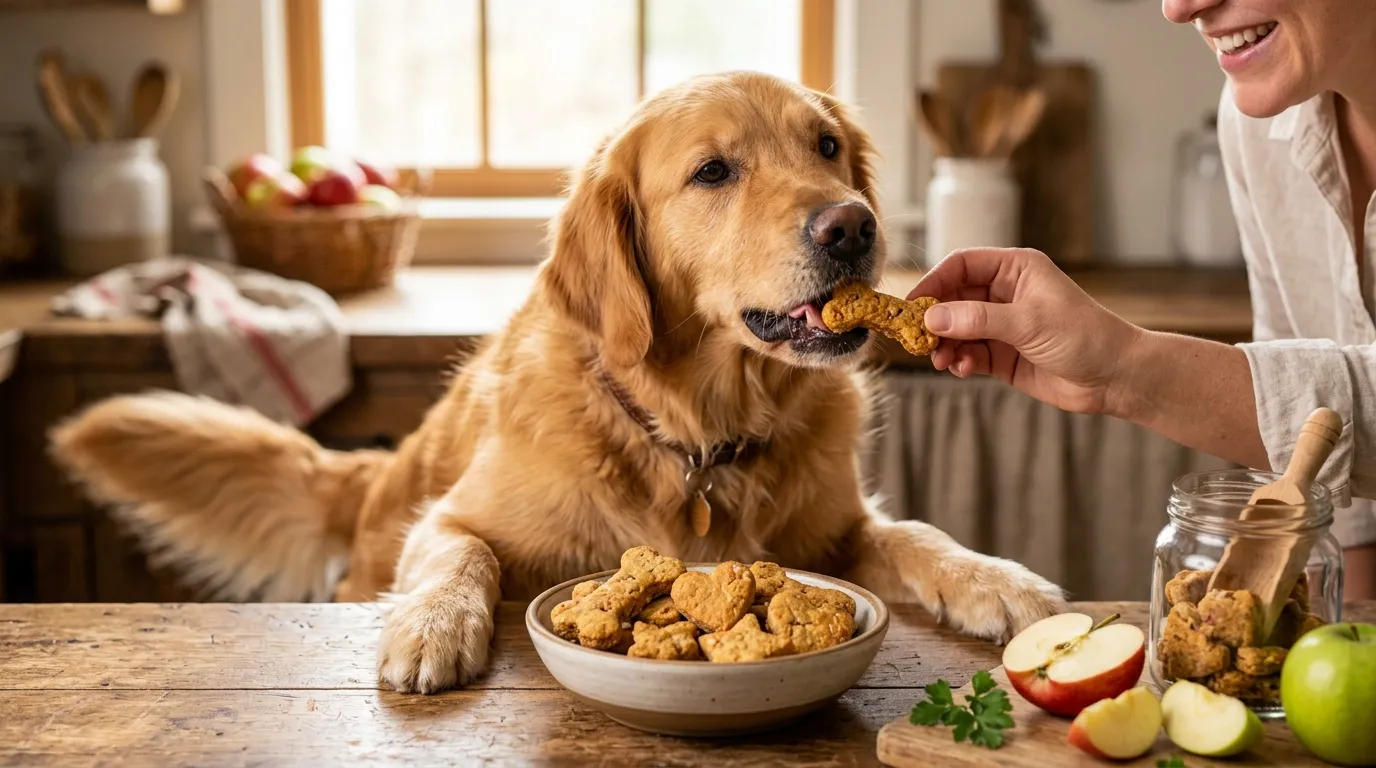
Turkey Apple Dog Treats Your Pet Will Love Today
There’s a special warmth in your home when you bake treats for your dog. Seeing your pet wait by the oven shows how much we love them. You want the best for your dog, making sure every bite is healthy and happy.

Making your own treats means you know what’s in them. You use savory turkey and crisp apple, avoiding bad stuff in store snacks. This way, you give your pet a tasty treat without worry.
Baking treats is a loving act that shows you care about your dog‘s health. You know they’re eating safe, good food. Start today and see how these treats can make your pet’s day better.
Why Homemade Turkey Apple Dog Treats Are a Healthy Choice
It’s easy to make your dog’s snacks better. By making homemade dog treats, you control what they eat. This means no bad stuff like fillers or too much salt.
The Nutritional Benefits of Turkey for Dogs
Turkey is a great protein for dogs. It has amino acids that help muscles grow. This keeps your dog active and full of energy.
Using lean protein helps your dog stay the right weight. Turkey apple dog treats are also easy on their stomach. They’re good for dogs with sensitive stomachs.
Why Apples Are a Safe and Tasty Fruit for Pets
Apples are good for dogs because they’re crunchy and tasty. They also have fiber for healthy digestion. This makes your dog feel full and happy.
When you make homemade dog treats, you know they’re safe. Turkey apple dog treats mix protein and fruit. It’s a tasty way to keep your dog healthy and happy.
Essential Ingredients for Natural Dog Treats
Making natural dog treats at home means choosing the best ingredients. This way, you control what your pet eats. Fresh, whole foods make sure every bite is good for your dog’s health and happiness.
Selecting High-Quality Lean Turkey
Good snacks start with quality protein. Look for lean cuts like breast meat to keep fat low. Avoid pre-seasoned or processed turkey found in stores.
These products often have hidden sodium, garlic, or onion powder. These are toxic to dogs. Always check labels for plain, unseasoned turkey. This keeps your treats safe and healthy.
Choosing the Right Apple Varieties
Apples add crunch and vitamins for your dog. But, prepare them right before adding to your dough. Remove seeds and core to avoid choking hazards and cyanide.
Here are some safe apple choices:
- Honeycrisp: Sweet and firm.
- Gala: Mild and sweet.
- Granny Smith: Tart and zesty.
- Fuji: Crisp and sweet.
Binding Agents and Flour Alternatives
You need a gentle binder for your ingredients. White flour can upset some dogs’ stomachs. Try healthier flours for better treats.
Here are some good options:
- Oat Flour: Good for digestion, hearty texture.
- Coconut Flour: Grain-free, high in fiber and protein.
- Chickpea Flour: Gluten-free, adds plant-based protein.
- Brown Rice Flour: Gentle, easy to digest.
Preparing Your Kitchen and Ingredients
A clean kitchen is key for making healthy homemade snacks. Making pet treats at home means you control their quality and safety. Preparing well keeps your baking experience clean and easy.
Sanitizing Surfaces for Pet Food Preparation
Clear your counters and wipe them down with a pet-safe cleaner. It’s essential to avoid mixing human food with pet food. Always wash your hands with soap and water before starting.
Clean utensils and bowls are as important as a clean counter. Make sure your tools are dry to avoid adding moisture. A clean space keeps your pet treats safe from bacteria.
Properly Washing and Coring Apples
Apples are great, but they need careful handling. Start by washing them under cool water to remove wax and debris. Then, dry them with a clean towel.
The core and seeds are very important. Apple seeds have cyanide, which is toxic to dogs. Use a knife or corer to remove the center, making sure no seeds are left.
Measuring Ingredients for Consistent Results
Getting the dough right every time is all about precision. A digital kitchen scale is the best tool for this. If you use cups, level them off to avoid too much dry stuff.
Measuring right means your pet treats will bake evenly. If the dough is too dry, it crumbles. If it’s too wet, it won’t shape right. Taking your time to measure correctly will make your snacks look professional.
Step-by-Step Guide to Making Turkey Apple Dog Treats
Making turkey apple dog treats for your dog is simple. Just follow a few steps to make treats that are safe and nutritious.
Mixing the Turkey and Apple Base
Begin by mixing ground turkey with apple puree in a bowl. Add flour slowly until the mix forms a cohesive dough.
If it’s too wet, add more flour. You want it firm but not too hard.
Rolling and Cutting the Dough
Dust your work area with flour to avoid sticking. Roll the dough to about a quarter-inch thick. This helps it bake evenly.
- Use festive cookie cutters for fun shapes.
- Keep sizes small for dog training treats.
- Press firmly to get clean edges.
- Gather scraps and re-roll as needed.
Baking Temperatures and Timing
Heat your oven to 350°F (175°C). Place the cutouts on a parchment-lined baking sheet, leaving space for air.
Bake for 20 to 25 minutes. The edges should be light golden. Proper timing is key for flavor and safety.
Cooling and Dehydrating for Texture
After baking, turn off the oven and let the treats dehydrate for an hour. This step adds crunch.
Then, cool them on a wire rack. This ensures they’re ready to store without losing quality.
Tips for Storing and Preserving Your Homemade Dog Biscuits
Keeping your homemade dog treats fresh is easy with a few simple steps. Proper storage keeps each snack as tasty as the day you made it. These steps also help keep the nutrients and texture your pet loves.
Refrigeration Methods for Freshness
For snacks you’ll use in a week, the fridge is best. Put the cooled dog biscuits in a sealed container. This stops them from getting soggy or smelling like other foods.
Freezing Treats for Long-Term Storage
Freezing is great for big batches that last months. Freeze them flat on a baking sheet first. Then, put them in a freezer-safe bag. This prevents clumping and makes it easy to grab a snack for your pup.
Identifying Signs of Spoilage
Always check your snacks before giving them to your pet. If they smell bad, have mold, or feel slimy, throw them away. Watching for these signs keeps your pet eating the safest, freshest food.
Customizing Canine Snacks for Dietary Needs
You can make simple recipes into special canine snacks for your pet. Every dog is different, and changing ingredients helps them stay healthy. Small changes make snack time fun for your furry friend.
Grain-Free Options for Sensitive Stomachs
Some dogs can’t handle common fillers like wheat or corn. These can upset their stomachs. For dogs with sensitive stomachs, try using grain-free alternatives like coconut flour or chickpea flour. They’re easier to digest and make tasty treats.
Make sure your ingredients don’t have hidden additives. Use single-ingredient flours for the best control. This keeps your canine snacks safe for dogs with food allergies.
Adding Superfoods for Extra Nutrition
Adding superfoods to your treats boosts their nutrition. Pureed pumpkin helps with digestion, and fresh blueberries are full of antioxidants. These add natural vitamins that help your dog’s immune system.
Remember, a little goes a long way. Try adding chia seeds or flaxseed meal for omega-3 fatty acids. These make your treats not just tasty but also healthy.
Adjusting Sizes for Different Dog Breeds
The size of your treats should fit your dog’s needs. Small breeds need tiny treats to avoid choking and manage calories. Big, active dogs need thicker, crunchier biscuits to clean their teeth.
Change the size and shape with cookie cutters or scoring the dough. Consistency in portioning helps with weight management. Tailor the size of your canine snacks for the perfect reward for your dog.
Safety Precautions When Feeding Organic Dog Treats
Feeding your dog homemade treats is a great way to show love. But, you must follow important safety rules. Organic dog treats are great rewards, but it’s key to keep things balanced for your pet’s health.
Monitoring Portion Sizes for Weight Management
Even the most nutritious snacks should be a small part of your dog’s diet. It’s easy to give too many treats. But, small portions help avoid weight gain.
Always talk to your vet about how many healthy dog treats your dog can have. Watching this closely keeps your pet at a good weight. They can still enjoy their favorite snacks.
Avoiding Toxic Additives and Sweeteners
When making natural dog treats, watch what you add. Some human foods, like xylitol, are highly toxic to dogs. They can cause serious health problems.
Always check labels if you use store-bought items. Using simple, whole foods is safest. This way, you avoid hidden dangers in your kitchen.
Introducing New Treats Gradually
Start with a tiny piece of the new treats. This lets you see how your dog reacts. It also helps their stomach get used to the new food.
If your dog seems fine, you can give them more treats. But do it slowly. This way, wholesome rewards stay safe and positive for your pet.
Conclusion
Making homemade turkey apple dog treats is a great way to show your pet love. You give them good food without the bad stuff in store-bought snacks.
Your kitchen turns into a place of health with fresh ingredients. Every treat you make brings you closer to your dog.
Try different shapes or sizes to see what your dog likes best. Small changes can make a big difference in their favorite treats.
Being consistent is key to a happy, healthy pet. Watch how your dog reacts to new tastes and textures.
Share your baking successes with other pet owners. Your efforts to improve your dog’s diet can inspire others to do the same.


