
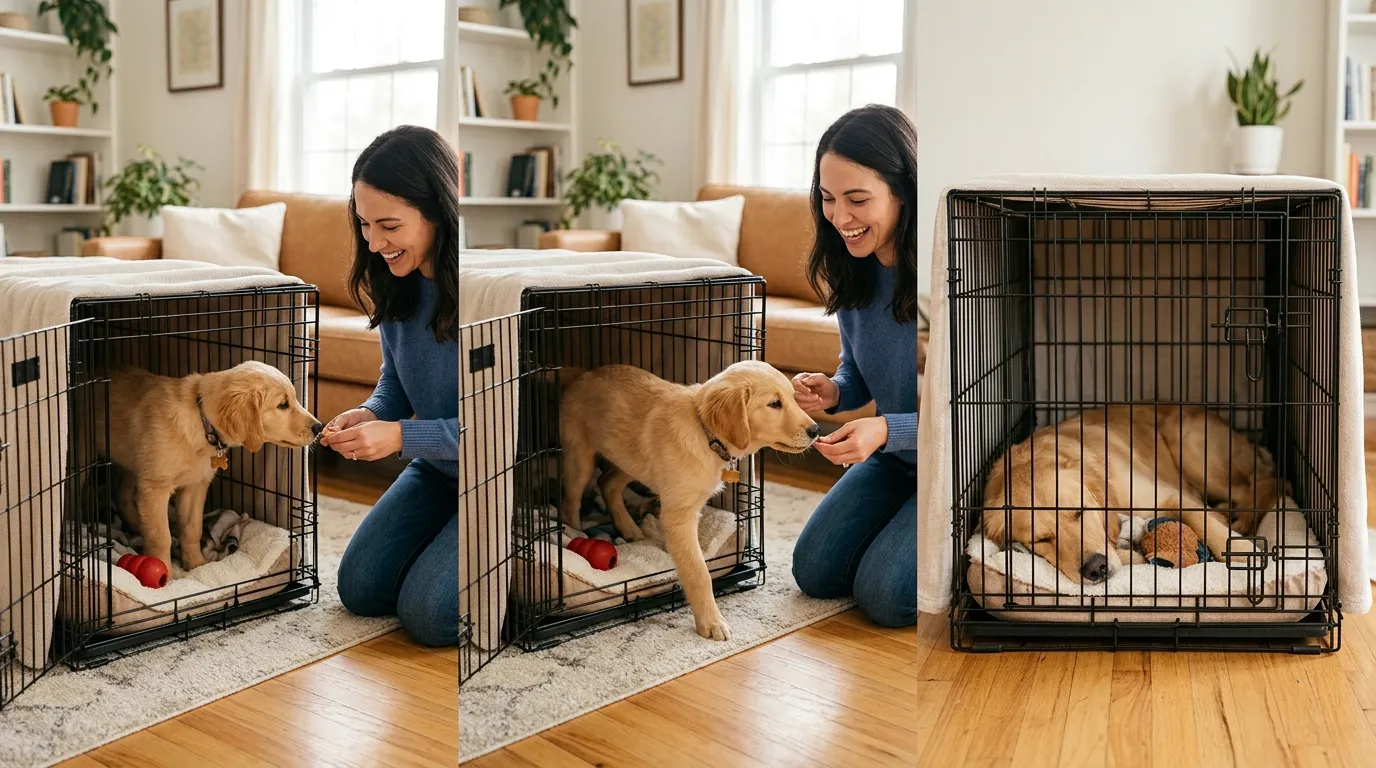
Dog Crate Training 101 Guide for Stress-Free Success
Getting a new pet is a big emotional milestone. It fills your heart with joy. You want your pet to feel safe and loved right away.

This guide helps make a safe and secure space for your pet. A positive approach makes a crate a cozy home for your pet. Patience and consistency are key to success.
We aim to help you feel confident on this journey. By following these steps, you’ll build a strong bond with your pet. Let’s start this crate training for your dog today.
Understanding the Benefits of Crate Training
If you’re learning how to crate train a dog, you need to know why it works. Many people see a crate as a cage. But for dogs, it’s a peaceful sanctuary.
By using their natural instincts, you can make a crate a cozy home for your pet.
Why Dogs Naturally Seek Dens
Dogs are den animals by nature. This comes from their wild ancestors. A small, enclosed space protects them from the elements and predators.
By giving your dog a crate, you offer them a modern den. It’s a safe haven where they can rest and feel secure.
Safety and Security for Your Pet
One big crate training benefit is less anxiety. The world can be loud and scary for dogs. A crate gives them a calm, predictable space.
When you’re away, a crate keeps your dog safe from harm. It’s a protective barrier that gives you peace of mind.
Assisting with Housebreaking and Routine
Crate training is the best way to housebreak a dog. Dogs naturally want to keep their sleeping area clean. This positive habit helps them wait to go outside to relieve themselves.
The crate also helps with a daily routine. It teaches your dog what to expect each day. Learning how to crate train a dog makes them well-behaved and happy.
Essential Gear and Preparation
Choosing the right gear for your dog is key to a good training journey. Getting ready properly is the cornerstone of a positive experience. It makes your dog feel safe from the start.
Choosing the Right Crate Size
Finding the right crate size is crucial for your dog’s comfort. Your pet should have enough room to stand up, turn around, and lie down comfortably.
If the crate is too big, your puppy might use one corner as a bathroom. Always choose a size that fits their current needs and their expected adult size.
Selecting Between Wire, Plastic, and Soft-Sided Crates
Different crates offer unique benefits. Wire crates are great for ventilation and visibility. They are a favorite among many owners.
Plastic crates feel like a cozy den, which can calm anxious dogs. Soft-sided crates are light and easy to carry. But they’re best for calm, crate-trained dogs who don’t chew.
Creating a Comfortable Den Environment
Turning a crate into a cozy space helps your dog see it as their own. A positive view of this space makes training easier.
Adding Bedding and Safe Toys
Soft bedding is key for comfort during long naps. Make sure it’s durable and can be washed in a machine to keep things clean.
Adding safe, chew-resistant toys keeps your dog entertained. But, avoid toys that could be a choking hazard when you’re not watching.
Placement Strategies for Your Home
Where you put the crate is very important. Place it in a high-traffic area like the living room.
This spot keeps your dog from feeling lonely or left out. Avoid drafty corners or areas near direct heat sources to keep your pet comfortable.
Dog Crate Training 101: The Step-by-Step Process
This step-by-step dog crate training guide will help you build a positive foundation for your pet. When you approach this process with patience, you ensure that your dog views their crate as a personal sanctuary. Mastering dog crate training 101 is all about moving at a pace that makes your furry friend feel secure and confident.
Introducing the Crate Positively
Start by placing the crate in a common area where your family spends time. Leave the door open and allow your dog to explore the space naturally. You can gently encourage them to enter by tossing high-value treats or their favorite toys inside.
Never force your dog into the crate, as this can create unnecessary fear. Instead, reward them with praise whenever they choose to step inside on their own. This simple method is the best way to how to crate train a dog without causing stress.

Feeding Meals Inside the Crate
Once your dog is comfortable entering the crate, begin serving their meals inside. This creates a strong, positive association with the space. If your dog seems hesitant, place the food bowl just inside the door until they gain more confidence.
- Place the bowl at the back of the crate to encourage full entry.
- Keep the door open during the first few meal sessions.
- Offer verbal praise as they finish their food.
- Gradually move the bowl deeper into the crate over several days.
Increasing Duration and Closing the Door
After your dog eats comfortably inside, you can start closing the door for short intervals. Begin by closing it only while they are eating their meal. Once they finish, open the door immediately to show them that they are not trapped.
Slowly increase the time the door remains closed after they finish eating. If your dog begins to whine, you may have moved too quickly. Always aim to let them out before they become anxious or restless.
Graduating to Longer Periods Alone
When your dog can stay in the crate for ten minutes with the door closed, you are ready to practice longer sessions. Start by leaving the room for a few minutes while they are occupied with a chew toy. This helps them learn that being alone in the crate is a safe and relaxing experience.
Continue to extend these periods gradually as your dog shows signs of comfort. By following this step-by-step dog crate training guide, you will help your pet develop the independence they need. Remember that consistency is the key to success when learning how to crate train a dog effectively.
Troubleshooting Common Challenges
Even the most dedicated pet owners face challenges when teaching their dogs to love their crates. The process is rewarding, but it’s normal to hit a few bumps. Using effective crate training techniques can help you overcome these moments with confidence.
Managing Whining and Barking
Dogs often vocalize when first in their crates. Patience is your best tool during these times. If your dog has been exercised and taken outside, ignore the noise.
Don’t give in to the whining. It can teach your dog that noise gets them out. Wait for a moment of silence before rewarding them. This teaches them that quiet is key.
Handling Accidents Inside the Crate
Accidents can happen, like with young puppies. If you find a mess, stay calm and avoid scolding your dog. Punishment won’t teach the right behavior.
- Clean the area thoroughly with an enzymatic cleaner to remove all odors.
- Review your current schedule to ensure your dog has enough breaks.
- Consider if the crate is too large, as extra space can encourage accidents.
- Keep a log of when your dog eats and drinks to predict their needs.
Addressing Separation Anxiety
Some dogs feel real distress when left alone. If your dog shows panic, like heavy panting, slow down. Use effective crate training techniques to make them feel safe.
Techniques for Gradual Desensitization
Desensitization helps your dog feel good about the crate. Start by keeping the door open while you’re there. Gradually increase the time they spend inside, giving treats for safety.
Once they’re comfortable, start closing the door for a few seconds. Slowly increase these times as they relax. This ensures they stay calm and happy.
Best Dog Crate Training Tips for Success
Creating a routine is key for stress-free training. The best dog crate training tips make your pet feel safe and sure. Being consistent helps your dog adjust quickly to their new space.
Maintaining a Consistent Schedule
Dogs do best with a set daily plan. Keep a strict schedule for meals, potty breaks, and crate time. Consistency helps your dog understand their boundaries and lowers anxiety from new routines.
Feed your dog at the same times each day. This makes it easy to know when they need to go outside. A set schedule is key for long-term success.
Using Positive Reinforcement and Treats
Motivation is crucial for your dog’s crate view. Reward them with treats or praise when they go in the crate willingly. This positive association makes the crate a happy spot, not a lonely one.
Don’t force your dog into the crate. This can make them scared. Use a favorite toy or snack to encourage them to explore the crate on their own. These small actions are among the best dog crate training tips for building trust.
The Importance of Exercise Before Crate Time
A tired dog is usually a calm dog. Make sure they get lots of exercise before crate time. A quick walk or playtime in the yard helps them relax.
When your dog is tired, they’ll rest better in their crate. Adding exercise to your daily routine is one of the best dog crate training tips for keeping your pet calm and relaxed when you’re away.
Crate Training Dos and Don’ts
Setting healthy boundaries for your dog starts with crate training dos and dont’s. Being patient and clear helps create a safe space for your pet. Consistency builds a lasting sense of security for your dog.
Safety Rules for Collars and Tags
Keeping your dog safe is crucial. Always take off your dog’s collar and tags before they go into the crate. This prevents accidents or injuries from the hardware getting caught on the crate wires.
Avoiding Crate Use as Punishment
The crate should be a cozy, safe place, not a punishment. If you use it when upset, your dog will feel bad about it. Make sure the crate is always a positive and inviting space for your pet.
Monitoring Time Limits for Puppies
For crate training puppies, watching the time is key. Puppies need to go out often because they have small bladders and crave social time. Here are some tips to keep your puppy happy and healthy:
- Limit crate time to one hour per month of age.
- Provide plenty of outdoor exercise before and after crate sessions.
- Ensure the crate is large enough for them to stand and turn around comfortably.
- Never leave a young puppy alone for more than four hours during the day.
- Prioritize socialization and play to balance their time in the den.
By following these simple rules, your dog will see their crate as a happy retreat. A thoughtful approach ensures your pet thrives in a safe and stress-free environment.
Conclusion
Learning to crate train makes your home peaceful for your pet. It gives them a safe place that meets their needs. It also helps them learn important life skills.
Being patient is key during this time. Every little win brings you closer to a calm dog. Watch how your pet adapts to their new space.
Being consistent makes life easier for your dog. Clear rules and positive rewards build trust and respect. This is the base for many happy moments together.
Brands like MidWest Homes for Pets or Frisco have great products. Pick tools that match your life and your dog’s needs. Your effort makes your home a happy place for all.
Sharing your experiences helps others train their dogs. Your stories guide others on their journey. Enjoy the fruits of your labor every day.


