
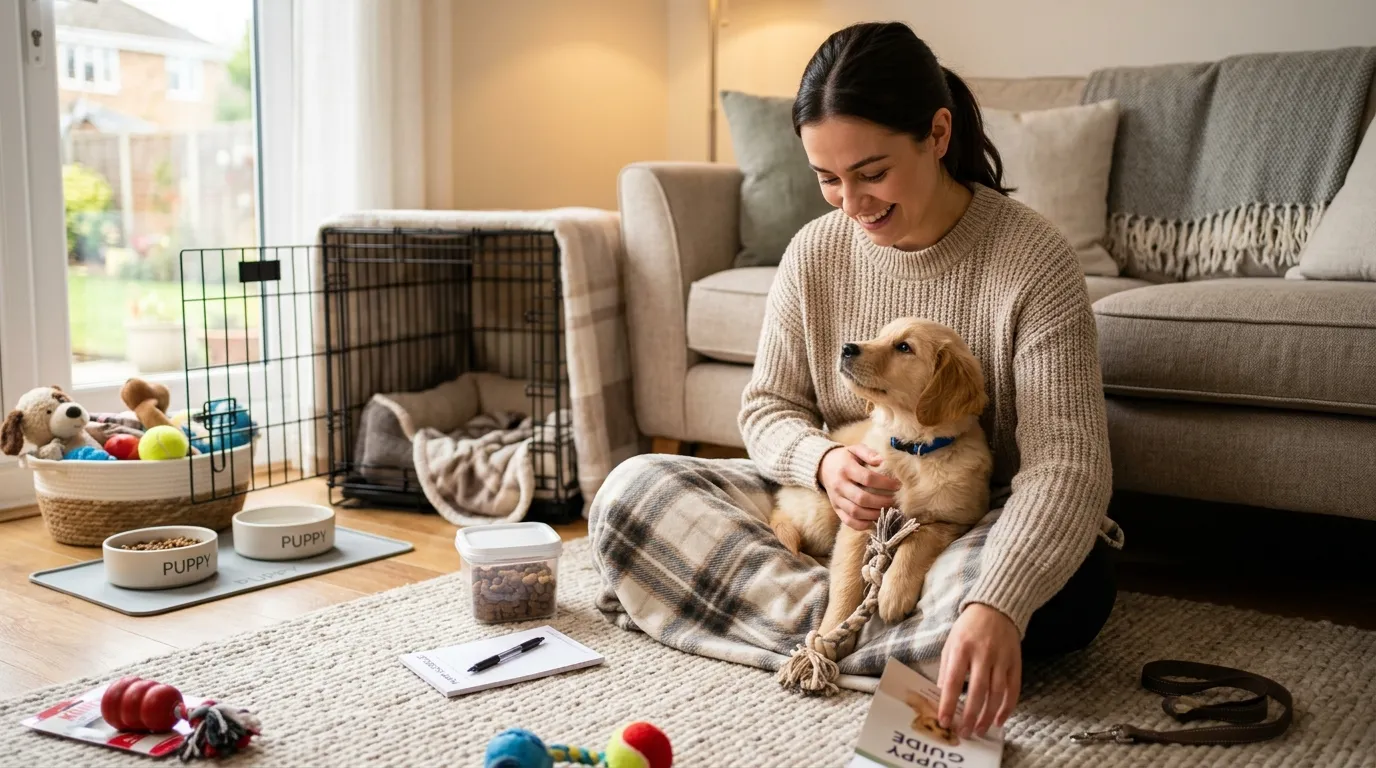
Surviving Your First Week with a Puppy: Tips for New Owners
Bringing home a tiny, wagging bundle of joy is a moment you’ll always remember. The house feels different, full of new energy and the sound of paws. Yet, the first days can feel really tough for any new parent.

This first time puppy owner guide makes the transition easier. You’re not alone in feeling anxious about the changes. By being patient and calm, you help your puppy feel safe.
We have key new puppy advice to help you bond with your puppy. Embracing the first week needs preparation and love. Let’s go through these steps together for a smooth transition.
Preparing Your Home Before the Puppy Arrives
Before your furry friend arrives, you must make your home safe. This way, you can bond with your pet without worrying about accidents. Follow these puppy care tips to get your home ready for a curious new friend.
Puppy-Proofing Your Living Space
Puppies learn by mouth, so your home might be full of dangers. Get down to see the world from their view. This helps you spot dangers you can’t see standing up.
To keep your home safe, follow these puppy care tips for removing hazards:
- Secure electrical cords by using cord covers or moving them behind heavy furniture.
- Remove toxic plants that could make your pup sick if they eat them.
- Clear small objects like coins, hair ties, or children’s toys that could choke your pup.
- Store cleaning supplies and chemicals in high cabinets or locked cupboards.
Creating a Dedicated Safe Zone
Even with a puppy-proofed house, your new friend needs a special area. A dedicated safe zone gives them security and helps manage their energy. It’s a calm retreat when things get too busy or loud.
Setting up this area is easy with a sturdy playpen or baby gates. Add a comfy bed, safe chew toys, and fresh water. These puppy care tips help create a safe space for your pup’s growth and happiness.
Essential Supplies for Your New Companion
Getting the right supplies is key for a smooth start with your new pet. Having the right gear makes your pet feel safe and secure. Follow these puppy care tips to pick the best items at the pet store.
Selecting the Right Nutrition and Bowls
Choosing the right food is crucial for your puppy’s growth. Look for high-quality food made for growing puppies. This ensures they get the nutrients they need for strong bones and a healthy brain.
The bowl you pick is also important. Think about these points when shopping:
- Stainless steel bowls are tough, easy to clean, and don’t grow bacteria.
- Ceramic bowls are heavy, making them hard for puppies to knock over.
- Stay away from plastic bowls because they can hide bacteria in scratches.
- Make sure the bowl is the right size for your puppy’s mouth and breed.
Comfort Items and Durable Toys
Your puppy needs a cozy spot to rest and relax. A soft, washable bed makes them feel safe and comfortable in their new home.
Puppies love to explore with their mouths. So, durable toys are a must. Look for toys that can handle sharp teeth and keep your puppy entertained.
Here are some must-haves for your puppy’s happiness:
- Rubber chew toys that can be frozen to soothe teething gums.
- Plush toys for comfort, but always watch play to stop swallowing.
- Interactive puzzle toys to keep their minds sharp.
- A soft blanket with a familiar scent to calm them down.
By following these puppy care tips, you’ll make sure your home is ready for your new pet. Quality items now save you time and stress later.
Establishing a Consistent Puppy Feeding Schedule
Feeding your puppy on a regular schedule is key for their first week. Eating at the same times every day helps their digestion and makes housebreaking easier. A puppy feeding schedule keeps their metabolism and energy steady all day.
Determining Portion Sizes and Frequency
Every puppy needs different food based on their breed, age, and how active they are. Always talk to your vet to find out how much food your dog needs. Consistency is key when measuring food, so use a standard cup to avoid over or underfeeding.
Young puppies usually need three to four small meals a day to keep their blood sugar right. As they grow, you can start to give them two meals a day. Keeping to a strict puppy feeding schedule helps avoid stomach problems and teaches them when to eat.
Transitioning to New Food Safely
Changing your puppy’s food needs to be done carefully. A sudden change can upset their stomach, cause diarrhea, or make them lose their appetite. Always introduce new food gradually over seven to ten days to let their system adjust.
Begin by mixing a little of the new food with their old food. Slowly add more new food and less old food until they only eat the new food. This slow transition keeps your puppy’s feeding schedule stress-free and your puppy happy and healthy.
Mastering Potty Training and Crate Basics
Starting your puppy’s journey with good bathroom habits and a cozy sleeping spot is key. These puppy training basics might seem tough at first. But they’re crucial for a happy home. Clear routines help your puppy know what’s expected.
Setting Up a Successful Potty Schedule
Puppies need to go often because their bladders are small and they eat a lot. Take them out right after waking, eating, or playing. Consistency is your best tool for teaching these basics.
Take your puppy outside every two hours during the day. This helps avoid accidents. Keeping a log of their bathroom habits helps you know when they need to go.
Positive Reinforcement for Housebreaking
Positive reinforcement is the best way to teach good habits. Praise and treat your puppy when they go outside. This clear communication makes them link going outside to good things.
Don’t scold your puppy for accidents. Reward the good behavior instead. Use a command like “go potty” to help them focus.
Handling Accidents with Patience
Accidents happen, even with well-behaved puppies. If you catch them, calmly take them outside. Stay patient and composed, as your puppy will sense your stress.
Use an enzymatic cleaner to remove odors from accidents. This prevents your puppy from going back to the same spot. Remember, these are just bumps on the road to a house-trained pet.
Introducing the Crate as a Positive Space
The crate should be a cozy, safe space, not a punishment. Add soft blankets, a bed, and chew toys to make it inviting.
Start by letting your puppy explore the crate at their own pace. Feed them meals inside to create a positive association. Over time, it will be their favorite place to relax.
Surviving Your First Week with a Puppy Through Routine
Focus on routine to make surviving your first week with a puppy easier. A consistent schedule helps your puppy know what to expect. This makes them feel secure and less anxious.
The Importance of Predictability
Puppies do best when they know when to eat, play, and sleep. Keep meal times and outdoor breaks the same every day. This consistency builds trust and reduces bad behavior.
Balancing Playtime and Mandatory Naps
Don’t let playtime go on forever. Your puppy needs lots of rest. A tired puppy is a happier puppy.
Try to mix one hour of play with two hours of mandatory nap time in a quiet spot. This keeps your puppy from getting too tired or hyperactive. Rest is key for their growth and calmness.
Managing Nighttime Crying and Sleep Schedules
Surviving the first week can mean sleepless nights. Puppies cry when they’re lonely or need to go out. Keep their crate near your bed at first.
If they cry, wait a bit to see if they calm down. If not, take them out for a quick potty break. Keep these nighttime visits short and calm. This helps your puppy learn to sleep at night.
Puppy Socialization Tips for Healthy Development
Your puppy’s brain is like a sponge, soaking up every new experience. Early puppy socialization tips help your pet grow into a confident adult dog. It’s about making positive associations with the world.
Safe Exposure to New Sights and Sounds
Begin by introducing your puppy to common sounds at a low volume. Sounds like the vacuum or TV can be scary if too loud. Gradual exposure helps your puppy get used to these sounds without fear.
Also, change the visual environment in your home. Use rugs, hardwood, or tile to help your puppy feel secure. These tips keep your dog curious, not scared, of new things.
Positive Interactions with People and Pets
When meeting new people, keep the first encounters short and calm. Ask guests to wait for the puppy to approach them. Rewarding calm behavior with treats shows that meeting new people is safe and nice.
When introducing your puppy to other pets, be careful. Choose calm, vaccinated adult dogs for playdates. These puppy socialization tips lay the groundwork for a lifetime of social skills and friendly behavior.
Managing Common Behavioral Challenges
It’s normal for your new furry friend to test boundaries by nipping and chewing. These actions help them explore the world. By focusing on puppy training basics, you can teach them better ways to play.
Addressing Nipping and Chewing Habits
Puppies use their teeth to check textures and ease teething pain. If they nip at your hands or chew furniture, stay calm and don’t pull away quickly. This can make them chase more. Give them a tough chew toy instead.
Being consistent is key in puppy training basics. Make sure everyone in your home agrees on what’s okay to chew. If you let them chew a slipper one day, they won’t get why it’s no tomorrow.
Redirecting Unwanted Behaviors
Redirecting is a great way to teach your puppy what’s right. When you see them doing something wrong, make a gentle sound. Then, give them a toy or puzzle that’s okay to play with.
If they pick the toy over the bad item, give them praise or a treat. This makes them link good choices to good things. Learning these puppy training basics early will save you a lot of trouble later.
When to Seek Professional Training Help
Even with your best efforts, some behaviors might be hard to fix. If your puppy is very aggressive, guards things too much, or is scared and won’t get better, get help. A pro trainer or vet behaviorist can make a special plan to help.
Remember, asking for help shows you’re a responsible owner, not a failure. Getting help early can stop small problems from getting big. Always think about your puppy’s happiness and your own when dealing with these times.
Conclusion
The first week with a new puppy is a whirlwind of learning. It’s a big change for every pet parent. This guide is your roadmap for the journey ahead.
Keeping a routine makes your dog feel secure. Every small win builds trust. Keep following this advice as your dog grows.
Patience is key in these early days. You’re setting the stage for a happy life together. Enjoy watching your puppy learn and explore.
If you need help, reach out to local trainers or vets. Talking to other owners can offer new ideas. Enjoy the journey of dog ownership.


