
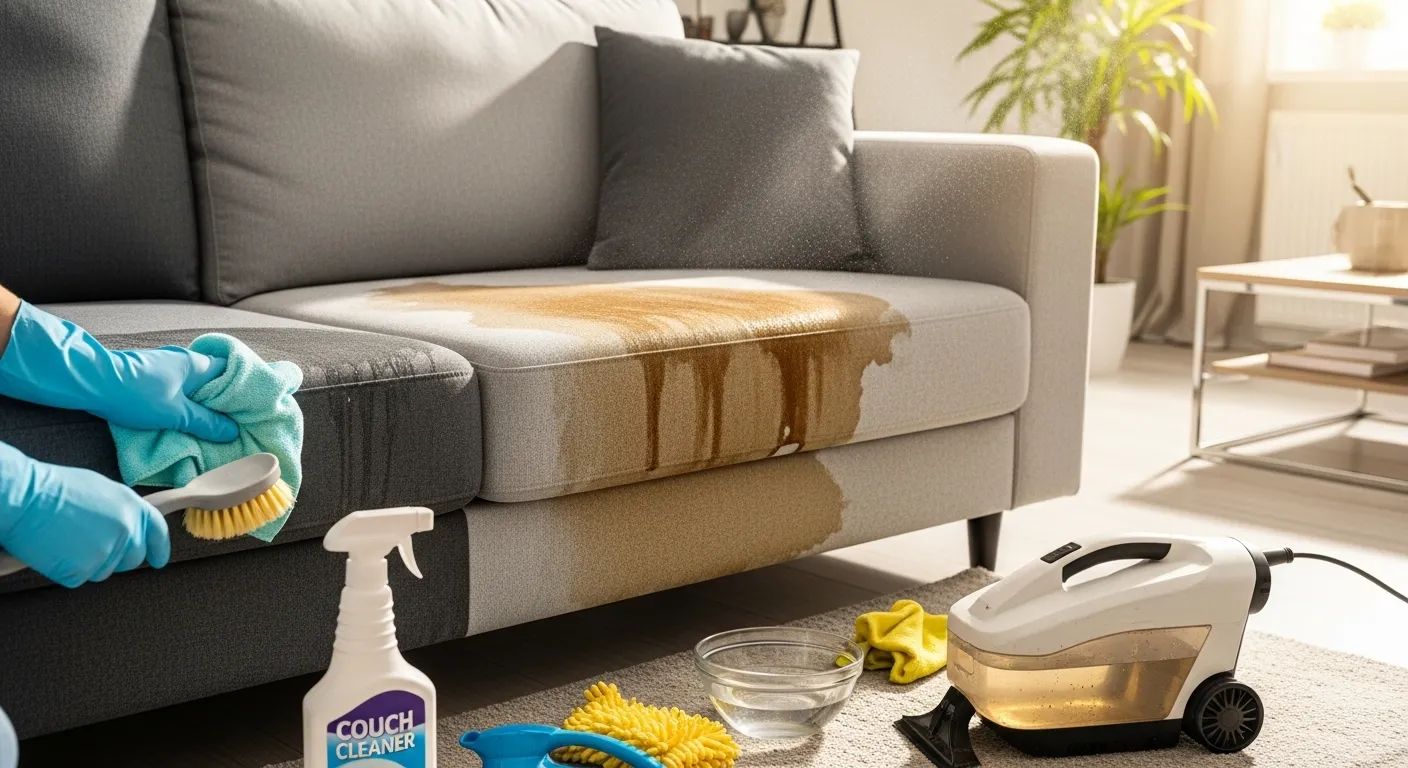
How to Deep Clean Your Couch and Remove Tough Stains Today
The living room is the heart of every home. It’s where families have movie nights and quiet moments. But, daily life leaves dust, crumbs, and spills that dull the fabric of our favorite seats.

Consistent maintenance is key to keeping furniture looking new. A regular cleaning routine keeps upholstery fresh. This makes your home feel welcoming without the need for expensive services.
By following this guide, you can tackle tough stains with confidence. Simple habits will keep your couch comfortable for years.
Understanding Your Couch Fabric and Cleaning Codes
Your couch is a big investment. Knowing its fabric type helps keep it looking new. Before using any liquid, it’s crucial to know your couch’s material. This way, you avoid damaging it. Follow these couch cleaning tips to keep your fabric bright and in good shape.
Decoding Manufacturer Labels
Modern furniture usually has a tag with cleaning instructions. These codes tell you which cleaners are safe for your couch. Not following these labels can cause stains or shrinkage.
Here’s a quick guide to common codes:
- W: Use water-based cleaners or mild detergent.
- S: Only use solvent-based cleaners.
- SW: Both water-based and solvent-based cleaners are okay.
- X: Don’t use liquids; vacuum or get professional help.
Identifying Natural vs. Synthetic Fibers
The type of your sofa affects how it handles moisture and heat. Natural fibers like cotton, linen, and wool soak up water. They can shrink or get water spots. These need gentle care to keep their texture.
Synthetic fibers like polyester, nylon, and microfiber are made to last and resist stains. They usually do well with water-based cleaners. A good couch cleaning tip is to test a small area first. This ensures you’re safe before cleaning the whole couch.
Essential Tools and Supplies for Upholstery Care
Creating a good cleaning kit is key to keeping your furniture clean. The right tools help you tackle spills on your sofa. With the right upholstery cleaning techniques, you can keep your home furniture looking great.
Choosing the Right Cleaning Solutions
Not every spill needs a strong chemical cleaner. It’s important to pick cleaners that fit your fabric type. This prevents damage or color changes. Always choose pH-balanced cleaners made for delicate fabrics.
If you’re not sure about a cleaner, check the label. The wrong cleaner can harm your furniture or leave sticky residue. This residue attracts dirt, making cleaning harder.
Must-Have Brushes and Cloths
A good cleaning kit needs the right tools to remove dirt. Quality brushes and cloths help you clean without harming your fabric. They’re key for regular and deep cleaning.
Microfiber Cloths vs. Paper Towels
Choosing the right cloth for spills is important. Microfiber cloths soak up spills well and don’t leave residue. They’re better than paper towels, which can leave behind paper bits.
Paper towels can be too rough for some fabrics and cause pilling. For best results, use clean, lint-free microfiber cloths for spills.
Soft-Bristled Upholstery Brushes
A soft-bristled brush is great for removing dust and dirt. These brushes gently clean without damaging your furniture. Regular use keeps your furniture looking new.
Remember to use these brushes gently. A light touch prevents damage to your furniture’s surface.
Preparing Your Sofa for a Deep Clean
Prepping your furniture is the best way to clean a sofa without damage. Make sure the surface is clean of loose particles. These can turn into mud or grime.
Clearing Debris and Vacuuming
First, take out all cushions and pillows. This lets you clean hidden parts of your couch. Use a vacuum with a soft brush to remove dust, pet hair, and crumbs.
Don’t forget to clean deep into crevices. Thoroughly vacuuming every corner helps avoid pushing dirt deeper. This makes cleaning easier.
Testing Cleaning Solutions for Colorfastness
After clearing the surface, check if your cleaner is safe for your fabric. A spot test is a critical step for deep cleaning sofa at home. It helps avoid color changes.
Put a small amount of cleaner on a hidden spot. Wait for it to dry before checking for color changes. If the color stays the same, you’re good to go.
This simple step is the best way to clean a sofa. It keeps your investment safe from harsh chemicals.
How to Deep Clean Your Couch and Remove Tough Stains
Accidents happen, but knowing how to deep clean your couch and remove unsightly blemishes is key. The secret to success is quick action and the right technique. Always blot gently, not rub, to avoid pushing stains deeper.

Treating Common Food and Drink Spills
Spills like coffee, wine, or soda can seem like a disaster. But, most liquids can be fixed quickly. First, soak up as much liquid as you can with a clean, white paper towel.
Once dry, mix mild dish soap with cool water. Apply this to the stain.
- Mix one teaspoon of clear dish soap with two cups of cold water.
- Dampen a clean cloth and gently dab the stain from the outside in.
- Rinse the area with a separate cloth dipped in plain water.
- Pat the fabric dry with a fresh towel to prevent water rings.
Lifting Pet Stains and Odors
Pet accidents need a special approach to remove stains and smells. Use an enzyme-based cleaner for organic waste. These cleaners break down the proteins in the stain, keeping pets away.
If you don’t have a commercial cleaner, try white vinegar and water. Test this on a hidden area first to keep colors from fading. Vinegar helps remove strong smells from the cushion fibers.
Addressing Ink and Marker Accidents
Ink and permanent marker accidents are tough, but not impossible. When removing stains from upholstery, be precise. Avoid soaking the fabric to prevent the ink from spreading.
Try these steps to lift the pigment:
- Dip a cotton swab into high-percentage rubbing alcohol.
- Gently dab the ink spot, changing the swab as it picks up color.
- Continue this process until no more ink transfers to the swab.
- Blot the area with a damp cloth to remove any remaining alcohol residue.
Step-by-Step: Deep Cleaning Methods for Couches
When just wiping down your couch doesn’t cut it, it’s time for deeper cleaning. Deep cleaning methods for couches can make your furniture look new again. These methods get rid of dust and allergens that hide deep in the fabric.
Using Steam Cleaners Safely
Steam cleaning is great for killing germs, but be careful not to harm your couch. Make sure not to soak the foam cushions too much. Always keep the steam wand moving to avoid burning the fabric.
- Test the steam cleaner on a hidden area first.
- Use the lowest heat setting recommended by the manufacturer.
- Keep the nozzle at least two inches away from the fabric surface.
- Avoid overlapping strokes too frequently to minimize moisture absorption.
Applying Foam Cleaners for Delicate Fabrics
For delicate materials like velvet, use a foam cleaner instead of steam. Foam cleaners gently remove dirt without soaking the fabric. This keeps your couch looking good.
Use a soft-bristled brush or a clean microfiber cloth to apply the foam. Move the brush in circles and then blot the area dry. This method is perfect for deep cleaning sofa at home without the risks of too much liquid.
Drying Techniques to Prevent Mildew
Drying your couch right is key to avoiding mildew and bad smells. Patience is essential when letting your couch dry completely.
To dry it faster safely, try these:
- Place a portable fan directly in front of the couch to improve airflow.
- Open nearby windows to encourage cross-ventilation in the room.
- Avoid sitting on the furniture until it is 100% dry to the touch.
- Use a dehumidifier in the room if the humidity levels are high.
Professional Couch Cleaning Techniques at Home
Many homeowners are surprised to learn that professional couch cleaning is possible at home. With the right products and methods, you can make your furniture look new again. These upholstery cleaning techniques keep your home clean without the cost of outside services.

When to Use Enzyme-Based Cleaners
Enzyme-based cleaners are great for tough stains. They break down proteins in pet accidents, food spills, and oils. Unlike regular soaps, they actually remove the stain, not just cover it up.
Use these cleaners for:
- Pet urine or biological accidents that leave lingering odors.
- Dried food spills that have bonded with the fabric fibers.
- High-traffic areas where organic oils have accumulated over time.
- Deep-set stains that have resisted traditional soap-and-water methods.
The Benefits of Steam Extraction
Steam extraction is a top choice for deep cleaning. It injects hot water and solution into the fabric, then vacuums it out. This method pulls out dirt and debris, not pushing it deeper.
Using these upholstery cleaning techniques has many benefits:
- Deep Sanitation: The heat kills bacteria and dust mites in the upholstery.
- Residue Removal: It removes cleaning agents, preventing sticky residue that attracts dirt.
- Fabric Longevity: It prevents fibers from wearing down too soon.
- Improved Air Quality: It reduces allergens in your furniture, making your home fresher.
Learning professional couch cleaning methods keeps your furniture clean and comfy for years. Staying consistent is key to keeping it looking new.
Maintaining Your Couch After a Deep Clean
You’ve worked hard to make your furniture look new again. Now, it’s time to keep it that way. Simple couch cleaning tips can make your sofa last longer.
Implementing a Regular Vacuuming Schedule
Dust, pet dander, and crumbs can damage your couch. They wear down the fabric over time. Start vacuuming your sofa every week to stop this.
Use a soft brush to avoid damaging the fabric. Focus on the tight spots where dirt hides. Vacuuming often keeps your sofa looking great and improves your home’s air.
Using Fabric Protectors
Using a fabric protector is a smart move. It stops liquids from getting into the fabric right away. This makes cleaning up spills much easier.
Here are some tips to keep your sofa in great shape:
- Rotate your cushions every month for even wear.
- Keep your sofa away from direct sunlight to prevent fading.
- Blot spills right away to avoid pushing stains deeper.
- Use arm covers or throws in busy areas to protect the fabric.
Following these couch cleaning tips will save you time and money. Being consistent is the secret to a beautiful, long-lasting sofa. With a bit of effort, your couch will stay a cozy part of your home.
Conclusion
A clean couch is the heart of a cozy home. Taking care of your upholstery keeps your furniture comfy for everyone. It makes your home inviting.
Regular cleaning becomes easy with the right tools. Brands like Bissell or Hoover make it simple. You’ll feel good knowing your home is clean and fresh.
By cleaning now, you avoid costly damage later. Small steps like quick spot treatments and vacuuming make a big difference. Your sofa will stay beautiful and comfy for years.
We love hearing about your cleaning wins. Share your top tips or amazing before-and-after photos. Your stories help others keep their homes clean and welcoming.
FAQ’s
What do the manufacturer cleaning codes on my sofa mean?
A: These codes are key for keeping your couch clean. W means use water-based cleaners. S is for solvent-based cleaners. SW is for both, and X means vacuum or brush only.
Following these codes helps avoid water rings and shrinkage.
How can I perform a diy couch stain removal for coffee or wine spills?
A: Quick action is crucial for stain removal. Blot spills with a clean cloth, not rub. For water-safe fabrics, mix mild dish soap with distilled water.
For organic messes, use an enzyme-based cleaner like Nature’s Miracle. It breaks down odors and proteins.
Is it safe to use a steam cleaner for a deep cleaning sofa at home?
A: Steam cleaning is effective but not for all couches. It’s safe for synthetic fibers like polyester. But, avoid high heat on delicate natural fibers.
Always check the tag for a “W” or “SW” code. Do a spot test before cleaning.
What tools are essential for effective upholstery cleaning techniques?
A: A high-quality vacuum with a crevice tool is essential. Tools like those on a Dyson or Shark remove hidden debris. A soft-bristled brush loosens dried mud.
Keep lint-free microfiber cloths handy. These tools help deep clean your couch without damaging the fabric.
How do I prevent my couch from developing mildew after a deep clean?
A: Proper drying is crucial. Never soak the cushions with too much liquid. Use fans, open windows, or a dehumidifier to dry the fabric.
Make sure the fabric is dry within 24 hours. This keeps your couch clean and safe.
Can fabric protectors help maintain my couch after it has been cleaned?
A: Yes! Fabric protectors like Scotchgard create a barrier against spills. This makes cleaning easier because liquids bead up, giving you time to blot them away.
How often should I vacuum my couch to keep it looking new?
A: Vacuum at least once a week, more often in busy homes. Use a vacuum with a HEPA filter to remove allergens and pet dander. Regular vacuuming keeps your couch looking great and extends its life.


