
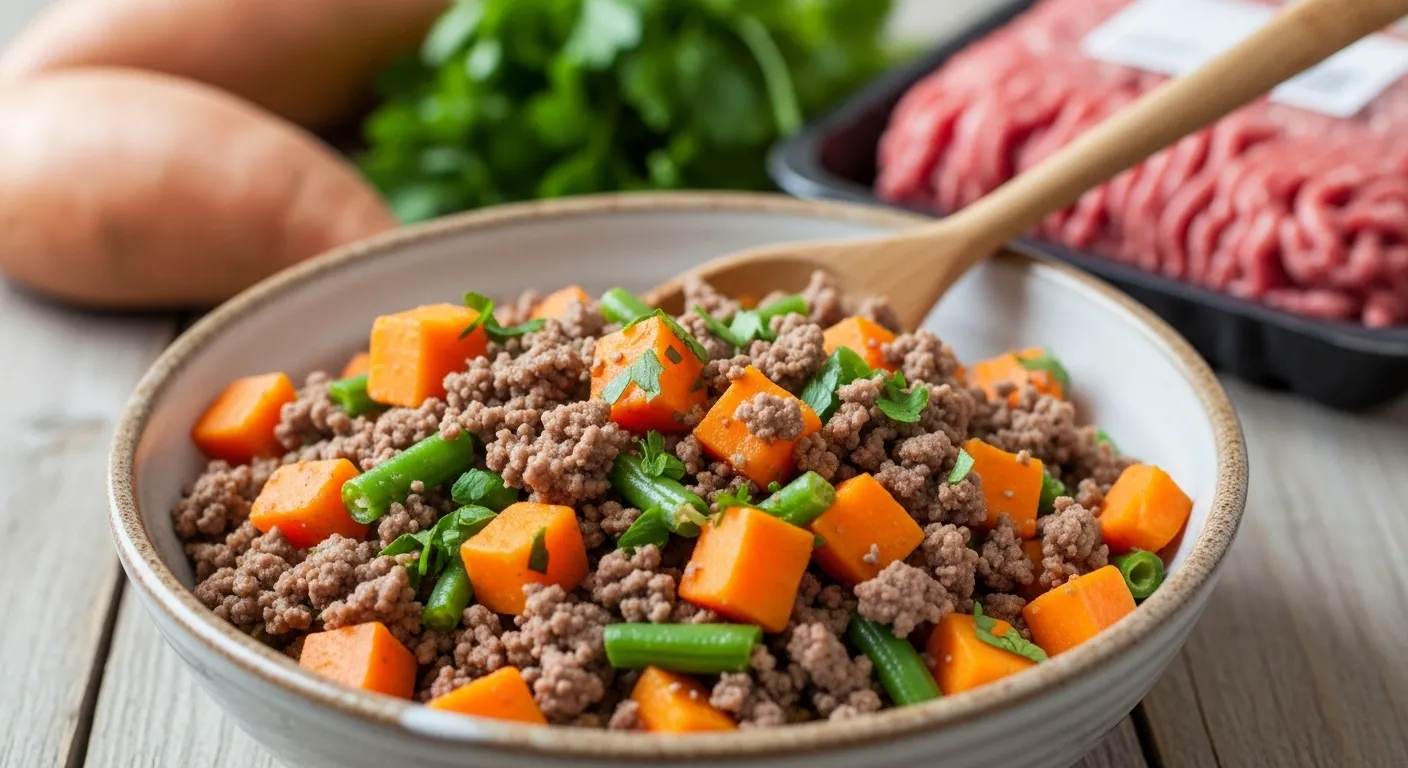
How to Make Beef and Sweet Potato Homemade Dog Food
Your loyal companion is more than just a pet; they are a cherished member of your family. You want to provide the very best care, starting with the nutrition in their bowl. Preparing meals yourself allows you to show love through every bite.

Many owners now choose to craft meals at home to ensure quality. This specific recipe offers a nutrient-dense profile that supports vitality for various breeds. By selecting wholesome ingredients, you gain complete control over what your furry friend consumes daily.
Balancing flavor with essential health requirements creates a happy, thriving pet. Taking this step ensures your canine receives the vitamins they need to stay active. It is a rewarding way to enhance their well-being while strengthening your unique bond.
Understanding the Benefits of Fresh Pet Nutrition
Feeding your dog fresh, whole foods is great for their health. When you focus on pet nutrition, you control what they eat every day. This can make them more energetic and happy.
Why Choose Homemade Over Commercial Kibble
Commercial foods often lose nutrients because of high-heat processing. Making healthy dog food at home avoids artificial preservatives and fillers. This way, your dog gets natural, high-quality ingredients.
Homemade meals let you tailor dog meal recipes to your pet’s needs. You know exactly what goes into their food. This is hard to find in store-bought options, making homemade better for many owners.
Nutritional Profile of Beef and Sweet Potatoes
Beef is great for pet nutrition because it has lots of protein. It helps keep muscles strong and supports a healthy coat. It’s also full of amino acids for a strong immune system.
Sweet potatoes are a perfect match for beef. They’re full of complex carbs and fiber for healthy digestion and energy. They also have vitamins A and C for your dog’s health.
Together, beef and sweet potatoes make a meal full of nutrients. These dog meal recipes help your pet stay healthy and happy. Choosing fresh pet food is a loving way to care for your dog.
Essential Safety Guidelines for DIY Dog Food
Starting to make natural dog food is exciting. But, it’s very important to be careful. You need to follow strict rules to keep your dog healthy and full of energy.
Consulting Your Veterinarian Before Changing Diets
Before you start making diy dog food, talk to your vet. Every dog is different. They need food based on their age, breed, and how active they are.
A vet can help you make sure your dog gets all the nutrients they need. This is the most important thing for your dog’s health.
Ingredients to Avoid in Homemade Dog Food
Some foods are very bad for dogs. They can make dogs very sick or even poison them. Make sure you don’t use these in your dog’s food:
- Onions, garlic, and chives
- Grapes and raisins
- Chocolate and caffeine
- Xylitol (often found in peanut butter)
- Macadamia nuts
Proper Storage and Food Safety Practices
Keeping things clean is very important when you’re handling food for your dog. Wash your hands, utensils, and surfaces well. This stops bad bacteria like Salmonella from spreading.
Store your natural dog food like you would your own. Use airtight containers and keep them cold. If you make a lot, freeze it right away. This keeps it fresh and stops bacteria from growing.
Selecting High-Quality Ingredients for Your Recipe
When making homemade pet food, the ingredients matter a lot. Good ingredients mean your dog stays healthy and happy. Using fresh, whole foods helps keep your pet well for a long time.
Choosing the Right Cut of Beef
The key to healthy dog food is quality protein. Look for lean beef like sirloin or top round. These cuts have the right amino acids without too much fat.
Make sure to buy meat from trusted places. This ensures your dog gets the best dog food ingredients. Lean, human-grade beef gives your pet the energy they need.
Preparing Sweet Potatoes for Optimal Digestion
Sweet potatoes are great for fiber and vitamins. But, they need to be cooked right. Steam or boil them until they’re soft.
Don’t give raw sweet potatoes to your dog. They’re hard to digest. Cooked sweet potatoes can be mashed or cut into small pieces. This way, your pet gets the most from this healthy veggie.
Adding Healthy Fats and Essential Supplements
A balanced meal needs more than just protein and carbs. Add healthy fats like fish oil or flaxseed oil. These fats are good for your dog’s skin and coat.
Also, think about adding supplements. Talk to your vet about what your homemade pet food might need. With the right dog food ingredients and supplements, your dog will stay healthy and happy.
Step-by-Step: Guide to Preparing Beef and Sweet Potato Homemade Dog Food
Making a beef and sweet potato homemade dog food dish is easy. Just a few steps in your kitchen. This way, your pet gets a meal that’s safe and full of nutrients. You control the quality of every ingredient.
Gathering Your Kitchen Equipment
First, set up your workspace. The right tools make cooking easier and faster. You’ll need:
- A large stockpot or Dutch oven for boiling or simmering.
- A sharp chef’s knife for dicing meat and vegetables.
- A sturdy cutting board that is easy to sanitize.
- A digital kitchen scale to ensure accurate portion sizes.
- A set of airtight containers for convenient storage.

Cooking the Beef and Sweet Potato Base
Start by browning the beef in a pan over medium heat. Make sure it’s fully cooked. Don’t add oils or seasonings that could upset your dog’s stomach.
Then, boil the sweet potatoes until they’re fork-tender. This takes about 15 to 20 minutes. This dog food recipe homemade way keeps the natural vitamins.
Mixing and Portioning the Final Meal
Once the ingredients cool, mix the beef and sweet potatoes in a bowl. Mash the potatoes a bit to mix well. This makes a texture dogs love.
- Divide the mixture into daily portions based on your dog’s weight.
- Place individual servings into airtight containers or freezer-safe bags.
- Store the daily portions in the refrigerator for up to three days.
- Freeze any extra batches to keep the food fresh for longer periods.
This dog food recipe homemade way makes serving meals easy. Always thaw frozen portions in the fridge before serving. A beef and sweet potato homemade dog food diet supports your pet’s health and happiness.
Balancing the Meal with Vegetables and Nutrients
Making dog meal recipes is more than just mixing protein and starch. Beef and sweet potatoes are a good start. But, your dog needs more vitamins to stay healthy. True health starts with a diverse bowl.
Incorporating Leafy Greens and Fiber
Leafy greens are great for your dog’s food. They add fiber for better digestion and keep your dog full. These greens also have antioxidants for a strong immune system.
Try adding these to your dog’s meals:
- Steamed spinach for iron and vitamins.
- Finely chopped kale for antioxidants.
- Cooked green beans for fiber.
- Grated carrots for beta-carotene and eye health.
The Importance of Calcium and Mineral Balance
Many forget about calcium in their dog’s diet. Without it, your dog might face health problems. Calcium is vital for strong bones and muscles.
You can’t just use meat for minerals. Talk to your vet about calcium supplements or bone meal powder. This keeps your dog’s diet safe and balanced.
Adjusting Recipes for Different Dog Sizes and Ages
Dogs of different sizes and ages need different nutrients. A growing puppy needs more calcium and protein than a senior dog. Tailoring your approach ensures your pet gets exactly what they need.
Remember these tips for different dogs:
- Puppies: Need more calcium and protein for growth.
- Active Adults: Need healthy fats for energy.
- Seniors: Need less calories and joint support.
- Small Breeds: May need smaller portions to manage blood sugar.
Watch your dog’s weight and energy to improve these dog meal recipes. Paying close attention to pet nutrition helps your dog live a long, happy life.
Transitioning Your Dog to a Homemade Diet
Starting to cook for your pet is exciting. But, how you introduce new meals is key. A sudden diet change can upset their stomach. A slow approach helps your dog adjust to natural dog food without stress.

The Gradual Transition Method
The best way to switch your dog is a seven to ten-day transition schedule. Begin by mixing a small amount of homemade food with their current diet. Start with 25% new food and 75% old food on the first few days.
As your dog gets used to it, increase the homemade meal every two days. By the end of the second week, they should eat 100% of the new natural dog food. This slow change helps their gut adjust to the dog food ingredients.
Monitoring Your Dog for Digestive Changes
Watch your dog closely during this time. Look for changes in stool, as loose stools mean the transition is too fast. If you see big changes, slow down the transition and keep the current ratio for a few more days.
Also, check their appetite and energy levels. Most dogs do great on fresh food, but patience is key for their best health. If you’re worried, talk to your vet for advice.
Common Mistakes to Avoid When Cooking for Pets
Even the most caring pet owners can make mistakes when cooking for their pets. You might forget important nutrients, even if you want the best for your dog. It’s crucial to avoid these errors to keep your homemade pet food safe and full of nutrients.
Over-relying on Single-Ingredient Diets
Feeding your dog the same few ingredients is a common mistake. This can lead to significant nutritional gaps over time. Dogs need a variety of vitamins and minerals to stay healthy.
Using only a few ingredients can miss out on important amino acids or trace elements. To safely make diy dog food, use a wide variety of whole foods. Always aim for a balanced mix to keep your pet healthy and happy.
Ignoring Caloric Density and Weight Management
Many owners forget that different foods have different energy levels. Not counting calories can cause weight gain or loss. Precision is key when managing your dog’s daily food intake.
Watch your dog’s body condition score to adjust food amounts. Using a consistent diy dog food recipe helps track calories. This way, you can provide homemade pet food that supports a healthy, active life for your dog.
Conclusion
Feeding your dog high-quality meals is key to their health. Making your own dog food lets you pick every ingredient. This way, you know exactly what your pet eats.
Choosing fresh pet food boosts your dog’s health and happiness. You’ll feel good knowing your dog is fueled for their adventures.
Being consistent is crucial. Work with your vet to make sure your dog’s meals are right. This keeps your dog healthy and happy.
Regular vet visits help you adjust food amounts as your dog grows or changes. Preparing fresh pet food strengthens your bond with your dog.
Start making a nutritious dog food recipe for your pet. Each meal shows the love and care you give them every day.


