
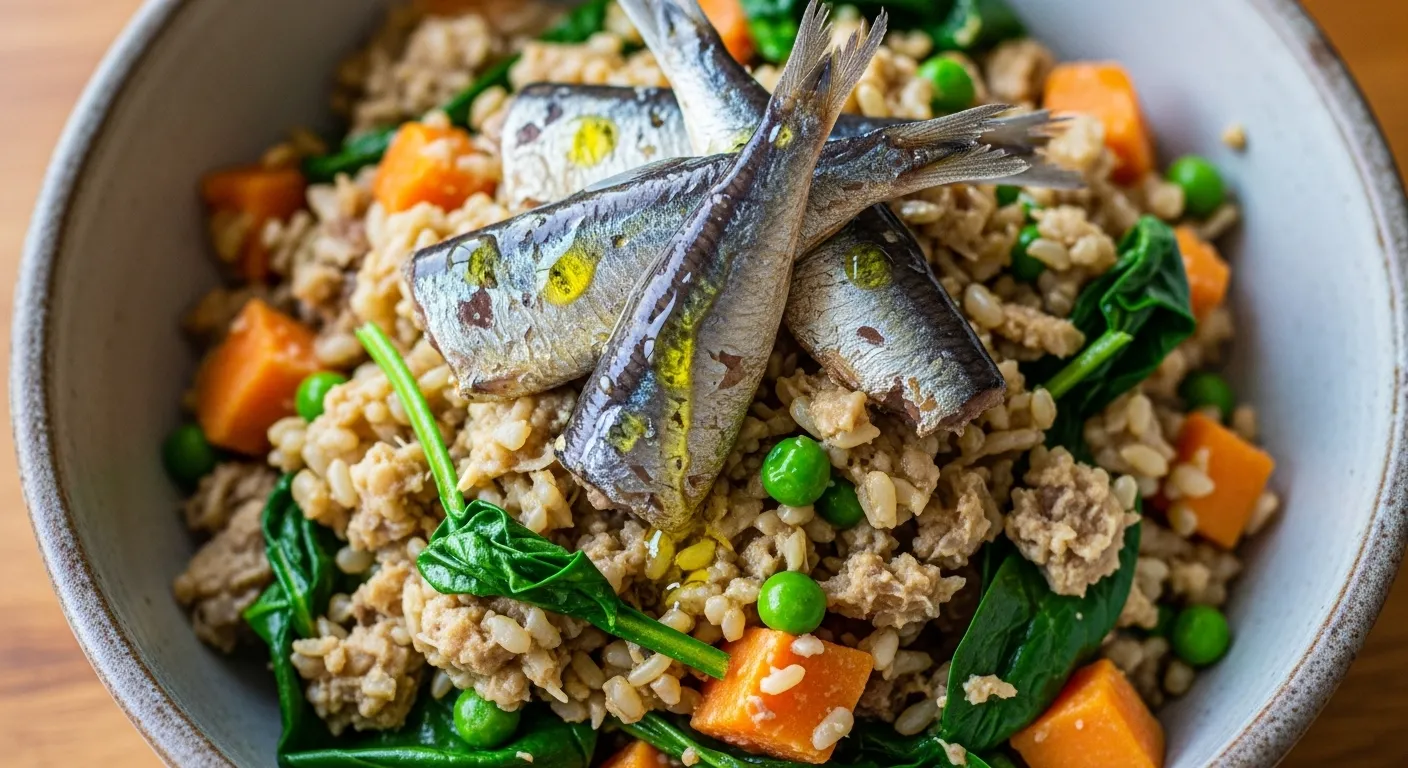
How to Make Homemade Dog Food with Sardines for Skin
Seeing your dog itch all the time or have dull fur is very sad. You just want them to be happy and healthy again. Many pet owners find that the key to a shiny coat is in their kitchen.
Switching to fresh, nutrient-rich meals can really help your pet. Using top-notch ingredients gives them the fatty acids they need. It’s a simple way to help them stay well from the inside out.

Small changes in their diet can make a big difference. Making their food yourself means you control what they eat. Let’s see how sardines can make your pet’s health better and bring back that glow you miss.
Understanding the Benefits of Sardines for Dogs
Adding sardines to your dog’s diet can really help their health. These small, oily fish are full of important nutrients. When you make homemade dog food with sardines for skin and coat health, you give your dog a natural boost. Many commercial diets don’t have this.
Nutritional Profile of Sardines
Sardines are very nutritious, full of high-quality protein and healthy fats. They have lots of EPA and DHA omega-3 fatty acids, which are key for your dog’s health. They also have vitamins like B12 and D, and minerals like calcium and selenium.
The benefits of sardines for dogs include better vitality and immune function. Since they are low on the food chain, they have less heavy metals than big fish. This makes them a safe choice for your dog’s meals.
How Omega-3 Fatty Acids Improve Skin and Coat Health
Omega-3 fatty acids are very important for skin and coat health for dogs. They help reduce inflammation. When your dog has dry, itchy skin, these fats soothe it at a deep level.
By adding sardines for dogs skin and coat health, you’ll see a big change. Your dog’s coat will look shiny and they’ll shed less. It’s a simple way to keep your dog feeling good and looking great every day.
Essential Ingredients for Homemade Dog Food with Sardines for Skin
Making homemade dog food with sardines for skin is a great way to help your pet stay healthy. Choose foods that are full of nutrients for a shiny coat. Use fresh, whole foods to give your dog the best nutrition.

Selecting High-Quality Sardines
When starting your homemade dog diet with sardines, pick the best fish. Always go for sardines in water, not oil or brine. This avoids extra additives.
Too much salt is bad for pets. So, always check the label for “no salt added” sardines. Wild-caught sardines are the cleanest source of good fats for your dog.
Complementary Vegetables and Grains for Skin Support
Adding the right veggies to fish makes a balanced meal. Sweet potatoes and carrots are great because they’re full of beta-carotene and fiber.
These veggies have vital antioxidants that protect the skin. You can also add cooked brown rice or quinoa for energy.
Supplements to Balance Your Homemade Diet
Fish and veggies are healthy, but not enough for all nutrients. Supplements help meet AAFCO standards for long-term health.
Using sardines for a dog’s skin and coat is a good start. But you need to balance calcium and phosphorus. Talk to your vet about a good multivitamin or mineral powder.
Safety Guidelines and Preparation Tips
Getting ready is key for a good homemade dog diet with sardines. The benefits of sardines for dogs are many, but safety first is important. A few extra steps in cooking can help avoid problems and keep your dog healthy.

Avoiding Harmful Additives and Sodium
When picking fish for your pet, check the label for hidden stuff. Many canned fish have too much sodium or added preservatives that can hurt dogs. Stick to sardines in water with no salt.
Stay away from fish with onion or garlic powder, as they are toxic to dogs. Reading labels well means you get pure, quality food without bad stuff. Simple ingredients help avoid stomach problems in dogs.
Proper Storage and Handling of Fresh Fish
Fresh fish needs careful handling to avoid bad bacteria and spoilage. If using fresh sardines, keep them cold until cooking. Proper storage keeps the fish’s nutrients good.
After cooking, store leftovers in a tight container in the fridge for two days max. Freeze big batches in portions for longer freshness. Safe handling practices mean you can feed your dog with confidence.
Consulting Your Veterinarian Before Dietary Changes
Talk to your vet before starting a homemade dog diet with sardines. Every dog is different, and your vet knows what’s best for your pet. They can tell you the right amount of sardines for a balanced diet.
Your vet might also suggest vitamins to make sure your dog gets everything they need. Talking openly with your vet makes sure any diet change is safe and works well. Professional advice is crucial for a successful homemade diet.
Step-by-Step: Recipe for Sardine-Infused Dog Meals
Making homemade dog food with sardines is a great way to help your pet. It lets you give them top-notch nutrients for homemade dog food with sardines for skin and coat health. This way, you skip the bad stuff in store-bought food.
Preparing the Base Ingredients
First, get fresh, whole foods that go well with sardines. You need protein, healthy fats, and veggies for a full meal.
- Sardines: Pick canned sardines in water, no salt added.
- Vegetables: Steam carrots, spinach, or green beans until soft.
- Grains: Cook brown rice or quinoa for energy.
- Healthy Fats: Add a bit of flaxseed oil for skin health.
Cooking and Mixing Techniques
When making this dog food recipe with sardines, keep the omega-3s safe. Don’t fry the fish because it loses good oils.
Steam your veggies and cook grains separately. Let them cool down. Then, mix in the sardines. Gently mashing the fish makes sure your dog gets the right mix in every bite.
Portioning Meals for Your Dog’s Size
It’s key to portion right for your dog’s health. Every dog needs the right amount of food based on their size, age, and how active they are.
- Small Breeds: Start with 1/4 cup grains and 1/2 sardine per meal.
- Medium Breeds: Use 1/2 cup grains and one full sardine.
- Large Breeds: Give 1 cup grains and two sardines for a big meal.
Watch your dog’s weight after starting this diet. If they gain or lose, change the grain amount to keep them healthy.
Incorporating Sardine Treats into Your Dog’s Diet
Want to make your dog’s skin better? Try adding sardine treats to their snacks. They’re a great way to add extra nutrients without changing their meals. It’s a fun and easy way to give your dog sardine benefits.
Simple Dehydrated Sardine Snacks
Making your own snacks is simple. Dehydrate fresh sardines to make crunchy, healthy treats. Just put them on a tray lined with parchment paper and bake until they’re dry.
These homemade snacks are better than store-bought ones with fillers. They keep the natural oils that help your dog’s coat stay healthy. Make sure they’re completely dry to avoid spoilage.
Mixing Sardines with Other Healthy Ingredients
You can mix sardines with other healthy stuff to make tasty bites. Add pumpkin puree or ground flaxseed for extra fiber and omega-3s. This creative mix helps support your dog’s skin.
While a full sardine dog food recipe needs careful balance, these treats are easier. Try freezing the mix in molds for a cool, healthy snack your dog will love.
Treat Frequency and Caloric Balance
Even healthy snacks should be given in small amounts. Sardines are full of nutrients, so they’re high in calories. Make sure treats don’t make up more than ten percent of your dog’s daily calories.
Watch your dog’s weight when adding sardine treats. If they start to gain, cut down their main meals a bit. This way, you can enjoy the benefits of these tasty snacks safely.
Monitoring Your Dog’s Skin and Coat Progress
When you start a new diet for your pet, watching their changes is key. This helps you see if your efforts to improve skin and coat health for dogs are working. Watching closely lets you spot small changes early.
Signs of Improvement in Skin Health
Changes will show up in a few weeks. A healthier coat will shine more. You’ll also see less hair around the house.
Less scratching and biting is another sign. A happier dog is a sign of good homemade dog food for healthy skin and coat.
Identifying Potential Allergic Reactions
Even with fresh food, watch for signs of sensitivity. Look for too much licking, ear problems, or upset stomach. These can happen with good food too.
If your dog has loose stools or vomits, stop the new food right away. Always keep a log of what you feed them. This helps find out what might be causing problems.
Adjusting the Diet Based on Results
Watching isn’t just about seeing; it’s about making changes. If things aren’t getting better, try adjusting the recipe. Swapping out a veggie or grain might help a lot.
Every dog is different. If you’re not sure how to change your homemade dog food for healthy skin and coat, talk to your vet. Small changes can make a big difference for your pet’s health.
Conclusion
Feeding your pet high-quality meals makes a big difference. They look better and feel more comfortable. You know how to pick the best ingredients for their meals.
Adding the best sardine recipes for dogs to their diet is easy. It helps them have a shiny coat and less itching. These meals give them the fatty acids they need, which kibble often doesn’t.
Choose fresh, low-sodium sardines from brands like Wild Planet or Crown Prince. This ensures your dog gets the best nutrition. Always tell your vet about these changes to keep your dog healthy.
Being consistent is key to seeing lasting changes in your dog’s look. Try these healthy meal plans today. You’ll see how much better your dog feels. Your effort in giving them good food will make them happy and healthy.


