
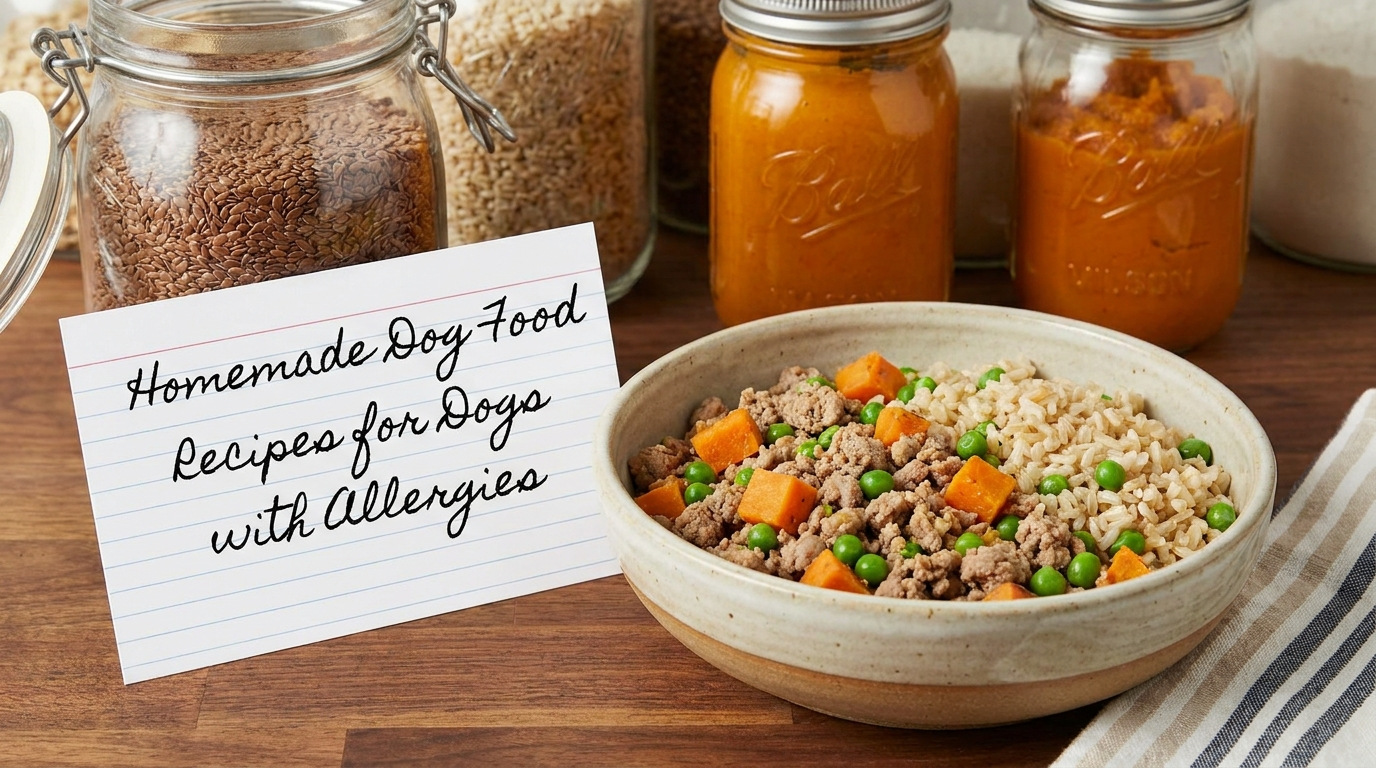
6 Homemade Dog Food Recipes for Dogs with Allergies You’ll Love
Seeing your dog itch or feel sick is heartbreaking. You wish they could be happy, healthy, and full of energy. Many pet owners think making their dog’s food is the best way to help.
This guide offers 6 homemade dog food recipes for dogs with allergies. It helps you feel sure about what to feed your dog. We’ll talk about picking the right ingredients, how to prepare them, and keeping the food balanced.

These dog food recipes use different main proteins. This makes it easy to find what’s best for your pet. You’ll also learn about the right serving sizes and how to store food safely.
Remember, these meals are just the beginning. Always talk to your vet before changing your dog’s diet. This ensures your pet gets the care they need.
Understanding Food Allergies and Sensitive Stomachs in Dogs
Finding out why your dog is uncomfortable is the first step to better health. If your pet has ongoing problems, making homemade dog food might help. But not every problem is an allergy.
Common signs that your dog may react to an ingredient
Your dog can’t tell you when something is wrong. So, you need to look for signs. Many pets have issues after eating certain foods. Watch for these signs:
- Chronic ear infections or inflammation.
- Persistent itching, licking of paws, or skin rashes.
- Frequent digestive upset, including gas or loose stools.
- Vomiting or unexplained changes in appetite.
If you see these signs, your dog might need sensitive stomach dog food. Tracking these signs helps find what’s causing the problem.
Food allergies versus food intolerances
Many people mix up allergies and intolerances. Allergies are an immune system reaction. Intolerances are when the body can’t digest something.
An allergy-friendly dog food can help with both. But the cause is different. Always get a vet’s advice before starting a diet. Simple, high-quality ingredients are best for your dog’s digestion.
Why your veterinarian should guide an elimination diet
An elimination diet is powerful, but it needs careful planning. Your vet can help make a diet that removes allergens and keeps your dog healthy. This often means using hypoallergenic dog food to find the problem.
Having a vet’s help is important. They make sure you don’t add new problems. Consistency is key in testing new foods. A structured plan helps figure out what your dog needs to be well.
How to Choose Allergy-Friendly Ingredients for Homemade Dog Food
When your dog has food allergies, picking the right ingredients is key. It’s essential for managing their sensitivities and keeping them healthy every day.
Remember, just because a dog food is labeled natural dog food or grain-free dog food, it’s not always complete. You need to make sure the diet is balanced and meets your dog’s health needs.

Simple proteins for limited-ingredient recipes
Using fewer ingredients makes it easier to track what causes a reaction. Choose one new protein source to start with. This helps you quickly find out if it’s safe for your dog.
Good protein choices include turkey, salmon, chicken, beef, lamb, or whitefish. These are great bases for hypoallergenic dog food recipes.
Dog-safe vegetables and carbohydrate options
Next, add digestible carbs and veggies to your protein. Sweet potatoes, pumpkin, and quinoa are often safe for dogs with sensitive stomachs.
These foods give your dog the fiber and energy they need. Make sure to cook them well to help with digestion and nutrient use.
Ingredients to avoid when your dog has suspected allergies
Some common ingredients can make allergies worse. Avoid using garlic, onion, or too much salt. These can be harmful or irritating to your dog.
Always check with your vet before starting a new allergy-friendly dog food plan. They can guide you and make sure your homemade hypoallergenic dog food is safe and works for your dog.
6 Homemade Dog Food Recipes for Dogs with Allergies
Cooking for a dog with food sensitivities is rewarding. It helps their long-term health. By making dog food recipes at home, you control every ingredient.
Turkey and Sweet Potato Allergy-Friendly Dog Food
Ingredients and nutritional purpose
This recipe uses lean turkey as a protein source. It’s easy for dogs to digest. Sweet potatoes add essential fiber and complex carbs for energy.
Cooking directions and safe preparation
Boil the turkey until it’s fully cooked. Shred it into small pieces. Steam sweet potatoes until soft, then mash them.
Mix the turkey and sweet potatoes. Make sure the meal is cooled before serving your homemade dog food.
Ingredient swaps for dogs with additional sensitivities
If your dog can’t eat sweet potatoes, use cooked butternut squash instead. Make sure the turkey has no added seasonings or sodium.
Salmon and Pumpkin Sensitive Stomach Dog Food
Ingredients and nutritional purpose
Salmon is rich in omega-3 fatty acids. It soothes inflamed skin. Pumpkin is a gentle digestive aid, making it great for sensitive stomachs.
Cooking directions and safe preparation
Bake the salmon until it flakes easily. Remove all bones. Mix it with plain, canned pumpkin puree. Serve in small portions.
Ingredient swaps for dogs with additional sensitivities
If salmon doesn’t work, try whitefish. Swap pumpkin for cooked carrots if your dog prefers a different texture.
Chicken and Quinoa Homemade Dog Food
Ingredients and nutritional purpose
Chicken is a high-quality protein for muscle maintenance. Quinoa is a gluten-free seed with a complete amino acid profile.
Cooking directions and safe preparation
Cook the chicken breast thoroughly. Dice it into bite-sized cubes. Rinse quinoa well before boiling it until fluffy. Mix the ingredients and store in airtight containers.
Ingredient swaps for dogs with additional sensitivities
If your dog is allergic to chicken, use duck as a lean protein. Millet can replace quinoa for a different grain option.
Beef and Green Bean Grain-Free Dog Food
Ingredients and nutritional purpose
Lean ground beef is a palatable protein source. Green beans add volume and vitamins without extra calories, making it a great grain-free dog food.
Cooking directions and safe preparation
Brown the ground beef and drain excess fat. Steam green beans until tender, then chop them finely. Combine the beef and beans when they’re room temperature.
Ingredient swaps for dogs with additional sensitivities
If beef causes a reaction, use venison. Swap green beans for zucchini if your dog prefers it.
Lamb and Brown Rice Limited-Ingredient Dog Food
Ingredients and nutritional purpose
Lamb is a flavorful protein for limited-ingredient diets. Brown rice is a gentle, digestible carb source for sensitive systems.
Cooking directions and safe preparation
Cook the lamb until it’s well-done and remove fat. Cook brown rice according to package directions. Mix the two for a balanced meal.
Ingredient swaps for dogs with additional sensitivities
If rice is a problem, use cooked oatmeal. Rabbit is a good alternative if lamb doesn’t work.
Whitefish and Potato Natural Dog Food
Ingredients and nutritional purpose
Whitefish is a lean, hypoallergenic protein. Potatoes are a simple, natural dog food base that’s easy on the digestive tract.
Cooking directions and safe preparation
Poach the whitefish until it’s tender. Boil potatoes until soft, then peel and mash them. Combine the fish and potatoes, ensuring no bones.
Ingredient swaps for dogs with additional sensitivities
If potatoes are a concern, use parsnips as a substitute. Cod or haddock are good fish choices for rotating protein sources.
How to Make Each Recipe Nutritionally Complete
Cooking for your pet is rewarding, but it’s a complex science. Many owners think mixing a protein, a vegetable, and a carbohydrate makes a healthy meal. But homemade dog food often lacks the right vitamins and minerals for long-term health.

Why homemade dog food needs balanced calcium and essential nutrients
Your dog needs a certain balance of calcium and phosphorus for strong bones and teeth. Without the right ratio, your pet may have serious skeletal problems. It is vital to understand that muscle meat alone is not enough for a growing or active dog.
Your dog also needs essential fatty acids, trace minerals, and vitamins. Using human food scraps or simple recipes can lead to dangerous deficiencies. Properly formulated homemade dog food must include these micronutrients to prevent chronic health issues.
When a canine-specific vitamin and mineral supplement may be needed
Even with high-quality ingredients, most home-cooked meals don’t meet AAFCO standards. You should talk to a veterinary nutritionist to see if a canine-specific supplement is needed. These supplements fill the nutritional gaps that fresh food can’t cover alone.
Don’t use human multivitamins, as they can be toxic to dogs. Always choose a supplement made for canine biology. This ensures your pet gets the right nutrients for their life stage and activity level.
Why you should not replace a commercial diet without veterinary guidance
Switching to homemade food is a big change for your dog’s digestive system. Never replace a commercial diet without your vet’s clear instructions. They can check if your homemade dog food plan is safe and good for your pet.
A professional can watch for signs of nutrient imbalances during the transition. Your veterinarian’s expertise is key to keeping your dog happy and healthy. Relying on their advice helps you avoid common mistakes in DIY pet nutrition.
Portion Sizes and Safe Ways to Serve Homemade Dog Food
After making your homemade dog food, figuring out how much to give is key. The right amount is crucial for your pet’s health and happiness.

Estimating portions based on your dog’s size and activity
Dogs need different amounts of food based on their breed, age, and how active they are. A busy working dog needs more food than a lazy senior dog.
Start by figuring out your dog’s resting energy needs. Always check with your vet to find the right calorie amount for your dog’s body type.
Transitioning gradually from your dog’s current food
Changing your dog’s food too fast can upset their stomach, which is bad if they have a sensitive stomach or need sensitive dog food. A slow change lets their stomach get used to the new food.
Start by mixing a little of the new food with their old food over seven to ten days. Slowly add more new food and less old food until they only eat the new food.
Adjusting portions for weight changes, age, and health needs
Watching your dog’s health closely is important. Look at their poop, how much they eat, and their energy level for the first few weeks.
If your dog is gaining or losing weight, you might need to change their food amount. Tracking their body condition score helps keep your homemade dog food balanced for their life stage.
Storage, Batch Cooking, and Food Safety Tips
Keeping your dog’s food safe is key to a good homemade dog food diet. Organize your kitchen well to keep meals fresh and safe. This care ensures your pet gets the right food.

Refrigerating and freezing prepared meals
Batch cooking saves time during the week. Let the homemade dog food cool down before storing. This stops moisture and bacteria.
Use containers made for food to keep meals fresh. Label them with the date and recipe name. This helps you use the oldest food first.
- Store meals in the fridge for up to three days.
- Freeze big batches in single servings for easy use.
- Use bags or glass for the freezer to keep quality high.
- Write down what you have on your freezer door.
Thawing and reheating homemade dog food safely
Thawing food safely is very important. Move it from the freezer to the fridge the night before. This keeps it safe and ready for the next day.
If you’re in a rush, thaw in cool water. Don’t use the microwave to avoid burns.
Always serve food at room temperature or a bit warm. Never leave thawed food out for more than an hour. This stops bacteria from growing too fast.
Preventing contamination from raw ingredients and leftovers
Keeping your kitchen clean is crucial. Wash your hands well before and after making homemade dog food.
Make sure your pet’s food area is separate from human food. Use different cutting boards, bowls, and tools. This stops raw proteins from mixing with other foods.
Clean everything with hot, soapy water after cooking. Follow these strict hygiene standards to keep your dog safe. This makes sure their meals are healthy and safe.
Homemade Dog Treats for Dogs with Allergies
Making your own homemade dog treats lets you control every ingredient. Store-bought snacks can cause allergic reactions in dogs. Simple recipes keep your pet healthy and happy.

Single-ingredient baked sweet potato treats
Sweet potatoes are great for dogs with allergies. Wash and slice a potato into thin rounds. Bake them on a parchment-lined sheet until they’re chewy or crunchy.
These simple snacks can be stored in an airtight container in the fridge for a week. Label the container so you know what’s inside. They’re perfect for tracking reactions because they only have one ingredient.
Frozen pumpkin bites for sensitive stomachs
Frozen pumpkin bites are cool and soothing for dogs. Use pure, canned pumpkin without added sugars or xylitol. Spoon small dollops onto a silicone mat and freeze until solid. Then, put them in a freezer-safe bag.
These homemade dog treats are great for hot days or as a gentle reward. They can be stored in the freezer for weeks. Keep your storage area clean to avoid cross-contamination.
How to match treats with your dog’s elimination diet
When your dog is on a strict diet, treats are important. They add calories and can upset your diet if they have hidden allergens. Make sure the treats match the diet you’re testing.
If you’re testing a new protein, avoid treats with other ingredients. Consistency is key in finding an allergy trigger. These single-ingredient treats let you reward your dog safely while keeping their diet on track.
Choosing the Best Recipe for Your Dog’s Allergy Plan
Finding the right food for your dog with allergies can be tough. You want the best for them, but remember, hypoallergenic dog food and natural dog food aren’t a replacement for a vet’s advice. Every dog is different, needing a special plan for their health.
How to select a recipe when the trigger protein is unknown
Start with a simple, limited-ingredient approach if you don’t know what’s causing the allergy. Pick a protein like duck or rabbit that your dog hasn’t tried before. This lowers the chance of a bad reaction while you figure things out.
Choosing allergy-friendly dog food means picking ingredients that are less likely to cause a reaction. Keep a list of every ingredient in your dog’s food. This list will help a lot when you talk to your vet.
How to use one novel protein consistently during an elimination trial
Being consistent is key during an elimination trial. Use only one new protein for weeks to see how your dog does. Changing recipes too often makes it hard to find the problem ingredient.
Sticking to one diet lets your dog’s body adjust and heal. Adding new foods too soon can confuse things and make your dog uncomfortable. Being patient is the best way to find a lasting solution.
When to stop a recipe and contact your veterinarian
Even with good intentions, some dogs may not do well with new foods. Stop using a recipe right away if your dog’s symptoms get worse. Signs like bad skin, vomiting, or diarrhea mean the food isn’t working.
If your dog keeps having tummy troubles or acts differently, call your vet fast. Getting professional help is crucial to keep your dog safe and healthy. Don’t wait to ask for help if your natural dog food plan isn’t helping your pet.
Conclusion
Managing your pet’s sensitivities needs patience and quality ingredients. These 6 homemade dog food recipes help improve your pet’s comfort. They use simple proteins and safe veggies to avoid reactions.
Being consistent is key when using these recipes. Always talk to your vet to make sure the food is right for your pet. Proper storage and portion control keep the food fresh and safe.
Homemade treats should follow the same diet rules as meals. Small changes help find what causes problems. Your care in cooking helps your dog stay healthy for a long time.
Homemade meals are a great way to care for your dog. Focus on quality, safety, and vet advice for the best care.


