
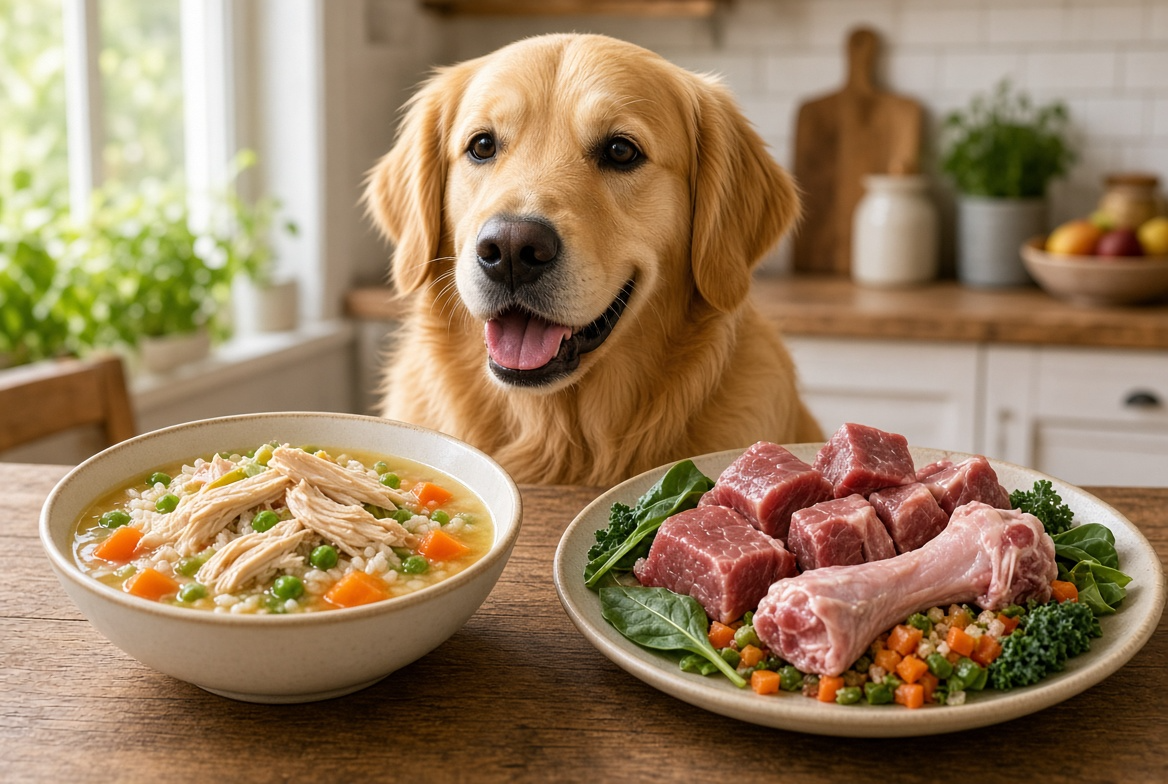
6 Cooked Dog Food Recipes vs Raw: Full Comparison
Choosing the right food for your dog is a big decision for pet owners in the United States. You want your dog to be healthy, full of energy, and happy for a long time. Whether you’re thinking about homemade meals or natural diets, knowing the differences is key.
This guide compares 6 cooked dog food recipes vs raw: a comparison to help you make a choice. We’ll look at important things like nutrition, safety, and how long it takes to prepare.

Your pet’s individual needs should always be the main thing to think about when picking a diet. By looking at storage needs and health benefits, you can see which way works best for you and your pet. Let’s see how these methods affect your daily life and your pet’s health over time.
How to Compare Cooked and Raw Dog Food
When you start a dog food comparison, look beyond the surface. See what truly fuels your canine companion. Making an informed choice requires weighing different feeding styles against your household capabilities. This ensures your pet gets the best care.
Nutrition, digestibility, and ingredient quality
The core of any nutritional strategy is how well your dog absorbs vitamins and minerals. Cooked diets are often high in digestibility, thanks to the heating process. Raw diets, on the other hand, may offer better enzyme activity for health.
Always choose high-quality ingredients, no matter the preparation method. The balance of amino acids, fats, and micronutrients is key for long-term vitality.
Food safety risks for dogs and people
Safety is key when handling raw meat in your kitchen. Raw diets carry a higher risk of bacterial contamination, like Salmonella or E. coli. This can harm both your dog and family members. Keep strict hygiene standards if you choose raw.
Cooked meals reduce these risks through heat treatment. They are a safer option for households with young children, elderly, or those with weak immune systems.
Preparation time, storage, and serving convenience
Your daily schedule is crucial in your dog food comparison. Raw feeding requires careful thawing and immediate serving to prevent spoilage. This can be time-consuming. You also need dedicated freezer space for raw portions.
Cooked meals offer batch cooking benefits, saving time during the week. They can be stored in the fridge or freezer, making them convenient for busy pet parents.
Why your dog’s age, health, and activity level matter
Every dog has unique needs that change with age. A growing puppy needs different calories and minerals than a sedentary senior dog. Consider these factors in your dog food comparison to support their life stage.
If your dog has sensitive digestion or medical conditions, talk to your vet before switching. A vet can help decide if cooked or raw is better for your dog’s health and activity level.
6 Cooked Dog Food Recipes vs Raw: A Comparison
Looking at 6 cooked dog food recipes vs raw shows how ingredients affect your dog’s health. These options help you find the right balance for your pet.
Remember, these homemade dog food recipes are just examples. They often need extra minerals and vitamins for long-term health.

Chicken, rice, carrots, and green beans
Key ingredients and cooking method
This classic recipe boils chicken breast and mixes it with steamed rice. It adds steamed carrots and green beans for fiber and vitamins.
Nutrition strengths and limitations
This meal is highly digestible and gentle on the stomach. But it lacks the complex nutrients in organ meats and may be low in fatty acids.
How it compares with a raw chicken-based meal
A raw chicken diet includes bone and cartilage for natural calcium. Cooking removes these benefits, so you need to add calcium to your homemade version.
Turkey, pumpkin, quinoa, and spinach
Key ingredients and cooking method
Ground turkey is browned without oil, then mixed with cooked quinoa and pumpkin. Fresh spinach is added at the end to keep its nutrients.
Nutrition strengths and limitations
This recipe is great for dogs needing lean protein and high fiber. It can be bulky, which might not suit dogs with small appetites.
How it compares with raw turkey and organ meat
Raw turkey diets include heart and liver for nutrients. Your cooked version needs careful balancing to match these nutrients.
Lean beef, sweet potato, and vegetables
Key ingredients and cooking method
Lean ground beef is cooked and mixed with boiled sweet potatoes. Peas or zucchini add color and nutrients.
Nutrition strengths and limitations
Beef gives essential amino acids and iron for muscle health. The main issue is high fat if you don’t choose lean cuts.
How it compares with a raw beef-based diet
Raw beef diets use raw bones for dental health. Cooking beef means losing the teeth-cleaning action of raw bones.
Salmon, brown rice, and leafy greens
Key ingredients and cooking method
Fresh salmon is baked or poached, then mixed with brown rice. Chopped kale or chard adds antioxidants.
Nutrition strengths and limitations
This recipe is rich in Omega-3 fatty acids for skin and coat health. The risk is mercury or parasites if the fish is not high quality.
How it compares with raw fish and seafood
Raw fish diets are riskier for bacterial contamination. Cooking salmon makes it safer for many homes.
Lamb, barley, zucchini, and carrots
Key ingredients and cooking method
Ground lamb is cooked and mixed with pearl barley. Steamed zucchini and carrots complete the meal.
Nutrition strengths and limitations
Lamb is good for dogs with protein allergies. It can be expensive, affecting your homemade dog food budget.
How it compares with raw lamb and bone-in meals
Raw lamb diets use bones for calcium. Your cooked version needs a vet-approved calcium source for the right ratio.
Egg, oatmeal, cottage cheese, and vegetables
Key ingredients and cooking method
Scrambled eggs are mixed with oatmeal and cottage cheese. Broccoli adds more vegetables.
Nutrition strengths and limitations
This recipe offers high-quality protein and is easy to make. It might not have enough calories for active dogs.
How it compares with raw egg and dairy ingredients
Raw egg diets risk salmonella, and some dogs can’t digest raw dairy. Cooking eggs and using pasteurized dairy makes it safer.
Dog Nutrition Comparison: What Cooked Meals and Raw Diets Provide
When you look at dog nutrition comparison, you see it’s not just about ingredients. Both raw and cooked diets aim to meet your pet’s needs. Knowing the differences is key for your dog’s health.
Protein, fat, and carbohydrate balance
Raw and cooked diets need the right mix of macronutrients. Raw diets often have more protein and fat. Cooked meals can include carbs like sweet potatoes or brown rice.
- Protein: Essential for muscle maintenance and tissue repair.
- Fat: Provides the primary energy source for active dogs.
- Carbohydrates: Offer fiber and sustained energy for digestion.
It’s important to match these ratios to your dog’s life stage. The wrong balance can cause weight gain or tiredness.

Calcium, phosphorus, and essential micronutrients
Calcium and phosphorus are crucial for a healthy skeleton. In a raw vs cooked dog food look, note how these minerals are handled. Raw diets use bones for calcium, while cooked diets need supplements to avoid deficiencies.
Micronutrients like zinc, iodine, and vitamins are sensitive to heat. Cooking can break down these nutrients, so you might need to add them back in.
Digestibility and stool quality
Digestibility is how much your dog absorbs versus what’s left as waste. Cooked meals are often easy to digest, leading to smaller, firmer stools. Raw diets can cause different stool types due to enzymes and bones.
Changes in digestion can mean your dog’s diet isn’t working well. Watching for these signs helps you know if your feeding plan is right.
Why ingredient freshness does not guarantee nutritional completeness
Many think fresh, human-grade ingredients make a balanced meal. But even the freshest foods lack all the needed minerals and vitamins. Nutritional completeness needs a scientific approach to fill all diet gaps.
Without expert formulation, even expensive ingredients can be lacking. Remember, freshness is a quality metric, but balance is a must for nutrition.
Raw vs Cooked Dog Food: Safety Risks You Should Weigh
When you look at raw vs cooked dog food, safety is key. Many owners focus on what’s good for their pets. But, knowing the dangers is crucial for everyone’s health.

Salmonella, E. coli, and other bacterial hazards
Raw diets can have a higher risk of Salmonella and E. coli. These harmful bacteria can grow in uncooked meat. This is a big risk for your dog’s stomach.
Cooking food kills these bad microbes. So, when you look at raw vs cooked dog food, cooked is safer for your pet.
Bone injuries, dental damage, and intestinal blockages
Raw feeding often includes raw bones. These bones can be extremely dangerous for your dog. They might break and hurt your dog’s mouth or throat.
Also, bones can get stuck in your dog’s intestines. This can cause serious problems that need emergency surgery. It’s expensive and scary for your pet.
Parasites, spoiled ingredients, and unsafe food handling
Raw ingredients can have parasites that cooking kills. If you choose raw, make sure the meat is from trusted sources. This lowers the risk.
Even with good ingredients, bad storage or handling can spoil them. Always keep your kitchen clean to avoid mixing with your food.
Household risks for children, older adults, and immunocompromised people
The risks of raw vs cooked dog food aren’t just for your pet. If your dog eats raw meat, they can spread bacteria. This can get on surfaces in your home.
This is a big risk for kids, older people, and those with weak immune systems. If you live with these people, cooked food is safer for everyone.
How Preparation and Storage Affect Your Best Dog Food Options
Choosing the best dog food options is more than picking good ingredients. How you prepare, store, and serve meals affects your dog’s health. Sticking to routines makes sure every meal is nutritious and safe.
Cooking temperatures and safe handling practices
When cooking meat for your dog, it’s essential to hit the right temperature. Use a digital meat thermometer to check chicken, beef, or turkey. Always wash hands, cutting boards, and utensils after handling raw meat to avoid contamination.

Refrigerating, freezing, thawing, and reheating homemade meals
Storing meals properly keeps them fresh and full of nutrients. Use airtight containers in the fridge for up to three days, or freeze for longer. Thaw frozen meals in the fridge, not on the counter. Reheat gently to keep vitamins intact.
Portion control and preventing calorie overload
Even the best dog food options can cause weight gain if not portioned right. Homemade meals have more calories than kibble. Use a kitchen scale for accurate servings based on your dog’s needs. Consistency helps keep your dog at a healthy weight.
Why raw meals may require more kitchen sanitation
Raw diets need extra care because of bacteria like Salmonella. Clean every surface that touches the food right away. While cooked meals also need clean habits, raw diets require more frequent deep cleaning to keep your home safe.
Which Dogs May Benefit From Cooked or Raw-Style Feeding?
Every dog is different, so a canine diet analysis is key for their health. Some dogs do well with many foods, while others need a specific diet. Knowing your dog’s needs helps decide if cooked or raw food is best for them.

Dogs with sensitive stomachs or food intolerances
If your dog often has stomach problems, gentle, cooked meals are a good start. Cooking makes food easier to digest. A homemade cooked diet can also help avoid common allergies.
Puppies, pregnant dogs, and senior dogs
Dogs at different life stages need different foods. Puppies and pregnant dogs need more calories and certain minerals for growth. Senior dogs, on the other hand, need less food that’s easy to digest to help with weight and joint health.
Active, overweight, and sedentary dogs
Active dogs, like working breeds, do well on nutrient-dense raw diets. These diets give them the energy they need. But dogs that are not active or are overweight need to watch their calories, no matter the diet.
Dogs with medical conditions that require veterinary nutrition plans
For dogs with ongoing health issues, a canine diet analysis is crucial. Conditions like kidney disease or diabetes need special diets. Always talk to your vet to make sure the diet is right for your dog’s health needs.
Making Homemade Dog Food Recipes Complete and Balanced
Creating balanced meals for your dog is more than just mixing ingredients. Nutritional science is key for a healthy life. Many owners find their favorite recipes lack the needed chemical balance for long-term health.
Why meat, vegetables, and grains alone are not enough
A diet of just muscle meat, veggies, and grains has big nutritional gaps. These foods are good for protein and fiber but lack minerals. Without careful planning, your dog may face hidden deficiencies that harm bones and organs.
Muscle meat has lots of phosphorus but little calcium. If not balanced, your dog’s bones may suffer. Using basic grocery items without a scientific plan can lead to serious health issues.
Using calcium and veterinary-formulated supplements correctly
To fill nutritional gaps, add specific additives to your dog’s diet. Calcium supplements are needed to balance meat’s high phosphorus. But never guess the dosage, as improper supplementation can harm.
Use veterinary-formulated supplements made for dogs. These ensure your dog gets the right vitamins and minerals. Always talk to a vet to find the right additives for your dog’s age and size.
Meeting AAFCO nutrient profiles with professional guidance
The Association of American Feed Control Officials (AAFCO) sets the standard for pet nutrition in the U.S. Meeting these profiles is crucial for your dog’s health. A veterinary nutritionist can help make these standards work for your dog’s meals.
Professional help avoids common cooking mistakes. An expert can review your plan and suggest changes for your dog’s health. This partnership ensures your dog gets a complete diet.
When an organic dog food approach helps and when it does not
Many owners choose organic dog food to reduce chemical exposure. Organic ingredients support your dog’s health. But, remember, organic status does not mean nutritional completeness.
An organic carrot is still just a carrot. It lacks essential amino acids and minerals. While organic is good, a balanced recipe is more important. The quality of ingredients matters less if the nutrients are not balanced.
Cost, Convenience, and Long-Term Feeding Practicality
Choosing the right food for your dog is more than just looking at labels. You need to think about your budget, daily schedule, and how easy it is to prepare food. This helps you find the best dog food options for your lifestyle.
Comparing grocery costs for cooked ingredients and raw cuts
Shopping for fresh ingredients can cost a lot, depending on what you buy. Raw cuts, like organic meats, can be expensive at first.
Cooked meals might seem cheaper, but you also need to think about the cost of grains and veggies. Keeping a steady grocery budget is easier if you buy things in bulk, whether raw or cooked.
Batch cooking versus daily raw meal preparation
Batch cooking lets you make meals for a week in one go. This saves a lot of time during the week. You just need to portion out the food and store it.
Raw feeding, on the other hand, needs daily work to thaw and keep clean. Some like the freshness of daily meals, but others find batch cooking easier to keep up with.
Commercial complete diets as an alternative to homemade feeding
If making meals at home is too much, commercial diets are a good choice. They meet strict nutrition standards, making your life easier.
Many premium brands offer fresh ingredients without the mess of cooking. This is a smart way to ensure your dog gets the nutrients they need without stressing about meal prep.
Choosing a plan you can follow consistently
The best diet is one you can stick to without getting tired or stressed. Think about your freezer space, comfort with raw meat, and how much time you have for meal prep each week.
By choosing a routine that works for you, your dog will always get the best food. The best dog food options are those that are healthy and easy for your household to manage.
How to Transition Your Dog to a New Diet
Changing your dog’s food is a big deal. It’s not just about picking a good recipe. You need a plan to help your dog get used to it. A sudden change can upset their stomach, so be patient.
Starting with small portions and gradual changes
Switching foods slowly is best. Mix a little new food with their old food for a week or ten days. This gentle approach helps their body get used to the new food without stress.
Monitoring appetite, stools, weight, and energy
Watch your dog closely as you introduce new food. Look for a steady appetite and lots of energy. Also, check their poop. It should be firm and regular.
Signs that call for stopping the transition and contacting your veterinarian
Some dogs may not like the new food. If they keep vomiting or have diarrhea, stop right away. Always consult your veterinarian if they seem tired or uncomfortable. These signs could mean they need help.
Keeping treats and table scraps from disrupting the comparison
It’s easy to give extra snacks, but they can mess up your test. Stick to the new food only. This way, you can see how the new food really affects them.
Conclusion
Choosing the right food for your dog is important. You need to think about your lifestyle and your dog’s needs. Our comparison shows both cooked and raw diets have their own benefits.
It’s key to consider the quality of ingredients and how well your dog can digest them. You also need to keep your dog safe and feed them regularly.
Your dog’s health is the most important thing. Whether you cook meals at home or choose raw diets, make sure they get all the nutrients they need. Healthy food choices mean more than just fresh ingredients. They help keep your dog’s energy up and their health good.
Talking to a vet is a smart move when changing your dog’s diet. They can help make sure your homemade food is safe and healthy. With good planning and vet advice, you can feed your dog well for many years.


