
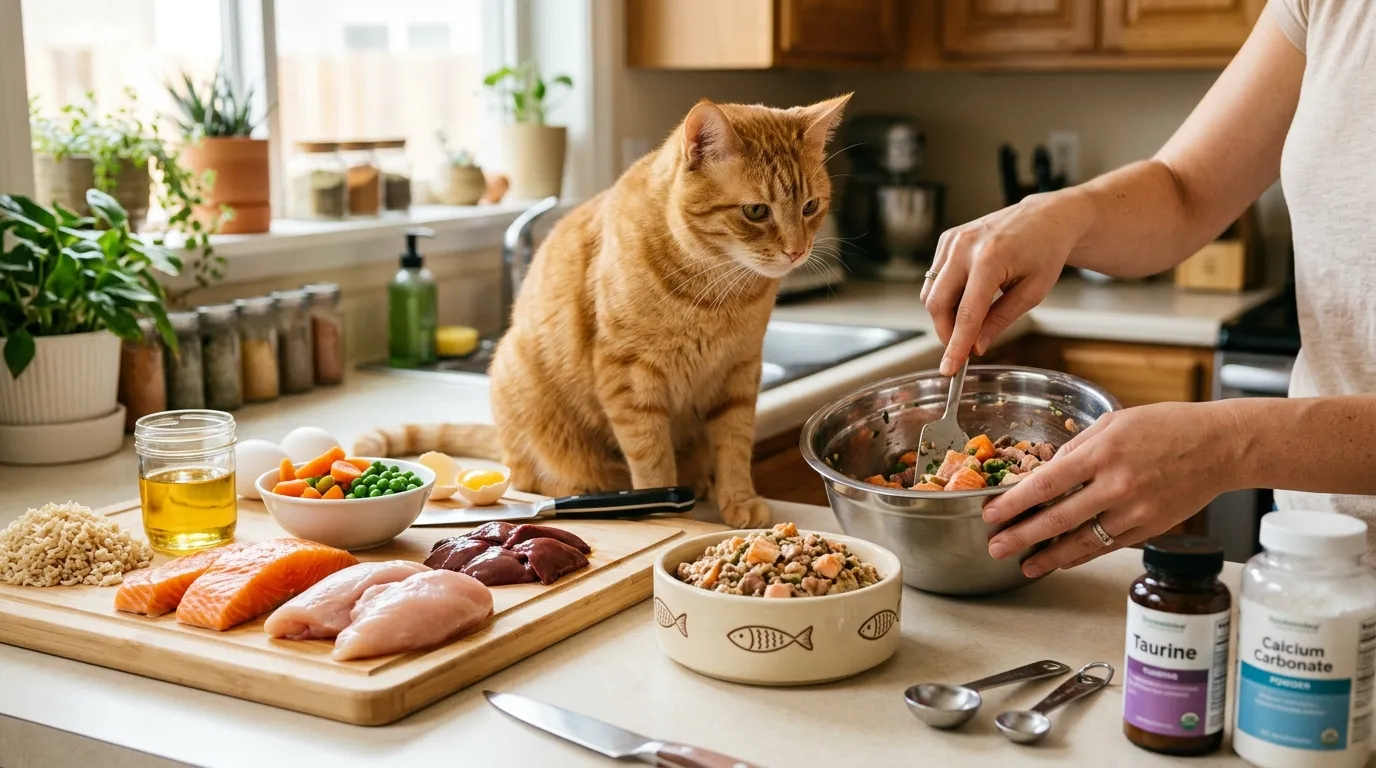
How To Make Homemade Cat Food: Easy Recipes For Healthy Cats
Every pet owner knows the deep bond with their feline friends. They watch them curl up in sunbeams, seeing them as family. Providing optimal nourishment shows how much we love them.
Many owners now make meals for their pets at home. This lets them full control over what their pets eat. It’s a journey to better health.

Choosing fresh, high-quality proteins makes healthy cat food. It keeps them full of energy and long-lived. Making their meals yourself gives you peace of mind. It’s a simple way to make them happy.
Understanding the Nutritional Needs of Your Cat
Feeding your cat a homemade diet means learning about their needs. Cats are meat-eaters and need nutrients found only in animal tissues. When making natural cat food, focus on high-quality proteins for your pet’s health.
The Importance of Taurine and Animal Protein
Taurine is a key amino acid cats can’t make enough of. Without it, they might get heart disease and vision problems. It’s important to use fresh meat to give them this vital nutrient.
Animal protein gives cats the energy and amino acids they need. Plant-based diets can’t offer this. By using muscle meat, you help your cat stay strong and healthy.
Essential Vitamins and Minerals for Feline Health
Cats also need vitamins and minerals for their immune system and coat. Calcium, phosphorus, and vitamin A are crucial. Using organic cat food ingredients helps your cat absorb these nutrients well.
A balanced diet makes your cat’s coat shiny and skin clear. Researching specific supplements ensures your homemade meals are nutritious and tasty.
Ingredients to Avoid in Homemade Cat Food
Not all healthy human foods are safe for cats. Some can be toxic. When making organic cat food, avoid these items:
- Onions and garlic, which can damage red blood cells.
- Grapes and raisins are known to cause kidney failure.
- Chocolate contains dangerous stimulants like theobromine.
- Xylitol is an artificial sweetener found in many sugar-free products.
- Raw yeast dough can expand and cause severe digestive distress.
Knowing about these dangerous ingredients helps you make natural cat food safely. Always check your ingredients before cooking to keep your cat safe.
Essential Tools and Ingredients for DIY Cat Food
Setting up your kitchen for success is the first step toward providing fresh meals for your cat. When you commit to diy cat food, you take full control over what your pet consumes every single day.
Focusing on the right homemade cat food ingredients ensures that your feline companion receives optimal nutrition. Quality starts with the foundation of your recipes, which is almost always high-quality animal protein.
Sourcing High-Quality Proteins
Always prioritize human-grade meats when shopping for your cat’s meals. Look for fresh cuts of chicken, turkey, rabbit, or beef without added sodium or preservatives.
Variety is key to a healthy diet, so try to rotate between different protein sources. Sourcing fresh, high-quality proteins provides the essential amino acids your cat needs to thrive and maintain strong muscles.
Safe Supplements and Additives
Meat alone does not provide a complete nutritional profile for a cat. You must incorporate specific supplements to balance the homemade cat food ingredients effectively.
Calcium is vital for bone health and must be added in the correct ratio to phosphorus. Also, include essential fatty acids like fish oil to support skin health and a shiny coat.
Always consult with a veterinary nutritionist to ensure your supplement ratios are accurate. Using high-quality taurine supplements is also non-negotiable to prevent heart and vision issues in your pet.
Kitchen Equipment You Will Need
To streamline your meal preparation, you need a few reliable tools in your kitchen. A high-quality meat grinder is essential if you plan to process your own proteins at home.
A digital kitchen scale is another must-have tool for any diy cat food enthusiast. Precision is critical when measuring supplements, as even small errors can lead to nutritional imbalances.
- Digital kitchen scale for precise measurements
- Heavy-duty meat grinder for processing proteins
- Glass storage containers for portioning meals
- Mixing bowls and stainless steel utensils
- Freezer-safe bags for long-term storage
How to Make Homemade Cat Food Safely
Learning how to make homemade cat food is rewarding. It needs careful attention to detail. By following a systematic approach, you can ensure your pet gets quality nutrition. Your cat’s health depends on the care you put into every step of the process.
Step One: Selecting Fresh and Safe Ingredients
The foundation of a healthy meal is the quality of your ingredients. Always pick human-grade proteins and fresh produce to avoid harmful pathogens. When you learn how to make homemade cat food, choose from reputable butchers or organic grocers.
- Check for clear, firm meat textures.
- Avoid ingredients with added sodium or preservatives.
- Ensure all vegetables are thoroughly washed and pesticide-free.
Step Two: Preparing and Cooking Proteins Properly
Proper cooking is key to kill bacteria like Salmonella or E. coli. Cook meats to the right internal temperature to ensure they are safe. Always keep your kitchen surfaces sanitized to prevent cross-contamination during preparation.
Avoid high-heat frying methods that can destroy vital nutrients. Instead, use gentle steaming or poaching to keep the protein’s natural moisture and integrity.
Step Three: Incorporating Necessary Supplements
A balanced diet needs precise vitamins and minerals. When you research how to make homemade cat food, you’ll find supplements like taurine are crucial for feline health. Use a digital kitchen scale to ensure accuracy, as small errors can lead to nutritional deficiencies over time.
Step Four: Portioning and Storing Your Homemade Meals
Once meals are prepared, proper storage is key to maintaining freshness. Divide the food into individual portions before freezing to avoid repeated thawing and refreezing. Properly sealed containers will prevent freezer burn and keep the food safe for your cat to enjoy later.
Remember, knowing how to make homemade cat food includes managing shelf life. Keep refrigerated portions for no more than three days. This ensures your cat always eats the freshest, safest meals possible.
Easy and Healthy Cat Food Recipes
Make your pet’s meals better with these healthy cat food recipes. Cooking at home means you pick what your cat eats every day. Choosing the best cat food recipes helps your cat get the nutrients they need.
Simple Chicken and Liver Feast
This meal is full of protein and tastes great to cats. It has lean chicken and liver, which are good for them.
- 1 pound of boneless, skinless chicken breast
- 2 ounces of fresh chicken liver
- 1/4 cup of water or low-sodium chicken broth
- Appropriate feline-specific taurine supplement
Balanced Turkey and Vegetable Blend
This turkey mix is great for variety. It has veggies for digestion and lots of protein. It’s a good choice for healthy cat food that’s easy to make in big batches.
- 1 pound of ground turkey
- 1/2 cup of finely chopped, steamed carrots
- 1/4 cup of cooked, mashed pumpkin
- Essential vitamin and mineral premix
Homemade Cat Treats for Occasional Rewards
Every cat loves a special treat. These homemade cat treats are easy to make and don’t have bad stuff in them. They’re perfect for playtime or training.
- 1 cup of canned salmon or tuna (in water)
- 1/2 cup of oat flour
- 1 egg to bind the ingredients
- A pinch of catnip for extra appeal
Let these treats cool down before giving them to your cat. These simple steps help you give your cat healthy snacks.
Transitioning Your Cat to a Homemade Diet
Starting your cat on fresh, homemade food is exciting. Patience is your best tool during this time. Cats like routine and may be hesitant to try new foods.
A slow transition helps avoid upset stomachs. It makes sure your cat feels okay with their new food.
The Gradual Mixing Method
The best way to change diets is the gradual mixing method. Begin by mixing a little homemade food with their old food. Over seven to ten days, slowly add more homemade food and less old food.
If your cat is picky, go even slower. Listen to your cat’s cues and adjust the pace if needed. This slow change helps their body get used to the new food without stress.
Monitoring Your Cat’s Health and Weight
Watch your cat closely during the transition. Look for changes in their energy levels. A healthy cat should be active and playful.
Also, check their stool quality. Sudden diet changes can sometimes cause digestive issues.
Regularly check your cat’s weight. Use a kitchen scale or your bathroom scale. Consistency is key for a healthy cat on a homemade diet.
When to Consult Your Veterinarian
While many cats adjust well, some need vet help. If your cat vomits, has diarrhea, or won’t eat for 24 hours, call your vet. These could be signs of a problem or intolerance.
It’s also good to have a vet check after a few months. They can do blood work to make sure your cat is getting balanced nutrition. Your veterinarian is your partner in keeping your cat healthy and happy.
Conclusion
Changing to a homemade diet is a big step in caring for your cat. You now know how to pick the best proteins and supplements. This ensures your cat stays healthy and full of energy.
Being consistent is key. Watch your cat closely as they get used to new foods. Small changes in energy or coat quality mean your plan is working. If your cat’s behavior or appetite changes suddenly, talk to your vet.
Preparing meals for your cat strengthens your bond. Every meal shows your love and care. Share your stories with other cat owners to help everyone keep their pets healthy. Your hard work today will make your cat’s future bright and happy.


