
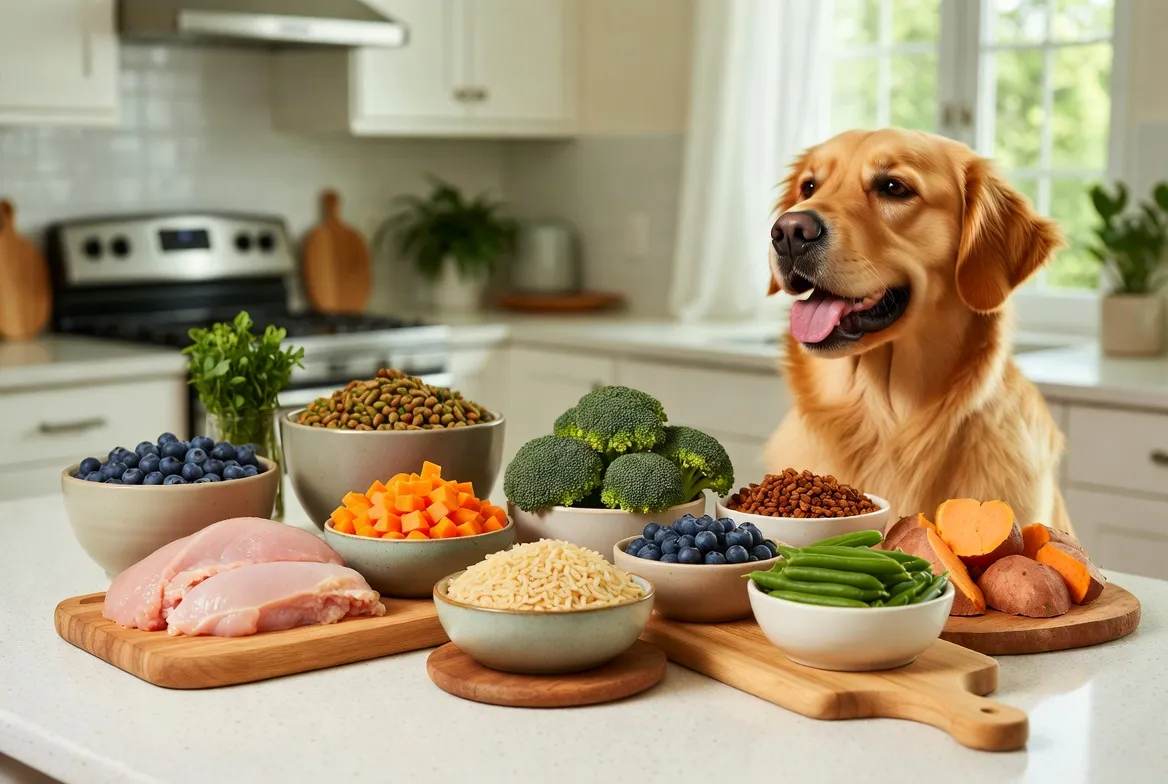
6 DIY Dog Food Recipes: Make Your Own Fresh Meals
You look into those soulful eyes and see a family member who deserves the very best. Providing optimal health starts with what fills the bowl each day.
Choosing to prepare homemade nutrition allows you to oversee every ingredient. This simple act transforms how you care for a beloved canine companion.

By selecting 6 DIY options, you gain total control over quality. These fresh dog meals ensure that your pet receives balanced, wholesome nourishment tailored to specific needs.
Embarking on this culinary journey is a rewarding experience for any pet parent. Let us explore how to craft these healthy dishes to support a long, vibrant life together.
Why Homemade Dog Food is Gaining Popularity
Many pet parents want to know what their dogs eat. They’re choosing homemade dog food for top-notch nutrition. They want to know what goes into their pet’s meals.
By cooking for your dog, you control every part of their meal. You can skip unnecessary preservatives, artificial colors, and mysterious fillers found in commercial kibble. You give your pet a diet that’s as natural as possible.
Preparing homemade dog food also brings you closer to your pet. It’s rewarding to know you’re helping your dog stay healthy. You see your dog’s happiness when they eat a fresh, homemade meal.
This method is great for dogs with special dietary needs. Many commercial foods can cause allergies or stomach problems. With homemade dog food, you can make meals just right for your dog. This ensures they feel their best every day.
Essential Nutritional Guidelines for Your Canine
Before you start cooking, learn the basics of diy pet nutrition. Giving your dog the right food is key. Every meal should help them stay healthy and happy.
Dogs need a mix of nutrients to stay energetic and healthy. When making healthy dog food at home, remember to include:
- High-quality proteins for muscle health.
- Healthy fats for energy and skin health.
- Complex carbohydrates for digestion and fiber.
- Essential vitamins and minerals for a strong immune system.

Adjust these ratios based on your dog’s age and activity level. Puppies and senior dogs have different needs. Calculating these needs makes your diy pet nutrition safe and effective.
Consistency is crucial when switching to healthy dog food. Focus on these nutrients for a balanced diet. Your dog’s shiny coat and bright eyes will show your dedication to quality.
6 DIY Dog Food Recipes: Make Your Own Fresh Meals
Start making fresh, healthy meals for your dog with these easy guides. Preparing your own pet food lets you control the quality and freshness. These 6 diy dog food recipes offer balanced nutrition and make mealtime exciting.
Beef and Sweet Potato Power Bowl
This bowl is great for active dogs needing energy all day. Lean beef and sweet potatoes help with digestion and muscle health.
- 1 lb ground lean beef
- 1 cup cooked sweet potato, cubed
- 1/2 cup steamed green beans
- 1 tablespoon olive oil
Chicken and Quinoa Vegetable Medley
Quinoa is a nutrient-dense grain alternative. This meal is light but filling, perfect for dogs with sensitive stomachs.
- 1 lb cooked chicken breast, shredded
- 1 cup cooked quinoa
- 1/2 cup chopped carrots
- 1/4 cup peas
Turkey and Brown Rice Digestive Blend
This recipe is gentle for dogs with tummy troubles. Turkey is easy to digest, and brown rice adds fiber.
- 1 lb ground turkey
- 1 cup cooked brown rice
- 1/2 cup zucchini, diced
- 1 teaspoon fish oil
Salmon and Spinach Omega Feast
This recipe is rich in omega-3 fatty acids. It makes your dog’s coat shiny and skin healthy. It’s a tasty way to add fish to your dog’s diet.
- 1 lb cooked salmon, flaked
- 1 cup steamed spinach
- 1/2 cup cooked cauliflower
- 1 tablespoon coconut oil
Lean Pork and Pumpkin Comfort Stew
Pumpkin is a superfood for dogs, soothing the digestive tract. This stew is comforting and full of vitamins for immune health.
- 1 lb lean pork loin, cooked and chopped
- 1 cup pumpkin puree
- 1/2 cup diced celery
- 1/4 cup chopped kale
Lamb and Lentil Nutrient-Dense Dinner
Lamb is a unique protein that dogs love. Paired with lentils, this meal is rich in plant-based protein and minerals.
- 1 lb ground lamb
- 1 cup cooked lentils
- 1/2 cup chopped bell peppers
- 1/2 cup steamed broccoli
Adding these 6 diy dog food recipes to your routine ensures your pet gets essential nutrients. Always introduce new foods slowly to see how your dog reacts.
Sourcing High-Quality Ingredients for Your Pet
Your journey to better canine nutrition starts with quality ingredients. Preparing meals at home lets you control what your dog eats. Choosing top-notch dog food ingredients ensures your pet gets the best.
Choose human-grade proteins and organic produce whenever you can. These options reduce your dog’s risk of harmful chemicals. Whole foods offer a cleaner, more nutritious base for meals.

Finding good suppliers is crucial. Look for local farmers or trusted butchers. They can tell you where their products come from. When shopping, read labels to avoid bad additives or too much salt in your dog food ingredients.
Knowing what you buy helps tailor meals to your dog’s health needs. Freshness is key. Buy in small amounts to keep nutrients high. This way, your pet gets the most from each meal.
Choosing the best ingredients boosts your dog’s food quality. Spending time on quality dog food ingredients supports your dog’s health. Your pet will show it in their shiny coat, energy, and happiness.
Safe Preparation and Storage Techniques
Safe kitchen habits are key when cooking for your dog. Proper dog food preparation keeps your pet healthy. It stops bacterial contamination and foodborne illnesses.
Start by being clean. Wash your hands, utensils, and surfaces well before cooking. These essential tips help avoid harmful bacteria in your dog’s food.

Cooking meats right is crucial. Use a meat thermometer to check if chicken, beef, or turkey is safe. This simple step is vital for your dog’s health.
After cooking, storing food correctly is just as important. You want to keep nutrients and freshness for your dog’s meals. Here are some storage tips:
- Refrigeration: Use airtight glass containers for up to three days.
- Freezing: Freeze single-serving portions in bags for weeks.
- Thawing: Thaw in the fridge, not on the counter, to avoid bacteria.
By following these habits, you give your dog the best nutrition. Consistent dog food preparation keeps your pet safe and healthy. It also makes you feel confident in your care.
Foods to Avoid When Cooking for Dogs
Starting to cook for your dog means knowing which dog food ingredients to avoid. Some kitchen items can be surprisingly dangerous for pets. It’s important to know these risks to keep your pet safe.
Not all human snacks are good for dogs. Some foods that are okay for people can harm dogs. Always choose the right dog food ingredients to keep your pet healthy.

Make your kitchen safe by knowing these common dangers:
- Onions and Garlic: They can harm a dog’s red blood cells and cause anemia.
- Grapes and Raisins: Even a little can cause sudden kidney failure in dogs.
- Xylitol: This sweetener in peanut butter or gum lowers blood sugar too much.
- Chocolate and Caffeine: They are toxic to a dog’s heart and nervous system.
Before cooking, check your pantry and fridge. Look at labels for hidden additives. Protecting your pet from these dangers is key to safe cooking.
Knowing the right dog food ingredients keeps your pet safe. A little caution can prevent harm. Your careful planning makes every meal nourishing and delicious.
Balancing Macronutrients and Supplements
Feeding your dog healthy food is all about balance and adding the right supplements. Each meal should have the right mix of protein, fats, and fiber. This helps keep your dog’s energy up. Consistency is key for your pet’s long-term health.
Starting a diy pet nutrition plan means figuring out the right amounts for your dog. This depends on their breed, age, and how active they are. For example, high-energy dogs need more protein, while older dogs might do better with less fat. Your goal is to find a balance that fits their needs.

Even with the best ingredients, homemade meals might miss some nutrients. That’s when supplements become important for keeping your dog’s food healthy. You might need to add certain nutrients that whole foods can’t provide.
Here are some key steps for your diy pet nutrition plan:
- Ask your vet if your dog needs extra calcium for strong bones.
- Learn about omega-3 fatty acids for better skin and coat.
- Use a digital scale to measure ingredients accurately.
- Keep track of your dog’s weight and energy to adjust their food as needed.
Remember, professional guidance is crucial. Always check with your vet before adding any new supplements. This ensures they’re safe and right for your dog’s health.
Transitioning Your Dog to a Fresh Food Diet
Starting your dog on fresh dog meals is a rewarding journey. It needs a steady pace. Your dog’s stomach needs time to get used to new foods.
A sudden change can upset their stomach. That’s why a gradual transition is key for success.
Plan to take about one to two weeks to make the change. This lets their gut adjust to the new food. It’s a slow approach to keep your dog happy and healthy.
Here’s a simple schedule to help the switch:
- Days 1-3: Mix 25% of your homemade food with 75% of their old food.
- Days 4-6: Serve a 50/50 split of the new and old meals.
- Days 7-9: Increase to 75% fresh food and 25% old food.
- Day 10 and beyond: Transition fully to 100% fresh dog meals.
Watch your dog’s health closely during this time. Look at their stool quality first. It shows how well they’re digesting the new food.
If you see loose stools or upset stomach, slow down. Stay at the current ratio for a few more days.
Also, check their energy and appetite. A healthy dog should be playful and eager for fresh dog meals. If problems persist, talk to your vet. They can make sure the diet is right for your dog.
Troubleshooting Common Homemade Feeding Challenges
Cooking for your dog is rewarding but can have surprises. Even skilled cooks may face issues like picky pets or busy schedules. By being proactive, you can keep your homemade dog food a fun part of your pet’s day.
If your dog is picky, try warming the food a bit. This releases smells that might attract them. Adding a bit of low-sodium broth or a favorite healthy topping can also help. These dog food cooking tips can really help if your dog isn’t interested in their food.
Dealing with food allergies needs careful attention to what you use. If your dog shows signs of allergies, try changing proteins or avoiding certain foods. Keeping a detailed food journal helps find the best foods for your dog’s belly.
Managing your dog’s weight is also important. For weight control, focus on strict portion control rather than changing recipes. Measuring meals ensures your dog gets the right amount of calories to stay healthy.
Lastly, remember that being consistent is key. If you’re busy, cook in bulk on weekends and freeze portions for the week. Using these dog food cooking tips helps keep your pet’s diet top-notch without daily stress.
Conclusion
Preparing meals for your pet is a big step towards their health. It makes your bond stronger. Your pet gets fresh, quality food every time.
You know how to make meals that keep your dog healthy. It’s all about safety and variety. Your dog will feel better and happier.
Begin with one recipe that suits your dog’s needs. See how they react to the healthy food. This care will make their life better.
Share your recipe stories with others. Your tips can help many pets. Keep finding new ways to feed your pet with love.


