
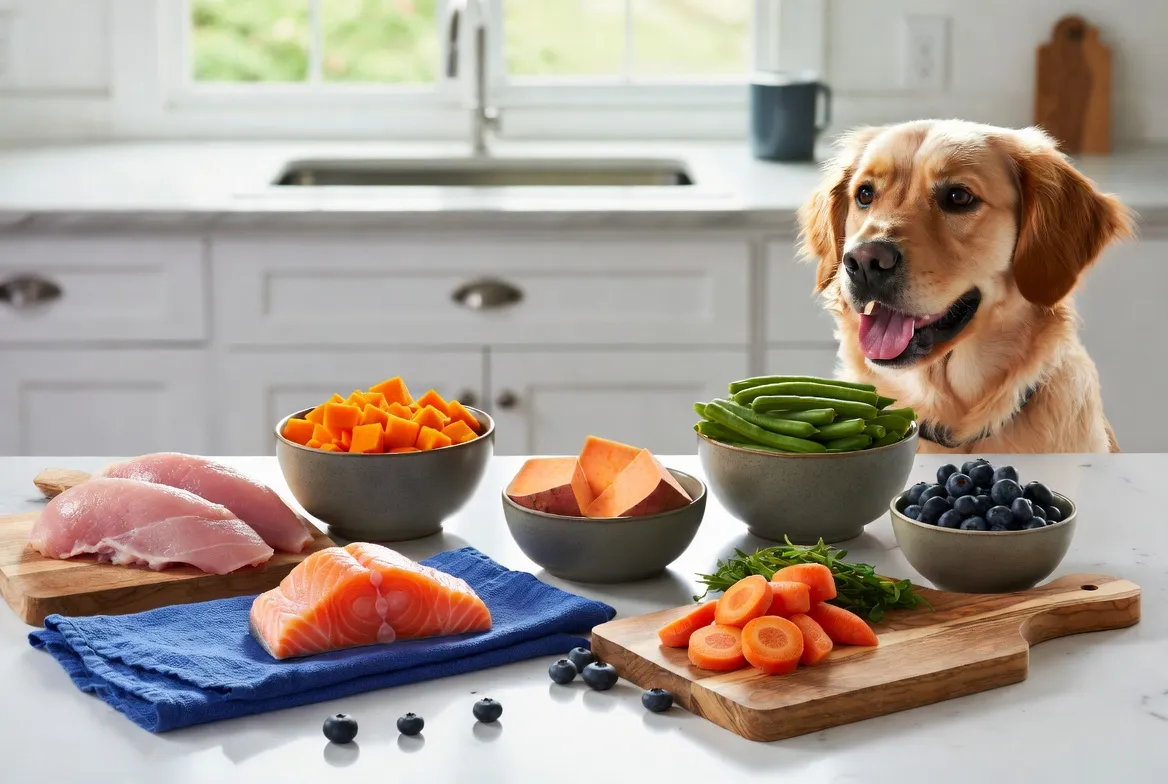
6 Grain-Free Dog Food Recipes for Sensitive Pups to Try
Last month, my golden retriever, Max, started scratching a lot after meals. His belly was upset, and he had less energy. We were both frustrated and worried.
I found out his kibble had hidden fillers that made him allergic. This made me see how homemade nutrition can change a pet’s health.

If your pet has similar problems, you’re not alone. Using wholesome, natural ingredients can help a lot. This guide will show you 6 Grain-Free Dog Food Recipes for Sensitive Pups.
You’ll learn how to pick the best proteins and veggies for a balanced diet. Making your own dog food is a safe way to show you care. Let’s start this journey to a happier, healthier life together.
Understanding Canine Food Sensitivities
Does your furry friend seem to struggle with constant itching or an upset stomach? Finding out why your dog is uncomfortable is the first step to better health. When your pet feels unwell, it’s natural to look at their food.
Many dogs react badly to common fillers in kibble. These reactions can cause chronic skin issues, ear infections, or upset stomachs. If your dog shows these signs, sensitive dog food might help.
Owners often choose grain-free recipes to avoid allergens. By removing bad additives, your dog’s stomach can heal. This simple change can make your dog feel better and look healthier.
Knowing what triggers your dog’s problems helps you feed them right. Every dog is different, and finding the right food is crucial for their happiness. Trying grain-free recipes is a good way to make sure your dog is healthy without hidden food problems.
Essential Nutrients for Sensitive Dogs
Creating a diet for your dog starts with knowing what they need. You must choose high-quality ingredients for sensitive dog food. This ensures it’s full of nutrients.
Your dog needs a balance of macronutrients for energy and muscle. Protein is key, and healthy fats fuel their daily activities. Getting these right is crucial for healthy dog food recipes.

Micronutrients like vitamins and minerals boost your dog’s immune system. Choose whole foods to avoid grains that can cause inflammation. Keeping the right balance in your ingredients is important for health and comfort.
Try to make your dog’s diet like their natural ancestral diet but safe for today. Learning about these needs lets you make healthy dog food recipes that really help your pet. This careful planning makes sure your sensitive dog food is safe and works well for a long time.
6 Grain-Free Dog Food Recipes for Sensitive Pups
If your pup has food sensitivities, these dog food recipes can help a lot. They use few ingredients to lower allergy risks and offer great nutrition. These grain-free recipes are easy on your dog’s stomach and taste great.

Turkey and Sweet Potato Mash
Turkey is a lean protein that dogs rarely react to. Boil ground turkey and mix it with mashed sweet potatoes. This easy dog food recipe gives your dog vitamins and fiber.
Lean Beef and Green Bean Medley
Beef is full of iron and protein, and green beans add crunch and fiber. Steam green beans and mix them with lean ground beef. It’s a nutrient-dense meal that’s easy to digest.
Salmon and Quinoa-Free Vegetable Stew
Salmon has Omega-3 fatty acids for skin and coat health. Mix cooked salmon with carrots and zucchini in a light broth. This stew is grain-free, making it safe for dogs with sensitivities.
Chicken and Pumpkin Digestive Support Bowl
Pumpkin helps soothe upset stomachs. Mix boiled chicken breast with pumpkin for a digestive-friendly meal. Your dog will enjoy it, and you’ll like the gentle ingredients.
Rabbit and Carrot Hypoallergenic Feast
Rabbit is a good protein for dogs that can’t handle chicken or beef. Cook rabbit meat with carrots until tender. This hypoallergenic option adds variety without causing allergies.
Whitefish and Spinach Nutrient Boost
Whitefish is light and easy for dogs to digest. Poach the fish and add wilted spinach for iron and antioxidants. These healthy dog food recipes give your pet a balanced diet.
Sourcing High-Quality Ingredients
When you cook for your dog, the quality of your ingredients is key. The success of homemade dog food depends on fresh, high-quality items. These ingredients are the base for your pet’s health.
Begin with top-notch proteins without fillers or preservatives. Choose human-grade meats like lean turkey, grass-fed beef, or wild-caught fish. These ensure your dog gets optimal nutrition without harmful additives.

Finding the right produce is as important as the protein. Always pick organic fruits and veggies to avoid pesticides. Here are tips to keep your homemade dog food pure:
- Shop locally: Visit farmers’ markets for fresh, seasonal produce.
- Check labels: Read ingredient lists to avoid hidden sugars or artificial dyes.
- Prioritize organic: Choose organic for produce with high pesticide residues.
- Inspect freshness: Pick firm veggies and bright, clear-eyed fish for the best nutrients.
Buying local and organic reduces the risk of digestive issues. Low-quality food can upset sensitive dogs. By being careful at the store, you make a safe, nourishing homemade dog food for your pet’s health every day.
Safe Preparation and Storage Practices
Storing food properly is as crucial as using good ingredients in your dog food recipes. A clean space stops bad bacteria from getting into your pet’s food. Always wash your hands, tools, and areas well before cooking.

When making easy dog food recipes, think about making big batches to save time. The right portion size keeps your dog on a steady diet. Use a kitchen scale to make sure each serving has the right calories for your dog.
To keep your easy dog food recipes fresh, use the right containers. Glass or BPA-free plastic containers are best for keeping moisture and nutrients in. Here are some easy storage tips:
- Put daily portions in the fridge for up to three days.
- Freeze extra batches in single servings for later use.
- Mark every container with the date to keep track of freshness.
- Thaw frozen meals in the fridge overnight before serving.
Consistency is key for a happy, healthy dog. By following these steps, your homemade dog food recipes stay safe, healthy, and tasty for every meal. Taking care in the kitchen really helps your dog’s health.
Transitioning Your Dog to Homemade Meals
Starting your dog on homemade dog food is a big step. It’s important to do it slowly. Abrupt changes can upset their stomach.
Begin by adding a small amount of easy dog food recipes to their kibble. Start with 25% of the new food for the first two days. This helps their body get used to the new food.
After a week, you can increase the homemade food to 100%. But watch for any signs of discomfort. If you see any, slow down the change.
Keep an eye on your dog’s stool and energy. These signs show if the easy dog food recipes are good for them. Being patient and consistent helps your dog make a smooth transition.
Monitoring Your Dog for Allergic Reactions
Your dog’s health is in your hands. Spotting small changes in their behavior or body is key. Even with the best ingredients, every dog reacts differently. Staying vigilant helps your pup do well on a grain-free diet.
Watch for signs of food sensitivities closely. These signs can show up right after trying a new food or slowly over time. Early detection helps prevent big health problems.

Look out for these common symptoms of an allergic reaction:
- Excessive scratching, licking, or biting of the paws and skin.
- Frequent ear infections or redness inside the ear flaps.
- Noticeable changes in bowel movements, such as diarrhea or increased frequency.
- Unexplained lethargy or a sudden lack of interest in playtime.
Keep a detailed food diary to help. Write down every ingredient in your dog’s meals and any changes you see. This tool helps find out which food might be causing problems.
If you see any bad changes, change your recipes right away. Proactive monitoring is crucial for your dog’s health. By watching their progress, you can adjust their diet to keep them happy and healthy.
Consulting Your Veterinarian Before Changing Diets
Your vet is key to your dog’s health when changing diets. Before making big changes, it’s imperative to get their advice. They can tell if your dog needs a special sensitive dog food or not.
Your vet is a partner in your dog’s health journey. They check if your recipes meet the AAFCO standards for dog food. This teamwork makes sure your pet gets the best care.
When you go to your vet, bring these things:
- A list of all ingredients you plan to use in your homemade meals.
- Detailed notes on your dog’s current health symptoms or digestive issues.
- Questions regarding whether a commercial sensitive dog food might be a safer starting point.
- Information about your dog’s activity level and current weight.
Always prioritize your dog’s safety by confirming that your nutritional plan is right for them. Working with a vet means you’re doing the best for your furry friend.
Conclusion
Controlling your dog’s diet is a big step to making them more comfortable. Making homemade dog food helps remove hidden allergens. It uses fresh, whole ingredients that keep your dog healthy for a long time.
You can now make healthy dog food recipes that fit your pet’s needs. These meals help your dog digest better and have a shiny coat.
Being consistent is key. Regular vet visits make sure your homemade dog food is right for your dog. Your hard work will show in your dog’s energy and happiness.
Begin by adding one new recipe at a time to see how your dog likes it. You can make mealtime a healing time. Enjoy feeding your best friend with love and care.


