
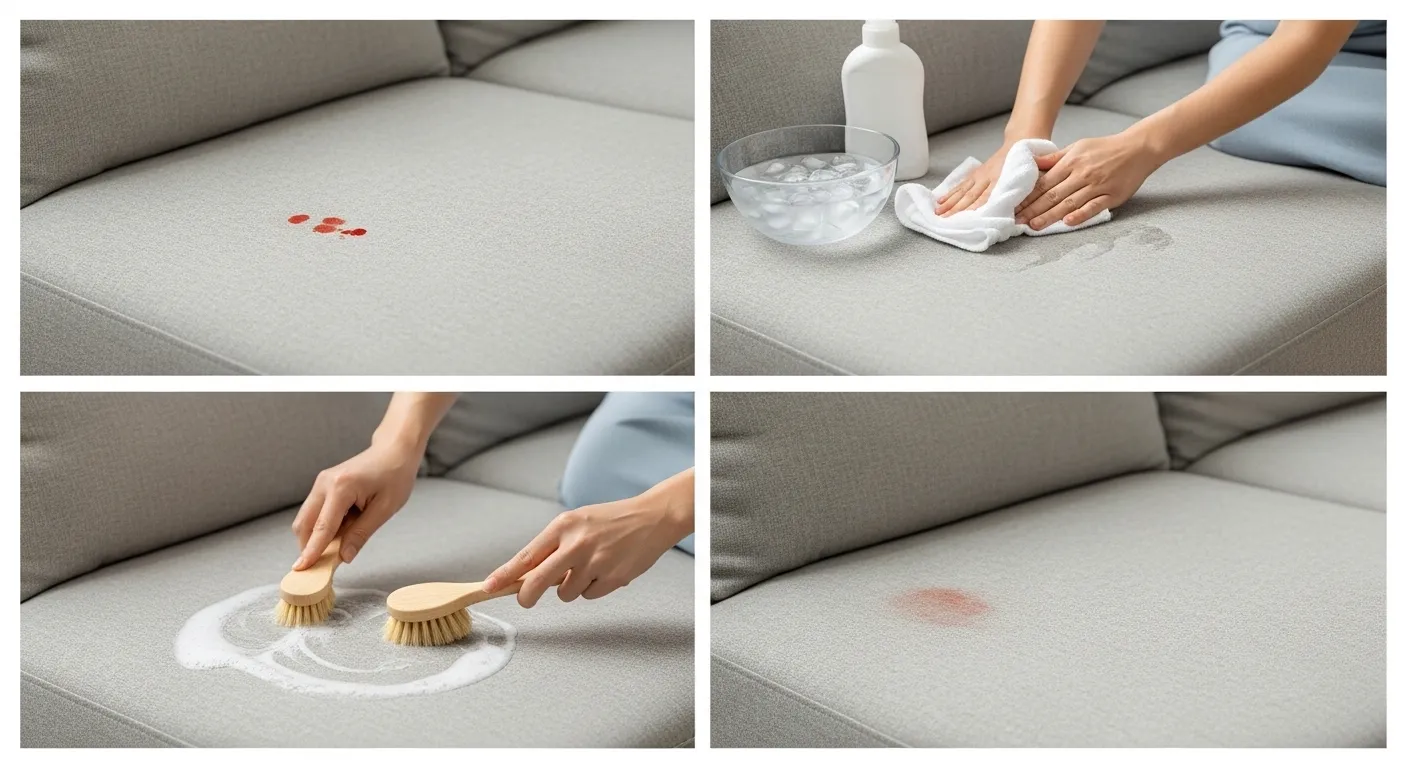
How to Clean Blood Stains on a Sofa: Step-by-Step Guide
We’ve all been there. You’re relaxing after a long day, maybe enjoying a snack. Then, a drop hits your favorite piece of furniture. It feels like a small disaster, but do not panic.
Your living room centerpiece can still be saved if you act fast.

Learning how to clean blood stains on sofa surfaces right away stops the liquid from setting deep. When you tackle these accidents quickly, you protect your upholstery. This keeps your home looking great. Taking quick action saves you from expensive professional services.
Following these simple steps to get rid of blood stains on sofa materials will make you feel better. You deserve a home that feels welcoming and fresh, even when life gets messy. Let’s go through the process together so you can enjoy your space again.
Immediate Actions for Fresh Blood Stains
When you see a fresh blood spill on your sofa, act fast. The first few minutes are key to stop the stain from getting deep into the fabric. Use these sofa blood stain cleaning hacks to stop the damage and get ready to clean.
Blotting Instead of Rubbing
Don’t scrub a fresh stain. Scrubbing pushes the blood deeper into the fabric, making it harder to clean. Instead, use a gentle blotting motion.
Here’s how to protect your sofa:
- Grab a clean, white cloth or a paper towel.
- Press down firmly on the stain without moving the cloth side-to-side.
- Lift the cloth and repeat with a fresh, dry section until no more blood transfers.
Patience is your best friend during this process. By lifting the liquid out, you keep the stain on the surface. This makes it easier to treat.
Using Cold Water to Prevent Setting
Temperature control is crucial for cleaning blood stains. Avoid warm or hot water at all costs. Heat makes the blood proteins coagulate, setting the stain into the fabric.
Always use cold water to keep the blood liquid. This makes it easier to remove the pigment from the material. If you act quickly and keep the area cool, you can save your upholstery.
How to Clean Blood Stains on a Sofa Using DIY Solutions
Stress can rise when you spot a stain on your favorite sofa. But you don’t need harsh chemicals to fix it. Many diy solutions for cleaning blood stains on the sofa are in your kitchen. These natural methods are safer for your sofa and cheaper.
The Power of Cold Salt Water
Salt is great for breaking down blood proteins. When you learn how to clean blood stains on sofa, start with a saline solution. It’s gentle yet tough on stains.
- Mix two teaspoons of salt with one cup of cold water.
- Stir until the salt is dissolved.
- Apply the solution with a clean white cloth.
- Gently blot until the blood lifts.
Using Hydrogen Peroxide for Light-Colored Fabrics
Hydrogen peroxide is good for light-colored upholstery. Always test it first to avoid discoloring your fabric. If it’s safe, it’s a reliable diy solution for cleaning blood stains on sofa.
Apply 3% hydrogen peroxide to the stain with a cotton swab or cloth. Wait a few minutes for it to bubble. Then, blot with a damp cloth to remove any leftover solution.
Applying Dish Soap and Water for Delicate Upholstery
Mild dish soap is best for delicate fabrics. It’s gentle and won’t damage your sofa. It breaks the stain’s surface tension, making it easy to lift.
Mix a few drops of dish soap with cold water. Apply the suds to the stain with a soft cloth, working from the outside in. Always finish by blotting with a clean, damp cloth to remove any soap.
Advanced Sofa Blood Stain Removal Techniques for Stubborn Spots
When you find old stains that won’t go away, it’s time for stronger sofa blood stain removal techniques. These methods tackle deep stains that have stuck to the fabric. They use special chemical reactions to lift tough spots without harming your sofa.

Creating a Meat Tenderizer Paste
Using unseasoned meat tenderizer is a great way to tackle dried blood. It has enzymes that actively digest blood proteins, making them easy to remove.
- Mix one tablespoon of unseasoned meat tenderizer with two teaspoons of cool water to form a thick paste.
- Gently apply the mixture directly onto the stained area using a clean cloth.
- Allow the paste to sit for approximately 30 minutes to let the enzymes work their magic.
- Rinse the area thoroughly with a damp cloth and blot until dry.
Utilizing Ammonia for Tough Stains
If the stain is still there, try using ammonia for a deep clean. Make sure the room is well-ventilated before starting.
Mix one tablespoon of clear household ammonia with a half-cup of cool water. Dab the solution onto the spot using a white cloth, working from the outside in to prevent spreading. Always follow up by blotting with a fresh, damp cloth to remove any chemical residue.
Testing Solutions on Hidden Areas
Before using these advanced techniques, do a spot test. Pick a small, hidden area of the sofa, like the back or under a cushion.
Apply a small amount of your chosen solution and wait for it to dry completely. This step ensures the cleaner won’t damage your fabric. It keeps your sofa safe and gives you confidence while cleaning.
Best Way to Remove Blood Stains from Sofa Based on Fabric Type
Knowing your sofa’s material is key to safely removing blood stains. Each fiber reacts differently to cleaning agents. Always check the care tag to avoid damage.

Cleaning Synthetic Microfiber Sofas
Synthetic microfiber is popular for its durability and stain resistance. For blood stains, rubbing alcohol works well. Dampen a clean cloth with alcohol and dab the stain gently.
Don’t soak the fabric to avoid water spots. After the stain lifts, dry the area with a cloth. This method is great for synthetic fibers that can’t handle too much water.
Handling Natural Cotton and Linen Upholstery
Natural fibers like cotton and linen soak up a lot and are delicate. Be careful not to push the blood deeper. Use a gentle, cold-water solution for these materials.
Test your cleaning solution on a hidden spot first. Work from the outside of the stain inwards to prevent spreading. Natural fibers need a gentle touch to stay intact.
Special Care for Leather and Suede
Leather and suede need a special approach because they soak up liquids easily. For leather, mix mild soap with water and clean with a soft cloth. Never soak the leather to avoid damage.
Suede is very sensitive and might need professional cleaning. If unsure about cleaning leather or suede, it’s best to get a professional. Keeping your luxury furniture in top shape is crucial.
Effective Methods for Removing Blood Stains on Furniture
Standard cleaning methods might not work for tough stains. When you need effective methods for removing blood stains on furniture, look beyond basic items. Advanced solutions can save a piece of upholstery that seems lost.
Using Enzymatic Cleaners
Enzymatic cleaners are a big help for organic stains. They have specialized enzymes that break down proteins in blood.
They remove the stain at a molecular level. Always check the label to make sure it’s safe for your fabric before using.
Steam Cleaning Considerations
Steam cleaning is good for sanitizing, but it’s risky for blood stains. The high heat can set the protein into the fabric fibers.
If you use a steam cleaner, treat the area with cold water first. Proceed with caution, as delicate materials like silk or vintage velvet may shrink or discolor under intense heat.
Professional Advice on When to Call Experts
Knowing when to stop is as important as knowing how to clean. If you’re looking for professional advice on cleaning blood stains from sofa surfaces, think about the item’s value and age.
Call a professional cleaner if the stain is big or the fabric is sensitive. Experts use industrial-grade solvents not available to everyone. Protecting your investment is often worth the cost of a professional service for deep, set-in stains.
Essential Tips for Cleaning Blood Stains on Couch
Learning the right ways to clean blood stains keeps your couch safe and clean. By following these tips for cleaning blood stains on couch surfaces, you protect your furniture and health. Getting ready properly makes cleaning easier and more effective.
Safety Precautions and Protective Gear
First, make sure you’re safe. Blood can have germs, so wearing protective gear is essential.
- Always wear disposable nitrile gloves to prevent direct skin contact.
- Ensure the room is well-ventilated by opening windows or using a fan.
- Keep children and pets away from the area while you work with cleaning agents.
- Wash your hands thoroughly with soap and warm water immediately after finishing.
Avoiding Common Mistakes That Damage Fabric
Many people accidentally damage their couches by using the wrong cleaning methods. It’s crucial to avoid these mistakes to clean blood stains on couch fabrics well.
Don’t scrub the stain hard, as this can push the blood deeper. Instead, use a gentle blotting motion. Also, don’t soak the fabric too much with water or cleaners. Too much moisture can damage the foam padding and cause mold or permanent damage.
Drying Techniques to Prevent Water Rings
After removing the stain, drying is key to keeping your couch looking great. If you dry it wrong, you might get water rings that are hard to get rid of.
To dry well, follow these steps:
- Use a clean, dry white towel to soak up as much moisture as you can.
- Direct a fan toward the damp area to help with even airflow.
- Don’t use a hair dryer on high heat, as it can set any remaining stain.
- Let the area stay still until it’s completely dry to the touch.
Conclusion
Keeping your living space clean starts with your upholstery. Accidents can happen, but your sofa doesn’t have to be ruined by one spill.
Speed is key when dealing with organic stains. Quick action stops proteins from sticking to fabric. Using cold water or cleaners like Bissell or OxiClean helps a lot.
Regular care keeps your sofa looking great for years. It makes your living room welcoming for everyone. Now, you know how to tackle tough stains with confidence.
Check your furniture for any stains today. Being proactive keeps your home comfy and lovely. If unsure, call professional cleaners for help.


