
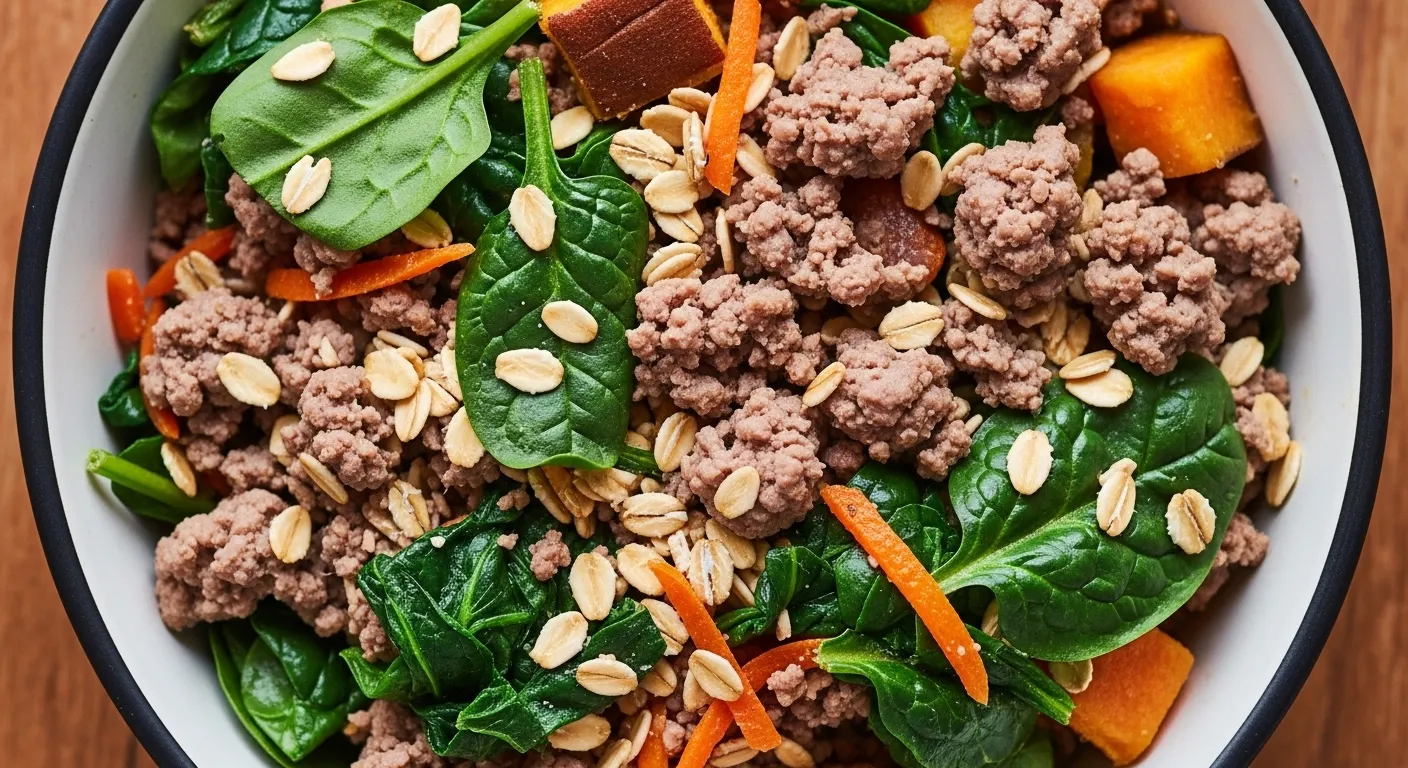
How to Make a Beef, Oats, Spinach, Nutritious Dog Dinner
Preparing a meal for your furry friend is special. You see their loyal eyes and know nothing says love like a bowl of real food.
Switching to a homemade dog dinner is more than a routine change. It’s a big step to keep your pet happy and healthy for years.

Making a beef, oats, spinach nutritious dog dinner at home is easy and rewarding. Choosing fresh ingredients means you control what your pet eats every day.
You don’t have to be a pro chef to make great meals. With a few basic items, you can make a meal that makes your pet happy. Let’s see how simple it is to improve your pet’s health.
Understanding the Nutritional Benefits of Homemade Dog Food
Making a nutritious canine meal at home lets you control your dog’s health. You pick each ingredient, making sure your pet gets the best food for them. This way, you help your dog stay healthy for a long time.
Why Choose Fresh Ingredients Over Commercial Kibble
Commercial kibble is often made with high heat, losing important nutrients. Making meals at home means avoiding bad fillers and preservatives. This way, your dog gets cleaner, more energy from their food.
Looking into homemade dog food options lets you match your dog’s taste. You can use whole foods without mystery additives. This is great for avoiding allergens and bad ingredients.
The Role of Protein, Fiber, and Greens in Canine Health
A balanced diet for dogs needs the right mix of nutrients. Good protein helps keep muscles strong. Without enough, your dog might feel tired all the time.
Fiber is key for a healthy gut. Adding natural fiber helps your dog digest well and feel full. Greens like spinach add vitamins and minerals, fighting off sickness.
When protein, fiber, and greens work together, they boost your dog’s health. This care helps your dog live well, not just survive. Consistency in nutrition is key for a happy, active pet.
Essential Ingredients for a Beef Oats Spinach Nutritious Dog Dinner
Making a beef oats spinach nutritious dog dinner needs careful picking of ingredients. When you cook at home, you control what your pet eats. Choosing the right ingredients makes sure your dog stays healthy.
Selecting High-Quality Lean Beef
Protein is key for a healthy dog diet. Choose lean cuts of beef to avoid too much fat. This fat can be hard for dogs to digest. Good meat gives dogs the amino acids they need for muscles and energy.
Choosing the Right Oats for Digestion
Oats add fiber and energy to a nutritious canine meal. Pick plain, rolled, or steel-cut oats. Avoid instant oats with added sugars or flavorings. These dog-friendly ingredients help with digestion and keep your pet full.
Preparing Spinach for Maximum Nutrient Absorption
Spinach is full of vitamins, but it needs to be cooked right. Raw spinach has oxalates that can block calcium absorption. Cooking spinach makes its nutrients easier for dogs to use.
Washing and Chopping Techniques
Wash the spinach well to get rid of dirt and pesticides. Proper cleaning is key for food safety. After washing, chop the leaves small to prevent choking and mix them evenly in the meal.
Steaming vs. Boiling Methods
You can steam or boil spinach to soften it. Steaming keeps more vitamins than boiling. If boiling, use little water and drain it well before adding the spinach to your dog’s meal.
Step-by-Step: Preparation Guide
Turning fresh, dog-friendly ingredients into a healthy meal is easy. Just follow a simple plan. This way, every healthy dog food recipe you make is safe and full of good stuff for your dog.

Step 1: Browning the Beef Safely
Begin by cooking lean beef in a clean skillet over medium heat. Make sure to avoid adding oils, salts, or spices because they can harm your pet. Cook the meat until it’s fully done to avoid any foodborne bacteria.
Step 2: Cooking the Oats to the Right Consistency
Boil the oats in water until they’re soft and like porridge. This makes them easier for dogs to digest than raw or undercooked grains. Check that the oats are fully hydrated before mixing them with other ingredients.
Step 3: Incorporating Spinach and Combining Ingredients
When the beef and oats are ready, add your chopped, steamed spinach. This makes a wholesome pet food that keeps the greens’ color and vitamins. Mix everything well to spread the nutrients evenly.
Step 4: Cooling and Portioning the Meal
Let the mix cool down to room temperature before serving. This prevents mouth burns. Divide the food into the right sizes for your dog’s needs. Serving a tasty and healthy dog dinner is a great way to show your dog you care.
Safety Guidelines and Portion Control
Starting your journey to give vet-approved dog meals means focusing on safety first. Homemade cooking lets you pick the ingredients. But it’s important to be careful. Keeping your pet healthy needs a careful plan that meets its special needs.

Consulting Your Veterinarian Before Changing Diets
Before adding new foods, see your vet. Every dog is different, based on age, breed, and how active they are. A vet can help make a balanced diet for dogs that fills any nutritional gaps.
Your vet might do blood tests to check for health issues. This is very important for a good feeding plan. Never skip this step, as it’s key for a safe change.
Identifying Toxic Ingredients to Avoid
Many kitchen items are bad for dogs. Keep onions, garlic, grapes, and xylitol away. These can harm your dog, even in small amounts.
Always check food labels for hidden dangers. Safety is your main goal when picking ingredients. If you’re not sure about a food, check a pet poison database or call your vet right away.
Calculating Daily Caloric Needs Based on Weight
How much food you give is as important as what you give. Too much can make your dog fat, while too little can make them tired and unhealthy. You need to figure out how many calories your dog needs based on their weight and how they look.
Vets usually give a calorie range for the right weight. Use a digital scale to measure food for each meal. By following these vet-approved dog meals tips, you make sure your dog gets the right amount of energy every day.
Tips for Storing and Serving Your Homemade Dog Meals
Managing your homemade dog dinner is easy with a few habits. Cool food fast and store it right to keep your dog healthy. Follow these steps for fresh meals every time.
Proper Refrigeration and Freezing Techniques
Cool food quickly before refrigerating. Store in airtight containers for up to three days. Freeze for longer storage.
- Use freezer-safe bags or glass containers to prevent freezer burn.
- Label each container with the date to track freshness.
- Divide food into single-serving portions for easy access.
- Thaw frozen meals in the refrigerator overnight before serving.
Reheating Homemade Food Safely
Ensure your homemade dog food options are at a comfortable temperature. Don’t serve frozen or hot food. Warm it gently with a little warm water or the microwave.
Stir well after heating to avoid burns. Testing the temperature with your finger is safe.
Transitioning Your Dog to a New Diet Gradually
Switching to vet-approved dog meals should be slow. A sudden change can upset your dog’s stomach. Take seven to ten days for a smooth transition.
Mix a little new food with their old diet first. Gradually add more new food and less old food each day. This careful transition helps your dog adjust to new nutrients.
Conclusion
Controlling your dog’s diet strengthens your bond. Making their food at home lets you check every ingredient.
You can now make a healthy meal for your dog. This simple act makes mealtime special for both of you.
Good food means your dog has more energy and a shiny coat. Small changes can make a big difference in their health.
Watch how your dog likes their new meals. Talk to other pet owners about fresh, homemade food. Start improving your dog’s health with the next meal.


