
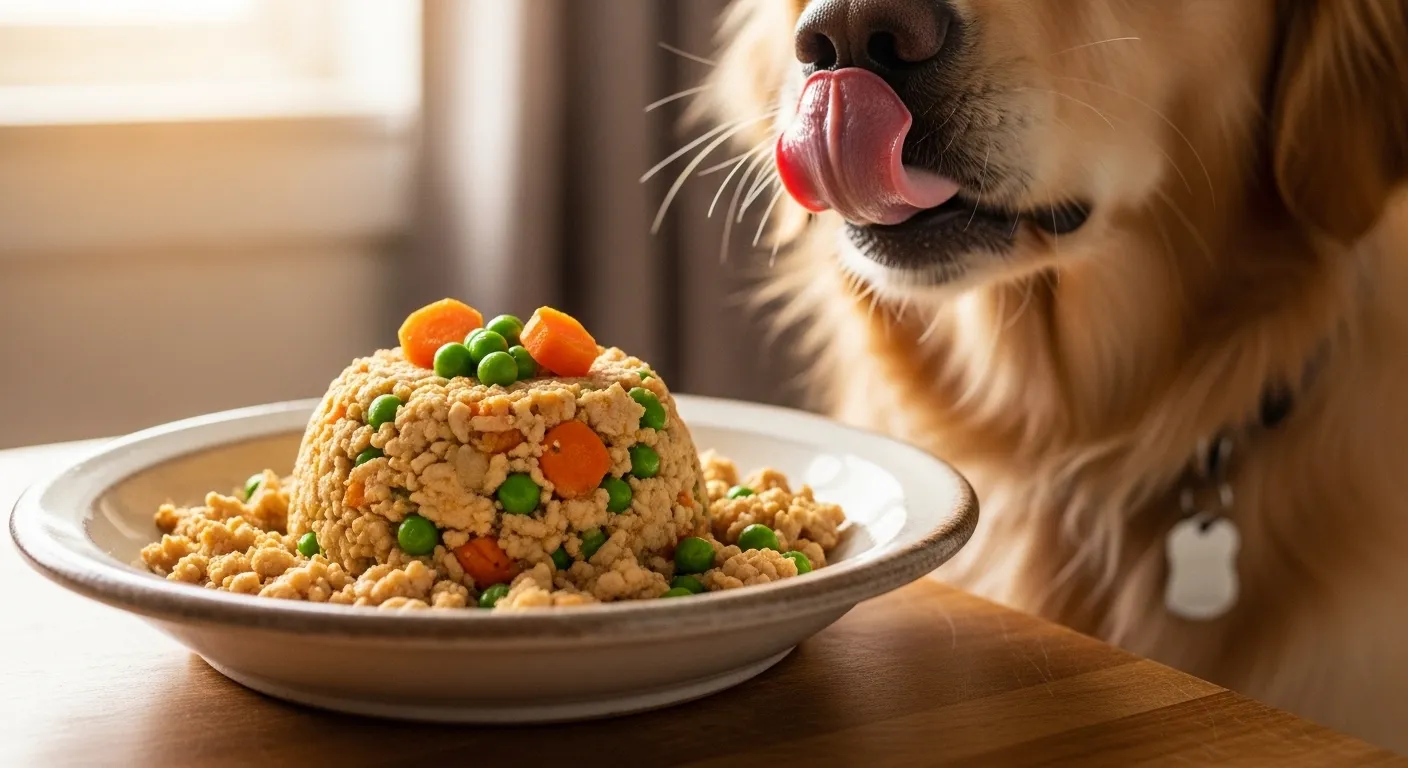
Nutritious ground chicken peas dog meal your dog will love
Watching your dog wag their tail for dinner is special. You want the best for them. Making a ground chicken peas dog meal at home is rewarding.

Healthy cooking doesn’t have to be hard. Use fresh, quality ingredients for vitamins and minerals. Your kitchen is where to start for your dog’s health.
This guide helps beginners make healthy food at home. You’ll learn to make tasty, nutritious meals. Let’s start this journey to better health for your dog, one bowl at a time.
Why homemade ground chicken peas dog meal is a healthy choice
Preparing a ground chicken peas dog meal lets you control your pet’s health. Many owners switch to a natural dog diet for a happier pet. Fresh ingredients mean your dog gets the best fuel for life.
Benefits of lean protein and plant-based fiber
Lean protein is key for strong muscle maintenance in dogs. Chicken gives amino acids for tissue repair and strength. Peas add fiber for optimal digestive health and keep your dog full.
Plant-based fiber helps control blood sugar and keeps the gut healthy. This is what makes healthy dog food that keeps your pet active and comfy. Your dog will have more energy all day.
Understanding the nutritional profile of chicken and peas
Chicken is full of B vitamins and minerals like phosphorus for bones. Peas add antioxidants like Vitamin C and K. Together, they make a nutrient-dense profile for a strong immune system.
Choosing a natural dog diet means avoiding commercial kibble fillers. These two ingredients make a clean, easy-to-digest meal. It’s a caring way to ensure your pet’s long-term health.
Essential ingredients for a balanced canine diet
Creating a healthy dog food base needs careful attention and top-notch ingredients. Making balanced dog meals at home lets you control what your pet eats. This way, every meal boosts their health and energy.
Selecting high-quality ground chicken
The protein source is key in a natural dog diet. Choose human-grade ground chicken without sodium or preservatives. Lean protein helps keep muscles strong and energy up in active dogs.
Choose packages with clear meat-to-bone ratios. This ensures your homemade food isn’t filled with unnecessary ingredients.
Choosing the right peas for canine digestion
Peas are great for fiber and vitamins. Use fresh or frozen peas to avoid canned versions with too much salt. Lightly steaming peas makes them easier for dogs to digest.
Right preparation prevents stomach issues. When peas are cooked right, they help keep dogs full and happy.
Adding supplemental nutrients for complete health
Even top ingredients might miss some nutrients in a grain-free dog food. Adding quality supplements fills these gaps. Organic pet nutrition helps ensure your dog gets all they need.
Think about adding:
- Calcium supplements to balance phosphorus levels.
- Omega-3 fatty acids for skin and coat health.
- Probiotics to support a healthy gut microbiome.
- Vitamin E or B-complex for immune system support.
Talking to your vet helps figure out the right amounts for your dog. Consistency is crucial for a healthy pet through homemade food.
Step-by-step preparation of your ground chicken peas dog meal
Learning to make a healthy dog meal is easy. Focus on quality and technique for a nutritious and delicious meal every day. This homemade dog food recipe is simple and great for your dog.
Preparing the chicken and vegetable base
Choose fresh, high-quality ingredients for the best results. Wash your veggies well and remove any tough parts. Chop the peas and veggies finely to mix well with the chicken.
Keep your workspace clean and organized when handling meat. Measure your portions carefully for the right balance of protein and fiber. This step is key to a consistent ground chicken peas dog meal your dog will love.
Cooking methods to preserve nutrient integrity
Cooking methods greatly affect the nutritional value of your meal. We suggest gentle steaming or poaching to keep vitamins and minerals intact. These methods avoid high heat that can destroy nutrients in fresh produce.
Don’t fry or over-boil your ingredients. This can cause a loss of moisture and flavor. Low and steady heat keeps your grain-free dog food full of nutrients. Consistent cooking temperatures are key to a healthy meal.

Mixing and cooling for serving
After cooking, mix the ingredients in a large bowl while they’re still warm. Fold the mixture gently to spread the peas evenly. This makes the texture easy for your dog to eat and digest.
Let the food cool completely before serving. Hot food can hurt your dog’s mouth and make mealtime uncomfortable. Once cooled, your homemade dog food recipe is ready to serve, offering a fresh and healthy meal for your dog.
Safety guidelines and handling raw versus cooked ingredients
Creating a safe kitchen is key for a homemade diet. With organic pet nutrition, you control what your dog eats. This care helps your pet stay healthy for a long time.

Avoiding toxic additives and seasonings
Many human foods are bad for dogs. Stay away from onions, garlic, chives, and leeks. They can harm your dog’s health. Always check labels for xylitol or too much sodium.
Stick to simple, whole foods for a vet-approved dog food. Avoid too many seasonings to avoid digestive problems. Choose safe, natural flavors for your dog.
Sanitation practices in the kitchen
Keeping your workspace clean is crucial when handling raw chicken. Wash your hands, tools, and surfaces well after handling. Proper hygiene stops harmful bacteria like Salmonella or E. coli.
Keep raw meat away from other foods until cooking. Use separate cutting boards for your pet’s food. A clean kitchen is essential for a safe, high-quality meal for your dog.
Recognizing signs of food sensitivities
Even with good ingredients, some dogs may react. Look for signs like itchy skin, ear infections, or upset stomach. If you see these, talk to your vet to change your vet-approved dog food.
Keeping a food diary helps track your dog’s reactions. This is part of great organic pet nutrition. Your vigilance makes meals healthy and fun for your pet.
Proper portion control and feeding schedules
Feeding your dog the right amount is key to their health. Even healthy food can cause weight problems if not portioned right. Watching how much your dog eats helps keep them healthy for life.
Calculating daily caloric needs for your dog
Every dog is different, needing the right amount of calories. Start by talking to your vet to find out how many calories your dog needs. This helps make a vet-approved dog food plan that fits their needs.
After finding out how many calories your dog needs, divide that by how many meals they get. Consistency is key for a good routine. It helps with digestion and hunger.
Adjusting meals based on activity levels
Your dog’s activity level affects how many calories they need. An active dog needs more than a lazy one. Watch their body condition score to see if they’re gaining or losing weight.
If your dog seems tired or is gaining weight, cut their food a bit. If they lack energy, a small increase might help. Always change their food slowly to keep them stable.
Transitioning your dog to a new homemade diet
Changing to a new diet should be done slowly. It helps their gut adjust to the new food in their balanced dog meals. Start by mixing a little of the new food with their old diet for seven to ten days.
Slowly add more of the new food and less of the old. If your dog gets upset, like loose stools or vomiting, slow down. This vet-approved dog food transition helps your dog adjust smoothly.
Storing and preserving your homemade dog food
Learning how to store your homemade dog food is key. It keeps your pet’s meals as good as any premium dog food brand. When you make a homemade dog food recipe, you want it to stay fresh and tasty. Good storage helps you work in the kitchen better and keeps the food nutritious.
Refrigeration best practices
For keeping food fresh for a few days, your fridge is the best place. Always put cooked meals in airtight containers. This stops air from getting in and keeps smells out. Here are some tips for keeping food fresh:
- Use glass or BPA-free plastic containers for the best seal.
- Keep the food in the coldest part of the fridge, usually the back.
- Consume refrigerated portions within three to four days of preparation.
- Label your containers with the date to track freshness easily.
Freezing batches for long-term convenience
Freezing is great for making lots of food at once. It saves time when you’re busy. By freezing meals in portions, you can easily grab what you need without wasting food. This way, you have a steady supply, just like a premium dog food brand.
To freeze well, use individual silicone molds or freezer-safe bags. Flash-freezing your portions on a tray before bagging stops them from sticking. This makes preparing meals faster and more organized.
Thawing and reheating safely
When you make a homemade dog food recipe for your pet, safety is most important. Never let frozen food thaw on the counter, as it can grow bacteria. Instead, put it in the fridge the night before you plan to serve it.
If you need to thaw food fast, thaw it in cool water. When reheating, make sure the food is warm but not too hot. This can hurt your dog’s mouth. Always mix the meal well to avoid hot spots before serving.
Conclusion
Making meals at home lets you control your pet’s food. You know exactly what they eat.
Many owners feel closer to their pets when they cook for them. It makes feeding time special for both.
Think of your homemade food like a top dog food brand. Fresh ingredients often beat processed ones in quality.
Watch your dog closely as you start this new food plan. Look for changes in energy or coat health.
Your effort to feed your dog well changes their life for the better. Share your best recipes with other pet owners.


