
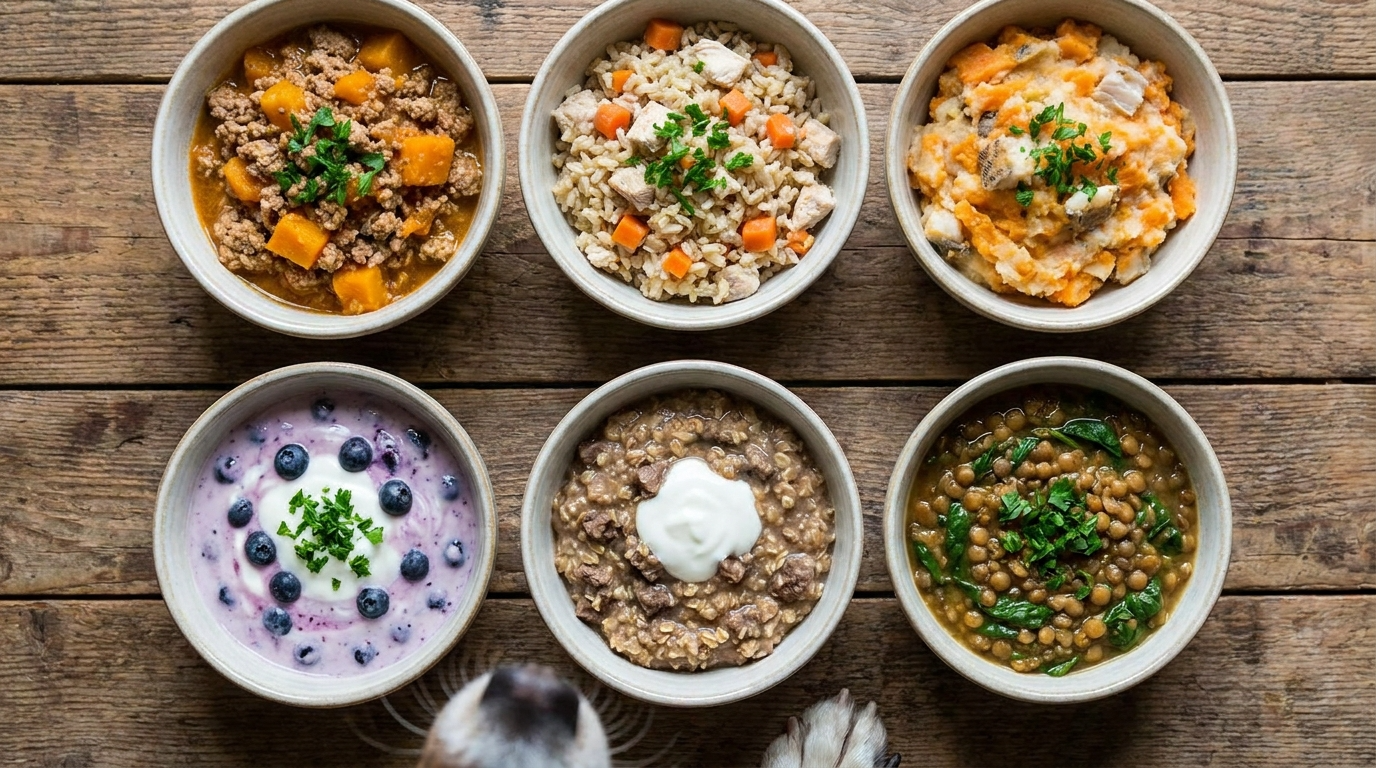
6 Gut-Healthy Dog Food Recipes for Digestive Health
Last Tuesday, my golden retriever, Cooper, paced all afternoon. His tummy made loud noises, and he couldn’t relax. I felt helpless, knowing what he ate was key to his comfort.

Maybe you want to ease your pet’s belly with simple, healthy foods. This guide offers 6 gut-healthy dog food recipes for digestive health you can make at home. These recipes use gentle ingredients that might help with healthy digestion.
Remember, these homemade recipes are meant to add flavor to your pet’s diet. They shouldn’t replace a complete dog food plan. Always talk to your vet before changing your pet’s food to make sure they get all the nutrients they need.
Why Gut Health Matters for Your Dog
A healthy gut is key for your dog’s comfort and energy. When their system works well, they feel lively and happy. Making gastrointestinal health a priority helps your pet stay active and joyful for a long time.
How a Healthy Gut Supports Canine Digestion
Good canine digestion lets your dog get the nutrients they need. A balanced gut breaks down food well, leading to healthy stools and better nutrient absorption. When the gut is healthy, your dog feels their best.
Digestion also boosts the immune system. Since a lot of the immune system starts in the gut, a healthy gut helps fight off sickness. It’s the key to your pet’s health.
Signs Your Dog May Have Digestive Upset
Even with great care, your dog might have a sensitive stomach sometimes. Look out for signs like gas, vomiting, or less appetite. Changes in stool or how often they go can mean trouble.
You might see your dog being very tired or showing belly pain. If these signs last, it could mean a bigger problem. Always watch your pet for these small changes.
When Homemade Food Can Complement Your Dog’s Diet
Many owners make homemade dog food for more variety or to help with sensitivities. These meals can add fresh ingredients that help gastrointestinal health. But remember, they don’t replace a complete, balanced diet on their own.
Before changing your pet’s diet, talk to your vet. They can make sure your homemade dog food meets your dog’s canine digestion needs. Getting a vet’s advice ensures your dog gets the best, safely.
6 Gut-Healthy Dog Food Recipes for Digestive Health
Feeding your pet homemade dog food is rewarding. It helps manage their health. Use lean proteins, fiber-rich veggies, and gentle grains for easy dog food recipes. These meals are simple to make and give your dog the nutrition they need.

Turkey, Pumpkin, and Brown Rice Bowl
Ingredients for Gentle, Fiber-Rich Nutrition
This meal needs lean ground turkey, cooked brown rice, and plain canned pumpkin puree. Make sure the pumpkin is 100% pure, without spices or xylitol.
Cooking Directions and Portion Guidance
Brown the turkey without oil, then drain the fat. Mix it with cooked brown rice and pumpkin. Serve the right amount for your dog’s size.
How Pumpkin and Brown Rice May Support Regularity
Pumpkin has soluble fiber for firm stools. Brown rice is easy to digest and provides gentle carbs.
Safety Notes for Serving Turkey
Always cook turkey well to avoid bacteria. Remove skin and gristle before mixing.
Chicken, Oatmeal, and Carrot Recipe
Ingredients for a Mild Homemade Meal
Boil chicken, then shred it. Mix with cooked oatmeal and steamed carrots. This is gentle on the stomach.
Simple Preparation Instructions
Boil chicken until it’s fully cooked. Shred it. Stir in cooked oats and softened carrots.
Why Oats and Carrots Can Be Helpful for Digestion
Oats soothe the stomach with fiber. Carrots add vitamins without being harsh. This mix is good for dogs with mild digestive issues.
How to Adjust the Recipe for Sensitive Dogs
For allergies, use white fish instead of chicken. Introduce new foods slowly to watch for reactions.
Salmon, Sweet Potato, and Green Bean Bowl
Ingredients With Digestive and Nutritional Benefits
Use cooked salmon, mashed sweet potato, and steamed green beans. They’re full of omega-3s and fiber.
How to Cook and Flake the Salmon Safely
Steam or bake salmon until it’s flaky. Check for bones to avoid danger.
How Sweet Potato and Salmon Support Overall Wellness
Sweet potatoes are easy to digest and give energy. Salmon is good for skin and coat. This mix is great for dogs with sensitivities.
Portion and Allergy Considerations
Start with small portions to check for fish tolerance. Avoid this recipe if your dog has a fish allergy.
Lean Beef, Barley, and Carrot Stew
Ingredients for a Protein-Rich Stew
Use lean ground beef, cooked pearl barley, and diced carrots. This stew is hearty for active dogs.
Step-by-Step Cooking Method
Brown the beef, then drain fat. Add barley and carrots. Simmer until soft and easy to chew.
How Barley Provides Gradual Dietary Fiber
Barley is slow to digest, keeping energy steady. It adds fiber for regular bowel movements.
Reducing Fat for Dogs With Sensitive Stomachs
Choose lean beef. Remove excess fat to avoid digestive problems.
Turkey, Quinoa, and Zucchini Meal
Ingredients for a Balanced-Tasting Recipe
Combine ground turkey, cooked quinoa, and diced zucchini. This is light and good for low-fat diets.
Preparing Quinoa and Ground Turkey
Rinse quinoa before boiling. Cook turkey until browned and drain well.
How Zucchini and Quinoa Fit Into a Digestive-Friendly Diet
Zucchini is low in calories and easy to digest. Quinoa is gluten-free, providing protein and fiber.
Serving Tips for Small and Large Dogs
Adjust portions based on your dog’s needs. Small dogs need smaller portions to avoid overfeeding.
Chicken, Pumpkin, and Probiotic Yogurt Topper
Ingredients for a Soft, Easy-to-Mix Meal
Mix shredded chicken with pumpkin puree and a bit of plain Greek yogurt. This is great for gut health.
Preparation Steps and Cooling Instructions
Combine chicken and pumpkin first. Let it cool. Stir in yogurt last to keep bacteria alive.
How Plain Yogurt May Add Probiotics for Dogs
Plain yogurt is a probiotic source for dogs. Make sure it has no artificial sweeteners like xylitol.
When to Skip Yogurt Because of Lactose Sensitivity
If your dog gets gas or diarrhea from dairy, skip the yogurt. Not all dogs can digest lactose well.
How to Choose Ingredients for Homemade Dog Food
When you make meals at home, what you choose matters a lot for canine digestion. Picking the right stuff makes sure your pet gets the right pet nutrition. It also keeps their stomach happy and calm.

Gentle Sources of Protein for Canine Digestion
Choose lean, easy-to-digest proteins for your dog’s gut health. Good options are skinless chicken breast, turkey, and lean ground beef. They give important amino acids without too much fat.
Make sure the meat is cooked well to kill off bad germs. High-quality protein is key for your dog’s health and muscle strength.
Soluble and Insoluble Fiber From Dog-Safe Foods
Fiber is important for regular bowel movements and a healthy gut. Soluble fiber in pumpkin and oatmeal helps with digestion.
Insoluble fiber in green beans or carrots helps with stool bulk and regular bowel movements. It’s a key strategy for good digestion.
Healthy Fats Without Overloading the Stomach
Dogs need fat for energy, but too much can cause problems. Use small amounts of healthy fats like fish oil or flaxseed for omega-3s.
Stay away from heavy oils or fatty parts that can stress the pancreas. Moderation is key when adding fats to your dog’s food.
Dog-Safe Ingredients to Avoid, Including Onion, Garlic, Grapes, Raisins, Xylitol, and Cooked Bones
Some kitchen items are toxic to dogs and must be avoided. Never use onions, garlic, or chives because they harm red blood cells.
Grapes and raisins can cause sudden kidney failure in dogs. Also, avoid xylitol and cooked bones, as they can be very dangerous.
Always check with your vet before adding new ingredients to your dog food. This keeps your homemade meals safe and healthy for your pet.
How to Prepare and Portion Digestive-Friendly Meals
Starting with easy dog food recipes means getting your kitchen ready. Cooking for your pet lets you control their food quality and safety. Sticking to a routine helps keep their meals good for healthy digestion and their happiness.

Cooking Meat Thoroughly and Removing Excess Fat
Always cook proteins until they are fully done to kill harmful bacteria. Raw or undercooked meat can harm your pet’s gut. After cooking, drain and trim away excess fat to avoid discomfort or pancreatitis.
Washing Produce and Cooking Grains Properly
Wash veggies well to remove pesticides or dirt. Make sure grains are cooked until soft and easy to digest. This is key for homemade dog food safety.
- Scrub all carrots and green beans under running water.
- Boil grains like brown rice or quinoa until they are fully hydrated.
- Avoid adding any seasonings, oils, or salt to your ingredients.
- Cool all cooked items completely before mixing them into a meal.
Calculating Portions Based on Your Dog’s Size and Activity
There’s no one-size-fits-all for dog food. Portion sizes depend on your dog’s weight, age, and activity. Always check with your vet to find the right calories for their body.
Serving Smaller Meals When Your Dog Has a Sensitive Stomach
If your pet has a sensitive stomach, try smaller meals. This eases their digestive work and prevents bloating. Consistency is key when switching to homemade dog food. Feeding at the same times each day helps healthy digestion.
Using Probiotics and Fiber Wisely
Keeping your dog’s gastrointestinal health in check is more than just a balanced diet. Whole foods are the base, but certain extras can help your pet do well. They balance their internal world.
Food-Based Probiotic Options for Dogs
Adding fermented foods to your dog’s meal can introduce good bacteria. Plain, unsweetened yogurt or kefir are great picks. Make sure these products don’t have xylitol or artificial sweeteners, as they’re bad for dogs.
Not all dogs do well with dairy. If your dog is sensitive, skip these foods to avoid stomach problems.
How Prebiotic Fiber Supports Beneficial Gut Bacteria
Prebiotic fiber feeds the good bacteria in your dog’s gut. Adding certain veggies to homemade meals helps these microbes grow.
- Pumpkin puree gives gentle, soluble fiber.
- Cooked carrots are a crunchy, fiber-rich snack.
- Sweet potatoes help with regular digestion.
- Zucchini adds moisture and mild fiber.
Why Too Much Fiber or Too Many Supplements Can Cause Gas
It’s easy to want to add lots of supplements for better pet nutrition. But too much fiber can cause gas, bloating, or loose stools.
Your dog’s body needs time to adjust to new foods. If your dog has trouble with gas, reduce fiber sources slowly over a few days.
Choosing a Veterinary-Recommended Probiotic Product When Needed
At times, food alone can’t tackle specific health issues. A good supplement is often the best choice.
Talk to your vet to find probiotics for dogs that are scientifically proven. Professional products ensure the live cultures are effective for your dog’s gastrointestinal health. This gives you confidence in your pet nutrition plan.
Transitioning Your Dog to Homemade Meals
Changing your dog’s diet is a big step. It needs a week-long plan to avoid upset stomachs. Even the healthiest recipes take time for your dog’s body to adjust. A slow start keeps their digestion steady and helps them get used to fresh, healthy meals.

Starting With Small Portions Alongside Regular Food
Start by adding a little bit of homemade food to their regular kibble. This small step lets you see how they react to new foods. If they seem okay, you can slowly add more homemade food over time.
Building a Gradual Seven-Day Food Transition
A consistent schedule helps make the switch smooth. Here’s a seven-day plan to introduce your easy dog food recipes safely:
- Days 1-2: Serve 25% homemade food and 75% regular food.
- Days 3-4: Serve 50% homemade food and 50% regular food.
- Days 5-6: Serve 75% homemade food and 25% regular food.
- Day 7: Transition to 100% homemade food if your dog feels great.
Monitoring Stool Quality, Appetite, Energy, and Gas
Watch your dog closely during the week. Look for firm, regular stools, which are a positive sign of health. Also, check their appetite, energy, and gas levels. Too much gas might mean the new food is too rich.
What to Do if Your Dog Develops Diarrhea or Vomiting
If your dog gets diarrhea or vomits, stop the transition right away. Go back to the previous mix or their original diet until they feel better. Always contact your veterinarian if these symptoms last, are severe, or if your dog seems tired and sick.
When Digestive Symptoms Need Veterinary Attention
Knowing when to seek vet help is key for pet owners. While diet helps with gastrointestinal health, some issues need quick medical care. Waiting too long can harm your pet.

Warning Signs That Should Not Be Managed With Food Alone
Food can’t fix every problem. If your dog is very tired, acts strangely, or is in a lot of pain, call the vet right away. These signs often mean there’s a bigger issue than just healthy digestion.
Recognizing Dehydration, Blood in Stool, and Persistent Vomiting
Act fast if you see certain signs in your dog. Persistent vomiting can cause dehydration quickly. Blood in the stool or watery diarrhea needs a vet to check for infections or blockages.
Why Puppies, Senior Dogs, and Dogs With Chronic Conditions Need Extra Care
Some dogs are more sensitive to stomach problems. Puppies and senior dogs are at higher risk. Dogs with chronic conditions need quick vet attention for any digestive changes.
Questions to Ask Your Veterinarian About Homemade Dog Food
Be ready to talk about your dog’s food when you see the vet. Ask if your recipes meet your dog’s nutritional needs. Also, ask about probiotics for dogs and if blood tests are needed to check their health.
Storing and Reheating Homemade Dog Food Safely
Make sure your pet eats well by learning how to store food safely. It’s essential to keep your homemade dog food safe from bad bacteria. This helps keep the nutrients that help with healthy digestion.
Cooling Meals Quickly and Using Airtight Containers
Quickly cool your meals to stop bacteria from growing. Spread the food in shallow containers. This helps heat escape faster.
Once it’s room temperature, put it in airtight containers. This keeps moisture out and stops other foods from getting contaminated.
Refrigeration and Freezer Storage Timeframes
Knowing how long to store food is key to keeping it safe. Here are some simple rules to follow:
- Refrigerator: Keep portions for 3 to 4 days.
- Freezer: Freeze for up to 3 months for best quality.
- Labeling: Always write the date on containers to know when it’s fresh.
Reheating Food Without Creating Hot Spots
When reheating, make sure it’s warm but not too hot. Microwaves can heat unevenly, so stir well halfway through.
Always check the food’s temperature with your finger before serving. Careful checking helps avoid burns to your dog’s mouth.
When to Discard Leftovers
Your dog’s safety is most important. If unsure, throw away the food. Discard it right away if you see:
- An unusual or sour smell.
- Visible mold or strange colors.
- It’s been out at room temperature for over two hours.
- The container seal is broken or damaged.
Keeping Homemade Recipes Nutritionally Complete
Cooking for your pup is fun, but making sure their meals are balanced is serious. Fresh ingredients are great, but homemade dog food needs careful balance. Just proteins and grains can cause health problems.
Why Six Recipes Should Complement Rather Than Automatically Replace a Complete Diet
These recipes are meant to be healthy extras, not the main meal. They’re perfect as toppers or occasional treats. But, they might not give all the nutrients your dog needs for life.
Feeding only homemade meals can leave out important nutrients. Your dog needs a mix of nutrients that home cooking might miss. Using these recipes in a mix ensures your dog gets the nutrients they need.
The Role of Calcium, Essential Fatty Acids, Vitamins, and Minerals
A balanced meal needs more than meat, grains, and veggies. Calcium is key for strong bones, but often forgotten. Essential fatty acids like Omega-3s are also important for skin and joints.
Vitamins and minerals are the foundation of your dog’s health. Without the right pet nutrition, your dog might feel tired or have health problems. Consistency is key for these nutrients, as small imbalances can cause big problems.
How a Veterinary Nutritionist Can Help Customize Meals
If you want homemade dog food to be your dog’s main meal, see a vet nutritionist. They know how to make a meal plan that fits your dog’s needs. They consider age, size, activity level, and health issues.
Working with a vet nutritionist makes cooking easier. They suggest supplements or changes to make sure your homemade dog food is complete. This partnership ensures your dog gets what they need to stay healthy.
Conclusion
Feeding your pet fresh, healthy meals can really help their daily life. These 6 gut-healthy dog food recipes are great for their digestive health. They help you manage their nutrition well.
Success comes from choosing good ingredients, the right amounts, and keeping food safe. These recipes are a great way to help your dog digest better. Just remember to keep things balanced and safe.
Start new foods slowly to watch for any signs of upset. Keep an eye on their energy, hunger, and poop during the change. This helps you see how they’re doing.
Your vet is your best friend in this journey. Ask for their advice before making these meals a regular part of your dog’s diet. They can make sure your pet gets all the nutrients they need for a happy life.


