
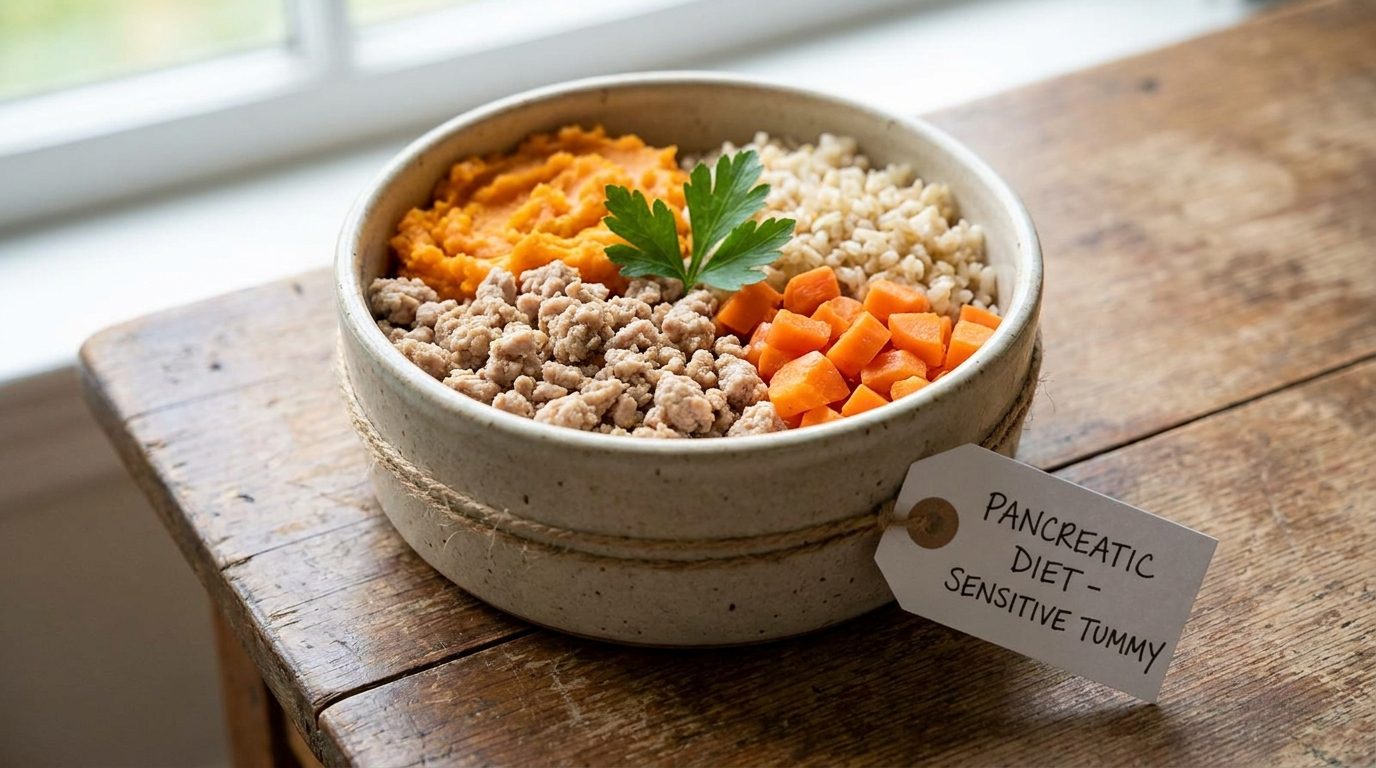
6 Pancreatic Dog Food Recipes for Sensitive Digestions
Last Tuesday, my golden retriever, Cooper, refused his bowl. He looked miserable, and I knew his tummy was acting up again. It is a common struggle for many pet parents who want the best for their furry companions.
Finding the right sensitive digestion dog food is vital when your pet feels unwell. You want options that are gentle and easy to process. These homemade ideas focus on low-fat, simple ingredients to help your pup feel better.

We have gathered 6 pancreatic dog food recipes for sensitive digestions to assist you. Each option uses wholesome components to keep your pet comfortable.
Please remember that homemade meals should complement, not replace, veterinary guidance. Always consult your vet before changing your pet’s diet; pancreatic dog food needs. Your veterinarian provides the best roadmap for your dog’s specific health journey.
6 Pancreatic Dog Food Recipes for Sensitive Digestions
These 6 recipes are great for dogs with sensitive stomachs. Making food at home lets you control the fat and ingredients. It’s crucial for dogs with sensitive systems. Always watch your dog closely when trying new foods.
Skinless Chicken, White Rice, and Pumpkin Bowl
Low-fat ingredients and gentle fiber sources
This recipe uses lean protein and easy-to-digest carbs. Skinless chicken breast is a good source of amino acids without too much fat. Pumpkin adds fiber to help with digestion.
Simple cooking and serving instructions
Boil the chicken until it’s fully cooked, then shred it. Mix the chicken with boiled white rice and pureed pumpkin. Don’t add any seasonings or oils.
How to adjust the texture for your dog
If your dog can’t chew, blend the mix into a soft mash. Adding warm water can make it easier to swallow.
Lean Turkey, Sweet Potato, and Zucchini Dinner
Choosing lean ground turkey and preparing the vegetables
Use the leanest ground turkey, like 99% fat-free. Peel and dice the sweet potatoes and zucchini for even cooking.
Step-by-step recipe directions
Cook the turkey without oil. Steam the sweet potatoes and zucchini until tender. Then mix them with the turkey.
Why this combination may suit sensitive digestion
Sweet potatoes are easy to digest. Zucchini adds bulk without upsetting the stomach.
White Fish, Potato, and Green Bean Meal
Selecting boneless, low-fat white fish
Choose white fish like cod or tilapia for these dog food recipes. Make sure the fish is boneless before cooking.
Cooking instructions without added oils
Poach the fish until it’s flaky. Steam the potatoes and green beans until soft. Then mix them.
Ways to make the meal easier to digest
Mash the potatoes and chop the green beans finely. Serving the meal at room temperature is better for sensitive stomachs.
Egg White, Oatmeal, and Carrot Recipe
Using cooked egg whites as a lean protein
Egg whites are a good, low-fat protein. Scramble them without butter or oil to keep the meal light.
Preparing soft oatmeal and carrots
Cook oatmeal until it’s like porridge. Boil carrots until very soft, then slice them.
Portion and consistency considerations
Mix the ingredients well for a balanced meal. Start with small portions to see how your dog reacts to the oats.
Extra-Lean Beef, Barley, and Butternut Squash Bowl
How to reduce fat from ground beef
Use the leanest ground beef and drain the fat after cooking. Rinsing the meat with warm water can remove more grease.
Cooking barley and squash until tender
Boil barley until it’s soft. Roast or steam butternut squash until it’s easy to mash.
When to choose a different protein
If your dog is uncomfortable after eating beef, try chicken or fish. Some dogs need to switch ingredients due to sensitivities.
Chicken, Pasta, and Carrot Sensitive-Stomach Recipe
Preparing skinless chicken and plain pasta
Boil skinless chicken breast and shred it. Cook plain pasta until it’s a bit overcooked for easier digestion.
Combining ingredients into a soft homemade meal
Mix the chicken and pasta with mashed carrots. These homemade dog food recipes are gentle for a tired stomach.
Keeping the recipe low in fat
Avoid adding butter, cheese, or oils to the pasta. Stick to the main ingredients for a gentle meal.
Before You Serve Homemade Pancreatic Dog Food
Managing your dog’s digestive health at home is a big job. It starts with getting advice from a vet. Before you start cooking, know what your dog can safely eat. Always consult your veterinarian before changing your pet’s diet.

Why veterinary guidance matters for pancreatitis and digestive disease
Pancreatitis is a serious condition that needs careful diet management. A vet knows how bad your dog’s inflammation is. They can say if homemade pancreatic dog food is right for your dog now. They also check blood work to make sure your dog is ready for diet changes.
How a veterinarian can set calorie and fat limits
Every dog needs the right amount of food based on their age, weight, and how active they are. Your vet will figure out how many calories your dog needs to stay healthy. They also set strict fat percentage limits to keep the pancreas from getting worse.
Why these recipes should not replace a complete diet automatically
Many think mixing meat, grains, and veggies makes a balanced meal. But, these ingredients might not have the right mix of nutrients. Without the right mix of calcium, phosphorus, and trace minerals, your dog could get very sick over time.
Questions to ask about supplements, prescription food, and testing
When you talk to your vet, have a list of questions ready. Ask things like:
- Does my dog need a special prescription diet instead of homemade food?
- What vitamins or minerals do we need to add to these recipes?
- Are there special blood tests we should get to check on my dog’s health?
- How often should we check if the diet is working based on how my dog feels?
Low-Fat Cooking Rules for Sensitive Digestions
When your dog has trouble digesting food, how you cook it matters a lot. Following certain rules makes sure your sensitive-digestion dog food is easy on their stomach. It also gives them the nutrients they need.
Ingredients to prioritize in homemade dog food recipes
Start with top-quality, easy-to-digest foods. Choose lean proteins and simple carbs that don’t stress the pancreas.
- Skinless poultry: Chicken or turkey breast without skin or visible fat.
- White fish: Cod or tilapia, which are naturally low in fat.
- Complex carbohydrates: Well-cooked white rice, sweet potatoes, or oatmeal.
- Vegetables: Steamed carrots, green beans, or peeled zucchini.

Fats, seasonings, and ingredients to avoid
Even a little bit of the wrong food can upset your dog. When making low-fat dog food recipes, avoid foods hard for sensitive stomachs to handle.
Why table scraps, butter, oils, and fatty meats can be risky
Table scraps often have hidden fats and spices that are highly inflammatory for dogs. Butter, oils, and fatty meats like pork or beef brisket make the pancreas work too hard. This can cause serious digestive problems. It’s best to stay away from these to keep your dog safe and comfy.
Cooking methods that preserve a gentle texture
The way food feels is as important as what’s in it. Boiling and steaming are best because they don’t need extra fats or oils.
Make sure grains and veggies are thoroughly softened before serving. A soft, easy-to-digest texture helps your dog get nutrients without straining their stomach. By following these simple low-fat dog food recipes, you help your pet feel better.
How to Portion and Serve Each Recipe
When making low-fat dog food recipes, the right serving size is key. It helps your pet stay healthy and avoid digestive issues.

Determining a starting portion for your dog
Every dog is different, so there’s no one-size-fits-all serving size. Start by figuring out your dog’s daily calorie needs. Your vet can help with this.
After finding out your dog’s calorie goal, split it by the number of meals. A digital kitchen scale is the most accurate way to keep portions the same every day.
Dividing food into small, frequent meals
Feeding your dog several small meals is better than big ones. It’s easier on their stomach.
Small meals are easier to digest and keep blood sugar stable. For dogs with sensitive stomachs, aim for three to four meals a day.
Serving food at a comfortable temperature
The food’s temperature affects how your dog eats and digests it. Room temperature is usually the safest for most dogs.
Don’t serve cold food straight from the fridge. It can upset sensitive pets. If food is in the fridge, let it sit for a bit or warm it up with a little water.
Adjusting portions for body weight, activity, and veterinary advice
Your dog’s needs change with their weight and activity level. If they’re less active, you might need to cut their food to prevent weight gain.
Watch your pet’s body condition closely. Talk to your vet before changing their low-fat dog food recipes. Your vet can help adjust portions for your dog’s health and happiness.
Transitioning Your Dog to Homemade Meals
Starting easy dog food recipes might excite you. But, do it slowly. Quick diet changes can upset your dog’s stomach, worse if they’ve had pancreatitis. Patience is your greatest tool during this time.

Introducing one recipe at a time
Start with one recipe for a few days. This lets you see how your dog reacts to it. Mixing too many new foods at once makes it hard to find the problem.
By focusing on one meal, you can spot any issues quickly. Consistency is key to keeping your dog comfortable while trying these recipes.
Using a gradual transition when your veterinarian approves
Always check with your vet before changing your dog’s food. After getting approval, mix a little homemade food into their old diet. Slowly add more homemade food over seven to ten days.
This gradual change helps your dog’s stomach get used to the new food. Watch your pet closely during this time. If they seem uncomfortable, slow down the change.
Tracking appetite, stool quality, vomiting, and abdominal comfort
Keeping a detailed log is key for your dog’s health. Track their appetite, stool, and any vomiting. Monitoring these signs helps catch problems early.
Also, watch for signs of stomach upset. If your dog seems uncomfortable or sensitive, it might mean the new food isn’t good for them. Being an observant and proactive caregiver is crucial when using these recipes.
Storing and Reheating Homemade Dog Food Safely
After making your low-fat dog food recipes, keeping them fresh is key. Good storage habits keep your pet safe from bad food and keep the food’s nutrients strong.

Refrigerating cooked portions within a safe time frame
Always put cooked meals in the fridge right away. Food left out too long can grow harmful bacteria. This is bad for a dog’s sensitive stomach.
Use airtight containers to keep food moist and prevent contamination. These meals stay good for up to three days in the fridge.
Freezing individual servings for convenient meal preparation
Freezing meals is great for saving time. Divide meals into single servings in containers or bags. This way, you can thaw just what you need the night before.
- Label each container with the date of preparation.
- Use flat freezer bags to save space in your freezer.
- Thaw frozen portions in the refrigerator rather than on the counter.
- Aim to use frozen meals within one month for the best quality.
Reheat without adding fat or overheating the food
Make sure the meal is warm but not too hot. Don’t add oils or fats when reheating. These can upset a sensitive dog’s stomach.
Gently warm the food in a microwave-safe dish or on the stovetop with a splash of water. Stir well to avoid burns.
When to discard leftovers
Trust your instincts about food safety. If you see any bad signs, throw the food away to keep your dog safe:
- The food has an unusual or sour odor.
- There is visible mold or discoloration.
- The meal has been in the refrigerator for more than three days.
- Your dog refuses to eat the food despite being hungry.
Keeping up with these standards for your low-fat dog food recipes makes every meal safe and tasty. Staying consistent helps your dog’s digestive health in the long run.
Making These Recipes Nutritionally Complete
Making homemade dog food recipes is more than just using fresh ingredients. These meals are made with love but often lack the balance your pet needs. Using only basic pantry staples can cause hidden deficiencies over time.
Why meat, grains, and vegetables alone may be insufficient
A diet of just meat, grains, and vegetables is often incomplete for dogs. These foods give energy but lack the right amino acids and fatty acids. Without the right balance, your dog might miss out on important nutrients for their immune system.
Discussing calcium, vitamins, minerals, and essential nutrients with your veterinarian
You need to talk to your vet about the supplements your dog needs. Calcium is very important for bone health and can’t be ignored. Your vet can help figure out the right amounts of vitamins and minerals for your homemade dog food recipes.
When a commercial therapeutic diet may be safer
For chronic conditions, a commercial therapeutic diet might be the smarter choice. These products are made by experts for consistent, medical-grade nutrition. If your dog has severe digestive issues, a vet-prescribed diet ensures every bite is balanced.
Using a veterinary nutritionist for long-term homemade feeding plans
If you plan to cook for your dog long-term, work with a vet nutritionist. They can make customized homemade dog food recipes that are scientifically balanced. This expert advice ensures your pet gets the best nutrition while managing their sensitive digestion safely.
Signs Your Dog Needs Prompt Veterinary Care
Knowing when to go to the vet is crucial for pet owners. Even if you cook healthy meals, some issues need a vet’s help. This is true for pancreatic dog food and more.
Recognizing repeated vomiting, diarrhea, or refusal to eat
If your dog keeps vomiting or has bad diarrhea, call the vet right away. These signs can cause serious health problems. If your dog won’t eat for more than a day or two, it’s a big warning sign.
Watch for abdominal pain, weakness, dehydration, or collapse
Watch for signs of pain or weakness in your dog. If they seem very tired or can’t stand, get emergency help. Look for a hunched back or dry gums and sunken eyes for dehydration.
Understanding why worsening symptoms should not be managed with recipes alone
Even the best pancreatic dog food can’t fix all problems. If things get worse, your dog might need special treatments. This could include IV fluids or pain meds only a vet can give.
What information to bring to your veterinary appointment
Bring all your dog’s health records to the vet. This helps them figure out what’s wrong. It also shows if your pancreatic dog food plan needs a change.
- A list of all ingredients used in recent meals.
- Notes on the frequency and consistency of stools.
- A log of when vomiting occurred and what it looked like.
- Any changes in your dog’s energy levels or behavior.
- A record of how much food your dog has consumed over the last 48 hours.
Adapting the Recipes to Your Dog’s Needs
Every dog is different. So, your homemade meals should be too. You might start with easy dog food recipes but find your dog needs special tweaks. Making these changes helps your dog get the right nutrition without upsetting their stomach.
Swapping proteins when your dog has an intolerance
If your dog can’t handle a certain meat, try another lean protein. Make sure the new protein is low in fat to keep your easy dog food recipes balanced. You can switch from chicken to white fish or lean turkey, if your vet says it’s okay.
Changing textures for dental problems or poor appetite
Dogs with dental issues or no appetite might like softer food. Try blending or mashing ingredients to make them easier to eat. This can help your dog eat more when they’re not feeling well.
Adjusting fiber carefully for constipation or loose stools
Fiber is key for your dog’s digestion, but it needs to be balanced. For loose stools, add more cooked pumpkin or boiled white rice to your easy dog food recipes. For constipation, a bit more cooked, pureed veggies can help.
Stopping an ingredient that causes a noticeable reaction
If your dog reacts badly to something, stop using it right away. Keep a detailed log of what you feed your dog to find out what might be causing problems. Here are some tips for managing your dog’s diet:
- Consult your veterinarian before making big changes to your dog’s food.
- Keep a simple food diary to see how your dog reacts to new foods.
- Introduce new ingredients one at a time to figure out any issues.
- Use high-quality, fresh ingredients to lower the chance of reactions.
Building a Practical Homemade Feeding Routine
Managing your dog’s diet doesn’t have to be hard. A good plan makes it easy. You can care for your dog well without feeling stressed.
Preparing several low-fat meals in advance
Batch cooking is a big help with special diets. Spend a few hours each weekend making big batches of dog food recipes.
After cooking, put the meals in individual containers. Then, freeze them. This way, you always have a healthy meal ready for your dog.
Keeping ingredient measurements and symptom notes
Being consistent is key for a sensitive stomach. Keep a logbook or digital spreadsheet. Record the exact amounts of each ingredient in your easy dog food recipes.
Also, track your dog’s energy and stool quality. Note how your pet reacts to different meals. This helps find the best food for them.
Balancing convenience with your dog’s long-term nutritional needs
While it’s good to be convenient, your dog’s health comes first. Even the simplest easy dog food recipes need vet checks. This ensures they stay balanced.
Remember, your routine should provide a complete diet. Stay organized and talk often with your vet. This way, you can give your pet the best dog food recipes for years.
Conclusion
Managing your pet’s health needs patience and a focus on good nutrition. These 6 recipes for sensitive digestion are a gentle start for your dog. You now have the tools to make low-fat meals that focus on comfort and health.
Success comes from watching your dog closely during changes. Look at stool quality and energy levels when introducing these recipes. Small, frequent meals help keep blood sugar steady and ease pancreas strain.
Keep meals fresh by storing them in airtight containers. Your vet is key in adjusting these recipes for your dog’s needs. If you see sudden changes or discomfort, contact your vet.
Your effort in making home-cooked meals makes a big difference for a sensitive dog. Follow these tips to create a routine that keeps your pet happy and healthy for years.


