
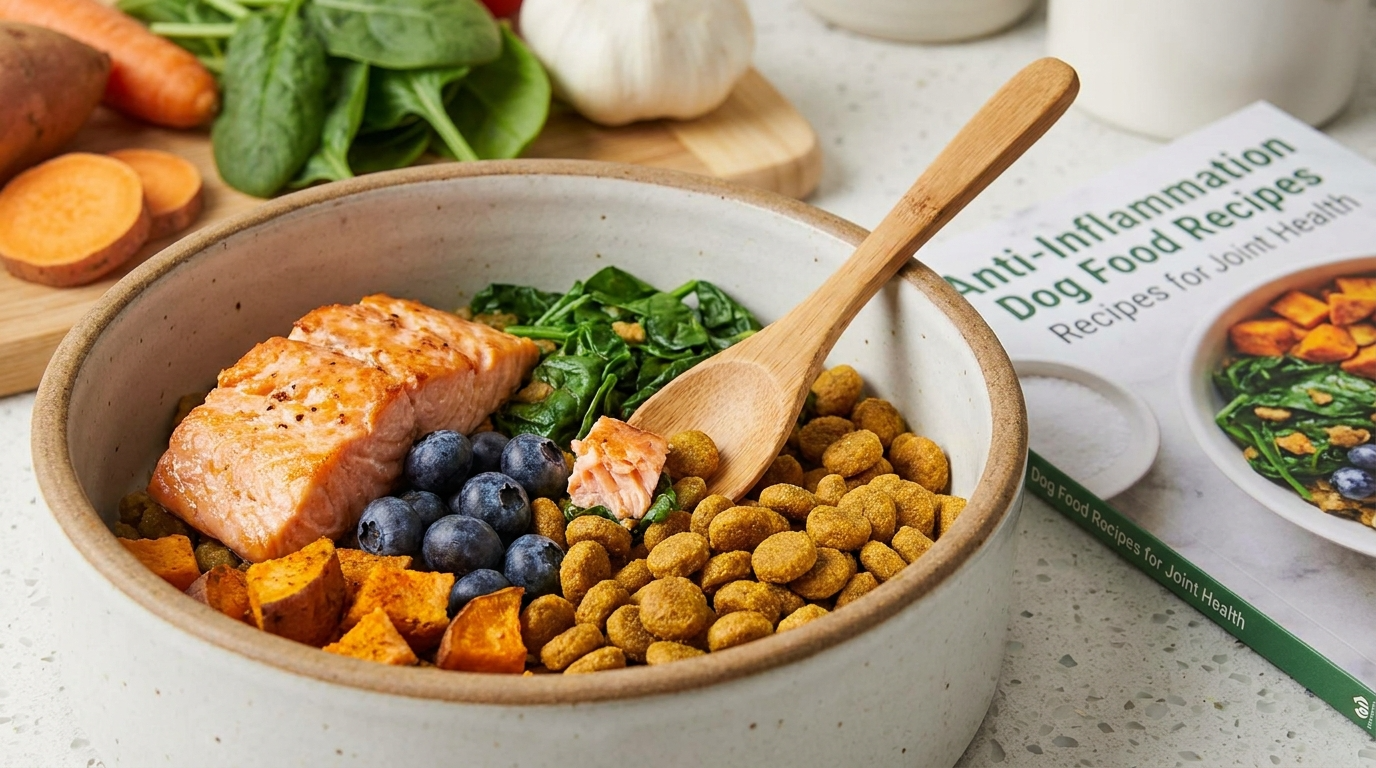
6 Anti-Inflammation Dog Food Recipes for Joint Health
Seeing your dog struggle to climb stairs or hesitate to jump is heartbreaking. You wish they could move like they did when they were a puppy. The right food can help them stay mobile and comfortable every day.

This guide has 6 anti-inflammation dog food recipes for joint health. These meals use fresh fish, lean poultry, colorful veggies, and whole grains. Choosing these dog food recipes can help fight inflammation naturally.
Remember, these meals should complement, not replace, vet care. Keeping your pet at a healthy weight is also key. Extra pounds can stress their body. We’ll talk about safe prep, storage, and how to customize these meals. This way, your pet can stay active and happy for years.
Why Nutrition Matters for Canine Joint Health
Good nutrition is key for your dog’s canine joint health. Quality food gives them what they need to stay strong and move well. This is important for their whole life.
How Inflammation Can Affect Your Dog’s Mobility
Inflammation quietly takes away your pet’s agility. It makes joints stiff, which is noticeable after rest or waking up.
Your active dog might now hesitate to jump or climb stairs. This is because of joint swelling and less lubrication.
What a Joint-Supportive Diet Can and Cannot Do
A balanced diet helps a lot with joint health. But it’s not a cure-all. It keeps your dog at a healthy weight, easing the load on their bones.
It also helps keep muscles strong, which supports the joints. But remember, food can’t fix structural problems like arthritis.
Signs Your Dog May Need Extra Joint Support
Watching your dog closely is the best way to spot problems early. Look out for limping, swelling, or weakness in their legs. These are signs they need joint support for dogs.
If your dog’s activity level changes suddenly, see a vet. They can check for health issues and help with a plan for diet, exercise, and care.
Safety Essentials Before Making Homemade Dog Food
Before you start cooking for your dog, safety and nutrition are key. Making homemade dog food is a great way to care for your pet. But you need to know a lot about pet nutrition to keep your dog healthy.

Talk With Your Veterinarian About Your Dog’s Needs
Always talk to your vet before changing your dog’s diet. They can tell if homemade food is right for your dog. They might also suggest a vet nutritionist to check your plan.
Keep Homemade Meals Nutritionally Complete
Many people think meat, veggies, and grains are enough for dogs. But they often miss out on important nutrients like calcium and vitamins. Without the right supplements, your dog could get very sick.
Exclude Toxic Ingredients Such as Onions, Garlic, Grapes, Raisins, and Xylitol
Some kitchen items are very bad for dogs. You must avoid onions, garlic, grapes, raisins, and xylitol. These can poison your dog. Xylitol, found in peanut butter, is very dangerous.
Account for Allergies, Medical Conditions, and Calorie Requirements
Every dog is different, needing food based on their age, size, and how active they are. Dogs with health issues like kidney disease or diabetes need special diets. Watch your dog’s weight to make sure they get the right amount of calories.
Anti-Inflammatory Ingredients to Include in Dog Food Recipes
When you make meals at home, you control the natural ingredients for dogs that help joints. Choosing the right ingredients is key to making an anti-inflammatory dog food. This food helps your pet move easily.
Omega-3-Rich Fish for Joint and Coat Support
Fish like salmon and sardines are full of omega-3 fatty acids. These fats are key for a normal inflammatory response in your dog’s body.
These oils also make your dog’s coat shiny and skin healthy. Adding these fish to your recipes boosts your dog’s health a lot.

Fiber-Rich Produce for Digestive and Metabolic Health
Adding veggies to your dog’s food gives them important vitamins and minerals. Pumpkin, green beans, blueberries, spinach, and sweet potatoes are full of valuable fiber for digestion.
Make sure to give these foods in the right amounts. When done right, they help keep your dog’s metabolism healthy. This is key for long-term joint support.
Lean Proteins for Muscle Support Around the Joints
Lean proteins are the main building blocks for strong muscles. These muscles protect your dog’s joints. They act as a protective cushion, reducing stress on sensitive areas.
Choose high-quality proteins like chicken breast, turkey, or lean beef. This helps your dog stay strong and active.
Turmeric, Ginger, and Other Ingredients to Use Carefully
Natural additives like turmeric and ginger are good for health. But, use them carefully with your dog.
Too much can upset their stomach or mix badly with medicines. Always start with small amounts. Talk to your vet to make sure your anti-inflammatory dog food is safe for your pet.
How to Prepare and Portion Homemade Meals for Dogs
When you make homemade dog food, how you prepare it matters a lot. It’s important to make sure every meal is safe and full of nutrients. This helps your pet stay healthy and happy.
Cook Meat, Fish, Grains, and Vegetables Thoroughly
Raw foods can have bad bacteria that makes pets sick. Cook all animal proteins, grains, and veggies until they’re soft. Thorough cooking makes it easier for your dog to get the nutrients they need.

Remove Bones, Excess Fat, and Dangerous Seasonings
When making healthy dog food, safety is key. Take out all bones to avoid splinters and internal harm. Also, cut off extra fat to stop stomach problems or pancreatitis.
Don’t add onions, garlic, or spicy stuff to your dog food recipes. These are bad for dogs and can cause serious health issues. Use only simple, healthy ingredients to keep your pet safe.
Transition Gradually to New Dog Food Recipes
Changing your dog’s diet too fast can upset their stomach. Start by mixing a little new food with their old food. Slowly add more new food over seven to ten days.
Use Portion Size and Body Condition to Guide Feeding
Every dog needs the right amount of food based on their size, age, and how active they are. Watch your dog’s weight to keep them healthy. If they’re gaining or losing weight, change their food portions.
Talking to your vet is the best way to figure out how much food your dog needs. Use these dog food recipes as a base. Then, adjust the portions to fit your dog’s lifestyle and health goals.
Storage, Batch Cooking, and Serving Tips
Keeping your pet healthy starts with how you store and serve their homemade dog food. Proper handling keeps the food fresh and safe. By following simple routines, every meal stays fresh.
Refrigerate Homemade Dog Food Safely
Cool your cooked meals quickly before refrigerating. Leaving food out too long invites bacteria. Move it to the fridge in two hours or less.
Use airtight containers to keep moisture in and prevent contamination. Most meals should be eaten within three to four days. If you have leftovers, freeze them to avoid spoilage.
Freeze Individual Portions for Convenient Meals
Freezing is great for managing your homemade dog food without daily cooking. Portion meals before freezing for easy mealtime. This method keeps nutrients fresh.
Just thaw a portion overnight in the fridge. This convenient approach ensures a healthy meal for your dog, even on busy days.
Warm Food Gently Without Overheating It
Warm the food gently to release its aromas. Use a microwave on low or add warm water. Always stir well to avoid burns.
Check the food’s temperature with your finger before serving. It should be comfortably warm. Serving food at the right temperature makes mealtime better for your dog.
6 Anti-Inflammation Dog Food Recipes for Joint Health
Making your own dog food lets you pick what your pet eats every day. You can use natural ingredients for dogs to make tasty meals that help with comfort and movement. These dog food recipes help you take care of your pet’s health at home.

Salmon, Brown Rice, and Spinach Bowl
Ingredients and Nutritional Purpose
Salmon has omega-3 fatty acids to fight inflammation. Brown rice gives steady energy. Spinach adds vitamins for joint health.
Cooking and Preparation Steps
Steam salmon until it’s done, then flake it. Mix with cooked brown rice and chopped spinach. Make sure to remove bones before serving.
How This Meal Supports Joint-Friendly Nutrition
Salmon’s healthy fats help keep joints lubricated. This mix has the right balance of protein and fiber for your dog.
Turkey, Pumpkin, and Blueberry Dinner
Ingredients and Nutritional Purpose
Lean turkey is good for muscle. Pumpkin helps with digestion. Blueberries fight oxidative stress.
Cooking and Preparation Steps
Brown ground turkey without oils or seasonings. Mix in pumpkin and blueberries when the turkey cools.
How to Serve This Fiber-Rich Meal
Feed this meal at room temperature to keep antioxidants good. Serve in portions right for your dog’s size.
Sardine, Oat, and Green Bean Recipe
Ingredients and Nutritional Purpose
Sardines are full of EPA and DHA for anti-inflammatory dog food. Oats give complex carbs. Green beans add crunch and nutrients.
Cooking and Preparation Steps
Use water-packed sardines and mash them. Mix with cooked oats and steamed green beans.
How to Manage Fish Flavor and Portion Size
Start with a small amount of sardines because of their strong smell. Watch how your dog reacts to the fish.
Chicken, Sweet Potato, and Turmeric Bowl
Ingredients and Nutritional Purpose
Chicken is lean protein. Sweet potatoes have beta-carotene. Turmeric can soothe stiff joints.
Cooking and Preparation Steps
Boil or bake chicken until tender, then shred it. Mix with mashed sweet potato and a little turmeric.
When to Use Turmeric and When to Avoid It
Use turmeric as a supplement to natural ingredients for dogs but sparingly. Always check with your vet first.
Lean Beef, Barley, and Vegetable Stew
Ingredients and Nutritional Purpose
Lean beef supports muscle, which is key for joint health. Barley gives slow energy. Mixed veggies add minerals.
Cooking and Preparation Steps
Slow-cook beef, barley, and water until barley is soft. Add carrots or zucchini last.
How the Recipe Helps Support Muscle and Joint Function
Beef’s protein keeps muscles strong for aging joints. This stew is filling and full of nutrients.
Egg, Quinoa, and Broccoli Breakfast Meal
Ingredients and Nutritional Purpose
Eggs are easy to digest. Quinoa is full of nutrients. Broccoli adds fiber and antioxidants for anti-inflammatory dog food.
Cooking and Preparation Steps
Scramble eggs lightly and mix with quinoa. Add steamed broccoli when it cools.
How to Adapt the Recipe for Sensitive Stomachs
If your dog’s stomach is sensitive, cook broccoli until very soft. Always introduce new foods slowly.
Important Note: These meals are meant to be supplements. Talk to your vet to make sure they fit your dog’s needs. Consider adding a vitamin-and-mineral supplement for long-term health.
How to Customize These Meals for Your Dog
Every dog is different. So, your approach to their meals should be flexible. The recipes given are a good start, but you might need to make changes for your pet’s health. Remember, natural ingredients for dogs don’t always have all the nutrients they need.

Adjusting Protein Choices for Food Sensitivities
If your dog has an allergy or intolerance, you can change the protein. For example, if chicken makes their skin itch, try turkey or white fish instead. Make sure the new protein is cooked well and doesn’t have any seasonings or fats.
Changing proteins means keeping the meal balanced. You need to replace the protein with something lean to keep the amino acids right.
Replacing Grains With Suitable Alternatives
Some dogs do well with grains, while others need a grain-free diet. If you need to swap out brown rice or barley, here are some good options:
- Sweet potatoes or yams for energy.
- Quinoa, which is like a grain but is a seed.
- Mashed pumpkin for fiber and digestive health.
- Green peas for plant-based protein.
Modifying Portions for Puppies, Seniors, and Less Active Dogs
Controlling portions is key in making healthy dog food. Puppies need lots of calories, while seniors don’t. Adjust the serving sizes based on your dog’s age, weight, and how active they are.
- Check your dog’s weight every week to see if they’re gaining or losing too much.
- Give less food to less active dogs to avoid obesity, which is hard on their joints.
- Talk to your vet to figure out how many calories your dog needs each day.
Adding Veterinary-Approved Supplements for Joint Support
For joint support for dogs, you might want to add special powders or oils. But, only do this with your vet’s advice. This is very important if your dog is already taking medicine for a long-term illness.
A vet can tell you if your dog needs extra joint support for dogs through certain additives like glucosamine or omega-3 oils. Getting expert advice makes sure your dog’s diet is safe and effective for their health.
Combining Homemade Food With a Complete Joint-Health Plan
For your dog’s canine joint health, a whole plan is needed. Homemade food is great, but it’s even better with a bigger wellness plan. This way, your pet can stay active and feel good for a long time.
Maintain a Healthy Weight to Reduce Joint Strain
Keeping your dog at a healthy weight is key. Too much weight puts extra stress on their joints. Even a small amount of weight loss can help your dog move better every day.
Pair Good Nutrition With Low-Impact Exercise
Moving is good for joints and muscles, but too much can hurt. Choose gentle exercises that are easy on the body. Here are some vet-approved activities for joint health:
- Controlled, steady-paced walks on soft surfaces like grass or dirt.
- Swimming or hydrotherapy, which provides resistance without weight-bearing impact.
- Therapeutic stretching exercises designed to improve range of motion.
- Short, frequent play sessions rather than long, exhausting bouts of running.
Discuss Glucosamine, Chondroitin, and Fish Oil With Your Veterinarian
Many owners want to add joint support for dogs with supplements. Glucosamine, chondroitin, and fish oil are popular. But, always talk to your vet before starting.
Your vet can check if these supplements are right for your dog. They can also help with the right amount and any possible side effects. Every dog is different, so a vet’s advice is crucial. Remember, regular care and a balanced life are key for joint health.
Conclusion
Feeding your dog well is a great way to show you care. These six recipes are a good start for making healthy meals at home. You can now focus on your dog’s nutrition while keeping safety and the right amount of food in mind.
Every dog is different, needing food based on their age, weight, and how active they are. Their health history, allergies, and medicines also affect how they digest food. Remember these things when cooking for your dog.
Before changing your dog’s diet, talk to your vet. They can help make sure your homemade meals are good for your dog. This includes talking about supplements or changes in your dog’s health.
Good joint health is more than just food. Make sure your dog is at a healthy weight and gets regular, gentle exercise. This helps your dog stay active and comfortable for a long time.


