
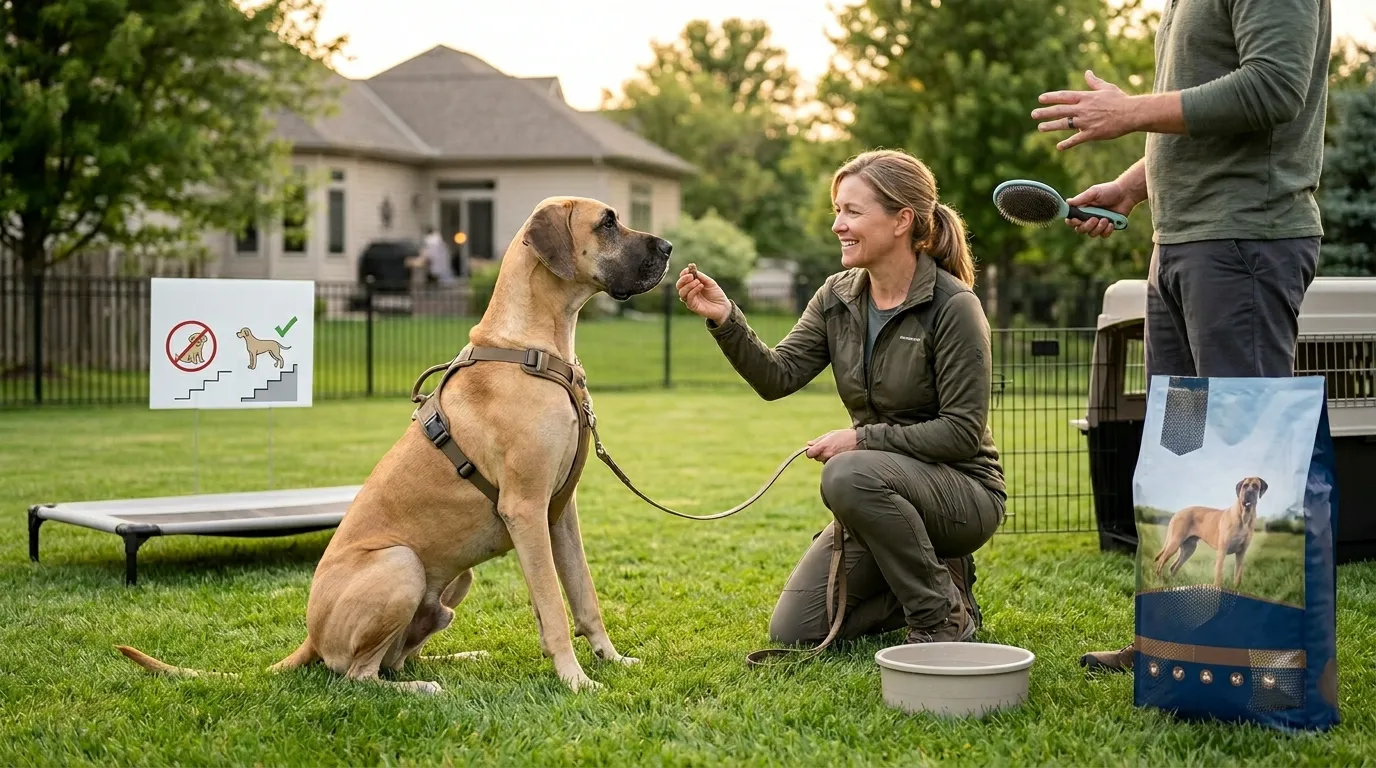
6 Mistakes Great Dane Owners Make and How to Fix Them
Getting a Great Dane is a big change. They bring a special kind of love into your home. But they need special care because of their size.

Even the most caring owners can miss important health needs. It’s easy to overlook things that affect your pet’s health. Knowing the 6 mistakes great dane owners make helps you create a better home for your dog.
Small changes can make a big difference in your dog’s life. We’re here to guide you. Let’s talk about how to give your dog the best care.
Understanding the Unique Needs of Your Gentle Giant
Many new owners are surprised by their gentle giant’s needs. These dogs are not just big versions of smaller pets. There are many common misconceptions about great danes that can confuse first-time owners.
One big mistake is thinking these dogs need lots of intense exercise. They actually need gentle, measured activity because of their fast growth. Not knowing this can lead to great dane care blunders that harm your dog’s health.
True companionship comes from learning and adapting to your dog’s needs. By understanding their nutritional and physical needs early, you help them live a healthy life. Avoiding great dane care blunders is easier when you focus on facts over myths.
It’s key to remember that Great Danes grow differently from smaller dogs. This means they shouldn’t be treated like adult dogs when they’re still puppies. Learning about their growth helps keep your gentle giant happy and active for years.
The 6 Mistakes Great Dane Owners Make and How to Fix Them
Raising a giant breed is joyful but needs careful attention. Knowing the 6 mistakes great dane owners make helps your dog thrive. Spotting these mistakes early ensures a safe and happy home for your dog.

Over-exercising Growing Puppies
It’s tempting to take your puppy on long walks. But their bones are still growing. Too much exercise can hurt their joints forever. Play short, controlled games until your vet says it’s okay for more.
Ignoring the Risks of Bloat
Bloat is a serious condition where the stomach twists. Watch for a big belly or if your dog can’t throw up. Get your dog to the vet right away if you see these signs.
Providing Improper Nutrition for Rapid Growth
Many think more food means a healthier dog. But fast growth can harm giant breeds’ bones. Choose a high-quality puppy food that supports slow growth.
Neglecting Joint Support and Supplements
Great Danes put a lot of weight on their joints. Adding glucosamine and chondroitin to their food helps. Start early to keep your dog moving well as they get older.
Failing to Prioritize Early Socialization
A fearful or reactive giant dog is hard to handle in public. Introduce your puppy to different things early. This builds their confidence for a happy adult dog.
Underestimating the Cost of Veterinary Care
Giant breeds need more medicine and care, which costs more. Plan for regular vet visits and emergencies. Avoiding these common errors in great dane ownership means many happy years with your dog.
Managing Physical Activity and Growth Milestones
Understanding your puppy’s joint protection is key. Great Danes grow fast, but their bones stay soft. This is a big great dane care blunder many owners make.
Over-exercising Growing Puppies
It’s tempting to take your puppy on long walks. But, moderation is essential in the first 18 to 24 months. This helps their bones grow with their body.
Why High-Impact Exercise is Dangerous for Puppies
High-impact activities stress a young dog’s growth plates. Jumping, climbing stairs, or running on hard surfaces can cause permanent damage. This can lead to mobility issues and expensive vet bills later.
Safe Exercise Alternatives for Large Breeds
You can keep your dog active without harming their bones. Choose low-impact activities to avoid these great dane owner mistakes. Here are some safe options:
- Short, frequent walks on soft surfaces like grass or dirt paths.
- Controlled leash training to prevent sudden lunging or pulling.
- Mental stimulation games that tire your puppy out without physical strain.
- Swimming, which provides excellent cardiovascular exercise without impact on the joints.
- Gentle play sessions in a confined area where the puppy cannot jump or slide.
By choosing these low-impact activities, you set a strong foundation for your dog’s health. Gentle, consistent movement is best for a growing giant breed.
Nutritional Strategies for Giant Breeds
Proper nutrition is key for your Great Dane’s health and energy. Many people make mistakes by focusing on quick weight gain. It’s important to know your dog’s special needs for a happy life.
Providing Improper Nutrition for Rapid Growth
Great Danes grow very fast in their first two years. Giving them too many calories can harm their bones and joints. It’s better to let them grow slowly and safely.
The Dangers of Over-Supplementing Calcium
Many think extra calcium makes bones stronger. But too much can cause serious bone problems. Always talk to your vet before adding supplements.
Choosing the Right Protein-to-Fat Ratio
Finding the right diet with the right protein and fat is crucial. Too much fat can make your dog overweight. Here are some important tips:
- Choose large-breed specific formulas that control calorie density.
- Monitor your dog’s body condition score every two weeks.
- Avoid free-feeding to prevent overconsumption of nutrients.
- Prioritize high-quality protein sources like chicken or lamb.
By avoiding common mistakes, you can keep your dog happy and healthy. Follow these tips to ensure your Great Dane lives a long, active life. Consistency in your feeding routine is key to success.
Preventing Life-Threatening Health Issues
Understanding bloat is key when you own a giant breed. Proactive care helps your dog live a long, happy life. Knowing how to manage risks is crucial for Great Dane owners.
Ignoring the Risks of Bloat
Gastric Dilatation-Volvulus, or bloat, is a sudden and life-threatening emergency. It happens when the stomach fills with gas and twists. This cuts off blood flow. Not seeing how serious this is is a big mistake for Great Dane owners.
Recognizing the Early Signs of Gastric Dilatation-Volvulus
Watch for small changes in your dog’s behavior. Signs include unproductive retching, where they try to vomit but nothing comes up. You might also see a distended or hard abdomen, along with restlessness or pacing.
If your dog shows these signs, don’t wait. Get emergency vet care right away. Every minute is crucial during a bloat episode.
Implementing Preventive Measures for Bloat
There are ways to lower bloat risk. Feed your dog smaller meals throughout the day, not one big meal. Also, avoid intense physical activity for at least an hour before and after meals.
Some debate about elevated food bowls. Talk to your vet about what’s best for your dog. By following these steps, you can avoid mistakes and keep your dog safe.
Building a Strong Foundation Through Training
Many people think Great Danes are lazy or hard to train. But this is a common misconception about great danes. These smart dogs do well with clear rules from the start. Training is key for their safety, as they can weigh over 150 pounds.
Failing to Prioritize Early Socialization
Socialization is key for a confident dog. Skipping it can make your dog feel scared or upset in new places. Early exposure to people, sounds, and places helps them feel at ease.
To raise a polite dog, focus on these social goals:
- Introduce your puppy to various household appliances and noises.
- Arrange controlled playdates with other calm, vaccinated dogs.
- Visit busy parks to help them get used to crowds and traffic.
- Practice handling their paws and ears to prepare for vet visits.
The Importance of Leash Manners for Large Dogs
Walking a big dog needs total control. If they pull, they can hurt you. Teaching them to walk by your side is a non-negotiable safety skill for safe walks.
Consistency in Behavioral Expectations
Being consistent is key for a good pet relationship. If you let them jump on the couch now, they won’t understand when they’re bigger. Setting clear rules early builds mutual respect for life.
Overcoming common misconceptions about great danes starts with their education. A well-trained Great Dane is a joy and a safe community member.
Conclusion
Owning a Great Dane is joyful and comes with big responsibilities. Learning about their needs strengthens your bond.
These tips help you care for your Great Dane. Paying close attention to their needs makes a big difference.
Knowing how to keep your dog healthy is key. Avoiding common problems helps prevent issues.
Regular vet visits and watching your dog’s growth are important. Small changes can greatly improve their life.
Join local dog communities to share your experiences. It’s a great way to get support and learn from others.
Your hard work will make your dog happy for many years. Enjoy every moment with your loyal friend.


