
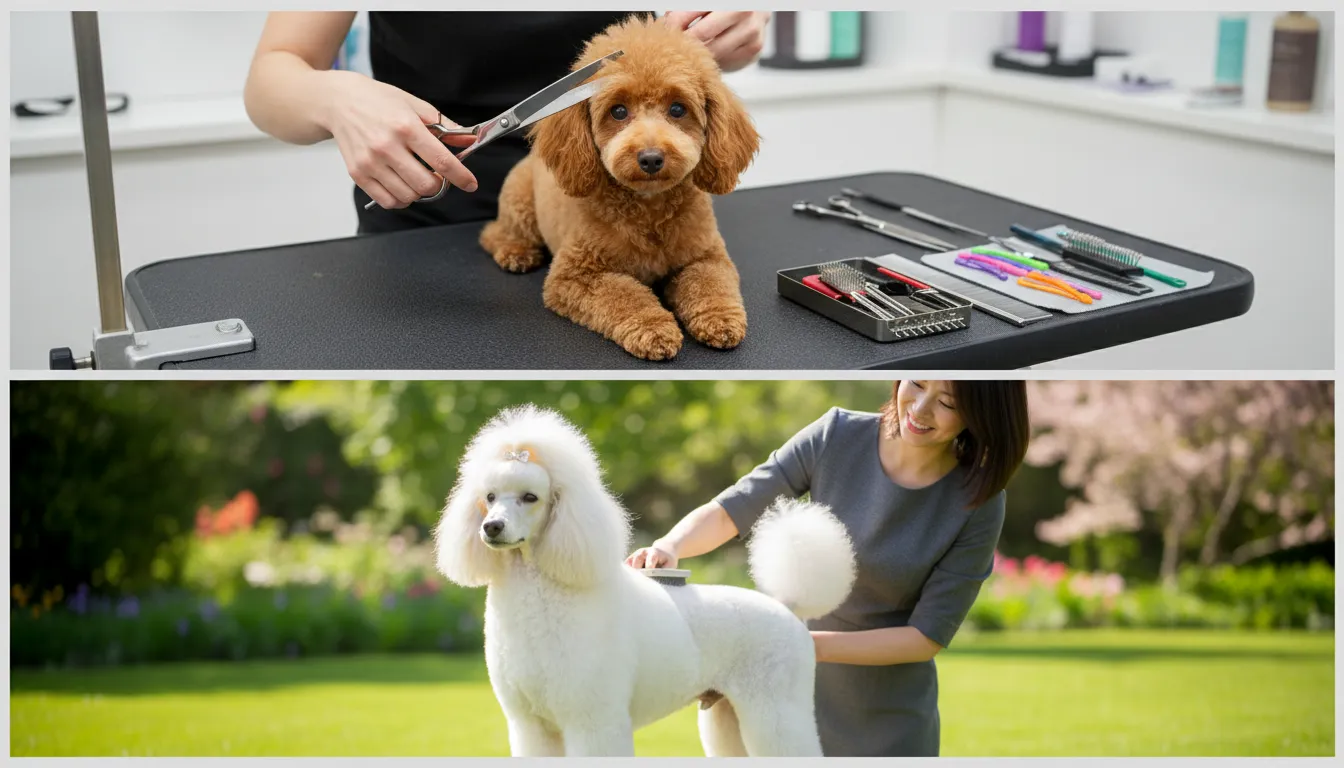
7 Grooming Rules Every Poodle Owner Must Follow for Best Care
Ever think if your daily care is enough for your curly-haired friend? Many see grooming as just a chore. But it’s key to your pet’s health and happiness. Knowing the 7 Grooming Rules Every Poodle Owner Must Follow changes how you care for your dog. It turns grooming into a meaningful bonding experience. This strengthens your bond.
Good grooming stops painful matting and skin problems. It keeps your pup comfy all year. By following these habits, your pet stays happy and full of life. Let’s see how these habits change your daily life and boost your pet’s well-being.
Understanding Your Poodle’s Unique Coat
If you want a happy, healthy dog, you need to know your poodle coat (it’s not like other dogs). Many owners think all dog coats are the same. But poodles are truly special. Understanding these differences is key to a good grooming routine at home.
Why Poodle Hair Differs from Fur
Most dogs have fur that grows and then sheds. But poodles have hair that grows continuously, like human hair. This means their hair stays in their coat until you groom it.
This is why grooming is so important. Without it, their hair can form painful knots. Consistency is your best friend in managing this.
The Importance of Texture and Density
Your poodle’s hair texture and density need special care. Their hair is often curly or wavy, creating a dense, protective barrier. This barrier traps debris and moisture. So, why coat type matter for your daily care?
Ignoring the coat’s density can lead to painful mats. These mats can hurt your pet. By learning to work with their hair, you make grooming stress-free and comfortable for them.
7 Grooming Rules Every Poodle Owner Must Follow
Learning to care for a poodle takes seven key rules. By following these, your dog stays happy and healthy. It’s all about consistency.
Brush Like a Boss Using the Line-Brushing Method
To avoid tangles, brush your poodle every day. The line-brushing method is the best way to get to the skin. It’s the only way to keep their coat clean.
Start at the bottom of the leg and move up in small parts. This stops mats from forming near the roots. It’s painful for your dog.

Master the Dynamic Duo of Bathing and Blow-Drying
After brushing, bath and blow-dry are your best friends. A high-velocity dryer dries the hair straight. This stops curls from matting.
Use dog-specific shampoo and conditioner. This keeps their coat natural and fluffy. Proper drying keeps their hair easy to manage for weeks.
Prioritize Pre-Bath Detangling to Prevent Matting
A key pro tip: detangle before bathing. Never bathe a matted dog. Water makes tangles worse, making them hard to remove.
Always brush your poodle before the bath. This simple step saves you time and keeps their coat healthy.
Stick to a Consistent Trimming Schedule
Trim your poodle regularly to keep their coat manageable. Trims prevent overgrown hair. It’s easier to care for.
Most owners get a professional trim every four to six weeks. This keeps your poodle looking good and feeling light.
Choose a Practical Style for Your Lifestyle
When choosing a style, think about your daily routine. A shorter “puppy cut” or “sporting clip” is easier to manage than a long coat.
Choose a style that fits your daily life. Your dog will be more comfortable with a shorter coat.
Maintain Ear, Teeth, and Nail Hygiene
Don’t forget ear, teeth, and nail care. These areas can get infections and be painful if not cared for.
Check their ears, brush their teeth, and trim their nails. These habits improve your dog’s life a lot.
Partner with Professional Groomers Strategically
Even with a good home routine, get professional help for tough tasks. Groomers have the skills and tools for deep cleaning and styling.
Use these visits to help your home care, not replace it. A good relationship with your groomer keeps your poodle in great shape all year.
Essential Tools and Maintenance
Having the right tools makes grooming easy and keeps your dog looking great. Professional-grade gear helps avoid skin problems and saves time for you and your pet.

Investing in High-Quality Brushes and Combs
Remember, tools matter (buy once, cry once). Cheap brushes can break or hurt your Poodle’s hair. Choose durable materials for long-lasting value.
For a great coat, you need these basics:
- A high-quality slicker brush for tangles.
- A strong metal greyhound comb for skin mats.
- Professional shears for eye and paw trim.
- Reliable nail clippers for big breeds.
Proper Maintenance for Your Grooming Kit
After buying top-notch tools, keep them in good shape. Bad care can cause rust, dull blades, and skin irritation.
Here’s how to keep your kit ready:
- Clear hair from brushes after each use.
- Sanitize metal tools with pet-safe spray.
- Store shears in a case to avoid dullness.
- Check clippers for debris and oil the blades.
These steps protect your tools and give your Poodle a gentle, effective grooming every time. Good care today means no broken tools tomorrow.
Training for a Stress-Free Grooming Experience
Success in grooming starts long before you pick up the brush. To ensure your dog remains calm and cooperative, you must train the grooming mindset (yours and theirs). When both you and your pet approach these sessions with a relaxed attitude, the entire process becomes a rewarding activity rather than a stressful chore.

Starting Early with Puppy Repetitions
It is essential to introduce your dog to grooming tools while they are still young. Because puppies need early reps to feel comfortable, you should start by simply touching their paws, ears, and tail with your hands. This helps them understand that being handled is a safe and normal part of life.
Once they are comfortable with your touch, introduce the sight and sound of brushes, dryers, and clippers. Keep these initial sessions very short and pair them with high-value treats. By creating these positive associations early, you prevent fear and anxiety from developing later in life.
Building a Positive Mindset for You and Your Dog
Your own emotional state plays a massive role in how your dog reacts during grooming. If you feel rushed or frustrated, your dog will likely pick up on that energy and become restless. Always prioritize your patience and take breaks if you feel yourself becoming tense.
Try to view grooming as a special bonding time where you can focus entirely on your companion. Use a calm, soothing voice and offer plenty of praise throughout the session. When you maintain a consistent and gentle routine, you turn a necessary maintenance task into a strengthened bond that you both look forward to every week.
Health Monitoring During Grooming Sessions
Every grooming session can be a chance to check your dog’s health. By watching your poodle closely, you can spot health problems early. Consistency is the key to catching small changes before they get big.
Catching Red Flags Early
While brushing and clipping, look for any unusual signs. Watch for red flags to catch early like skin redness, lumps, or bad ear smells. Also, check for fleas or ticks near the skin.
Keeping a grooming journal is a good idea. It helps you track changes in your dog’s skin or coat. If you see dry skin or a bump, note the date and where it is.
When to Consult Your Veterinarian
Some issues need a vet’s help right away. If you find a firm lump or it grows fast, get help fast. Also, if your dog’s ears or eyes keep discharging, see a vet quickly.
A strong vet partnership matters for your poodle’s health. Your vet needs your observations to diagnose correctly. By being proactive, you help your dog get the best care.
Conclusion
Learning to care for a Poodle makes grooming a special part of your day. It strengthens your bond with your pet. Every time you brush or trim, you show love and care.
Grooming evolves as your dog grows. Puppies have different needs than older dogs. Watch for these changes to keep your pet happy and healthy.
Patience is key in grooming your Poodle. Small steps help avoid pain and keep your dog looking great. By doing this, you ensure your dog lives a happy, active life with you. Keep up these habits for many joyful years together.


