
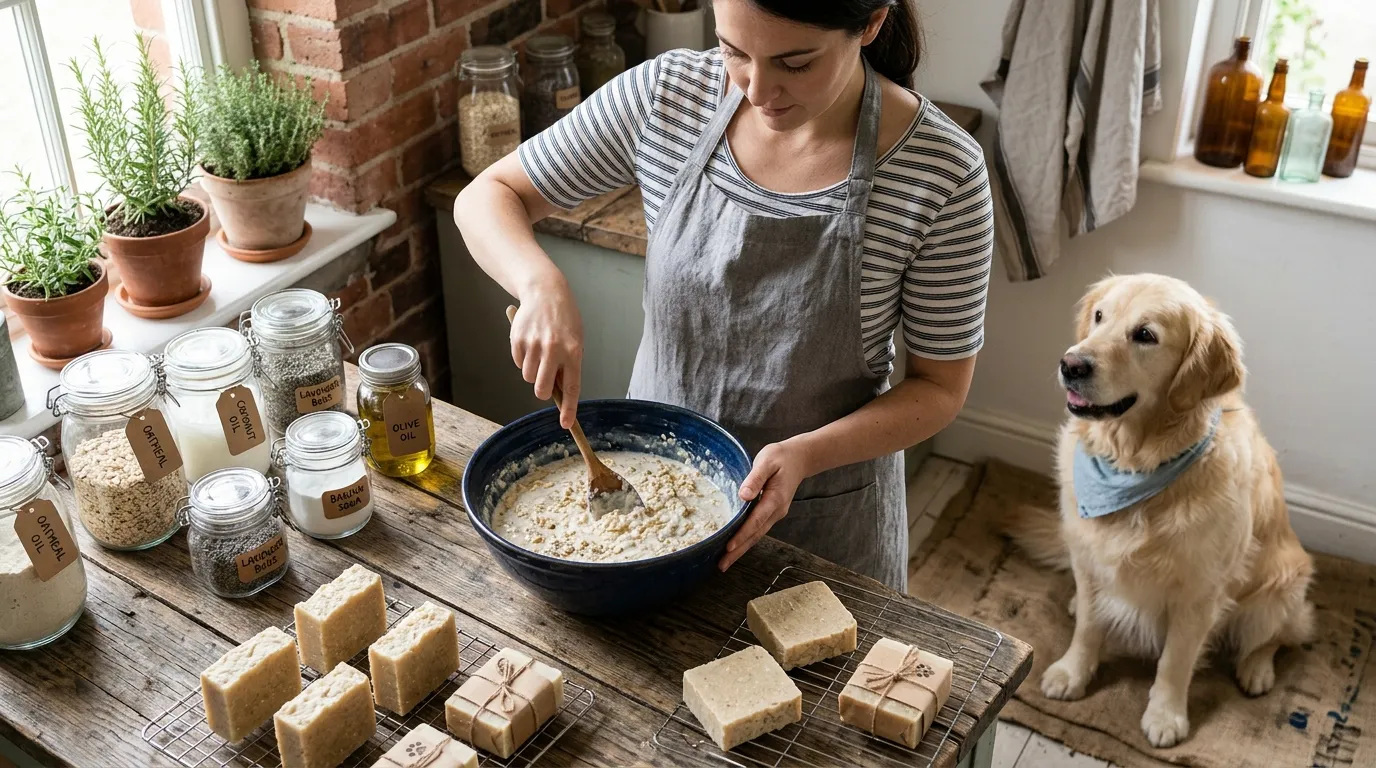
DIY Dog Bath Soap That Won’t Make Your Pup Itchy
There’s nothing like the bond between you and your furry friend. You love those long walks and quiet nights together. But seeing them scratch after a bath is heartbreaking.
It feels like you are failing them when their skin gets red and irritated from harsh chemicals.
Many commercial products have synthetic fragrances and sulfates. These take away natural oils, leaving skin dry and prone to inflammation. You want a better way to keep them fresh without worrying about allergic reactions.

Making a gentle, natural alternative at home is easy. Use simple, soothing ingredients like oatmeal or aloe vera. This gives them the relief they need.
Controlling their hygiene is a rewarding experience. It keeps your pet comfortable, happy, and clean. Let’s find out how to make the perfect wash for them.
Understanding Your Dog’s Skin Needs
Your dog’s skin is very delicate and needs special care. Unlike human skin, it has a more neutral pH balance. This means that human products can harm your pet’s skin.
When your dog’s skin barrier is broken, it can’t fight off bacteria and allergens. Using a natural dog bath soap helps keep their skin healthy and comfy.
Why Commercial Shampoos Often Cause Irritation
Many shampoos have harsh chemicals that take away your dog’s coat oils. Ingredients like sodium lauryl sulfate make a lot of foam but dry out the skin. Synthetic fragrances can also cause allergies in pets.
These chemicals are made for humans, not animals. They can make your dog’s skin inflamed and uncomfortable over time.
Identifying Sensitive Skin Symptoms in Canines
Spotting early signs of skin problems can help your dog. Look for these signs after a bath:
- Excessive scratching or biting at the paws and tail.
- Visible redness or inflammation on the belly and ears.
- Dry, flaky patches that appear after the coat dries.
- A dull, brittle coat that lacks its natural shine.
- Frequent shaking of the head or rubbing against furniture.
The Benefits of Natural Ingredients for Pet Grooming
Switching to an organic dog shampoo diy lets you control what touches your pet’s skin. Plant-based ingredients clean gently without toxins. They also have soothing properties that help heal and keep skin healthy.
Using organic ingredients keeps your dog’s coat soft and shiny. An organic dog shampoo diy routine shows your pet you care and supports their health.
Essential Ingredients for a Soothing Homemade Dog Shampoo Recipe
Starting a healthier coat journey means knowing the key parts of dog grooming. Making a homemade dog shampoo recipe needs the right stuff. This ensures your pet’s comfort and safety.
Choosing the Right Base Ingredients
A good wash needs a solid base. You want something that cleans well but keeps natural oils. So, picking the best soap for dog bath is crucial.
Benefits of Castile Soap
Castile soap is loved for being plant-based and gentle. It cleans well without harming sensitive skin. It’s a must-have for any DIY grooming kit.
Using Organic Aloe Vera for Hydration
Adding organic aloe vera adds a cool feel and keeps moisture in. It’s great for dogs with dry skin. It makes the coat soft and easy to manage.
Natural Additives for Itch Relief
After setting up your base, you can add soothing extras. These help with skin issues like allergies or irritation.
The Role of Colloidal Oatmeal
Colloidal oatmeal is great for calming skin. It creates a barrier that keeps moisture in. It offers many benefits for your pet:
- Reduces redness and swelling.
- Soothes itchy patches instantly.
- Provides a gentle, non-irritating exfoliation.
- Supports the skin’s natural barrier function.
Using Chamomile Tea for Calming
Chamomile tea is perfect for dogs that stress during baths or have sensitive skin. It has anti-inflammatory properties and a nice scent. Adding this makes baths a calming experience for your pet.
Safety First: Ingredients to Avoid in Canine DIY Grooming Products
Keeping your pet safe means knowing what’s in their bath water. Making non-toxic dog soap at home is rewarding. But, you must pick ingredients carefully. Some common items can be dangerous to your pet if not used right.
Essential Oils That Are Toxic to Dogs
Essential oils are popular, but they’re not safe for pets. Dogs smell things more strongly than humans. They also process these oils differently. Avoid these oils in your canine diy grooming products:
- Tea Tree Oil
- Peppermint Oil
- Wintergreen Oil
- Pine Oil
- Ylang Ylang
Why Human Shampoo Is Not Suitable for Pets
It’s tempting to use your own shampoo on your dog. But, it’s a bad idea. Human skin is different from a dog’s. Our shampoos are too acidic for dogs.
Using human soap can harm your dog’s coat. It can cause irritation, dryness, and itching. Always use pet-specific products for their comfort.
Checking pH Levels for Canine Skin
The pH level of a product is key for skin health. Human skin is around 5.5 pH, but dogs’ skin is more neutral. When making non-toxic dog soap, keep the pH neutral.
If the pH is too low, it can harm your dog’s skin. This makes them more likely to get infections. Use pH strips to test your canine diy grooming products. This ensures a safe bath for your pet.
Step-by-Step Guide to Creating the Best DIY Dog Bath Soap That Won’t Make Your Pup Itchy
Creating a gentle wash for your dog is easy with basic tools and natural ingredients. This way, you avoid harsh chemicals. It lets you tailor the formula to your pet’s skin needs.
Gathering Your Supplies and Equipment
First, clear a clean space in your kitchen or bathroom. You’ll need a glass mixing bowl, a whisk or blender, and a funnel. These are for pouring the soap into a bottle.
Measuring ingredients accurately is important. Use a digital scale or measuring cups for consistent results. Always sanitize your equipment to prevent bacteria.
Mixing Your Gentle Shampoo Base
Start with unscented liquid Castile soap as your base. It cleans gently without removing natural oils. Mix it with distilled water to get the right consistency.
If your dog has dry skin, add a bit of vegetable glycerin or coconut oil. Whisk gently to avoid bubbles. Patience is key to mix everything well.
Adding Soothing Botanical Infusions
Add natural infusions to make your shampoo better. Use aloe vera gel or cooled chamomile tea. These calm irritated skin and soothe itching.
Stir these additions well so they’re spread out evenly. This makes your shampoo a luxurious spa experience for your pet. Always test a small amount first to check for any reactions.
Proper Storage and Shelf Life Considerations
Since your shampoo lacks preservatives, store it properly. Keep it in a cool, dark place. Label your container with the date to track freshness.
Use your shampoo within two to four weeks for best results. If it changes color, smell, or texture, throw it away and make a new batch. Keeping your supplies fresh means your dog gets the best care.
Techniques for a Stress-Free Bath Time Experience
Turning bath time into a positive experience is key for pet grooming at home. Even with the best soap for dog bath, how you do it matters a lot. A calm place makes your pup feel safe and willing to cooperate.
Preparing Your Dog for the Bath
Begin by brushing your dog well before they get in the water. This gets rid of loose fur and stops mats from getting worse when wet. Creating a calm atmosphere is crucial, so talk softly to keep them calm.
Put a non-slip mat in the tub for stability. This makes your dog feel steady and less likely to get scared. Preparation is the foundation for a stress-free bath for both you and your pet.
Applying the Soap Without Irritating Sensitive Areas
Start by wetting your dog with lukewarm water. Gently rub the soap into their coat, starting at the neck and going down to the tail. Be extra careful around the face, eyes, and ears to avoid stinging or irritation.
Use a damp washcloth for the face and eyes. This stops the best soap for dog bath from getting into sensitive spots. Taking your time keeps your dog comfortable and relaxed.
Rinsing Thoroughly to Prevent Residue Buildup
The biggest mistake in pet grooming at home is not rinsing off all soap. Any soap left can cause dry, itchy skin. Take your time to rinse until the water is clear.
Focus on the belly, armpits, and between the paw pads. These spots can trap soap, causing discomfort. Thorough rinsing is the last step to keep your dog happy and itch-free after their bath.
Troubleshooting Common Skin Issues After Bathing
Dealing with your pet’s skin reaction is part of pet grooming at home. Even with gentle ingredients, some dogs might get a bit sensitive or dry. Being watchful helps you tweak your routine for a happier pup.
Managing Dryness After the Wash
If your dog is scratching a lot, their skin might be dry. A little natural coconut oil or aloe vera gel can help. These moisturizers hydrate well without being greasy.
Make sure the skin is clean before moisturizing. A gentle touch can give immediate relief. If dryness keeps coming back, try adding organic olive oil to your shampoo.
When to Consult a Veterinarian About Skin Irritation
Most issues are minor, but some need a vet. Red bumps, hot spots, or infection signs mean stop using canine diy grooming products. These signs often mean an allergy or serious skin problem.
If your dog is in pain or irritation gets worse fast, get vet help right away. A vet can find out what’s causing the problem. Your dog’s health is the top priority, so don’t hesitate to ask for help.
Adjusting Your Recipe for Specific Coat Types
Every dog’s coat is different. For long or curly hair, add more conditioning to your canine diy grooming products. A bit more vegetable glycerin keeps curls soft.
Double-coated breeds need a good rinse to avoid soap near the skin. If your mix is too thick, try diluting it with distilled water. Making your pet grooming at home process better ensures your dog feels fresh and comfy.
Conclusion
Creating custom grooming solutions lets you control your pet’s health journey. You can now switch to gentle, plant-based cleaners. These respect your dog’s natural skin.
Small changes in your routine can make a big difference. Your dog’s coat will feel better and look great. Using safe, non-toxic ingredients makes bath time safer for your dog.
Try different botanical infusions to see what works best for your dog. Sharing your favorite recipes with others helps build a community. This community focuses on caring for animals in a holistic way.
If your dog’s skin changes or reacts strangely, talk to your vet. Your efforts make bath time a special bonding time for years.


