
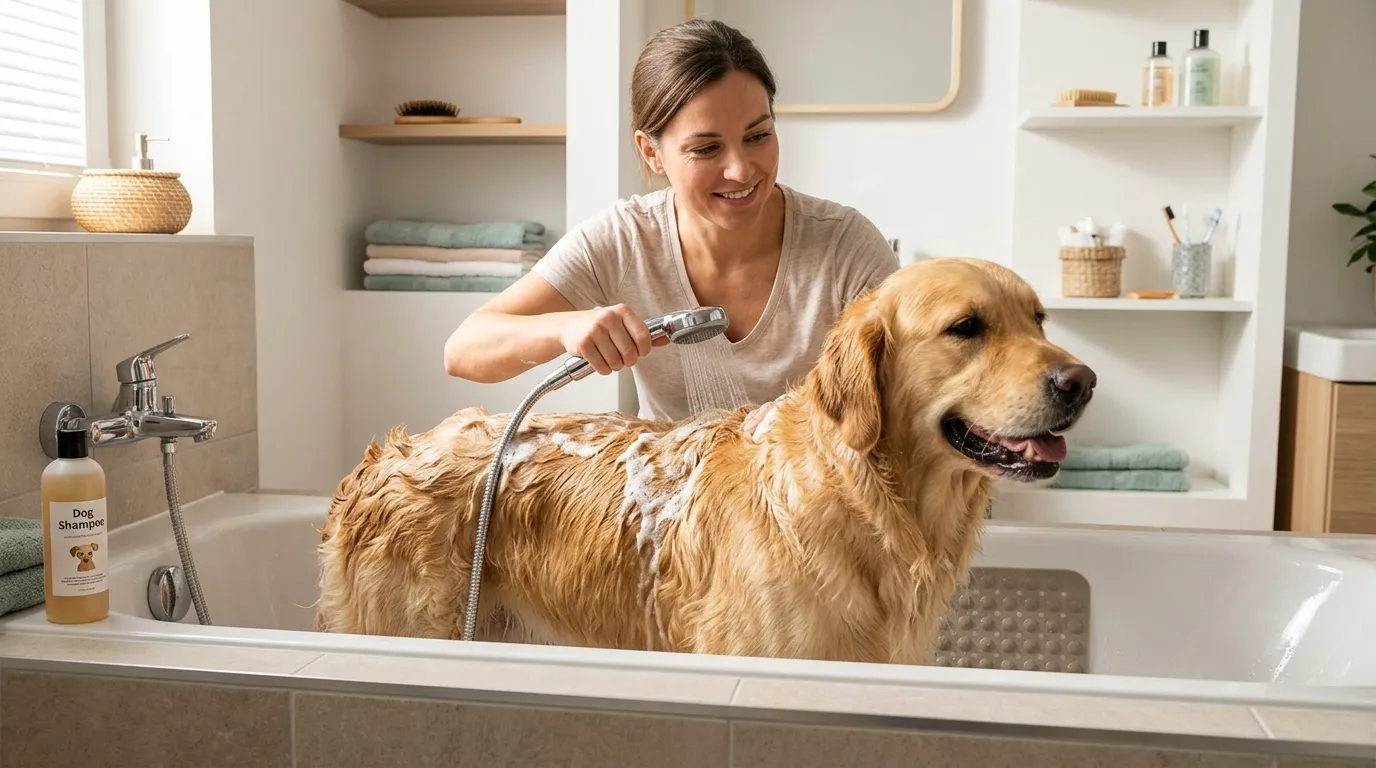
How to Clean Your Dogs Properly and Keep Them Healthy
Coming home to a wagging tail is the best. Our furry friends give us love without asking for anything in return. Maintaining a consistent grooming routine shows we care.
Knowing how to clean your dog is key for any dog owner. It’s not just about fresh smells. It keeps their skin healthy and their coat shiny. It strengthens the bond between you and your dog.

Bath time can be tough. But cleaning your pet dog doesn’t have to be hard. With a few simple steps, it can be fun. Let’s make it easy so you can keep your dog happy and healthy every day.
Essential Supplies for Dog Grooming
Starting a bath right is key. Get the right tools for a top-notch groom. This makes grooming a special time for you and your pet.
Choosing the Right Shampoo and Conditioner
Don’t use your own shampoo on your dog. It’s too harsh. Choose a special dog shampoo that keeps their coat shiny.
For skin issues, pick shampoos with oatmeal or aloe vera. These help soothe and moisturise. They keep your dog’s skin healthy.
Tools for Brushing and Detangling
Start with the right brush for your dog’s coat. The wrong brush can hurt or not work well. Here are some must-haves:
- Slicker brushes for loose fur and to prevent tangles.
- Metal combs for thick undercoats.
- Rubber curry brushes for short-haired dogs to massage their skin.
- Detangling sprays to make brushing easier and less painful.
Safety Equipment for Bathing
Keeping your dog safe is crucial. A slippery tub can be scary or even hurt them. A non-slip mat helps them stand steady.
Protective gear is also important. A handheld sprayer helps control water, and a waterproof apron keeps you dry. These steps make grooming safe and fun for all.
How to Clean Your Dogs: A Step-by-Step Bathing Guide
Learning how to clean your dog can be fun. It turns a hard task into a special time together. By following a clear plan, your dog stays calm and happy.
Preparing the Bathing Area
Get all you need before bringing your dog to the bathroom. Put a non-slip mat in the tub. This makes your dog feel secure and confident.
Lock the bathroom door to keep your dog safe. Having everything ready is key for a good bathing dogs at home experience.
Brushing Before the Water Hits
Don’t forget to brush your dog before the bath. Water makes loose fur mat and tangle. This makes cleaning harder later.
Brushing removes dirt and dead hair. It makes the bath faster and easier for both of you.
Managing Water Temperature and Pressure
Always check the water temperature on your wrist. It should be lukewarm, not hot. Dogs have sensitive skin and can get upset by extreme temperatures.
Use low water pressure, too. Gentle dog washing techniques keep your pet calm. They also prevent water from getting in their ears or eyes.
Applying Shampoo and Rinsing Thoroughly
Wet your dog from the neck down, avoiding their face. Use a small amount of shampoo and massage it into their coat.
Rinsing is very important. Make sure to remove all soap. Leftover soap can cause itchy skin and irritation.
Drying Techniques for Different Coat Types
After the bath, let your dog shake off water in the tub. Use a microfiber towel to dry their coat gently.
For dogs with thick coats, use a cool setting on a pet-safe blow dryer. Make sure your dog is dry to avoid skin problems or a damp smell.
Maintaining Hygiene Between Baths
Keeping your dog clean is easy with simple routines. You don’t need to bathe them often to keep them smelling good. By following best dog grooming practices, your dog will stay happy and clean longer.
Daily Brushing to Reduce Shedding
Brushing your dog daily is key to a clean coat. It spreads oils, making fur shiny and healthy. Consistent brushing also stops hair from getting everywhere.
Use a slicker brush or comb for a few minutes each day. This stops mats and checks for skin problems. It’s a great way to bond with your dog.
Spot Cleaning with Pet-Safe Wipes
Don’t bathe your dog after every muddy walk. Use diy dog grooming with pet-safe wipes instead. These are great for cleaning paws and wiping eyes.
Make sure the wipes are safe for pets. Keep them by the door for quick clean-ups. This keeps your dog clean without drying out their skin.
Managing Paw Health and Pad Care
Your dog’s paws take a lot of abuse. Make paw care a part of your dog hygiene essentials. Check for dirt, thorns, or cracks that hurt.
If the pads are dry, use a safe paw balm. Trimming hair between toes helps too. Healthy paws mean a happier dog for walks and play.
Grooming Specific Areas for Optimal Health
To really clean your pet dog, look beyond the fur. Focus on sensitive spots. This targeted grooming keeps your dog healthy and happy. Follow these dog grooming tips to spot health problems early.
Cleaning Ears to Prevent Infections
Your dog’s ears can get wet and cause infections. Check them weekly for signs of trouble. Use a vet-approved cleaner and a soft cotton ball to clean the outer ear.
- Never insert cotton swabs deep into the ear canal.
- Look for signs of discharge or excessive wax.
- Keep the area dry after swimming or bathing.
- Consult your vet if your dog shakes their head often.
Trimming Nails Safely
Long nails can hurt your dog. Trimming them needs patience and the right tools. Use sharp clippers or a rotary grinder, but be careful not to cut the quick.
Start by trimming just the tips of the nails. Give your dog a treat after each paw. If you cut the quick, use styptic powder to stop bleeding.
Dental Care and Oral Hygiene
Good oral hygiene is key. Brush your dog’s teeth at least three times a week. Use toothpaste made for dogs.
If brushing is hard, try a finger brush or dental wipe. Dental chews can help between brushings. Keeping your dog clean from nose to tail keeps them happy and healthy.
Common Mistakes to Avoid During Dog Washing
Many people struggle with bathing dogs at home because they don’t know simple mistakes. You want to keep your pet clean, but some habits can harm them. Knowing these mistakes is the first step to better grooming.
Using Human Shampoo on Canine Skin
One big mistake is using your own shampoo. Human skin and dog skin are different. Using human products can strip away the protective barrier, causing dryness, itching, and infections.
Always pick a high-quality, pH-balanced shampoo made for dogs. This change makes your dog washing techniques safe and right for your pet’s skin.
Ignoring the Importance of Ear Protection
Water in the ear canal is a big worry during baths. If water stays in, it’s a perfect spot for bacteria and yeast. This can cause ear infections that need vet help.
To avoid this, put a gentle cotton ball in each ear before bathing. Take them out right after to keep the area dry and healthy.
Over-Bathing and Stripping Natural Oils
It’s easy to want to wash your dog every time they get dirty. But washing too much is a mistake. It takes away the essential natural oils needed for a shiny coat. These oils also protect against environmental irritants.
Unless your vet says to, try not to bathe your dog too often. Learning these dog washing techniques helps keep your dog clean without hurting their skin.
Conclusion
Learning to groom your pet strengthens your bond. This journey boosts your dog’s health and happiness.
By focusing on dog hygiene, you lay a strong foundation for your pet’s life. Regular care stops common health issues. It keeps your dog feeling great every day.
Using products like Burt’s Bees for Dogs or TropiClean keeps your dog’s coat and skin healthy. Good tools make grooming easier for both you and your pet.
Be patient during grooming to make your pet feel safe. A calm approach turns grooming into a positive experience. It strengthens your bond.
You now know how to care for your pet with confidence. Keep these hygiene tips central to your routine. Enjoy many happy years together.
Share your grooming tips with other pet owners. Your experiences help them give their dogs the best life.


