
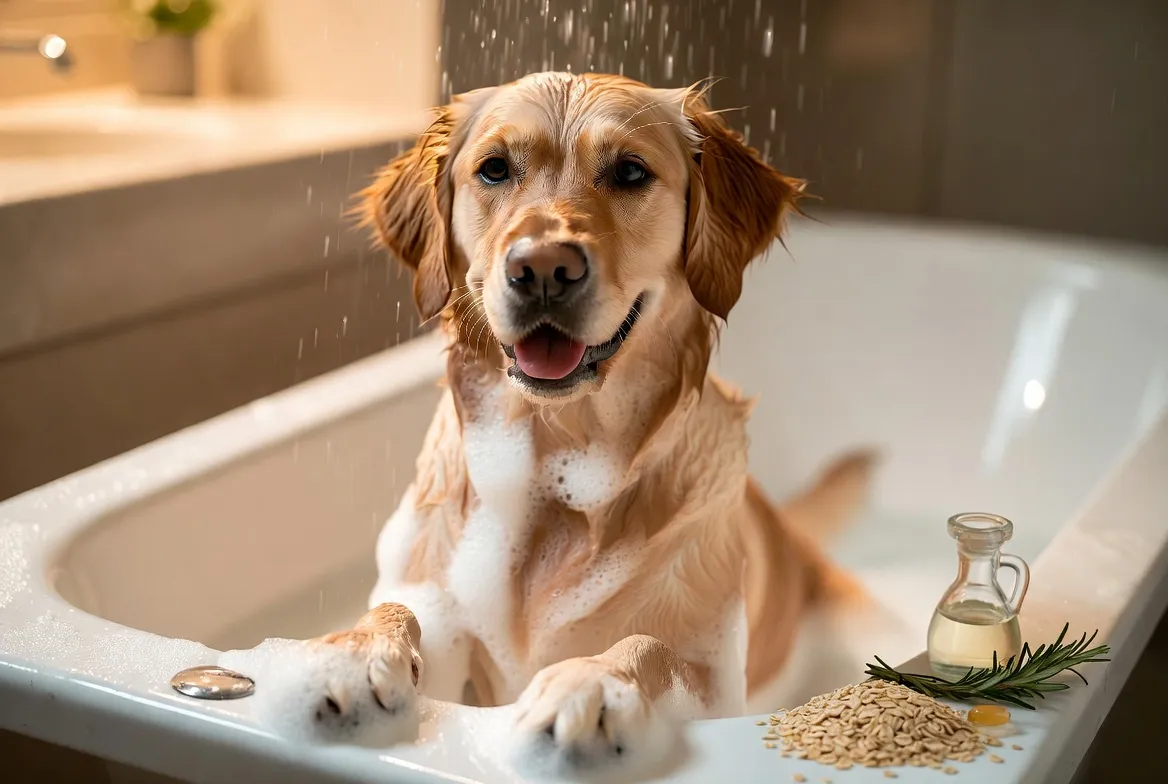
Best DIY Dog Shampoo for Your Furry Friend
When your loyal companion greets you at the door, it’s a special moment. They are more than just an animal; they are part of your family. Keeping them clean and comfortable is very important.
Many grooming products have harsh chemicals. These can make your pet’s skin itch. Switching to a natural, homemade alternative keeps your pet healthy and happy.

Making your own grooming solution shows you care. Using gentle, kitchen-friendly ingredients means you control what touches your pet’s coat. This guide will help you make the perfect DIY Dog Shampoo. Every bath will be a relaxing experience for your furry friend.
Understanding Your Dog’s Skin Needs
Good pet care at home starts with knowing your dog’s needs. Their skin is a key defense against the world. It needs care to stay healthy and strong.
The pH Balance of Canine Skin
Dog skin is very different from human skin. Human skin is slightly acidic, but dog skin is more neutral. It usually stays between 6.2 and 7.5.
Using human products can upset your dog’s skin. This can cause irritation or infections. Keeping the right pH is key to healthy skin.
Identifying Common Skin Sensitivities
Some dogs may get skin problems that need extra care. Look for signs like persistent itching, redness, or dry patches.
Scratching or licking paws a lot can mean trouble. Other signs include:
- Flaky or dandruff-like skin
- Unpleasant odors despite regular bathing
- Inflamed or bumpy skin texture
- Hair loss in specific areas
Spotting these signs early helps avoid big problems. Proactive observation keeps your dog happy and itch-free.
Essential Ingredients for Natural Dog Shampoo Recipe
Making a natural dog shampoo recipe means picking simple, quality ingredients. The right mix ensures your pet gets a gentle clean. It also avoids harsh chemicals that can irritate their skin.
Benefits of Using Castile Soap
Castile soap is a great base for your homemade shampoo. It’s made from vegetable oils, making it gentle on your dog’s skin. It cleans well without taking away natural oils.

The Role of Essential Oils in Pet Grooming
Adding specific essential oils can be very beneficial for your pet. They help soothe the skin and add a nice scent. Always check which oils are safe for dogs before adding them.
Remember, essential oils are strong. A little goes a long way. They make your dog-friendly shampoo ingredients even better. Blending them right ensures your pet enjoys the scent without any issues.
Natural Moisturizers Like Aloe Vera and Coconut Oil
Keeping your dog’s coat soft and hydrated is key. Aloe vera and coconut oil do this well. They help prevent dryness and make the coat shiny.
Aloe vera cools sensitive skin. Coconut oil makes the fur silky. Using these ingredients makes a natural dog shampoo recipe that really cares for your pet.
Safety Precautions and Ingredients to Avoid
Before you start mixing ingredients, your dog’s health is key. Making a homemade dog shampoo is rewarding but needs careful attention. The wrong ingredients can cause skin problems or health issues.
Human Shampoo vs. Dog Shampoo
Don’t use your own soap on your dog. Human skin and dog skin are different. Human products can take away your dog’s natural oils, making their skin dry and open to infections.
Use only dog-friendly shampoo ingredients that match your pet’s skin. Stay away from human products, even if they say they’re gentle or organic. These can have strong smells that upset a dog’s sensitive nose.
Toxic Ingredients to Keep Out of Your Recipes
Some ingredients are a big no-no in homemade dog shampoo. Tea tree oil, pennyroyal, and wintergreen are very bad for dogs. Also, avoid artificial preservatives like parabens or formaldehyde-releasing agents.
Check your dog-friendly shampoo ingredients list before starting. If you’re not sure about an essential oil, it’s best to skip it. Your dog’s safety is more important than a nice smell.
Patch Testing Your Homemade Formulas
Do a patch test before using a new shampoo on your dog. This step is crucial to avoid allergic reactions. Put a small amount of the shampoo on a small, hidden area of your dog’s skin, like the inner thigh.
Wait 24 hours to see if the skin reacts. If it looks good, the shampoo is likely safe. Never skip this step, even if your dog has sensitive skin.
Preparing Your DIY Dog Shampoo Workspace
Before you start making your organic dog shampoo at home, you need a clean area. A dedicated space helps you stay focused and avoid spills. It makes sure your pet’s shampoo is safe and consistent.
Gathering Necessary Mixing Tools
Having the right dog grooming supplies makes mixing easier. Choose materials that won’t react with your ingredients and are easy to clean. Quality tools will last long and make your DIY projects feel professional.
Keep these key items in your grooming kit:
- Glass mixing bowls to prevent chemical leaching.
- Silicone spatulas for thorough blending and scraping.
- Measuring cups and spoons for precise ingredient ratios.
- A small whisk to emulsify oils and soaps effectively.
- Funnel sets for mess-free pouring into storage bottles.
Sanitizing Your Containers
Cleaning your storage vessels is key. Even if a bottle looks clean, it might have bacteria. Sanitizing your equipment keeps your organic dog shampoo at home fresh and safe.
To sanitize containers, wash them with hot, soapy water and rinse well. For extra protection, rinse with rubbing alcohol or white vinegar. Always let your containers air dry completely before using them. Trapped moisture can cause mold.
Basic DIY Dog Shampoo for All Coat Types
Making a DIY dog shampoo is easy. You don’t need many expensive items. Just a few natural ingredients can make your pet smell great and look clean.

Simple Castile and Water Base
The key to a good DIY dog shampoo is liquid Castile soap. It’s made from plants, safe for most dogs, and biodegradable. Here’s how to mix it:
- 1 cup of distilled water
- 1/4 cup of unscented liquid Castile soap
- 1 tablespoon of organic coconut oil (optional for extra moisture)
- A clean, reusable plastic bottle for storage
Adding Glycerin for Coat Shine
Vegetable glycerin can make your dog’s fur shine. It pulls moisture into the hair, giving it a beautiful, natural shine. Just add one teaspoon to your mix and shake before use.
Customizing for Short vs. Long Hair
You can change your DIY dog shampoo for different coat lengths. Short-haired dogs need less, while long-haired ones need more for detangling.
For long-haired dogs, add a drop of jojoba oil to smooth the hair and prevent mats. Short-haired dogs can use the basic mix. Always remember to rinse well to avoid soap residue.
Specialized Recipes for Sensitive Skin
If your dog has allergies or dry skin, finding the right shampoo can be hard. Making a natural dog shampoo recipe at home lets you pick every ingredient. These gentle options help without harsh chemicals found in store shampoos.

Oatmeal-Based Soothing Shampoo
Colloidal oatmeal is a powerhouse ingredient for dogs with itching. Ground into a fine powder, it keeps moisture in and reduces swelling. Mix half a cup of ground oats with your base for a calming natural dog shampoo recipe.
Chamomile Infusions for Itchy Skin
Chamomile soothes the senses and skin. Brew strong chamomile tea, then cool it. This makes a natural anti-inflammatory agent for your dog’s coat. Massaging this liquid into their coat calms red, irritated areas.
Honey and Aloe Vera Hydration
When your dog’s skin is tight or flaky, it needs deep hydration. Honey draws moisture into the skin. Pure aloe vera gel heals and cools irritation. Adding these to your routine keeps your pet comfortable and itch-free.
Natural Solutions for Flea and Tick Prevention
Keeping your furry friend safe from pests doesn’t need harsh chemicals. Many are turning to diy pet grooming to make their home less appealing to fleas and ticks. Simple items from your pantry can help keep your dog safe during peak seasons.
Using Apple Cider Vinegar Safely
Apple cider vinegar helps balance your dog’s skin pH, making them less appealing to pests. Always mix it with water, one part vinegar to one part water. Never apply undiluted vinegar to your dog’s skin, as it may irritate.
Lightly mist this mixture on your dog’s coat, avoiding their eyes and nose. This is a gentle way to keep their coat healthy and shiny while repelling pests.
Lemon and Citrus Infusions
Citrus fruits have limonene, which fleas don’t like. Boil lemon slices in water and let it steep overnight. Once cooled, strain it and use it as a final rinse after bathing.
Remember, citrus can dry out your dog’s skin. Watch for signs of skin sensitivity or redness after the first use. If your dog has very dry or cracked skin, avoid this method.
Essential Oils That Repel Pests
Certain essential oils repel pests, but use them carefully. Make sure they are therapeutic grade and diluted properly. Here are some options for your diy pet grooming:
- Cedarwood: Repels fleas effectively.
- Lavender: Calms your dog while keeping ticks away.
- Lemongrass: A strong natural repellent with a fresh scent.
- Geranium: Keeps outdoor parasites away.
Always test a small area of your dog’s skin before full application. If they show discomfort, stop use right away. Your dog’s safety is the most important part of any natural grooming practice.
Odor-Eliminating Formulas for Active Dogs
When your dog spends hours exploring, their coat can trap smells. Making organic dog shampoo at home helps get rid of these smells without harsh chemicals. It’s great for dogs who love to play in the grass or mud.
Baking Soda for Deep Cleaning
Baking soda is a powerhouse for getting rid of bad smells. It balances your dog’s skin pH and removes dirt from hair follicles. Adding a bit to your shampoo helps absorb odors instead of just covering them up.
Rosemary and Peppermint Refreshers
Rosemary and peppermint make your dog smell like a fresh garden. They give a long-lasting, clean scent that keeps your pet smelling good. Rosemary soothes the skin, and peppermint cools it down after a hike.
Dealing with Wet Dog Smell
The “wet dog” smell comes from bacteria and yeast in a damp coat. Using organic dog shampoo at home with natural deodorizers stops these smells. Make sure to rinse well to avoid musty smells.
Step-by-Step Guide to Bathing Your Dog
A stress-free bath time starts long before you turn on the water faucet. By focusing on diy pet grooming, you can create a relaxing environment. This keeps your dog feeling safe and secure throughout the process.
Preparing Your Dog for the Bath
Before you begin, gather all your necessary dog grooming supplies in one place. Having a non-slip mat inside the tub is essential to prevent your pet from sliding and feeling anxious.
Make sure you have several absorbent towels ready within arm’s reach. Keeping your dog calm is much easier when you do not have to leave the room to find extra items.
Proper Application and Rinsing Techniques
Start by wetting your dog’s coat thoroughly with lukewarm water, avoiding the sensitive eye and ear areas. Gently massage your homemade shampoo into the fur, working from the neck down to the tail.
Thorough rinsing is the most critical step to prevent skin irritation from soap residue. Spend extra time flushing the coat until the water runs completely clear and no bubbles remain.
Drying Your Dog Effectively
Once the bath is finished, allow your dog to shake off the excess water in the tub. Use your absorbent towels to pat the coat dry rather than rubbing vigorously, which can cause tangles.
If you are new to diy pet grooming, remember that patience is your best tool. Always reward your companion with a treat or praise after the drying process. This ensures they look forward to their next bath.
Storing and Preserving Your Homemade Pet Products
After making your homemade shampoo, storing it right is key. Natural ingredients need special care. This ensures your dog’s baths stay safe and effective.
Shelf Life of Natural Ingredients
Natural mixes don’t have the preservatives found in store-bought shampoos. So, they last only a few weeks. Always keep your batches small for the freshest formula every time.
Choosing the Right Storage Containers
Light and air harm natural formulas. Store your homemade dog shampoo in dark, airtight containers. Glass or BPA-free plastic bottles are best to keep oils and extracts fresh.
Label each container with the date you made it. Store them in a cool, dark place away from sunlight. Consistency in storage keeps your DIY supplies fresh.
Signs That Your Shampoo Has Expired
Even with good storage, watch for spoilage signs. If you see any of these, it’s time to throw it away:
- A noticeable change in the original scent or a sour, off-putting odor.
- Visible mold growth or unusual discoloration within the bottle.
- A separation of ingredients that does not resolve after a gentle shake.
- A change in the texture, such as becoming overly watery or clumpy.
Trust your senses with your homemade pet products. If it looks or smells off, it’s safer to make a new batch. Your dog’s skin health is worth it.
Conclusion
By taking care of your dog’s hygiene, you strengthen your bond with them. Learning to care for your dog at home lets you make each wash perfect for them. This way, you avoid harsh chemicals found in many products.
You can now make safe, effective, and natural pet products in your kitchen. Using homemade pet products means you know exactly what touches your dog’s skin and fur.
Try one recipe this weekend to see how your dog likes it. Watch how they react to the gentle ingredients. You’ll feel good knowing what’s in the bottle.
Good grooming makes your dog happier and more comfortable. Share your best results with other pet owners. Help them see the good in a natural lifestyle.


