
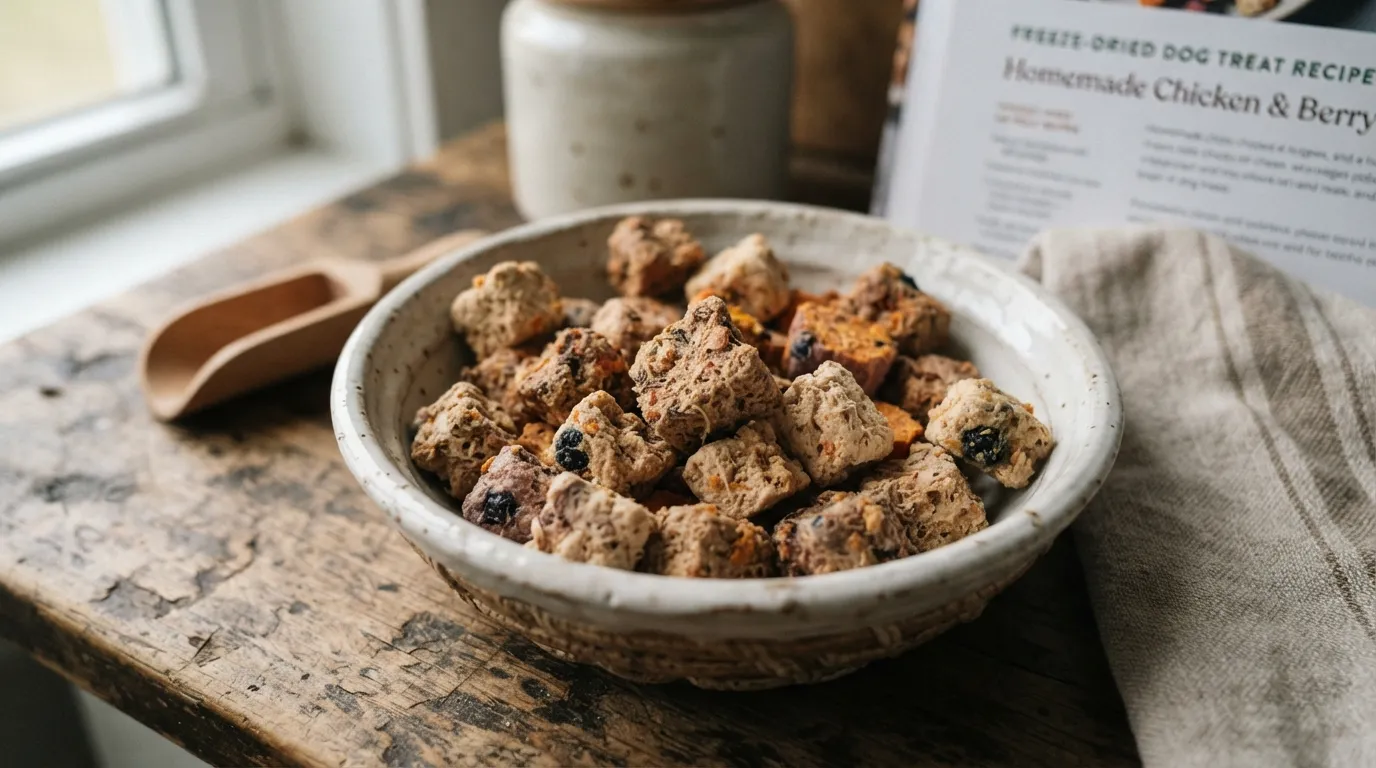
Freeze-Dried Dog Treat Recipes The Ultimate Guide to Try
You look into those soulful eyes and know your furry companion deserves nothing but the best. Making homemade dog treats shows love and lets you control every ingredient. This way, you avoid hidden additives and fillers in many store-bought treats.

Freeze-Dried Dog Treat Recipes: The Ultimate Guide helps you make better snacks. These healthy dog treats are easy to make. They ensure your pet enjoys tasty and safe snacks. Always remember, these snacks should add to a balanced diet, not replace meals.
In this article, we’ll cover essential kitchen tools and safety tips. You’ll learn how to make various freeze-dried dog treat recipes easily. We’ll also talk about storage and serving ideas to keep your pup happy and healthy. Let’s begin this rewarding journey to better snacking for your best friend.
Freeze-Dried Dog Treat Recipes: The Ultimate Guide
Want to make snack time better for your dog? Start by learning about freeze-drying. It removes moisture from food under cold conditions. This keeps the food’s shape, color, and nutritional integrity intact. It also makes the flavors more intense, which dogs love.
What Makes Freeze-Dried Dog Treats Different
These treats are light and easy to chew, unlike baked or dehydrated snacks. The low-heat process keeps natural enzymes and vitamins in. But, they’re sensitive to humidity, so keep them in airtight containers.
Benefits of Making Homemade Dog Treats
Making your own freeze-dried dog treat recipes lets you control what your pet eats. You can avoid harmful additives found in store-bought treats. Choosing natural dog treats helps your pet stay healthy.
Homemade treats are also cheaper than buying them. You can buy ingredients in bulk and make them when you want. This way, your dog always has a tasty reward ready.
How to Use This Guide for Your Dog’s Needs
This guide helps you make the best freeze-dried dog treats for your dog. We’ve organized tips to find the right recipes for your dog’s needs:
- Size and Age: Adjust sizes for small or big dogs.
- Health Needs: Choose low-fat or limited-ingredient options for sensitive stomachs.
- Allergies: Swap proteins for specific dietary needs.
- Texture Preferences: Learn to rehydrate treats for senior dogs.
By following these tips, you can make snacks that fit your dog’s lifestyle. Whether training a puppy or rewarding a senior, you’ll find the perfect recipe.
Choose Safe Ingredients for Homemade Dog Treats
When making homemade dog treats, picking the right ingredients is key. You want to use the best stuff to feed your pet. Your dog relies on you to make choices that keep them healthy and full of energy.
Dog-Safe Proteins for Freeze-Dried Treats
Proteins are the base of good snacks. Choose lean, quality meats for the amino acids your dog needs. Good choices are:
- Plain chicken breast
- Lean turkey cuts
- Fresh lean beef
- Whitefish or salmon
Make sure these proteins don’t have added seasonings, salts, or oils. Using pure, single-ingredient proteins lets you control what your dog eats.
Fruits and Vegetables Your Dog Can Eat
Plant-based ingredients add vitamins and fiber. Many dogs love the natural sweetness and crunch of these. Try adding these safe options to your dog snacks:
- Pumpkin puree (plain)
- Fresh carrot slices
- Blueberries
- Seedless apple pieces
These are usually easy on your dog’s stomach. Always wash produce thoroughly before using it.
Ingredients to Keep Out of Dog Snacks
Some human foods are toxic to pets and must be avoided. Never add these to your recipes, as they can be very harmful:
- Chocolate and caffeine
- Grapes and raisins
- Onions and garlic
- Macadamia nuts
- Xylitol (often found in sugar-free products)
Even a little bit of these can be dangerous. Double-check every label to avoid these harmful additives.
Account for Allergies, Health Conditions, and Dietary Restrictions
Every dog is different, needing specific nutrients based on their age, weight, and health. If your pet has pancreatitis, kidney disease, or diabetes, be extra careful. Some ingredients might make things worse.
If your dog has food allergies or a strict diet, talk to your vet first. They can help pick safe ingredients for your dog. Your proactive approach will keep your furry friend safe and happy for years.
Gather Equipment and Prepare Your Ingredients
Setting up your workspace right is key for perfect diy dog treats. Getting everything ready first is crucial. It makes the whole process fun and easy.

Essential Freeze-Drying Equipment
To make high-quality snacks, you need a good freeze-dryer. It removes moisture and keeps nutrients. You’ll also need:
- High-quality stainless steel or aluminum trays.
- Parchment paper or silicone liners to prevent sticking.
- A dedicated space with proper ventilation for your machine.
- Airtight storage containers to maintain freshness after processing.
Useful Kitchen Tools for Consistent Treats
Being consistent is important when trying new dog treat recipes. A digital kitchen scale helps you measure ingredients right. Sharp knives and a sturdy cutting board make prep faster and safer.
Trim Fat, Remove Bones, and Cut Ingredients Evenly
Before freezing, prepare food carefully. Trimming visible fat is important because fat doesn’t freeze-dry well. Also, remove bones to keep your pet safe.
Cutting ingredients into uniform pieces helps them dry evenly. This way, all treats dry the same, avoiding some being too moist or too hard.
Prepare Small Test Batches Before Making More
Start with a small batch first. It’s smart because different ingredients and machines can affect results. A small batch helps you learn how your machine works. Once you get it right, you can make more healthy diy dog treats.
Follow the Freeze-Drying Process Step by Step
Turning fresh food into tasty pet treats is rewarding. Please follow each step carefully. This ensures your treats are safe and yummy for your pet.
Step One: Cook Ingredients When Food Safety Requires It
First, make sure your ingredients are safe to eat. Cooking raw proteins is key. It kills harmful bacteria that could be in the treats.
Safe Cooking Temperatures for Chicken, Beef, Turkey, and Fish
Use a meat thermometer to check the temperature. Poultry like chicken and turkey need to be 165°F to be safe. Beef and fish should be at least 145°F. Ground meats must hit 160°F.

Step Two: Arrange Pieces on the Freeze-Dryer Trays
Getting your trays ready is crucial for good results. You want all food to dry evenly.
Leave Space Between Pieces for Airflow
Don’t fill your trays too much. This stops air from getting through. Place your food in a single layer, leaving space for air to move.
Step Three: Select the Appropriate Freeze-Dryer Settings
After setting up your trays, pick the right settings for your machine. Most have cycles for raw or cooked meats. If you can adjust settings, choose a longer cycle for better texture in your freeze-dried dog treats.
Step Four: Check for Complete Dryness
Don’t take the trays out right away. Make sure all moisture is gone from the food.
Recognize Moisture, Cold Spots, and Incompletely Dried Treats
Check a few pieces carefully. If they feel cool or soft, they need more drying. These signs mean they’re not ready yet.
Step Five: Cool and Package the Finished Treats
Once the treats are dry, let them cool down. Then, put them in airtight containers or bags. Storing them right keeps your homemade pet treats fresh and crunchy for your dog.
Make Single-Ingredient Meat and Fish Treats
Single-ingredient snacks are the best for pet owners who want the best. They focus on pure proteins, making healthy dog treats without fillers or additives. These freeze-dried dog treat recipes give your pet top-notch nutrition and let you control their diet.

Freeze-Dried Chicken Breast Bites
Ingredients, Preparation, and Drying Instructions
Chicken breast is lean and dogs love it. Start by removing fat from the raw chicken for a longer shelf life. Cut the meat into small cubes, cook them, and freeze-dry them in a single layer.
Lean Beef and Turkey Training Treats
How to Create Small, Low-Mess Reward Pieces
For training, you need quick, mess-free rewards. Cut lean beef or turkey into small pieces, like peas. These small portions are great for training because they’re low in calories and keep your dog focused.
Salmon and Whitefish Dog Treats
Remove Bones and Control Strong Fish Odors
Fish is full of omega-3 fatty acids, good for a shiny coat and healthy skin. Always check your fish for every single bone before processing. Freeze-drying fish in a well-ventilated area helps manage its strong smell.
Liver Treats for High-Value Rewards
Use Small Portions Because Organ Meat Is Rich
Liver is very nutritious and a great reward for dogs. But use it sparingly because it’s so rich. Moderation is key to avoid upsetting your dog’s stomach or diet balance. Keep the pieces small and limit how often you give them.
Try Fruit, Vegetable, and Yogurt Dog Treat Recipes
Making natural dog treats at home lets you pick what your pet eats. You can add fresh fruits and dairy for more flavors and nutrients. These easy dog treat recipes are great for those who want healthy snacks for their pets.

Freeze-Dried Apple and Pumpkin Bites
Apples and pumpkin add fiber to your pet’s diet. They freeze-dry into a crunchy snack that dogs love.
Remove Apple Seeds, Stem, and Core Before Processing
Make sure to remove apple seeds, stems, and cores before making treats. These parts are bad for dogs. Slice apples into equal pieces for even drying.
Banana and Plain Yogurt Drops
Bananas and yogurt make a creamy, healthy snack. These dog snacks are great for training rewards.
Choose Unsweetened Yogurt Without Xylitol
Use only plain, unsweetened yogurt. Make sure it doesn’t have xylitol, which is toxic to dogs. Always choose safe dairy products.
Sweet Potato and Carrot Cubes
Sweet potatoes and carrots are full of vitamins and minerals. They make chewy, tasty treats for your pet.
Cook Dense Vegetables Before Freeze-Drying
Since these veggies are dense, cook them until tender before freeze-drying. Steaming or boiling makes them easier to digest.
Blueberry and Pumpkin Training Treats
Blueberries add antioxidants to your treats. Mixing them with pumpkin makes a soft, tasty snack for training.
Make Soft Mixtures Easy to Portion on Trays
For soft mixtures, use a piping bag or spoon for shapes. Portioning treats evenly helps them dry well, making a quality snack.
Adapt DIY Dog Treats for Different Dogs
Every dog is unique. So, making treats should be tailored to each one. Whether for a tiny puppy or a big, active dog, small changes can greatly improve their health and happiness.
Make Smaller Treats for Puppies and Small Breeds
Size matters most for small dogs. Aim for tiny pieces to avoid choking and aid digestion. Tiny portions are key for puppies still learning to chew.
Adjust Portions for Large Dogs and Frequent Training
Large dogs need more motivation during training. But, watch their calorie intake. Even natural dog treats count towards their daily calories. Monitoring portions helps avoid weight gain and keeps them motivated.
Choose Lower-Fat Recipes for Dogs With Sensitive Stomachs
High-fat snacks can upset some dogs’ stomachs. For dogs with sensitive stomachs, use lean proteins like white fish or chicken breast. These are gentler on their digestive system and reduce discomfort.
Build Limited-Ingredient Treats for Allergy Trials
Simple, single-source snacks can help with food allergies. Use one protein and one vegetable to find potential allergens. But talk to your vet before starting an elimination diet to ensure your dog gets the nutrients they need.
Use Texture and Flavor to Help Picky Eaters
Picky eaters like changes in texture or flavor. Try different drying times for crunchy or chewy homemade dog treats. Adding a bit of liver or pumpkin can make them more appealing to even the pickiest dogs.
Customizing your diy dog treats ensures they are safe and enjoyable. Making small changes leads to better health and happiness for your dog.
Store Freeze-Dried Dog Treats Safely
Keeping your homemade dog snacks fresh is key. After freeze-drying, focus on keeping them crunchy. This ensures they stay good for weeks.
Cool Treats Completely Before Packaging
Don’t bag your treats while they’re still warm. Warm treats can cause moisture inside the bag. This makes your freeze-dried dog treats lose their crispiness.
Let your snacks cool at room temperature for thirty minutes. This step removes all moisture. It makes your treats safe and shelf-stable.
Select Airtight Containers and Moisture Absorbers
Protect your snacks from humidity. Use glass jars or vacuum-sealed bags. These keep air and moisture out.
- Choose food-grade silicone or glass containers for best results.
- Put a food-safe oxygen or moisture absorber inside.
- Keep these packets away from your dog, as they are not meant for consumption.
- Make sure the lid or seal is airtight after each use.
Label Each Batch With Ingredients and Date
Being organized is important when making dog snacks. Always label your container. Include the ingredients and date.
This helps you keep track of freshness. It’s also useful for managing allergies.
Identify Signs of Moisture, Spoilage, or Loss of Quality
Check your freeze-dried dog treats before each use. Look for signs of quality loss:
- A soft or chewy texture instead of a crisp snap.
- Visible clumping of the treats inside the container.
- An unusual or sour odor that differs from the original scent.
- Any signs of discoloration or visible mold growth.
Rehydrate Treats Safely When Your Dog Prefers Softer Food
Some dogs prefer softer treats, such as those for dogs with dental sensitivities. You can make them softer by adding warm water or low-sodium broth.
Serve these rehydrated treats right away. Moisture makes them spoil fast. They should not be stored once wet.
Serve Pet Treats Responsibly and Troubleshoot Problems
Once you’ve got your favorite dog treat recipes down, it’s time to think about how to feed them right. Giving treats is a great way to bond with your pet. But it’s important to keep things balanced for their health.
Keep Treats Within the Recommended Daily Calorie Limit
Even the best snacks shouldn’t replace a full meal. Treats should make up no more than 10% of your dog’s daily calories. This way, they get all the nutrients they need from their main meals and still get treats.
Introduce New Natural Dog Treats Gradually
When trying a new recipe, start with a little bit first. This helps avoid upset stomachs, even with good ingredients. Watch your pet for any signs of trouble for a few days after trying something new.
Use Treats for Training, Enrichment, and Meal Toppers
Use pet treats wisely to make them more valuable. They’re great for training or to hide in toys for fun. You can also crumble them over their food for a tasty topping.
Fix Treats That Remain Moist or Become Crumbly
If your treats are a bit soft, they might need more freeze-drying. Just run them through again to dry them out. If they’re too crumbly, store them with bread to keep them fresh. Or, use the crumbs as a tasty topping.
Know When to Stop Feeding a Recipe and Contact Your Veterinarian
Your dog’s health is the most important thing. Watch for signs like vomiting, diarrhea, or itching after eating. If you see any of these, stop giving them the treat right away. Always talk to your vet if you’re worried about how a treat is affecting your dog.
Conclusion
Making your own pet treats at home means you control the quality. You pick fresh ingredients and follow drying steps carefully. This way, you give your dog healthy treats that help them stay well.
Freeze-Dried Dog Treat Recipes: The Ultimate Guide helps you start this fun hobby. It gives you the confidence you need.
Success comes from choosing the right ingredients and keeping portion sizes the same. Make sure what you pick is safe for dogs. Storing your treats right keeps them fresh and good for your pet.
The best recipes are easy, balanced, and made just for your pet. Start with small amounts to watch for any stomach issues. Always keep treats within your dog’s daily calorie needs to keep them healthy.
If you have questions, talk to your vet about diet and health. Your effort to give your dog good food really matters. Enjoy making tasty, healthy snacks that your dog will love.


