
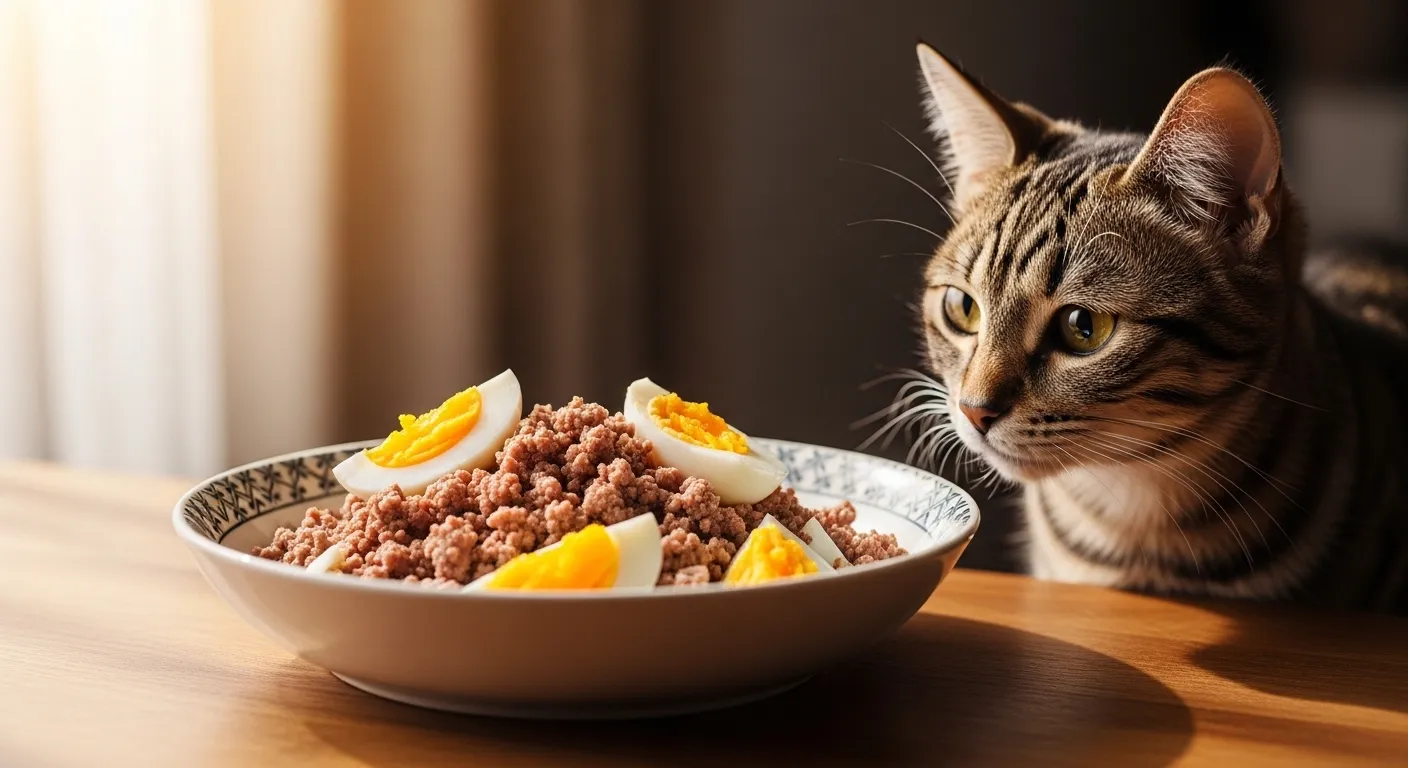
Ground Beef and Egg for Cats Nutrition and Feeding Tips
Every pet owner knows the deep bond with their feline friend. We want the best for them, looking for ways to boost their health through food.
Many are now making homemade meals for their pets. Using ground beef and egg for cats can give them a healthy, protein-rich diet. This supports their long-term health.

Starting a home-cooked diet is exciting but needs careful planning. It’s essential to talk to your vet before big changes. This ensures your pet gets all the nutrients they need.
In this guide, we’ll cover the basics of keeping your cat healthy. You’ll learn how to make these meals safely. This keeps your cat happy, healthy, and thriving at every age.
Understanding the Nutritional Value of Ground Beef and Egg for Cats
Choosing ground beef and egg for cats means picking top-notch food for them. These foods give cats the nutrients they need to stay healthy and full of energy. By choosing whole foods, you help your pet get the best for their health.
Protein Requirements for Feline Health
Cats need animal-based proteins to live. Beef’s high-quality protein helps keep their muscles strong and their health good. Giving them enough protein is key to keeping them active and strong.
The Role of Healthy Fats and Amino Acids
Cats also need healthy fats and amino acids to work right. These help keep their coat shiny, skin healthy, and organs working well. Adding these to their diet supports their long-term health and energy.
Why Eggs Are a Nutrient-Dense Addition
Eggs are super nutritious for cats. They have vitamins and minerals that many cat foods lack. Using eggs in their diet helps fill nutritional gaps, making sure they get all the micronutrients they need.
Essential Safety Precautions Before Preparing Homemade Cat Food
Your cat’s health is very important. When you make homemade cat food recipes, you must make sure it’s safe. Start early to avoid problems that could harm your pet.
Sourcing High-Quality Organic Ingredients
Good food starts with the right ingredients. Choose organic cat food recipes to keep your pet safe from bad stuff. Always pick human-grade proteins for your diy cat food to avoid low-quality fillers.
The Risks of Raw Versus Cooked Preparation
Choosing between raw or cooked food is big. Raw meat might be good, but it can have Salmonella or E. coli. Cooking your food well kills these germs and makes it safer for your cat.
Sanitation Practices for Kitchen Safety
Keeping your kitchen clean is key. Treat it like a pro food area to avoid messes. Here’s how to stay safe:
- Wash your hands: well with hot, soapy water before and after touching raw meat.
- Use different cutting boards and tools for your cat’s food.
- Clean all surfaces with a safe disinfectant right after cooking.
- Put all food in airtight containers to stop germs in the fridge.
By sticking to these rules, you make a nurturing and safe place for your cat. Being consistent will make you feel good about feeding your pet well.
Step-by-Step Guide to Preparing Ground Beef and Egg for Cats
Making the perfect meal for your cat starts with the right ingredients and safe cooking. Preparing ground beef and egg for cats at home lets you control their diet. This ensures they get the best nutrition every day.
Selecting the Right Lean Ground Beef
Choosing the right protein is key for homemade cat food recipes. Always pick lean ground beef. This keeps the fat content right for your cat’s needs.
Too much fat can cause stomach problems or weight gain. Look for low fat-to-meat ratio packages. This gives your pet a clean, healthy protein source.
Proper Cooking Techniques to Preserve Nutrients
Using the best cat food ingredients means careful handling. Cook the beef well to kill bacteria but avoid high heat. This keeps vitamins safe.
Try gentle poaching or light pan-searing without oils. This makes the meat tender and keeps vital nutrients intact.
Incorporating Eggs Safely into the Mixture
Eggs are great for organic cat food recipes because they’re full of nutrients. But, they must be cooked right to be safe and easy for your cat to eat.
Boiling and Peeling Eggs for Optimal Digestion
Hard-boiling eggs is the safest way to cook them. Make sure to remove the shell completely. This prevents choking or stomach upset.
Chop or mash the egg to make it easier for your cat to eat. This helps them digest the egg better.
Mixing Ratios for a Balanced Meal
When making diy cat food, keep the diet balanced. Use 80% lean ground beef as the main protein. Add 20% cooked egg.
- Use 80% lean ground beef for the base.
- Add 20% cooked egg to the mixture.
- Ensure all ingredients are cooled to room temperature before serving.
These ratios help make a nutritionally sound meal. It supports your cat’s health and energy.
Balancing the Diet with Necessary Supplements
Creating a balanced diet for your cat is more than just protein. Beef and eggs are great, but they don’t have all the vitamins and minerals your cat needs. Eating only these can cause big nutritional gaps over time.

Why Meat and Eggs Alone Are Not Enough
Even with top organic cat food recipes, cats need more than just meat and eggs. These foods are full of protein but lack the nutrients found in prey. Without supplements, your cat might miss out on important nutrients for their health.
Adding Essential Taurine and Calcium
Taurine is very important for your cat’s heart and eyes. Cats can’t make enough taurine, so it must be added to their food. This is key to prevent serious health problems.
Also, you need to balance minerals in their meals. Meat has a lot of phosphorus, which can hurt calcium absorption. Adding a good calcium supplement is essential for strong bones and healthy organs.
Incorporating Holistic Cat Nutrition Additives
For your pet’s best health, think about holistic cat nutrition. Use natural additives for better digestion, skin, and coat. These additions make your organic cat food recipes more complete and healthy.
Here are some supplements to consider:
- Taurine powder for heart health.
- Calcium carbonate or bone meal to balance phosphorus.
- Fish oil for Omega-3 fatty acids.
- Vitamin B-complex for metabolism.
Choosing these supplements ensures your cat gets all the complete nutrition they need. Always talk to your vet about the right amounts for your cat’s size and age.
Proper Portioning and Feeding Frequency
When making diy cat food, knowing how much to give is key. The right amount of nutrients keeps your pet healthy and happy. Consistency in feeding helps keep their metabolism stable.
Calculating Daily Caloric Needs for Your Cat
Every cat needs different calories based on their age, weight, and activity. Indoor cats need less than active or outdoor cats. Talk to your vet to find out how many calories your cat needs.
Split the daily calories into two or three meals. This stops overeating and keeps your cat full. Watching your cat’s body condition helps adjust the amount over time.
Transitioning Your Cat to a New Diet Gradually
Changing to natural cat food options should be slow. Sudden diet changes can upset their stomach. Start by mixing a little new food with their old diet.
Gradually add more new food over seven to ten days. This gentle transition lets their stomach get used to the new food. If they seem uncomfortable, slow down the change.
Storing Homemade Meals for Freshness
Storing homemade meals right is key for holistic cat nutrition. Homemade meals need careful handling to avoid bacteria. Use airtight glass or BPA-free plastic containers for storage.
Keep meals in the fridge for up to three days for freshness. Freeze portions for longer storage. Always serve food at room temperature for better taste and digestion.
Monitoring Your Cat for Dietary Sensitivities
Adding new foods to your cat’s diet needs careful watching. Every cat is different, so they might react in unique ways to raw diet for cats or homemade meals. Noticing small changes in your pet’s behavior is crucial to keep them happy and healthy.

Identifying Signs of Digestive Upset
Starting a new diet means watching how your cat reacts to the food. Digestive problems can show up in small ways during daily care.
Look out for these signs of sensitivity:
- Changes in stool consistency, such as diarrhea or constipation.
- Frequent vomiting shortly after mealtime.
- A noticeable decrease in appetite or interest in food.
- Lethargy or unusual hiding behaviors after eating.
- Excessive gas or bloating that causes discomfort.
When to Consult Your Veterinarian
Some symptoms need vet help, even if they seem minor. If your cat shows severe distress, get help fast.
Call your vet right away if you see:
- Blood in the stool or vomit.
- Persistent refusal to eat for more than 24 hours.
- Signs of dehydration, such as dry gums or skin tenting.
- Extreme weight loss or sudden lethargy.
Talking to your vet is key when trying a raw diet for cats. They can help figure out if an ingredient is causing trouble or if it’s something else.
Adjusting Ingredients Based on Feline Feedback
Your cat knows best what they need. If they leave some ingredients behind or show mild sensitivity, it’s okay to change your approach.
Here’s how to tweak your recipes:
- Remove one ingredient at a time to find the problem.
- Slowly add proteins back to see if the issue stays.
- Ask a vet nutritionist for good alternatives.
- Keep a food diary to see what works for your cat.
Being flexible helps you make a meal plan that keeps your cat healthy. Remember, patience is key in finding the right mix for your cat.
Common Mistakes to Avoid When Feeding Natural Cat Food Options
Even the most dedicated pet owners can accidentally overlook critical safety factors when crafting homemade meals. When exploring homemade cat food recipes, it’s vital to watch what goes into your cat’s bowl. Small errors in preparation can lead to significant health challenges over time.
Avoiding Toxic Additives Like Onion and Garlic
Many ingredients found in human kitchens are strictly off-limits for our feline companions. You must be extremely careful to avoid onions, garlic, chives, and leeks. These contain compounds that can damage a cat’s red blood cells. Even in small amounts, these items are highly toxic and can cause severe anemia.
Always double-check your labels when selecting the best cat food ingredients for your pet. Never assume that a seasoning safe for humans is safe for a cat. Keeping these harmful substances out of your kitchen is the safest way to protect your furry friend.
Preventing Nutritional Deficiencies Through Variety
Relying on a single recipe for an extended period can lead to dangerous nutrient gaps. A balanced approach is essential when you choose a raw diet for cats or any other homemade regimen. Rotating your protein sources ensures that your cat receives a wide spectrum of essential amino acids and minerals.
Variety is the key to long-term vitality. By mixing different types of meats and organs, you mimic the natural diversity a cat would find in the wild. This practice helps prevent the body from becoming depleted of specific nutrients that are missing from a monotonous diet.
The Dangers of Over-Supplementation
While supplements are often necessary, more is not always better. Adding too many vitamins or minerals to natural cat food options can be just as harmful as a deficiency. Excessive intake of certain fat-soluble vitamins, such as Vitamin A or D, can lead to toxic buildup in your cat’s system.
Always consult with a veterinarian before adding new supplements to your cat’s meals. It is crucial to follow precise measurements rather than guessing the dosage. Proper balance is the foundation of a healthy, thriving cat.
Conclusion
Making meals at home is a great way to help your pet stay healthy for a long time. Using top-quality ingredients and the right supplements is key. This helps build a strong foundation for your pet’s health.
Choosing natural cat food is a smart move. It turns feeding time into a chance to keep your cat healthy. You get to pick what your cat eats every day.
Keeping up good habits and talking to your vet is important. Your vet can help make sure your cat’s diet is right. This keeps your cat safe and healthy.
Changing things a little bit at a time can really help. You can make your cat’s diet better over time. This way, your cat can stay full of energy and happy for a long time.
Begin by picking fresh, healthy ingredients for your cat’s meals. Your hard work will greatly improve your cat’s life. It’s a big difference for your furry friend.


