
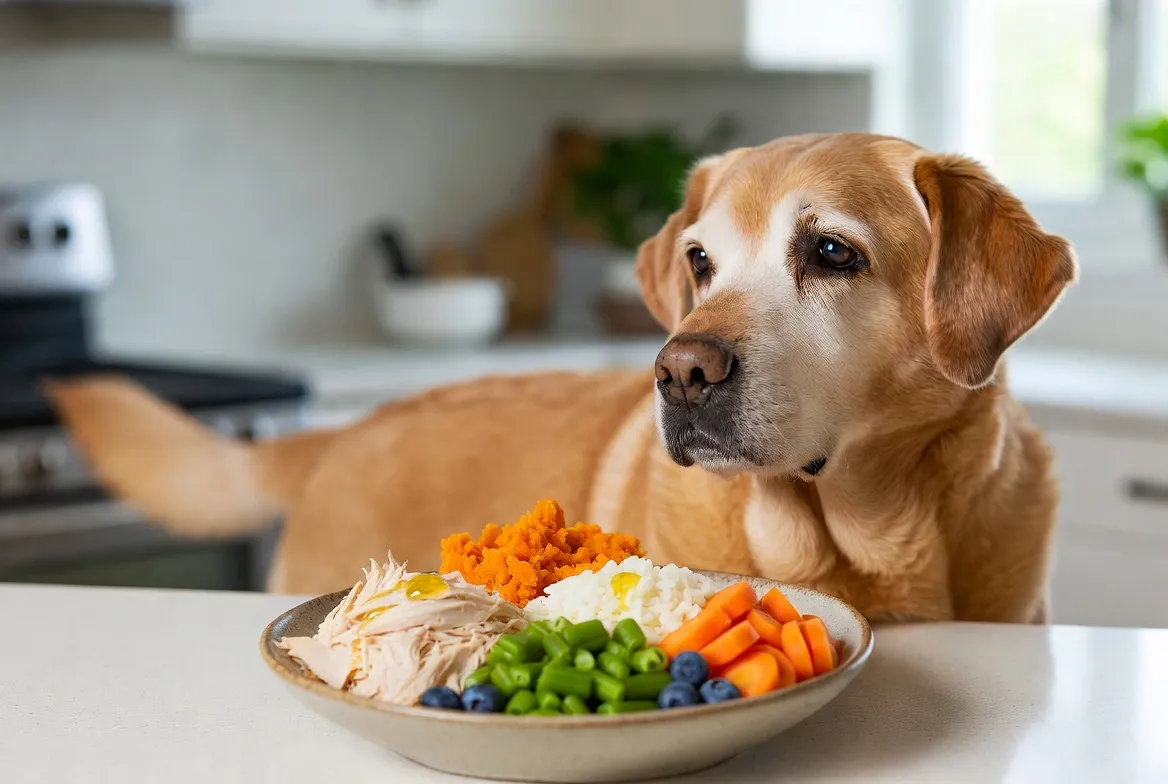
6 Homemade Senior Dog Food Recipes for Older Pups
Watching your loyal companion grow older is a mix of sadness and joy. You see the gray fur and slower walks, knowing they need the best care. Providing high-quality nutrition is a beautiful way to show your love.
As they age, their metabolism slows down. They need a special diet that’s fresh and full of nutrients. Proper nourishment is key to a happy, active life in their golden years.

Starting a fresh diet might seem hard, but it’s worth it. By choosing the right ingredients, you can help with joint health and digestion. Let’s look at how these simple, healthy meals keep your pet happy and healthy, with every bite full of vitamins.
Understanding the Nutritional Needs of Aging Dogs
As your dog gets older, their body changes a lot. They might need fewer calories to avoid gaining weight and hurting their joints. Changing their diet can help them stay healthy and active.
Studies show that senior dogs need good, easy-to-digest proteins. These are key for keeping their muscles strong. When making senior dog food recipes, use lean proteins to help them digest better.
Older dogs also need special nutrients for long-term health. Adding Omega-3s helps their joints and skin. Antioxidants protect their immune system and brain as they age.
Making small changes to your dog’s diet can greatly improve their life. Giving them meals rich in nutrients shows you care. By understanding their needs, you can keep them happy and healthy in their golden years.
Essential Ingredients for Senior Dog Health
Choosing the right ingredients for homemade dog food is key for your dog’s golden years. High-quality nutrition is the base for better senior dog health and organ function. Every meal is a chance to help your pet live longer.
As dogs get older, they need specific nutrients that are easy to digest. Lean proteins, fiber-rich veggies, and healthy fats keep them energetic. These ingredients help your pet stay strong and active.

Adding ingredients with natural anti-inflammatory benefits is also important. They help manage stiffness and keep your dog comfortable. Here are the essential categories for your recipes:
- Lean Proteins: Chicken, turkey, and white fish offer essential amino acids without too much fat.
- Fiber-Rich Vegetables: Sweet potatoes, spinach, and pumpkin support healthy digestion and gut health.
- Healthy Fats: Fish oil and flaxseed are full of omega-3 fatty acids to ease joints.
- Natural Antioxidants: Blueberries and carrots protect cells from oxidative stress.
By picking these ingredients, you make a balanced homemade dog food plan for older pets. Consistent, high-quality nutrition is the best gift for senior dog health. Your care in their diet will show in their happy tail and bright eyes.
Safety Guidelines for Preparing Homemade Dog Food
Making meals at home for your dog is rewarding. But you must follow strict safety rules. When making homemade dog food, aim for quality nutrition and avoid bacteria. Keeping your kitchen clean is key to your dog’s health.
Be very careful with your ingredients. Some kitchen items are toxic to dogs and can be dangerous. Always check your ingredients to avoid these harmful items:
- Onions and garlic (in any form, including powders)
- Grapes and raisins
- Xylitol (often found in peanut butter and sugar-free products)
- Chocolate and caffeine
- Macadamia nuts

Storing your homemade dog food is crucial. Use airtight containers and keep it cold to prevent spoilage. When batch-cooking, thaw safely in the fridge to avoid bacterial growth.
Don’t try to make a diet without a vet’s help. It’s very important to talk to your vet or a vet nutritionist. They can make sure your homemade dog food is safe and complete for your dog’s needs.
6 Homemade Senior Dog Food Recipes for Older Pups
As dogs get older, they need softer, nutrient-rich foods. Making 6 homemade senior dog food recipes for older pups lets you pick what they eat. It also makes sure the food is easy on their teeth.
These easy dog food recipes have lots of moisture. This keeps your pet hydrated and happy. Using fresh, whole foods makes tasty meals that help them stay healthy.

Gentle Chicken and Quinoa Stew
This stew has lean chicken breast and protein-rich quinoa. It also has soft carrots. The quinoa gives fiber, and the chicken helps keep muscles strong.
Heart-Healthy Turkey and Sweet Potato Mash
Turkey is lean and easy to digest for older dogs. Mashing it with sweet potatoes makes a comforting meal. It’s full of vitamins and antioxidants.
Joint-Support Beef and Broccoli Bowl
Beef is full of iron and zinc for a strong immune system. Adding steamed broccoli boosts fiber and nutrients. It helps support joint health in older dogs.
Digestive-Friendly White Fish and Rice Medley
White fish is great for dogs with sensitive stomachs. Mixing it with cooked white rice makes a gentle, soothing meal. It’s easy to digest.
Lean Lamb and Spinach Power Plate
Lamb is tasty and many dogs love it. Adding wilted spinach gives iron and vitamins. These senior dog food recipes are tasty and nutritionally complete.
Senior-Friendly Salmon and Pumpkin Puree
Salmon is full of omega-3 fatty acids for skin and coat health. Blending it with pumpkin puree helps with digestion. It’s a delicious texture that senior dogs enjoy.
Adapting Recipes for Specific Health Conditions
Changing an older dog’s diet for health issues is key for pet owners. As dogs get older, they may face chronic problems. Adjusting their food can help manage these issues and make them more comfortable.
Always talk to your vet before changing your dog’s food. They can make a plan based on your dog’s health. Your vet is your best partner in making sure the diet change is safe and works well.

If your dog has kidney disease, you need to ease the load on their kidneys. Choose easy-to-digest proteins and limit phosphorus. You might need to change some ingredients in their older dog diet to keep these levels safe.
For dogs with arthritis, fighting inflammation is key. Adding glucosamine and chondroitin can help their joints. Here are some things you can add to their food:
- Green-lipped mussels for natural joint support.
- Fresh blueberries to provide antioxidants that fight inflammation.
- Cold-pressed fish oil to supply essential omega-3 fatty acids.
Managing diabetes means keeping blood sugar steady. A diabetic-friendly older dog diet focuses on complex carbs and fiber. It’s important to feed them at the same times and with the same ingredients every day.
Every dog is different, and what works for one might not work for another. By watching your dog closely and working with your vet, you can make a special diet for them. Giving the right food is a great way to show you care for them in their golden years.
Portion Control and Weight Management for Seniors
As dogs get older, their metabolism slows down. This makes it crucial to manage their weight. Keeping them at an ideal weight can help them live longer and feel less pain.
Proper dog nutrition is key to keeping your dog comfortable. It helps them enjoy their golden years more.
To avoid weight gain, calculate your dog’s daily calories. Consider their activity level and weight. Many older dogs need fewer calories because they’re less active. Consistency is key when preparing senior dog meals.

Regularly check your pet’s weight to adjust portions. Use a kitchen scale for precise measurements. This simple step keeps your dog’s nutrition plan on track.
Watch your dog’s shape by feeling their ribs and waistline. If they’re gaining weight, talk to your vet. Taking these small steps can make your dog’s life happier and more active.
Supplements to Boost Your Senior Dog’s Diet
As dogs get older, they need more than just regular food to stay healthy. Even with a good homemade diet, they might still need extra help. These extra nutrients can help with the natural aging process.
Choosing the right supplements can really help your pet feel better. Many owners see big improvements in their dog’s energy and comfort. Here are some key supplements to consider:
- Probiotics: These keep the gut healthy and help with digestion.
- Fish Oil: It’s full of omega-3s, making the coat shiny and skin healthy. It also fights inflammation.
- Joint Support Compounds: Things like MSM or turmeric help with stiffness and keep your dog moving.
Always talk to your vet before adding new supplements to your dog’s diet. It’s important to make sure they won’t mix badly with any medicines. Your vet can help create a safe plan for your dog’s health and happiness.
Common Mistakes to Avoid When Cooking for Dogs
Preparing meals for your senior dog needs more than love and good intentions. Many owners accidentally make their dogs unhealthy by missing out on important vitamins and minerals. Consistency is the key to keeping your aging pup healthy and vibrant.
One big mistake is relying too much on human leftovers. These can be too salty, fatty, or seasoned for dogs. It’s safer to give them homemade dog treats made just for them.
Being precise in the kitchen is crucial when managing your dog’s diet. You must measure every ingredient carefully to give your pet the right amount of calories. Avoiding “quick fixes” that lack long-term nutritional value will help prevent health problems later.
It’s tempting to find easy dog food recipes online, but always check the source. Not every recipe has all the nutrients a senior dog needs. Using high-quality, whole ingredients will give your dog a diet that supports their golden years.
Transitioning Your Dog to a Homemade Diet
Switching to homemade dog food is a big change. Your pet’s stomach needs time to get used to it. Older dogs might get upset stomachs if their food changes too fast.
You might see vomiting or diarrhea if you change their food too quickly. This is because their stomachs are more sensitive.
For your dog’s comfort, take a gradual transition period of 7 to 10 days. This slow change helps their body adjust to new foods. It also helps with different fiber levels.
Being patient during this time is key. It ensures a smooth transition to a healthier diet.
Begin by mixing a small amount of the new homemade dog food with their old kibble. Slowly add more of the new food over the next week. By the end of ten days, your dog should be fully adapted to the new diet.
Watch your dog closely for any signs of discomfort. If they show an upset stomach, slow down the transition. Staying committed to this careful process will help your senior dog stay healthy and full of energy.
Conclusion
Preparing fresh meals for your aging pet strengthens your bond. It also boosts their health and energy. You give them the nutrients they need to stay active.
Small diet changes can make a big difference. They can improve your pet’s mobility and coat health. Adding homemade treats between meals is a great way to give extra vitamins.
Always talk to your vet before changing your dog’s diet. They can make sure the recipes fit your dog’s health needs. This way, your dog gets the best ingredients and feels their best.
Share your favorite recipes with other pet owners. Your efforts to improve your dog’s health can inspire others. Keep trying new, healthy ingredients to find your dog’s favorite flavors.
FAQ’s
Why should I consider switching my pet to a specific older dog diet?
Are these 6 homemade senior dog food recipes for older pups nutritionally complete on their own?
Can I still give my pet homemade dog treats while they are on this new meal plan?
How do I know if these easy dog food recipes are suitable for a dog with kidney issues?
What is the safest way to transition my pet to homemade dog food?
Do I need to add supplements like fish oil to these senior dog food recipes?
Related Posts :
- 6 Low-Protein Dog Food Recipes for Kidney Issues You Can Make
- 6 High-Protein Dog Food Recipes Perfect for Active Dogs
- 6 Low-Fat Dog Food Recipes for Weight Management Guide


