
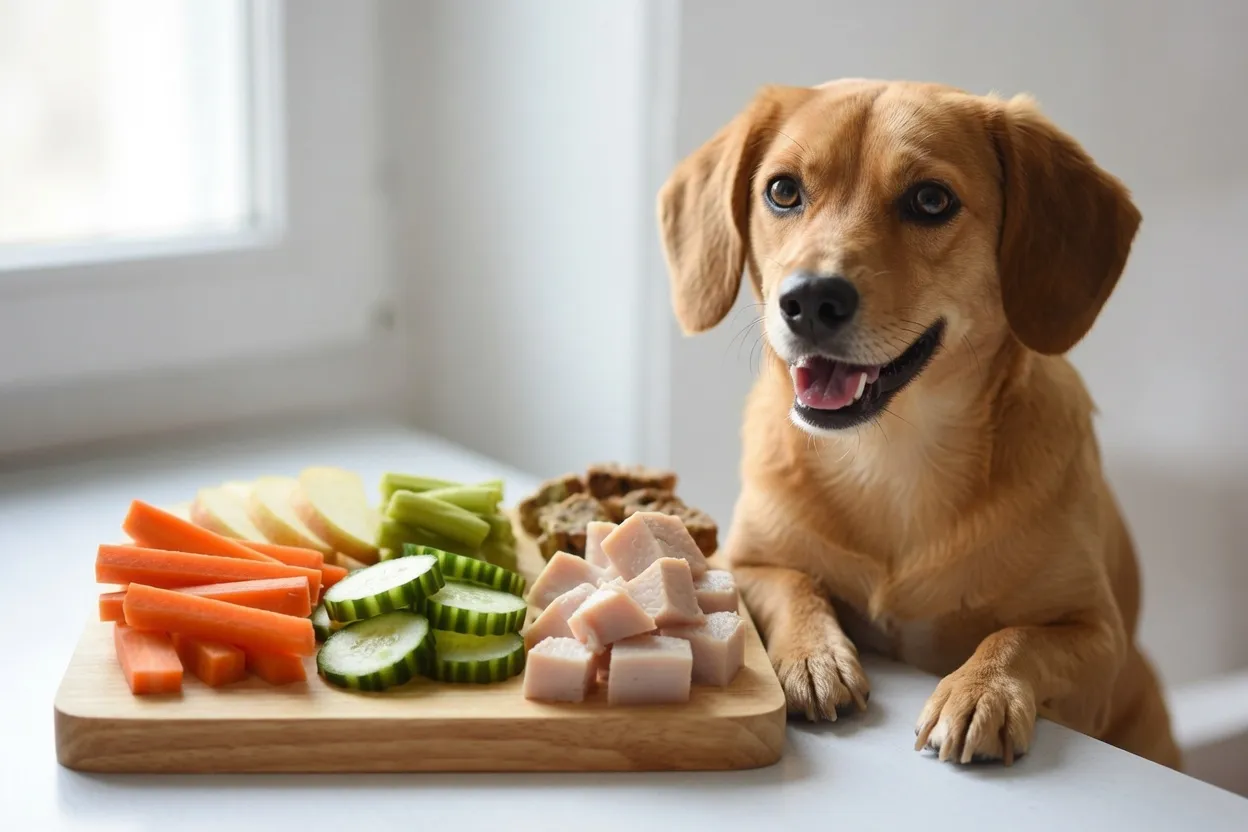
6 Low-Calorie Dog Treat Recipes for Weight Watchers
Last summer, my golden retriever, Buster, had trouble on our walks. He got tired quickly, even after a short distance. His vet told me he needed to lose some weight.
This was a big wake-up call for me. It made me think differently about his snacks.
Mindful snacking is key to helping your pet stay healthy. You can help them stay fit without making them miss out on treats.

Always remember that snacks should be just 10% of your dog’s daily food. This rule helps keep their diet balanced and their treats enjoyable. With these 6 Low-Calorie Dog Treat Recipes for Weight Watchers, you give them healthy snacks that make them happy. Let’s see how these easy recipes can make your pet’s life more active and fun.
Understanding Canine Weight Management
Managing your pet’s weight is key to their health. A healthy weight means more energy and a better life for your dog. But too much weight can harm their body and lead to serious health problems.
Excess weight can cause many health issues in dogs. Keeping your dog at a healthy weight helps prevent these problems:
- Chronic joint pain and mobility challenges.
- Increased risk of heart disease and breathing problems.
- Less stamina for walks and play.
- Metabolic issues that shorten their life.
Choosing the right snacks is crucial for your pet’s health. Dog-friendly weight loss treats let you reward them without adding extra calories. These treats satisfy their cravings while keeping them at a healthy weight.
It’s important to regularly check your dog’s body condition score. Using dog weight management treats helps you control their calorie intake. This way, your dog stays healthy, active, and happy for many years.
Essential Ingredients for Healthy Homemade Dog Treats
You can make your dog’s snack time better by choosing the right ingredients. Pick ingredients that are full of nutrients. This way, you make healthy dog treats that are good for them and don’t have too many calories.
Using fresh fruits and veggies, and lean proteins, gives your dog important vitamins and minerals. This means you don’t need to add bad stuff like fillers or artificial sugars. Your dog deserves the best nutrition, and whole foods are the best way to give it to them.

When you make homemade dog treats, you control what goes into them. It’s key to use ingredients that are good for dogs. Here are some things you should have in your kitchen:
- Lean proteins like boiled chicken breast or turkey.
- Fiber-rich vegetables such as green beans and carrots.
- Nutrient-packed fruits like blueberries and pumpkin.
- Healthy grains like rolled oats for texture.
But, be careful not to use things that are bad for dogs. Avoid grapes, onions, garlic, and xylitol. These can be harmful, even in small amounts. Always check your ingredients to keep your healthy dog treats safe for your pet.
Choosing good ingredients really helps your pet’s health. You’ll know exactly what’s in every treat. With these tips, you’re ready to bake healthy snacks for your dog.
6 Low-Calorie Dog Treat Recipes for Weight Watchers
Keeping your pup happy and slim is easy. Making your own snacks lets you control what goes in. This way, your pet gets dog-friendly weight loss treats without bad stuff.

Frozen Blueberry and Yogurt Bites
These refreshing treats are great for hot days. Mix plain, non-fat Greek yogurt with fresh blueberries. Freeze them in an ice cube tray. They’re full of antioxidants and probiotics.
Crunchy Green Bean Snaps
Fresh green beans are perfect for a crunchy snack. Serve them raw or lightly steamed. They’re full of fiber, making your dog feel full.
Dehydrated Sweet Potato Chews
Sweet potatoes are a healthy snack. Slice them thin and bake until chewy. This simple method makes a tasty, long-lasting snack.
Pumpkin and Oat Mini Biscuits
Mix pureed pumpkin with oats for these treats. Pumpkin is good for digestion and tastes great. These dog diet recipes are perfect for training.
Cucumber and Mint Refreshers
Try sliced cucumbers with a bit of mint for a cool treat. Cucumbers are mostly water, making them great for weight management. Your dog will love the taste.
Lean Chicken and Carrot Jerky
Make your own jerky with lean chicken and carrots. Dehydrate them until firm. This protein-packed snack is a healthy reward.
Safety Guidelines for Preparing Homemade Snacks
When you make snacks for your dog, keeping your kitchen clean is key. Making healthy dog treats at home is fun, but you must be careful. This keeps your pet safe and happy.
Begin by washing fruits and veggies well under cool water. This step gets rid of bad stuff like pesticides and bacteria. Always dry them off before chopping.
If your recipe has meat, cook it right to kill off bad germs. Raw or undercooked meat can harm your dog. By following these healthy dog treats steps, you give your dog the best food.
Also, know which foods are bad for dogs. Keep these foods away to avoid accidents:
- Xylitol: A sweetener in peanut butter and gum that’s very bad.
- Grapes and Raisins: Can cause sudden kidney failure in dogs.
- Onions and Garlic: Harm red blood cells and cause anemia.
- Chocolate: Bad for a dog’s heart and nervous system.
Lastly, keep your work area clean to avoid mixing things up. When you focus on safety, your healthy dog treats are a yummy and safe treat for your pet.
How to Calculate Caloric Intake for Your Dog
Managing your dog’s weight starts with knowing how many calories they need daily. By learning these calculations, you can make sure your dog’s diet recipes fit their daily needs. This way, you keep them healthy and give them tasty, low-calorie snacks.
To start, find your dog’s Resting Energy Requirement, or RER. This is the energy they burn just by being alive. To find it, take your dog’s weight in kilograms, raise it to the power of 0.75, and then multiply by 70.

After finding the RER, you need to think about their activity level. Active dogs or those trying to lose weight need different multipliers. Talk to your vet to find the right multiplier for your dog’s lifestyle and health.
It’s key to adjust these numbers often as your dog loses weight or changes their exercise. Watching these numbers closely makes sure your homemade dog diet recipes keep working. Staying consistent helps your dog reach their weight goal better.
Remember, treats should be a small part of their daily food. By mixing their main meals with these snacks, you help them reach their weight goal safely and healthily. Taking charge of these numbers shows you truly care about your dog.
Tips for Portion Control and Treat Frequency
Even the best treats can lead to weight gain if not portioned right. It’s tempting to give your pet treats, but consistent monitoring is key. Treats should be part of their daily food, not extra.
Try breaking treats into smaller pieces. This way, you can give more often without overfeeding. It keeps your dog happy and focused for longer.

Having a set treat schedule helps your dog know when to expect a reward. Link treats to good behavior or training times. This stops random snacking and keeps intake in check.
Quality is more important than quantity when rewarding your pet. Choose high-value, low-calorie snacks to keep them excited. Be mindful of treat frequency to support your dog’s weight loss and keep them happy.
Recognizing When Your Dog Needs a Diet Adjustment
Watching your pet’s body shape is crucial for keeping them at a healthy weight. By checking on your dog often, you can see if their diet is working. Consistency is key for a healthier weight for your pet.
Look for signs that show your dog is getting healthier. A healthy dog should have a clear waistline when seen from above. You should also be able to feel their ribs without a lot of fat on top. If you see these signs, your diet plan is probably good.

But sometimes, your dog might not get any better, even with good care. If you don’t see the signs of health, it might be time to change their treats. You might need to give them snacks less often or choose ones with fewer calories.
Remember, your vet is a big help in this journey. If you’re not sure about your dog’s health, ask your vet. They can tell you if you should keep using dog weight management treats or if you need to change their main diet for better health.
Storing and Preserving Your Homemade Treats
Keeping your homemade dog treats fresh is easy with a few simple steps. Since they don’t have artificial preservatives, they need more care. Proper storage is the secret to keeping them good for your pet.
How you store them depends on the ingredients. Soft or moist treats need the fridge to avoid mold. Freezing is great for large batches, keeping them fresh for weeks.
Here are some easy ways to store your homemade dog treats:
- Use airtight glass or plastic containers to keep them fresh.
- Label containers with the date made to know when to use them.
- Store dry chews in a cool, dry place away from sunlight.
- Keep fridge items in the back for even temperatures.
Always check your treats before giving them to your dog. If they smell bad, look different, or have mold, throw them away. Your dog’s health is the top priority, so don’t risk it.
Learning these storage tips means your homemade dog treats stay healthy and tasty. These small steps keep the snacks nutritious. Your dog will thank you for the effort to keep their treats fresh and yummy.
Conclusion
Managing your dog’s weight is rewarding. It makes your bond stronger. You can greatly improve their life with simple choices every day.
Low-calorie recipes keep your dog’s diet balanced. They don’t have to miss out on treats. Remember, portion control is key to helping your pet reach their weight goals.
Patience is your best friend in this journey. Small steps lead to big changes for your dog. Your hard work will keep them happy and active.
Begin today by making some healthy snacks. Share your success with other pet lovers. Your efforts will greatly benefit your dog’s health and happiness.


