
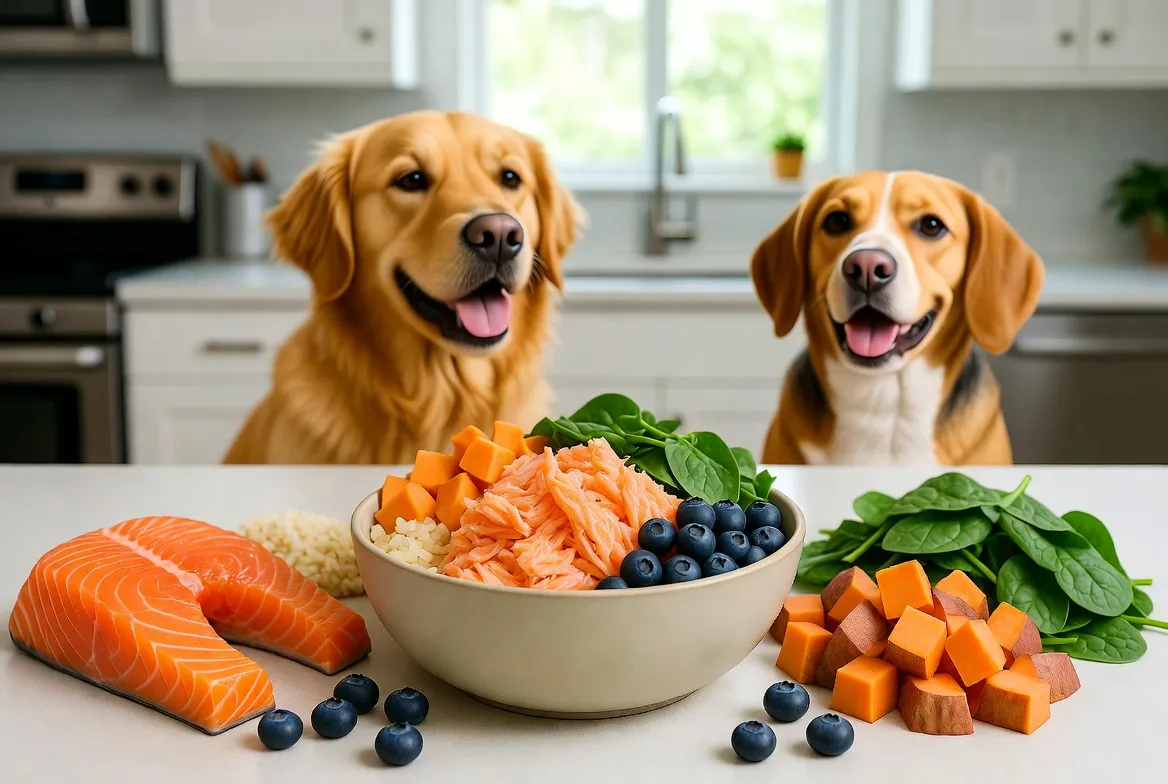
6 Salmon Dog Food Recipes for a Shiny Coat Your Dog Will Love
Last winter, I noticed my golden retriever, Max, seemed to lose his usual spark. His fur felt brittle, and he constantly scratched at his dry skin. I felt helpless watching my best friend struggle with such discomfort every single day.

That experience taught me that true vitality starts from within. By switching to high-quality ingredients, I saw a massive change in his appearance. Providing your pet with the right nutrients is the most effective way to support vibrant health.
You can easily prepare these 6 salmon dog food recipes for a shiny coat right in your own kitchen. These vet-approved meals offer the essential fatty acids your canine companion needs to thrive. Let us explore how simple, fresh ingredients can transform your pup’s well-being today.
The Science Behind Salmon and Your Dog’s Coat Health
The secret to a shiny coat is in the healthy dog food you give. The right ingredients do more than fill a belly. They fuel your pet’s health from the inside.
Understanding how nutrition affects skin health is key. It leads to a happier, more comfortable pet.
Essential Fatty Acids and Omega-3 Benefits
Omega-3 fatty acids, like EPA and DHA, are at the heart of this. They act as natural anti-inflammatory agents. They soothe irritated skin and reduce redness.
By adding salmon for dogs to their diet, you build a strong lipid barrier. This barrier keeps moisture in and keeps the coat shiny.
This barrier is key for a soft, lustrous coat. Without these fats, your dog might have dull fur or dry skin. High-quality fats keep the skin strong against stress.
Why Salmon is a Superfood for Canine Skin
Salmon is a top superfood because it’s packed with nutrients. Feeding your pet healthy dog food like salmon helps repair skin. It’s great for dogs with chronic itching or allergies.
Choosing salmon for dogs means more protein and oils. Your dog will scratch less as their skin gets healthier. Nourishing your pet with salmon supports their skin health for the long term.
Safety First: Preparing Homemade Dog Food Responsibly
When you cook for your dog, safety and quality ingredients are top priorities. Making homemade dog food recipes shows you care. But, it’s important to be very careful. This ensures your pet stays healthy and full of energy.
Sourcing High-Quality Salmon
The protein you choose is crucial for your natural dog food. Buy fresh, human-grade salmon from trusted places. This reduces the chance of harmful parasites or chemicals. Wild-caught salmon is best because it’s full of nutrients and has fewer chemicals.
Check the fish for bones before cooking. Even tiny bones can be dangerous. Make sure to cook the salmon well. This kills any harmful germs that could hurt your dog.
Avoiding Toxic Ingredients for Dogs
Many kitchen items are bad for dogs. Don’t use onions, garlic, chives, or leeks because they can cause anemia. Also, watch out for artificial sweeteners like xylitol. It’s very toxic and can harm dogs even in small amounts.
Keep grapes, raisins, and macadamia nuts away from your cooking. They can cause kidney failure or brain problems. Stick to safe, whole foods for your dog’s meals.
Proper Storage and Portion Control
Managing your dog food ingredients well is key to avoiding bacteria. Store cooked meals in airtight containers in the fridge for three days. Freeze big batches to keep them fresh longer.
It’s also important to control portions. Use a kitchen scale to measure food based on your dog’s size and activity. Consistency is the key to keeping your dog healthy and well-fed.
6 Salmon Dog Food Recipes for a Shiny Coat
You can turn your kitchen into a gourmet space for your dog with these easy meals. High-quality nutrition keeps your pet happy and healthy. These 6 salmon dog food recipes for a shiny coat are tasty and full of important nutrients.
These homemade dog food recipes are great for bonding with your pet. You can also make healthy homemade dog treats for training. Here are six balanced options to start with.

Salmon and Sweet Potato Power Bowl
This recipe uses sweet potatoes for energy. They also add fiber and vitamins for your dog.
- 1 cup cooked salmon, flaked
- 1/2 cup mashed sweet potato
- 1 tablespoon coconut oil
Hearty Salmon and Quinoa Medley
Quinoa is a great gluten-free grain. It adds texture and is a complete protein that goes well with fish.
- 1 cup cooked salmon
- 1/2 cup cooked quinoa
- 1/4 cup chopped carrots
Salmon, Spinach, and Brown Rice Feast
Spinach is full of iron and antioxidants. Mixed with brown rice, it makes a filling and nutritious dinner.
- 1 cup cooked salmon
- 1/2 cup cooked brown rice
- 1/4 cup steamed spinach
Steamed Salmon and Garden Vegetable Mix
Steaming keeps vitamins in your veggies. This light meal is good for dogs with sensitive stomachs.
- 1 cup steamed salmon
- 1/4 cup steamed green beans
- 1/4 cup diced zucchini
Salmon and Blueberry Antioxidant Blend
Blueberries are a superfood for immune health. This recipe is a refreshing change for your dog.
- 1 cup cooked salmon
- 1/4 cup fresh blueberries
- 1/2 cup cooked oatmeal
Salmon and Pumpkin Digestive Support Recipe
Pumpkin helps with digestion. This recipe is gentle on the gut and tastes rich and savory.
- 1 cup cooked salmon
- 1/3 cup pureed pumpkin
- 1 tablespoon flaxseed oil
Understanding Nutritional Balance in Homemade Meals
Making a balanced diet for your dog is more than picking fresh ingredients. Moving away from commercial kibble means you’re fully responsible for your pet’s health. Giving your dog healthy dog food needs careful planning to meet their unique needs.

The Role of Protein and Healthy Fats
Protein is key for your dog’s muscles, organs, and immune system. Foods like salmon give the amino acids needed for optimal physical function. You also need to add healthy fats for skin and coat health.
Getting the right mix of these nutrients keeps your dog energetic all day. Using top-quality ingredients makes sure your natural dog food is tasty and good for them. The right balance is essential for a happy, healthy dog.
Incorporating Essential Vitamins and Minerals
Even the best proteins don’t have all the nutrients your dog needs. You must add specific vitamins and minerals to prevent deficiencies. For example, calcium is crucial for strong bones, and zinc is important for skin and fur health.
Talking to a vet helps you find the right supplements for your recipe. This step makes sure your healthy dog food is complete and tailored to your pet’s needs. With careful planning, you can give your dog a natural dog food diet that supports their health for years.
Transitioning Your Dog to a Salmon-Based Diet
Adding salmon for dogs to their diet is a great step for their health. It’s important to let their stomach get used to it slowly. This way, they won’t get upset and will stay happy and healthy.

Gradual Introduction Methods
The best way to change their food is the seven-to ten-day transition method. Begin by mixing a little of the new food with their old food. Then, slowly add more salmon for dogs and less old food each day.
By the second week, they should only eat the new food. This gradual change helps their body get used to the good stuff in the fish. Being patient is the best thing you can do for them.
Monitoring Your Dog’s Digestion
Watch how your dog feels as you introduce these new meals. Check their poop and energy every day. Healthy digestion means the new diet is good for them.
If they seem uncomfortable, like having loose stools or feeling tired, slow down. It’s important to watch how they react to the new food. Taking it slow helps them enjoy their new diet without stress.
Signs of a Healthy Coat and Skin
A vibrant, healthy coat shows your new diet is working well. After a few weeks of natural dog food, your pet’s look will change.

Identifying Improvements in Fur Texture
Look for a shine increase on your dog’s back and sides. A healthy coat is soft, not brittle or coarse.
Shedding less at home is another sign. Dry, flaky skin patches show your salmon for dogs choice is right.
When to Consult Your Veterinarian
Even with good results, regular vet visits are key. Your vet checks if your natural dog food meets your pet’s needs.
If skin issues or digestive problems persist, get vet advice. Salmon for dogs helps wellness, but a vet makes sure it’s right for your pet.
Common Mistakes to Avoid When Cooking for Dogs
Many pet owners accidentally make mistakes that harm their dog’s health. Cooking meals at home is a great way to show love. But it needs a balanced approach to keep your pet healthy. Small mistakes can cause big health problems if not watched.

Over-relying on Single Ingredients
It’s easy to stick to a few favorite foods for your dog. But variety is crucial for a healthy diet. Using only one or two dog food ingredients can leave out important nutrients.
Try mixing up your dog’s protein and veggies. Variety ensures your dog gets all the nutrients they need every week. If you always use the same ingredients, add different safe veggies or grains to boost nutrition.
Ignoring Caloric Density
Many think fresh meals are always lower in calories than kibble. But some homemade dog food recipes can be very calorie-dense. Not watching these calories can cause your dog to gain weight.
Always check the calories of your dog food ingredients before cooking. Watch your dog’s weight to keep them healthy. Adjusting portion sizes based on their activity level helps prevent obesity and keeps them feeling great.
Tips for Making Mealtime Exciting
Mealtime is the best part of your dog’s day. Why not make it even more special? You can turn a simple bowl of healthy dog food into a fun adventure. This will make your dog excited for their meals.
Adding Natural Toppers and Treats
Adding a little something extra can make meals more interesting. Try adding fresh parsley or plain, unsweetened yogurt to their bowl.
These simple additions add variety without losing the health benefits of your dog food ingredients. You can also give small amounts of homemade dog treats as rewards.
Creating a Consistent Feeding Schedule
Feeding your dog at the same times every day is key. It helps their digestion and keeps them healthy.
A routine makes your dog feel safe and ready for meals. Make sure any extra homemade dog treats or toppings don’t add too many calories.
By mixing a steady schedule with the right dog food ingredients, meals stay both healthy and fun. Your dog will thank you for making their meals special.
Conclusion
Preparing fresh salmon meals changes how your pet eats every day. You have the tools to make their diet better with quality proteins and fats.
Small kitchen changes can make a big difference in your dog’s energy and coat. Look for changes in how they move and feel.
Make sure your kitchen is always ready with fresh ingredients. Use places like Whole Foods or local markets. A regular diet keeps your dog healthy and active for a long time.
If your pet’s health or appetite changes, talk to your vet. They can help make sure your homemade meals are safe and good for your pet.
Share your favorite recipes with other pet owners. Your stories can help them care for their pets too.


