
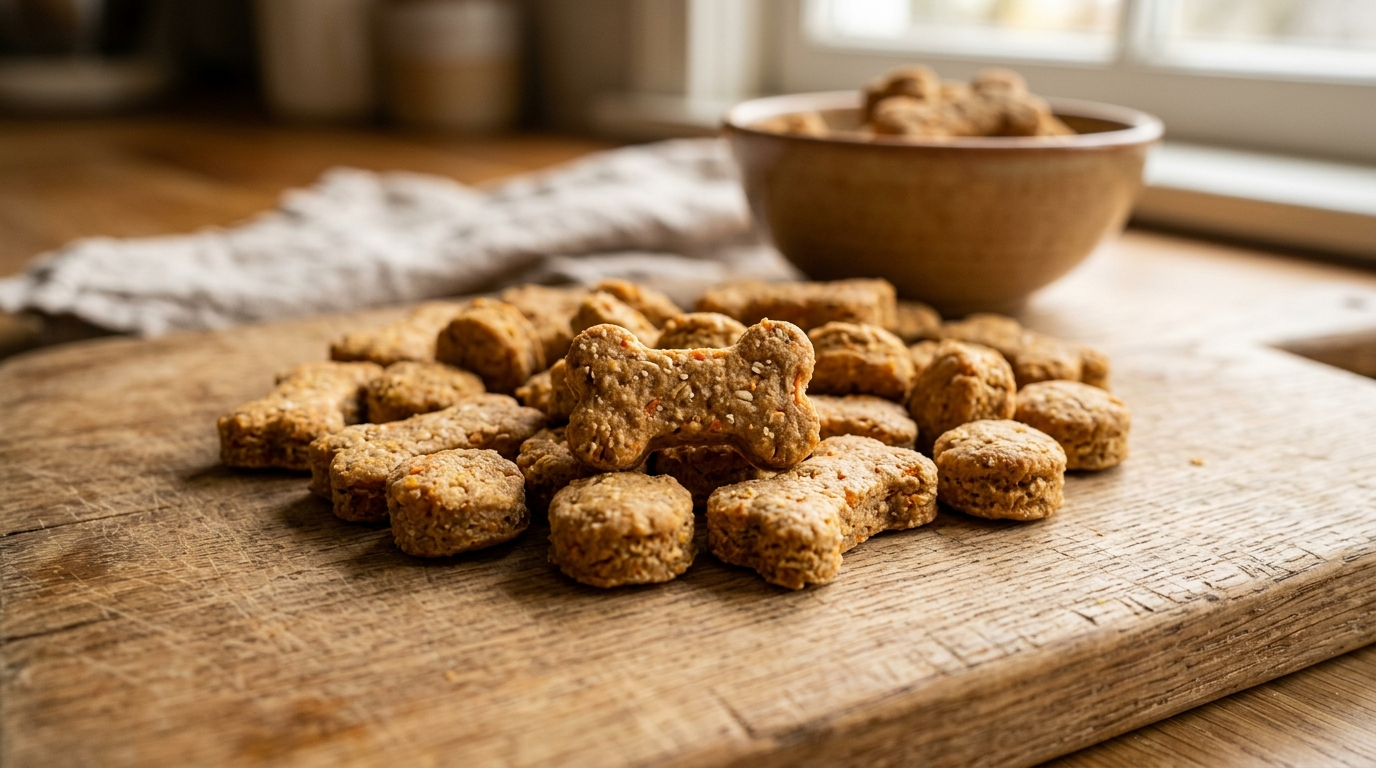
6 Vet-Approved Dog Treat Recipes for Training Your Pup
Seeing your dog’s joy when they learn something new is special. It’s that spark of connection that makes being a pet owner so rewarding. You want to give them the best to keep them happy and eager to learn.

Making your own treats lets you control what your pet eats. You can use healthy ingredients like chicken, pumpkin, and apples. These 6 vet-approved dog treat recipes for training help teach good manners and build confidence.
Remember, these treats should be small and safe for your pet. It’s important to think about their diet before starting. Choosing quality ingredients makes every training session a healthy celebration of your bond.
What Makes a Homemade Dog Treat Training-Friendly
Making the best training reward means knowing what your dog needs. When you make homemade dog treats, you control the quality and nutrition. This keeps your dog healthy while they learn.
Prioritizing Nutrient-Dense, Dog-Safe Ingredients
Good rewards start with the right ingredients. Choose whole foods for real nutrition, not fillers. Lean proteins, fresh veggies, and good grains keep your dog energized.
Make sure every ingredient is safe for dogs. Avoiding harmful additives keeps your homemade dog treats healthy for your pet.
Keeping Calories and Portions Small
Training needs lots of practice. Big rewards can make your dog too full or tired. Small portions keep them focused and prevent weight gain.
- Use pea-sized pieces for quick rewards.
- Break larger snacks into smaller, manageable bits.
- Limit the total volume of treats per session.
- Ensure the caloric density remains low for frequent use.
Balancing Taste, Texture, and Treat Value
A good training treat must be appealing. It should be soft and easy to chew. A strong, savory aroma makes treats more appealing, even in distracting places.
Try different flavors to see what your dog likes best. High-value homemade dog treats can help with tough commands.
Checking With Your Veterinarian About Dietary Needs
Always talk to your vet before new snacks. Every dog is different, with special needs. Your vet can suggest safe ingredients for your dog.
Tell your vet about any allergies or health issues. This keeps your homemade dog treats safe and healthy for training. Talking to your vet helps avoid health problems.
6 Vet-Approved Dog Treat Recipes for Training
Make your training sessions better with these 6 Vet-Approved Dog Treat Recipes. Your dog will love these easy dog treat recipes. They use simple, healthy ingredients to keep your dog focused and healthy.

Soft Chicken and Oat Training Bites
Ingredients and Simple Preparation
Mix cooked, shredded chicken breast with rolled oats and an egg. Roll the dough into pea-sized balls. Bake at 350°F for 15 minutes until firm but soft.
Why Lean Chicken and Oats Work Well for Training
Chicken is a high-quality protein dogs love. Oats are gentle on their stomachs. This mix is highly digestible and good for sensitive stomachs.
Portion Size, Texture, and Best Uses
Keep these bites small for quick swallowing. Their soft texture is great for fast training drills.
Pumpkin and Peanut Butter Reward Drops
Ingredients and Xylitol Safety Check
Mix pureed pumpkin with natural peanut butter. Always check the label for xylitol. Add oat flour for dough consistency.
How Pumpkin Supports a Simple, Fiber-Rich Recipe
Pumpkin is good for digestion and adds sweetness. It keeps the treats moist without extra fats.
Ways to Make the Drops Small Enough for Repetition
Use a piping bag or spoon for tiny drops. These are perfect for simple behaviors like “sit” or “stay.”
Salmon and Sweet Potato Mini Cakes
Ingredients and Baking Instructions
Blend salmon, mashed sweet potato, and an egg. Spread on a baking sheet and bake at 325°F until set. Cut into small squares once cooled.
Using Salmon as a High-Value Training Reward
Salmon’s strong aroma makes it a high-value reward. Use these treats for difficult behaviors or in distracting environments.
How to Serve These Treats Without Overfeeding
Serve these treats sparingly due to their healthy fats. Cut them small to provide many rewards without overfeeding.
Turkey and Carrot Homemade Dog Treats
Ingredients and Preparation Method
Combine ground turkey, grated carrots, and flaxseed. Form into small discs and bake at 350°F until cooked. These treats are easy to make and store well.
Why Lean Turkey and Carrots Suit Everyday Practice
Lean turkey keeps dogs energized without being heavy. Carrots add crunch and vitamins, making them a healthy choice for daily training.
Making the Treats Firm Enough for a Treat Pouch
Bake until slightly crisp on the edges. This firmness prevents them from crumbling in your training pouch.
Apple and Cheddar Training Cubes
Ingredients and Safe Apple Preparation
Mix diced apples, shredded cheddar cheese, and whole wheat flour. Always remove seeds and core from apples before chopping. Bake until golden and firm.
Using Cheese in Moderation for Delicious Dog Treats
Cheese is a favorite but should be used sparingly. A small amount adds a big flavor boost for training.
Cutting and Cooling the Cubes for Easy Rewards
Cool completely on a wire rack before cutting into cubes. Cooling makes them firm and easy to grab from your treat bag.
Banana and Blueberry Soft Bites
Ingredients and Mixing Instructions
Mash a ripe banana and mix with blueberries and oat flour. Roll into balls, flatten slightly, and bake at 350°F. These bites are soft, chewy, and sweet.
Using Fruit for Natural Sweetness Without Added Sugar
Bananas and blueberries are naturally sweet. They are a healthier alternative to many store-bought treats.
Adjusting Moisture and Texture for Different Dogs
- Add more flour if the dough feels too sticky.
- Use a little water if the mixture is too dry.
- Bake for less time for a chewier treat.
- Bake for longer for a crunchier texture.
How to Prepare These Easy Dog Treat Recipes for Training
Being consistent is key when baking healthy dog treats at home. A structured process ensures every treat is safe, nutritious, and the right size for your dog.
Gathering Dog-Safe Ingredients and Measuring Accurately
Clear your space and get all the ingredients ready. A digital kitchen scale is better than measuring cups for dry ingredients like oat flour or coconut flour.
Precision is important when making these snacks. Right measurements help avoid dough that’s too crumbly or sticky. This makes the treats easier to handle.

Choosing Baking Temperatures and Pan Sizes
The size of your baking pan affects the treat’s texture. A shallow pan helps with even heat, making crunchy treats.
For softer treats, use a deeper pan or bake for less time. Watch the oven closely. High heat can dry out healthy dog treats, making them brittle.
Cooling, Cutting, and Testing Treat Texture
Be patient after the timer goes off. Let the treats cool completely on a wire rack to keep them moist.
After cooling, cut the dough into shapes with a pizza cutter or knife. Before training, do a quick test:
- Make sure the treat is firm but not hard.
- It should be soft enough for your dog to chew quickly.
- Check that it’s small to avoid overfeeding.
- Make sure it’s dry so it doesn’t leave a mess in your pocket.
Preparing a Mix of Low-Value and High-Value Rewards
Good training needs variety. Make different healthy dog treats for different rewards.
Use simple oat biscuits for basic commands in quiet places. For harder tasks or new tricks, have protein-rich treats like salmon or chicken. This keeps your dog fully engaged and excited.
How to Use Homemade Dog Treats During Training
How you give rewards can change your training session. Using dog training treats well means thinking ahead. It turns every treat into a way to teach and communicate.
Matching Reward Value to the Difficulty of the Behavior
Every task needs a different level of motivation. For simple tasks like “sit” or “stay” in a quiet room, a small reward works. These are often dry, crunchy, or less smelly.
For harder tasks or new behaviors, use a bigger reward. Things like salmon or liver are very tempting to dogs. They help keep your dog focused during tough training times.
Using Tiny Pieces for Frequent Repetition
The size of your dog training treats is key for many repetitions. You want to keep your dog interested without making them too full.
Go for treats the size of peas. Your dog can swallow them in one go. This lets you train fast, making it clear what action gets a reward.
Pairing Treats With Markers, Praise, and Clear Cues
Timing is everything between the action and the reward. Use a marker, like a clicker or “yes,” right when your dog does what you want.
Then, give your treat and enthusiastic praise. This strong link helps your dog know what they did right.
Fading Food Rewards as Your Dog Builds Confidence
As your dog gets better, cut back on treats. You don’t want them to only do things for food.
Start by rewarding only the best tries or using treats sometimes. Over time, treats will be a special treat, not a must for every success. This makes your dog more reliable and confident.
Portion Control and Daily Treat Calories
Keeping your dog fit and focused is easy with portion-controlled dog treats. A healthy diet and rewards keep them energized without gaining weight. Sticking to a routine is key for your dog’s health and learning new tricks.

Following the Ten Percent Treat Guideline
Remember, treats should not be more than ten percent of your dog’s daily calories. The rest should come from a good, balanced meal. Always check your dog’s food label to know how many calories they need.
Adjusting Meal Portions When Training Intensifies
During intense training, dogs eat more treats. To avoid overfeeding, slightly reduce their regular meals. This keeps their energy balance stable, even with more rewards.
Recognizing When Treats Are Too Large or Too Frequent
Using portion-controlled dog treats means thinking about treat size. Large biscuits can fill up your dog’s calorie needs quickly. Break treats into tiny pieces to keep them motivated without overfeeding.
Adapting Recipes for Puppies, Seniors, and Small Breeds
Different life stages and sizes need special treat plans. Puppies and small breeds need extra small and soft treats to avoid choking. Seniors may need lower-calorie treats to support their metabolism. If your dog has health concerns, talk to your vet for a safe plan.
Ingredients to Avoid in Homemade Dog Treats
Making natural dog treats at home means knowing what’s safe for your pet. Some common foods can be very bad for dogs. Always check every ingredient before you start baking.

Never Use Xylitol, Chocolate, Grapes, or Raisins
Some foods are very bad because they have toxins. Xylitol, found in sugar-free stuff, is very dangerous. It can cause liver failure fast. Also, chocolate, grapes, and raisins can harm your dog’s kidneys or heart.
Keeping Onions, Garlic, Macadamia Nuts, and Excess Salt Out
Many foods that people like are bad for dogs. Onions and garlic can hurt your dog’s blood. Macadamia nuts and too much salt can make your dog weak or cause shakes.
Checking Peanut Butter, Broth, and Dairy Labels Carefully
When picking ingredients for natural dog treats, read labels closely. Some peanut butters have xylitol, so check the list. Also, broths and some dairy can upset your dog’s stomach.
Calling Your Veterinarian After a Suspected Toxic Exposure
If you think your dog ate something bad, don’t wait. Call your vet or an animal poison hotline right away. Quick action helps keep your dog safe and healthy.
Storing and Serving Homemade Training Treats Safely
Even the best simple dog treat recipes need careful handling. Baking is fun, but keeping snacks fresh is key. Moisture control is the secret to healthy treats.

Cooling Treats Completely Before Storage
Let your homemade snacks cool down entirely on a wire rack before storing. If you pack them warm, steam causes condensation. This can lead to mold and bacteria, ruining your treats.
Using Refrigeration and Freezing to Preserve Freshness
Homemade treats lack preservatives, so they don’t last long. Store them in an airtight container in the fridge for up to a week. For longer, freeze your treats in small bags for months.
Carrying Treats in a Clean, Sealed Training Pouch
Use a dedicated, washable pouch for training sessions. Don’t keep treats in pockets, as crumbs and bacteria can hide. Keep your pouch clean to ensure safe rewards for your dog.
Discarding Treats That Show Spoilage or Texture Changes
Check your rewards before giving them to your dog. If they smell bad, show mold, or have odd texture, throw them away. It’s safer to err on the side of caution for your pet’s health.
Adapting Vet-Recommended Dog Treats to Your Dog
Even the best vet-recommended dog treats might need tweaks for your pup. Every dog is different in metabolism, taste, and health history. Think about these before cooking.
Modifying Ingredients for Food Allergies and Sensitivities
If your dog has food allergies, you might need to change proteins or grains. Always talk to your vet before big diet changes. This ensures the new recipe is balanced.
You can swap chicken for turkey or oat flour for wheat if your dog is uncomfortable. Always read labels carefully to avoid hidden allergens.
Choosing Softer Treats for Dental or Chewing Concerns
Senior dogs or those with dental issues might find hard treats hard. You can make recipes softer by adding moisture or using ingredients that soften when baked.
Using pureed fruits or vegetables makes treats softer and gentle on teeth. These changes help your dog enjoy treats without pain or trouble.
Testing One New Recipe at a Time
When making vet-recommended dog treats at home, it’s tempting to try many recipes. But it’s safer to introduce one new treat at a time.
This way, you can see which ingredient might cause a problem. If your dog does well with a recipe, you can add it to their regular treats.
Watching for Digestive Changes and Skin Reactions
Watch your dog closely after trying a new snack. Look for signs of an upset stomach, like loose stools or vomiting. This could mean an ingredient sensitivity.
Also, check their skin for redness, itching, or hives. If you see concerning physical changes, stop the treat and talk to your vet.
Conclusion
Making your own dog snacks makes every practice session special. These six recipes are healthy and keep your dog focused. They make learning new skills exciting.
Using homemade rewards lets you control what your dog eats. You can keep portions small and easy to manage.
Remember the ten percent rule to keep your dog’s diet balanced. Always avoid toxic foods like xylitol or grapes. Check peanut butter labels to keep your dog safe.
Adjust the recipes for your dog’s age, size, and health. Soft foods are best for seniors, and small bites are good for puppies. This helps them stay engaged without eating too much.
Be consistent with timing and clear cues. This is key to good communication with your pet.
If you have questions, talk to your vet about dietary needs. Making homemade rewards builds trust and success. Start baking today and watch your dog thrive.


