
Easy High-Fiber Dog Food Recipes for Better Digestion
Last month, my golden retriever, Cooper, paced the kitchen floor all night. His stomach was upset, and I felt helpless. That night taught me the importance of proactive nutrition for a happy, healthy pet.

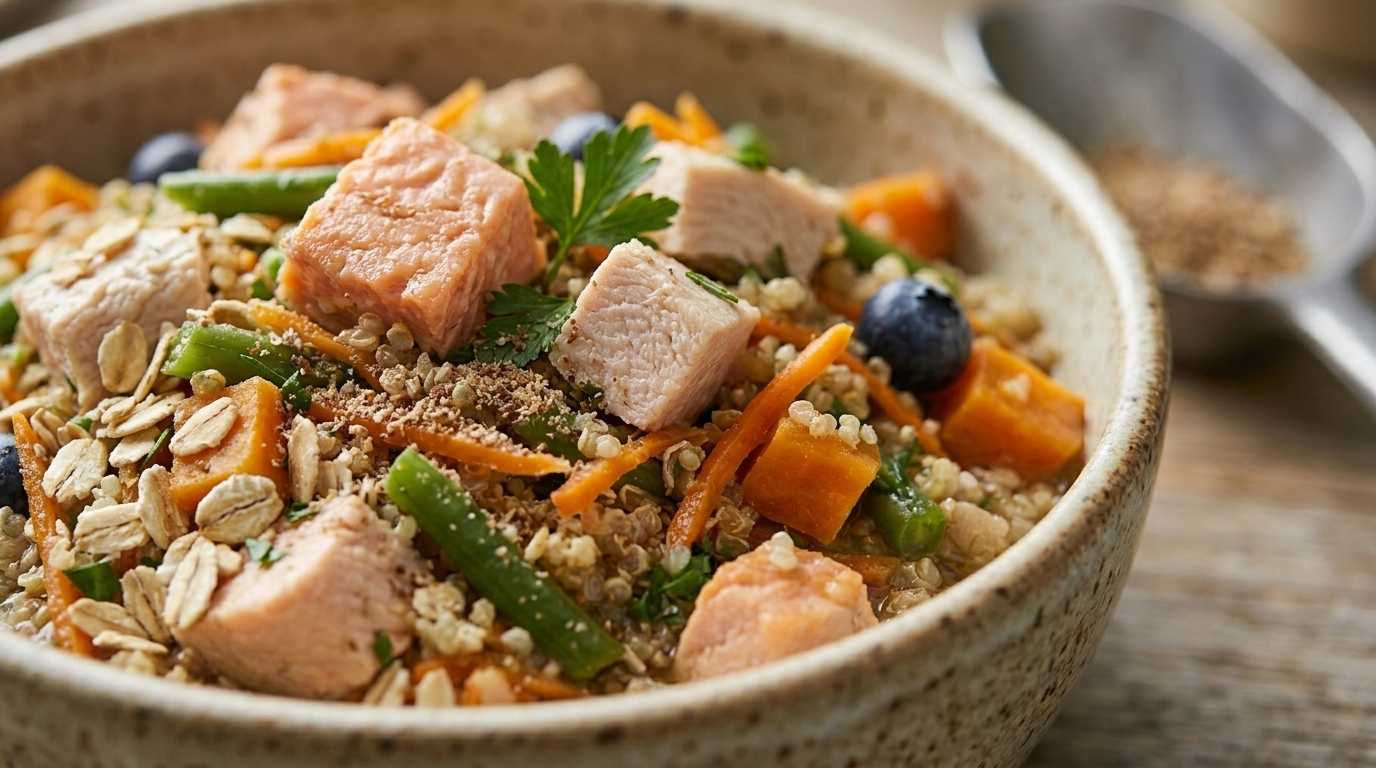
This guide is your go-to for keeping your dog healthy with homemade meals. We’ll look at four easy recipes: pumpkin with turkey, chicken with sweet potato, beef with barley, and salmon with quinoa.
Remember, these meals are just examples. Please adjust them for your pet’s needs with your vet’s help. We’ll also talk about safe cooking, portion sizes, and slow diet changes. Let’s make nutritious bowls that keep your dog’s tail wagging and tummy happy.
Why High-Fiber Dog Food Recipes for Better Digestion Can Help
Understanding how your dog processes nutrients is key to their wellness. Focusing on dog digestion can solve small problems before they get big. Adding the right nutrients to their food keeps them feeling great every day.
How Soluble and Insoluble Fiber Support Your Dog’s Gut
Fiber is a complex tool that works in two ways. Soluble fiber turns into a gel, slowing digestion and keeping your dog full. This helps control blood sugar and softens stool.
Insoluble fiber doesn’t dissolve in water and helps move waste through the gut. It prevents constipation. Balancing both types supports healthy gut bacteria.
Signs Your Dog May Benefit From More Dietary Fiber
Changes in your pet’s behavior or health might mean they need more fiber. Look for these signs that suggest they need high-fiber dog food:
- Frequent constipation or trouble passing stool.
- Stools that are loose, watery, or have an odd texture.
- Excessive begging for food, showing they’re not full.
- Visible straining during bathroom breaks.
- Occasional scooting or discomfort in the anal area.
When Digestive Symptoms Require Veterinary Care
Homemade meals can help with mild issues, but they’re not a replacement for vet advice. Always prioritize your dog’s safety. If they show severe illness signs, don’t delay in getting help.
See your vet right away if you notice:
- Blood in the stool or persistent vomiting.
- A sudden loss of appetite or significant weight loss.
- Lethargy or a noticeable change in energy levels.
- Symptoms that last more than 48 hours despite diet changes.
- Severe abdominal pain or bloating.
Your vet can do tests to check for parasites or infections. Always work with a vet to ensure your dog gets the care they need for long-term health.
Check Your Dog’s Needs Before Changing Their Diet
Before you start cooking for your pet, it’s key to know their needs. Making homemade dog food is rewarding but needs a good plan. This ensures your pet stays healthy and happy.
Discuss Fiber Changes With Your Veterinarian
Always see your vet before changing your dog’s fiber. They’ll check your pet’s health and if a diet change is needed. Open communication with your vet is crucial to avoid problems.
Consider Your Dog’s Age, Size, Activity, and Health
Every dog is unique, and their needs change with age. Puppies, active adults, and seniors need different nutrients. Your vet will guide you on the right amounts for your dog’s life stage.
Identify Food Allergies, Sensitivities, and Existing Conditions
Review your dog’s health history to avoid bad ingredients. Some dogs have hidden sensitivities that can get worse with diet changes. Keep a log of any past health issues.
Dogs With Diabetes, Pancreatitis, or Kidney Disease
If your dog has a chronic condition, be very careful. These conditions need careful control of nutrients to keep organs working right. Always get vet advice before making diet changes.
Dogs Taking Medication or Following a Prescription Diet
Some meds don’t mix well with certain foods, making treatment less effective. If your dog is on a special diet, talk to a veterinary nutritionist first. They can create a balanced diet that meets your dog’s health needs.
Choose Safe, Fiber-Rich Ingredients for Homemade Dog Food
Making homemade dog food means picking the best fiber-rich ingredients. Cooking for your pet lets you control what they eat. This way, you can give them a high fiber dog food that helps with digestion and health.
Vegetables That Add Gentle, Digestible Fiber
Vegetables are great for fiber, keeping your dog’s digestive system running well. Choose soft, cooked veggies over raw ones. They’re easier to digest and won’t upset your dog’s stomach.
Whole Grains and Legumes to Use Carefully
Whole grains like brown rice or oats offer energy and fiber. Make sure to cook them well so they’re digestible. Legumes, like lentils, can be used in small amounts. But watch for signs of gas or bloating in your dog.
Lean Proteins and Healthy Fats for Nutritional Balance
Fiber alone isn’t enough for a complete meal. Include lean proteins like chicken or turkey to keep muscles strong. A bit of healthy fat, like fish oil, is also key for a shiny coat and healthy skin.
Safe Preparation for Pumpkin, Sweet Potato, Carrots, and Green Beans
It’s important to prepare veggies safely for your dog. Steam or boil them until they’re soft. For pumpkin dog food, use plain, canned pumpkin or cooked, pureed pumpkin without added sugars or spices.
Ingredients to Avoid, Including Onions, Garlic, Grapes, and Xylitol
Some foods are dangerous for dogs. Avoid onions, garlic, and chives because they harm red blood cells. Also, stay away from grapes, raisins, and anything with xylitol. These can cause serious health problems.
Gather Equipment and Prepare Ingredients Safely
Making healthy meals for your dog starts with safe preparation. Organizing your space ensures every meal is healthy and safe. Consistency is the secret ingredient for a happy dog.

Step 1: Wash, Peel, and Cook Produce Thoroughly
Wash veggies and fruits under cool water before chopping. This removes dirt and pesticides. Peel items like carrots or potatoes for easy digestion.
Step 2: Cook Meat, Grains, and Eggs to Safe Temperatures
Cooking ingredients thoroughly kills harmful bacteria. Thorough cooking makes nutrients easier for your dog to use.
Step 3: Measure Portions With a Kitchen Scale
Measuring food by sight can lead to overfeeding. A digital kitchen scale ensures your dog gets the right amount. Precision helps keep your dog’s weight ideal and ensures enough fiber.
Step 4: Cool, Combine, and Store the Food Properly
Cool ingredients before mixing them. This stops bacterial growth and keeps food fresh. Good homemade dog food storage saves your effort.
Refrigeration and Freezing Guidelines for Homemade Dog Food
Proper storage keeps your dog’s meals fresh. Follow these simple rules:
- Divide meals into individual, airtight containers immediately after cooling.
- Keep refrigerated portions for no more than three days to ensure maximum freshness.
- Freeze extra batches in single-serving bags to prevent freezer burn.
- Always thaw frozen meals in the refrigerator overnight rather than on the counter.
- Discard any food that shows signs of spoilage or has an unusual odor.
By following these steps, you master homemade dog food storage. Your dog will thank you for the care in every meal.
Make a Gentle Pumpkin and Turkey Fiber Bowl
If your pup has tummy troubles, a turkey dog food bowl might help. Making meals at home lets you pick what goes in. This ensures your pet gets good, gentle food.
Step 1: Assemble Lean Ground Turkey, Plain Pumpkin, Brown Rice, and Green Beans
Start by getting your ingredients. You need lean ground turkey, plain pumpkin, cooked brown rice, and green beans. Make sure the pumpkin is 100% pure to avoid bad stuff like xylitol or spices.
Step 2: Cook the Turkey and Brown Rice Without Seasonings
Cook the turkey until it’s fully done. Make sure it’s not pink anymore. Cook the meat and rice without onions, garlic, salt, or seasonings. These can harm your dog’s stomach.
Step 3: Mix the Ingredients Into a Soft, Moist Meal
After cooking, mix everything in a big bowl. Add pumpkin until it’s soft and easy to eat. This helps your dog digest it better.
Step 4: Serve a Portion That Matches Your Dog’s Calorie Needs
Finding the right dog food portion size is key for a healthy weight. Talk to your vet to figure out how much food your dog needs. This depends on their activity and health.
How Plain Pumpkin May Help With Firming Loose Stools
Many dogs do better with plain pumpkin for dogs in their diet. Pumpkin’s fiber helps firm up loose stools. This gives your dog much-needed relief.
How to Adjust the Texture for Small, Senior, or Dental-Challenged Dogs
If your dog has dental problems or is older, you might need to change the meal’s texture. Use a food processor or mash it with a fork. This makes the food softer and easier to eat.
Prepare a Chicken, Sweet Potato, and Oatmeal Recipe
Making a meal at home lets you pick what your dog eats. This chicken sweet potato dog food recipe is easy on the stomach. It also gives your dog the nutrients they need.
Step 1: Gather Skinless Chicken, Cooked Sweet Potato, Plain Oats, and Carrots
Choose good-quality, skinless chicken. Use plain, rolled oats for a healthy oatmeal dog food base. Make sure your sweet potatoes and carrots are fresh and clean.
Step 2: Cook Each Ingredient Until Tender and Fully Done
Boil or steam the chicken until it’s fully cooked. Cook the sweet potatoes and carrots until they’re soft. Proper cooking is vital for your dog’s digestion.
Step 3: Shred the Chicken and Combine the Fiber Sources
Shred the chicken when it’s slightly cool. Mix it with cooked oats, mashed sweet potato, and chopped carrots. Stir well for a balanced mix.
Step 4: Cool the Recipe Before Serving It to Your Dog
Let the food cool down to room temperature before serving. Serving hot can hurt your dog’s mouth. Safety is the top priority when making homemade meals.
Why Oats and Sweet Potato Provide Different Types of Fiber
Oats give soluble fiber, which helps control blood sugar. Sweet potatoes have both soluble and insoluble fiber for regular bowel movements. Together, they offer a well-rounded approach to digestive health.
How to Prevent Excess Calories From Starchy Ingredients
Oats and sweet potatoes are high in energy. Be careful with portions to avoid overfeeding. Consulting with your veterinarian about the right amount will help keep your dog at the right weight.
Cook a Lean Beef, Barley, and Vegetable Meal
A beef barley dog food recipe is great for your pet. It adds fiber and nutrients. Dogs love the taste and find it absolutely irresistible.
Step 1: Select Lean Ground Beef, Pearled Barley, Zucchini, and Carrots
Choose lean ground beef for your dog’s protein needs. Use pearled barley for fiber. Add fresh zucchini and carrots for vitamins.
Step 2: Drain Excess Fat and Cook the Barley Thoroughly
Brown the beef, then drain the fat. This keeps the meal light. Cook the barley until it’s soft. Raw or undercooked grains are hard for dogs to digest.
Step 3: Combine the Beef, Barley, and Chopped Vegetables
Mix the cooked beef and barley in a bowl. Add chopped zucchini and carrots. Make sure everything is well mixed for a balanced meal.
Step 4: Check the Meal’s Moisture and Portion Size
Make sure the mix is moist for easy swallowing. Adjust the dog food portion size to keep your dog healthy and at a good weight.
When Barley Is a Good Choice and When to Avoid Grains
Barley is good for dogs needing more fiber. But avoid it if your dog has grain allergies or digestive problems.
How to Replace Beef for Dogs With a Protein Sensitivity
If your dog can’t eat beef, try ground turkey, chicken, or white fish. Watch your dog closely when trying new proteins. Make sure they do well and get the right dog food portion size.
Build a Salmon, Quinoa, and Green Bean Bowl
Making a salmon quinoa dog food bowl at home is rewarding. It’s good for your pup. This mix tastes great and gives them important nutrients.

Step 1: Prepare Plain Cooked Salmon, Quinoa, and Green Beans
First, cook the salmon without oils, salts, or seasonings. Rinse the quinoa well to remove its coating. Then, boil it until it’s soft and fluffy.
Steam the green beans until they’re tender. Chop them into small pieces for your dog.
Step 2: Remove Every Fish Bone Before Mixing the Ingredients
Make sure the salmon is bone-free. Check it carefully to avoid any bones. Tiny bones can be dangerous for your dog.
Step 3: Flake the Salmon and Combine the Recipe Evenly
After removing bones, flake the salmon into small pieces. Mix it with cooked quinoa and green beans in a bowl. Stir gently to mix well.
Step 4: Serve Small Portions While Monitoring Stool Quality
Start with small portions of this salmon quinoa dog food. Watch your dog’s stool quality for a few days. If it’s okay, you can give more.
How Salmon Adds Protein and Beneficial Fats
Salmon is full of protein for muscle health. It also has omega-3 fatty acids for a shiny coat and healthy skin. These fats give dogs lots of energy.
Why Quinoa Requires Thorough Rinsing and Cooking
Quinoa is a great gluten-free grain. But it has saponin that can taste bitter. Rinsing it well makes it easier for dogs to digest. Cook it until it’s soft for your dog’s health.
Balance Homemade Fiber Recipes With Complete Nutrition
Knowing the difference between a simple meal topper and a complete nutrition dog food is key for pet owners who cook at home. Adding fresh ingredients to your dog’s bowl boosts their fiber. But, these recipes are best as short-term solutions or tasty additions to a balanced diet.
Use Recipes as Toppers or Short-Term Meals Unless Formulated Completely
Most homemade dog food recipes online aren’t made for long-term health needs. Treat these fiber-rich bowls as toppers, not the main meal. Using them for a few days is safe, but long-term use without vet advice can cause imbalances.
Provide Adequate Protein, Calcium, Vitamins, and Essential Fatty Acids
Your dog’s diet must have the right mix of nutrients. Make sure each meal has enough protein, calcium, vitamins, and fatty acids. Missing any of these can harm your dog’s health.
Why Meat, Vegetables, and Grains Alone May Not Meet Every Requirement
It’s a myth that mixing meat, veggies, and grains makes a healthy meal. These foods are nutritious but lack the mineral ratios and trace elements in complete nutrition dog food. Without supplements, your dog might not get the nutrients they need.
Ask a Veterinary Nutritionist About Long-Term Homemade Diets
If you plan to feed your dog homemade dog food long-term, see a veterinary nutritionist. They can check your recipes and suggest supplements for a balanced diet. Working with a veterinary nutritionist ensures your dog stays healthy and happy for years.
Introduce New Fiber Gradually and Monitor Digestion
Helping your dog get used to new fiber-rich meals is key. It’s all about a smooth transition. Always keep their diet consistent to avoid digestive issues.

Step 1: Start by Replacing a Small Amount of the Regular Food
Start with a tiny bit of the new food mixed with their old food. Aim for about 10% of the new meal. This gentle start helps their body adjust slowly.
Step 2: Increase the New Recipe Slowly Over Several Days
Slowly add more of the new food over a week. If they do well, you can switch more of the old food. Even healthy foods like pumpkin dog food need a slow introduction.
Step 3: Track Stool Consistency, Appetite, Energy, and Gas
Watch your pet closely during this time. Look for changes in stool, energy, and gas. Monitoring these details will show if the new food is right for them.
Step 4: Reduce or Stop the Recipe if Symptoms Worsen
Make sure to feed the right dog food portion size to avoid overfeeding. If your dog has trouble digesting, cut back or stop the new food. It’s safer to be careful than to risk their comfort.
Warning Signs Such as Repeated Vomiting, Blood in Stool, or Lethargy
If your dog vomits a lot, has blood in their stool, or is very tired, stop the new food right away. These signs are serious and need immediate veterinary care. Always talk to your vet before making any big changes if you see these signs.
Store, Reheat, and Serve Homemade Dog Food Safely
Keeping your pet healthy starts with how you manage your homemade dog food storage after cooking. Proper handling keeps every batch of homemade dog food nutritious and safe.
Divide Meals Into Individual Portions Before Refrigerating
Efficiency is key in the kitchen. Portion meals into airtight containers right after cooking. This avoids handling large batches often.
- Use glass or BPA-free plastic containers for freshness.
- Label each container with the date of preparation.
- Keep daily portions separate to maintain consistent calorie control.
Thaw Frozen Food in the Refrigerator Instead of at Room Temperature
Plan when thawing frozen meals. Move the container from the freezer to the fridge slowly. This thaws it safely.
Thawing at room temperature can lead to harmful bacteria growth. Always prioritize safety by keeping food chilled until serving.
Reheat Food Gently and Test Its Temperature Before Serving
If your dog likes their meals warm, use a gentle method. Try a quick stir in a pan or a brief microwave session. Make sure to mix the food well to avoid burns.
Always test the temperature with your finger before serving. The food should be lukewarm or at room temperature. This ensures a comfortable dining experience for your dog.
Discard Food That Looks, Smells, or Tastes Spoiled
Sometimes, food may spoil faster than expected. If you notice unusual odors, color changes, or mold, don’t try to save it.
It’s better to throw away a questionable portion than risk your dog’s health. Trust your instincts and keep storage clean. This keeps your dog happy and healthy.
Conclusion
High-Fiber Dog Food Recipes can help manage your pet’s gut health at home. Use ingredients like pumpkin, sweet potato, and lean proteins. These create a menu that supports regular bowel movements.
Always think about your pet’s health before changing their food. Start with small amounts of new ingredients to help them adjust. Make sure to measure food portions to keep them at a healthy weight.
Homemade meals need a vet’s help to be balanced for long-term health. Talk to a veterinary nutritionist to make sure your recipes are complete. If your pet shows signs of illness, like lethargy or vomiting, contact your vet. This way, your pet stays happy and healthy every day.


