
5 Food Recipes for Dogs with Itchy Skin You Can Try
Seeing your dog scratch all the time is very sad. You just want them to feel better and be happy in their own fur. Many pet owners find that homemade dog food for itchy skin helps a lot.

This guide shows you some nutritious meal ideas. We talk about meals with turkey, salmon, chicken, beef, and venison. These are mixed with sweet potato, pumpkin, oatmeal, quinoa, and peas. These foods help soothe your dog’s skin from the inside.
Remember, these meals are just suggestions. Always talk to your vet before making big changes. They can help make sure your dog gets the right food for their health. With your vet’s help, you can find a diet that makes your dog feel better for good.
Why Diet May Matter When Your Dog Has Itchy Skin
Wondering if your dog’s food is the cause of their scratching? Diet is a big part of their skin health. Looking into dog food recipes for itchy skin can help. But you need to know what your dog needs.
https://www.youtube.com/watch?v=O2-0Xq9zbl8
Common signs that itching may involve a food reaction
Food reactions can show up in many ways, not just scratching. You might see ear infections or changes in digestion too.
These signs can start small but get worse if ignored. Watch for these signs that your dog might be reacting to food:
- Chronic or recurring ear inflammation
- Frequent licking of the paws or belly
- Unexplained digestive upset or loose stools
- Red, inflamed patches of skin that do not improve
How food allergies differ from environmental allergies and parasites
Not all scratching is from food. It’s key to know the difference between food and other causes like pollen or fleas.
Environmental allergies change with the seasons. Food allergies are always there. Fleas cause itching in specific spots. Always consult a professional to check for these before blaming food.
Why homemade meals should support—not replace—veterinary care
Homemade meals can be great, but they should not replace vet care. A vet can find out why your dog is itchy. This ensures you’re not missing something serious.
Homemade meals are good for nutrition. But they must be balanced for your dog’s health. Diet changes should be part of a bigger care plan. Work with your vet to keep your dog safe and healthy.
How to Prepare Homemade Dog Food for Itchy Skin Safely
When your dog itches a lot, the kitchen can help. Making homemade dog food for itchy skin needs careful planning. This way, you can avoid foods that make your dog uncomfortable.

Choose simple, recognizable ingredients for easier monitoring
Start with whole foods you know well. Recipes with many ingredients are hard to track. Simplicity is your best tool to soothe your dog’s skin.
Use balanced portions instead of feeding meat and vegetables alone
Don’t think a mix of meat and veggies is enough. Your dog needs the right mix of nutrients. Feeding meat and vegetables alone can cause health problems.
Introduce one recipe gradually and track changes in your dog’s skin
Slowly introduce new foods to avoid upset stomachs. Keep a log of what you feed and how your dog’s skin reacts. This careful observation helps you see if the food works.
Ingredients to avoid, including onions, garlic, grapes, raisins, and xylitol
Always put your dog’s safety first in the kitchen. Avoid onions, garlic, grapes, raisins, and xylitol as they are toxic. Check every label to be sure.
When a limited-ingredient or prescription diet may be more appropriate
Home cooking might not solve all health problems. If your dog has serious allergies or health issues, a dog food for sensitive skin from a vet might be better. These formulas are made to help when homemade food doesn’t.
Recipe One: Turkey, Sweet Potato, and Green Bean Bowl
Finding the right food for your pet can be tough. But this meal stands out among 5 food recipes for dogs with itchy skin. It uses simple, high-quality ingredients. This makes it easier to see how your dog reacts to their food.
Ingredients and preparation method
Lean ground turkey, cooked sweet potato, and green beans
To make this meal, cook lean ground turkey in a pan without oil or seasonings. Steam or boil sweet potatoes until they’re soft. Then, mash them well. Add cooked green beans to the mix.
Optional veterinarian-approved calcium or canine supplement
These foods are very nutritious. But they might not have all the minerals your dog needs. Always check with your vet before adding any supplements. This ensures the meal is right for your dog’s health.
Why this recipe may suit dogs with sensitive skin
This dish is great for easy dog food recipes for skin allergies. It uses lean turkey and sweet potatoes. These are easy on the stomach and rarely cause allergies. A simple ingredient list helps avoid skin reactions.
Portion guidance and safe storage instructions
How to cool, refrigerate, and freeze leftovers
Let the food cool down before putting it in containers. Store it in the fridge for up to three days. For longer, freeze portions and thaw them in the fridge when needed. This way, you always have a nutritious, homemade meal for your pet.
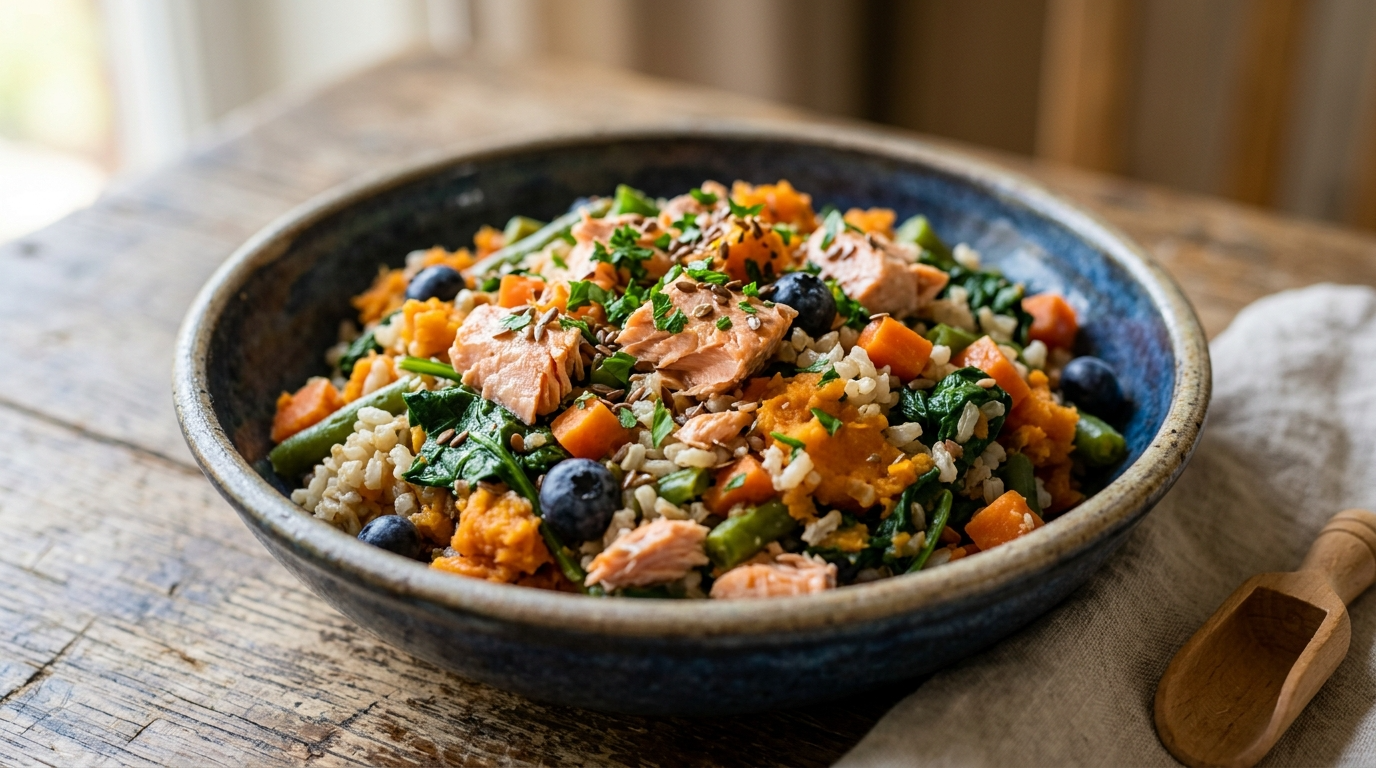
Recipe Two: Salmon, Brown Rice, and Pumpkin Dinner
Salmon is great for dogs with itchy skin. It’s a common choice in dog food recipes for itchy skin. This is because fish is easy for many dogs to digest.

Ingredients and preparation method
Fully cooked salmon, brown rice, and plain pumpkin purée
Start by mixing cooked salmon with brown rice and pumpkin purée. Make sure the rice is soft. This helps with digestion. The pumpkin adds gentle fiber for a smooth digestive tract.
Removing bones and avoiding seasoned or smoked salmon
It’s crucial to remove all bones from the fish. Don’t use smoked, salted, or seasoned salmon. These can be harmful or upset your dog’s stomach. Always choose completely unseasoned ingredients for your pet’s safety.
How omega-3 fatty acids may support skin and coat health
Salmon has lots of omega-3 fatty acids. These are good for your dog’s skin. They help reduce inflammation and can make your dog’s coat shiny and less itchy.
Important cautions for dogs with fish sensitivities or pancreatitis
Salmon is not good for all dogs. Dogs with fish allergies or pancreatitis should not eat it. High-fat fish can cause problems for sensitive dogs. Always talk to your vet first.
How to introduce salmon without causing digestive upset
Start by adding a little salmon to your dog’s food. Slowly increase the amount over a few days. This helps avoid any upset stomach. Using dog food recipes for itchy skin needs patience to make sure your dog is happy and healthy.
Recipe Three: Chicken, Oatmeal, and Carrot Comfort Meal
When your dog has itchy skin, a gentle meal can help a lot. This chicken, oatmeal, and carrot recipe is great for homemade dog food for itchy skin. It uses simple, easy-to-digest ingredients.

Ingredients and preparation method
Plain cooked chicken, unsweetened oatmeal, and soft carrots
Begin by boiling or poaching plain, skinless chicken breast until it’s fully cooked. Mix the shredded chicken with cooked, unsweetened oatmeal and finely chopped, steamed carrots. These ingredients offer a gentle balance of protein and fiber that’s easy on a dog’s stomach.
Keeping the recipe free from butter, salt, sauces, and seasoning
It’s crucial to keep this diy dog food for itchy skin free from additives. Don’t add butter, salt, oils, or commercial sauces. These can cause inflammation or hide the true cause of your dog’s skin problems.
When this recipe can be a useful gentle option
This recipe is great for dogs with sensitive stomachs and skin issues. The simple ingredients are easy on the gut. This can lead to a calmer immune response. Many owners find it helps their pets feel better during flare-ups.
Why chicken may not be suitable for every itchy dog
Chicken is common but can be an allergen for many dogs. If your pet is allergic to poultry, this recipe won’t help. Always watch your dog closely after trying new foods.
Signs that your dog may need a different protein source
Look for signs like persistent scratching, redness, or ear infections after eating this meal. Also, if your dog has loose stools or gas, they might be allergic to chicken. If you see these signs, it’s time to try a different protein.
Recipe Four: Beef, Quinoa, and Zucchini Skin-Support Bowl
Beef, quinoa, and zucchini make a great mix for your dog’s itchy skin. This combo is easy to make and uses whole foods. Always check with your vet before changing your dog’s diet.

Ingredients and preparation method
Lean cooked beef, thoroughly rinsed quinoa, and steamed zucchini
Start with lean ground beef or diced steak. Cook it well without oils, salts, or spices. Rinse quinoa under cold water to remove saponins. Then, add steamed zucchini for moisture and texture.
Trimming excess fat and serving quinoa in moderation
Remove all visible fat from the beef for a light meal. Quinoa is great, but serve it in small amounts. This keeps the diet balanced and prevents weight gain.
How this meal provides protein, fiber, and useful nutrients
This bowl is good for skin health with its amino acids and fiber. Beef repairs skin, and zucchini adds vitamins and water. It’s a vet-approved recipe for itchy skin.
Safety considerations for dogs with weight or digestive concerns
If your dog has weight or stomach issues, talk to your vet first. They can adjust the portion sizes. Watch your dog’s stool and energy after eating this dish.
Why high-fat beef mixtures and heavily seasoned leftovers are unsuitable
- High-fat beef can trigger pancreatitis in sensitive dogs.
- Onion and garlic, often found in human leftovers, are toxic to dogs.
- Added salts and preservatives can worsen existing skin inflammation.
- Seasonings like paprika or chili powder can cause severe gastrointestinal distress.
Recipe Five: Venison, Potato, and Pea Limited-Ingredient Meal
Going back to basics can help soothe your dog’s skin. Diy dog food for itchy skin works best with a short list of ingredients. This reduces the chance of allergic reactions.
Ingredients and preparation method
Plain cooked venison, potato, and peas
This recipe uses lean ground venison, boiled potatoes, and steamed peas. Cook the meat well without oils, spices, or onions. These can harm pets. Keeping the meal plain helps you watch your dog’s reaction closely.
Using a novel protein only when your veterinarian recommends it
Venison is a new protein for many dogs. Only add it if your vet says it’s okay. Using vet-approved dog food recipes for itchy skin ensures your pet gets the right food during this time.
Why a less familiar protein may help during an elimination diet
An elimination diet removes common allergens. Switching to a new protein resets your dog’s immune system. This makes it easier to find out what’s causing the itchiness.
How to prevent accidental exposure to other proteins
Even a small amount of old food can cause a reaction. Be careful about what your dog eats during this time. Consistency is the key to improving your dog’s skin health.
Checking treats, chews, supplements, and flavored medications
Many treats and medications have hidden proteins like chicken or beef. Always check labels to avoid hidden allergens. If you’re unsure, talk to your vet before giving anything to your dog.
Serving, Storing, and Balancing These Dog Food Recipes
Choosing a recipe is just the start. Serving and storing it right is key for your dog’s health. Finding the best dog food for itchy skin is just the first step. You must also support their long-term wellness with your daily practices.
How much homemade food to offer your dog
Finding the right portion size is important. It depends on your dog’s age, weight, and how active they are. A high-energy puppy needs more calories than a senior dog who sleeps a lot. Always consult your veterinarian to figure out the right amount of calories for your dog.
Watch your dog’s body condition score to see if they are gaining or losing weight. If you notice changes, adjust the portion sizes a bit. Being consistent is important when giving them the best dog food for itchy skin to ensure they get enough nutrition.
How to transition from commercial food without stomach upset
Changing to a new diet should be done slowly. This prevents digestive problems. Start by mixing the new dog food for sensitive skin with their old food over seven to ten days. Begin with 25% new food and 75% old food, then slowly increase the new food.
This slow change helps your dog’s gut adjust to the new food. If you see loose stools or vomiting, slow down the transition. Patience is essential when helping your dog adjust to a new diet.
Why recipes need veterinary-formulated nutrient balancing
Homemade meals are great, but they must be complete to avoid health problems. Just mixing meat and veggies is not enough. Work with a vet nutritionist to make sure your dog food for sensitive skin is balanced.
Calcium, essential fatty acids, vitamins, and minerals your dog may need
Your dog needs the right nutrients to stay healthy, even more so when they have skin issues. Calcium is important for bones, and essential fatty acids like Omega-3s help with skin problems. Without the right vitamins and minerals, your dog could get deficiencies that make their condition worse.
Safe refrigeration, freezing, reheating, and discard guidelines
Storing food properly is as important as choosing the right ingredients. You can store homemade meals in the fridge for up to three days in airtight containers. For longer storage, freeze portions and thaw them in the fridge before serving.
When reheating, make sure the food is warm but not hot to avoid burns. Always throw away any uneaten food left for more than thirty minutes to prevent bacteria. Keeping your kitchen practices clean helps keep your dog healthy and comfortable.
When Itchy Skin Requires a Veterinarian Instead of a New Recipe
Not every skin issue can be solved in the kitchen. It’s important to know when to seek vet help. While many owners try natural remedies for itchy skin in dogs, these are not a replacement for vet care when your pet is in pain.
Skin symptoms that should receive prompt veterinary attention
Hot spots, open sores, hair loss, swelling, odor, and recurrent ear infections
If your dog gets hot spots, open sores, or loses a lot of hair, see a vet right away. These signs often mean a bacterial or yeast infection that needs medicine. Swelling, bad smells, or ear infections that keep coming back also mean your dog needs vet help.
How your veterinarian can investigate food allergies
Strict elimination trials and controlled ingredient reintroductions
Changing your dog’s diet a little won’t solve food sensitivities. A vet will guide you through a strict elimination trial. This means feeding a special diet for weeks, then adding back ingredients one at a time to see if your dog reacts.
Why natural remedies and diet changes cannot treat every underlying cause
Diet is just one part of the solution. Many skin problems come from allergies, hormones, or immune issues that food can’t fix. Relying only on homemade food might miss a serious problem that needs medical treatment.
How to combine diet tracking with flea prevention and prescribed treatment
For the best skin health, use a mix of strategies. Keep a food log and make sure your dog has flea prevention. Using vet-approved dog food recipes for itchy skin with vet meds or creams gives your pet the best chance for relief.
Conclusion
Starting your pet’s comfort journey begins with the right food. You now have five meal options, from turkey and sweet potato to venison and peas. These recipes are vet-approved to soothe your dog’s itchy skin.
Preparation is key. Slowly introduce new meals to see how your dog reacts. Keeping a symptom log helps spot triggers fast. This way, you give your pet the best care.
Homemade meals are beneficial but need careful balance. Always check with a vet to make sure it’s good for long-term health. Using vet-approved recipes keeps your pet safe from food sensitivities.
Your hard work in your dog’s health is crucial. Keep an eye on their skin and avoid problem ingredients. Working with your local vet ensures your dog gets a diet that fits their needs perfectly.


