
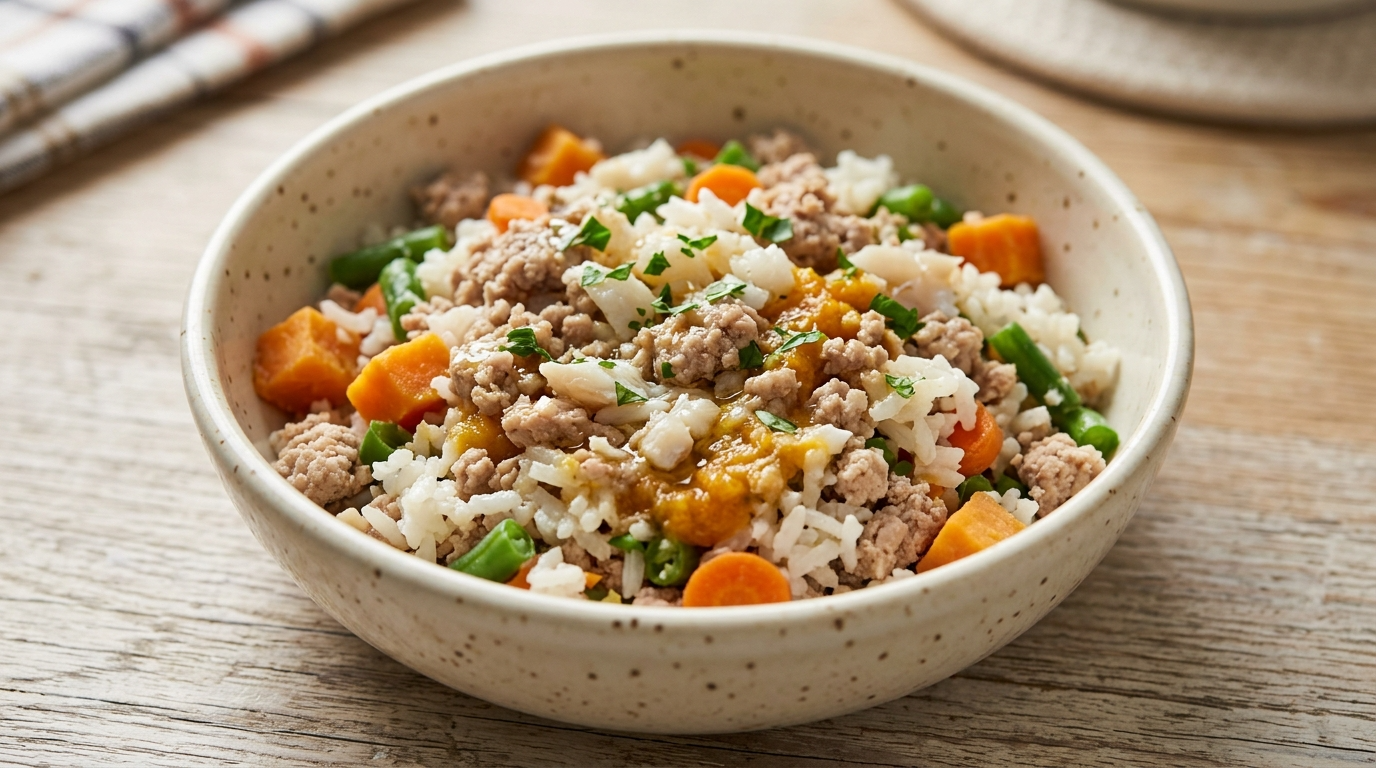
Easy Dog Food Recipes for Sensitive Stomachs No Chicken
Last Tuesday, my golden retriever, Cooper, paced the hallway all night. His belly made strange noises, and he looked sad. I knew his kibble was making him sick.
If your dog has digestion problems, you’re not alone. Many owners make easy dog food recipes for sensitive stomachs at home. These meals use gentle proteins and mild carbs to help.

This guide helps manage your pet’s diet. We’ll look at dog food recipes for sensitive stomachs (no chicken) with simple, healthy ingredients. Remember, homemade food is just temporary help. Always talk to your vet if your pet’s symptoms don’t get better.
Start Safely With Dog Food Recipes for Sensitive Stomachs (No Chicken)
Managing a sensitive stomach at home starts with finding out what’s causing your pet’s discomfort. Before making dog food recipes for sensitive stomachs (no chicken), watch your dog closely. This helps you give them the right support for their digestive system.
Recognize Common Signs of a Sensitive Stomach
Digestive sensitivity shows up in clear ways. You might see your dog having a lot of gas, loose stools, or bowel movements that don’t settle. It’s heartbreaking to see your companion in pain. These signs mean their body is reacting to something it doesn’t like.
Also, watch for changes in your dog’s appetite. If they suddenly don’t want to eat or keep vomiting, it might mean their diet is bothering them. These signs are more than just being picky; they show a deeper problem.
Know When Digestive Symptoms Require Veterinary Care
While cooking at home can help, some issues need a vet right away. Call your vet if you see blood in your dog’s stool or if they keep vomiting. These are serious signs that need a vet’s check.
Look out for signs of severe tiredness or dehydration, like dry gums or no energy. If your dog’s symptoms last more than a day, don’t wait to get help. Your veterinarian is your best partner in keeping your dog safe and healthy.
Set Realistic Goals for Homemade Dog Food
Using dog food recipes for sensitive stomachs (no chicken) can help find out what your dog can eat. These meals are a gentle, short-term fix for an upset stomach. Remember, these recipes are simple and not complete for long-term eating.
Your main goal is to give a bland, easy-to-digest diet to help your dog recover. Once they feel better, work with a vet to make sure their diet is complete. Always put your dog’s comfort and safety first.
Choose Gentle, Non-Chicken Ingredients for Your Dog
When your dog has digestive issues, picking the right non-chicken dog food recipes is crucial. Choose simple, high-quality ingredients to help your pet recover. These sensitive stomach dog food recipes calm the gut and give essential nutrients.
Select Digestible Proteins Such as Turkey, Lean Beef, Fish, or Eggs
Proteins are key in your dog’s diet, but they must be easy to digest. Lean ground turkey, extra-lean beef, white fish, and eggs are great for sensitive stomachs. Always cook these proteins plain to keep them gentle on the stomach.
Use Mild Carbohydrates Including White Rice, Oats, Potato, and Pumpkin
Carbohydrates give your dog the energy to heal. White rice is a classic, easy-to-digest option. Cooked oats, boiled potatoes, or plain canned pumpkin also help soothe the digestive tract.
Add Low-Irritant Vegetables in Small Portions
Vegetables are full of vitamins, but introduce them slowly. Use mild options like cooked carrots or green beans in small amounts. Moderation is key to avoid irritation during the transition.
Identify Ingredients to Avoid During a Sensitive-Stomach Flare
Some foods can make digestive issues worse. It’s best to avoid potential irritants until your dog’s digestion improves. A simple diet helps you see how your dog reacts to each new food.
Why Fatty Meats, Spices, Dairy, and Table Scraps May Cause Problems
Fatty meats are hard for a sensitive gut to digest and can cause inflammation. Spices and seasonings can irritate the stomach lining. Dairy and table scraps often lead to gas, bloating, and diarrhea in dogs with sensitive stomachs.
Prepare Your Kitchen and Plan Balanced Portions
Starting your journey to home-cooked pet food begins with kitchen prep and portion planning. When making homemade dog food for sensitive stomachs, a clean and organized kitchen is key.
Gather Safe Cooking Equipment and Storage Containers
First, pick out special utensils and cookware for your dog’s meals. This keeps human spices and oils out of their food.
- Use stainless steel or glass mixing bowls for easy sanitization.
- Keep a dedicated set of measuring cups to ensure consistent portion sizes.
- Select airtight, BPA-free storage containers to keep meals fresh in the refrigerator.
- Ensure all pots and pans are thoroughly cleaned before every cooking session.
Calculate Portions Based on Your Dog’s Weight, Age, and Activity
Every dog needs different amounts of food based on their lifestyle. You must figure out the right portions for your dog’s weight, age, and activity level.
Always monitor your dog’s body condition to see if they are gaining or losing weight. If your dog is less active, you may need to reduce the portion size to prevent unwanted weight gain while managing their sensitive stomach.
Keep Homemade Meals Nutritionally Complete With Veterinary Guidance
Switching to home-cooked food needs careful attention to your dog’s long-term health. Before starting, talk to your vet to make sure the meals are balanced.
Ask About Calcium, Essential Fatty Acids, Vitamins, and Minerals
A balanced diet is more than just protein and carbs. Ask your vet about specific supplements to ensure your dog gets enough:
- Calcium for bone health.
- Essential fatty acids for skin and coat support.
- Vital vitamins and minerals for immune function.
Prevent Cross-Contamination With Chicken and Other Irritants
If others in your household eat chicken, you must be extra careful. Keep your dog’s ingredients strictly separated from common allergens to avoid accidental flare-ups. Thoroughly wash all surfaces and tools after preparing homemade dog food for sensitive stomachs to maintain a safe environment for your pet.
Step One: Cook a Simple Turkey and Rice Sensitive-Stomach Meal
Starting your journey into homemade dog food for sensitive stomachs is easy. You just need three simple ingredients. This way, you can help your pet feel better and watch how they digest it.

Prepare Lean Ground Turkey Without Oil or Seasoning
Choose the leanest ground turkey you can find. Cook it in a non-stick pan without oil or fats. Don’t add salt, pepper, onion, or garlic because they can upset their stomach.
Cook White Rice Until Soft and Easy to Digest
White rice is a bland, easy-to-digest food for upset stomachs. Boil it until it’s very soft. This makes it easy for your dog to digest.
Combine Turkey, Rice, and Plain Pumpkin in Gentle Portions
When the turkey and rice are cooked, mix them with plain pumpkin. Make sure the pumpkin is 100% pure and has no added sugars or spices. This mix is gentle on your dog’s stomach.
Use a Starting Ratio That Lets You Adjust to Your Dog’s Response
Start with a simple ratio to see how your dog reacts. Here’s a good starting point:
- Start with a 50/50 mix of turkey and rice.
- Add one tablespoon of plain pumpkin per cup of food.
- Watch your dog’s stool and appetite for 24 hours.
- Change the ratio if your dog still has stomach issues.
Cool, Serve, and Refrigerate the Finished Meal Safely
Let the food cool down to room temperature before serving. Never serve hot food to avoid burns or an upset stomach. Store leftovers in an airtight container in the fridge for later.
Step Two: Make a Lean Beef, Potato, and Green Bean Recipe
Making dog food at home is easy and good for your pet. Lean beef is a great protein for dogs. It’s easy on their stomach and tastes good.
Choose Extra-Lean Ground Beef and Drain Excess Fat
Get the leanest ground beef you can find. Too much fat can upset your dog’s stomach. So, drain all fat after cooking the meat.
Boil or Bake Plain Potato Until Soft
Potatoes give dogs lots of energy and are easy to digest. Peel the potato and cook it until it’s soft. Don’t add butter, oil, or seasonings to the potato.
Add Cooked Green Beans Without Salt, Butter, or Seasoning
Green beans are full of fiber and nutrients. Cook them until they’re soft. Use fresh or frozen beans without salt or preservatives.
- Steam or boil the green beans until they are very tender.
- Chop the beans into small, bite-sized pieces for easier consumption.
- Mix the beans directly into the beef and potato base.
Adjust the Recipe for Dogs Sensitive to Beef or Higher Fat Levels
Some dogs might not like beef or have trouble with fat. If your dog seems uncomfortable, try less beef or a leaner protein. These recipes are flexible. Watch your dog closely. If problems continue, talk to your vet.
Step Three: Prepare a White Fish and Oatmeal Recipe
White fish and oatmeal are great for dogs with sensitive stomachs. They are easy to digest and can calm upset stomachs. This mix is a light, gentle energy source.

Select Fully Cooked, Boneless White Fish
Choose mild white fish like cod, tilapia, or haddock. Make sure it’s thoroughly cooked without oils, butter, or seasonings. Don’t fry it to avoid extra fat.
Prepare Plain Oatmeal With Water Instead of Milk
Use rolled or quick oats for this recipe. Cook them in water, not milk, because dogs can’t digest milk well. The oats should be soft and easy on the stomach.
Mix Fish, Oatmeal, and a Small Amount of Pumpkin
Put cooked fish and oatmeal in a bowl. Add a bit of plain, canned pumpkin. Pumpkin is full of fiber and helps with digestion. Mix everything well for a balanced meal.
Check Carefully for Bones Before Serving
Before serving, check the fish for bones. Even small bones can be dangerous. Use a fork to flake the fish and make sure it’s safe.
Introduce Fish Gradually if Your Dog Has Never Eaten It
If your dog is new to fish, start with a tiny amount. Watch for any signs of intolerance. These easy dog food recipes for sensitive stomachs help keep your dog healthy and happy.
Step Four: Make a Mild Egg, Potato, and Pumpkin Meal
This egg and potato dish is a simple, non-chicken option for your dog. It’s gentle on their stomach when they’re feeling off. Using whole foods helps your dog feel better without upsetting their gut.
Cook Plain Eggs Thoroughly Without Butter or Oil
Make sure eggs are fully cooked for your dog. Don’t add butter, oil, salt, or seasonings as they can upset their stomach. Scramble or boil the eggs until they’re firm and cooked through.
Mash Soft Potato and Pumpkin Into a Smooth Texture
Plain potato and pumpkin are key to this meal. Boil the potato until it’s very soft, then peel it. Mix it with plain pumpkin until it’s smooth and easy for your dog to eat.
Serve Small Portions as a Temporary Meal or Topping
This recipe is good for a short fix or a light topping. It’s easy to digest and helps with a minor upset stomach. Keep portions small to avoid upsetting your dog’s stomach while they’re recovering.
Stop the Recipe if Eggs Trigger Gas, Vomiting, or Loose Stool
Not all dogs do well with eggs. If your dog shows signs of discomfort like gas, vomiting, or loose stool, stop using this meal. Finding the right food for your dog might take some trial and error.
Serve Homemade Meals and Sensitive Stomach Dog Treats Responsibly
When your pup has a sensitive stomach, every bite they take matters a lot. Making sudden changes to a canine diet often leads to unwanted digestive distress. By following a structured approach, you can ensure your dog adjusts comfortably to their new, gentle menu.

Transition From Current Food Gradually Over Several Days
Never switch your dog’s food overnight. Instead, gradually mix the new homemade meal with their previous food over a period of five to seven days. Start with a small portion of the new recipe and slowly increase the ratio until the transition is complete.
Feed Smaller Meals More Frequently
Large meals can overwhelm a delicate digestive system. It is often better to divide the daily food intake into three or four smaller portions throughout the day. This practice helps maintain steady energy levels and reduces the physical strain on your dog’s stomach.
Use Simple Treats Such as Plain Pumpkin or Cooked Sweet Potato
Finding the right sensitive stomach dog treats is essential for rewarding your pet without causing a flare-up. Stick to single-ingredient options that are naturally soothing to the gut. Excellent choices include:
- Plain, canned pumpkin (not pie filling)
- Steamed or baked sweet potato chunks
- Small pieces of boiled white fish
- Frozen carrot slices for teething or chewing
Avoid Treats With Chicken Meal, Artificial Flavors, or High Fat
Be very cautious when selecting store-bought snacks. Many commercial products contain hidden triggers that can undo your hard work. Always read labels carefully to avoid these common irritants:
- Chicken meal or chicken by-products
- Artificial colors and chemical preservatives
- High-fat ingredients that cause inflammation
- Added sugars or corn syrup
Track Stool Quality, Appetite, Energy, and Other Reactions
Keep a simple log to monitor how your dog responds to their new diet. Consistency is key when identifying what works best for your companion. Pay close attention to the following indicators:
- Stool consistency and frequency
- Daily appetite levels
- Overall energy and playfulness
- Signs of gas, bloating, or vomiting
If you notice any negative changes, pause the introduction of new sensitive stomach dog treats or ingredients. Consulting your veterinarian remains the best way to ensure your dog stays healthy and happy during this dietary adjustment.
Store, Rebalance, and Troubleshoot Your Homemade Recipes
When you cook for your dog, you protect their health. Keeping a routine is key for dogs with sensitive stomachs. Finding the best dog food for sensitive stomachs without chicken can take time and effort.
Follow Safe Refrigeration and Freezing Practices
Storing food right keeps it fresh and safe. Use airtight containers to keep meals fresh. You can store them in the fridge for three days or freeze for a month.
- Label every container with the date and main protein source.
- Use small, single-serving containers for easier thawing.
- Thaw frozen meals in the refrigerator overnight rather than on the counter.
- Discard any food that shows signs of freezer burn or unusual odors.
Reheat Meals Without Creating Hot Spots
Microwaves can heat food unevenly, which can hurt your dog’s mouth. Stir the food well after heating and check the temperature with your finger. Always ensure the meal is lukewarm before serving it to your pet.
Modify One Ingredient at a Time When Symptoms Continue
If your dog has a bad reaction, don’t change everything at once. Changing one ingredient at a time helps you find the problem. Keep a log of ingredients and your dog’s stool quality to track progress.
Understand Why a Homemade Diet May Need Supplements
Homemade meals might not have all the vitamins and minerals your dog needs. Without the right supplements, your dog could have long-term health problems. Consulting a professional is essential to make sure your recipes are complete.
Work With Your Veterinarian or a Board-Certified Veterinary Nutritionist
A vet nutritionist can check your recipes for missing nutrients. They will suggest the right supplements for your dog. This partnership helps keep your homemade diet safe and right for your dog’s needs.
Know When a Commercial Non-Chicken Diet May Be the Better Choice
At times, making a homemade diet can be too hard or not practical. If your dog still has problems, a vet-approved commercial food might be better. Many owners find that the best dog food for sensitive stomachs without chicken is a vet-approved formula that is easy to trust.
Conclusion
Managing your pet’s health needs patience and a focus on quality food. You now know how to make natural dog food recipes for sensitive stomachs. These recipes use gentle ingredients like turkey, beef, fish, and eggs.
Using simple, whole foods lets you see how your dog reacts to different foods. Always give small portions and change their diet slowly. This helps avoid more digestive problems. Keeping food fresh and tracking your dog’s energy is also key.
These recipes are a great first step in cooking for your dog at home. It’s important to talk to your vet or a vet nutritionist. They can make sure your dog gets all the nutrients they need.
Your care for your dog’s health really matters. Keep watching how they do and change things if needed. A good diet is the best thing you can give your dog for a happy life.


