
No-Bake Dog Treat Recipes for Quick & Easy Snacks
Do you ever feel like your furry friend is looking at you with hope? Nothing beats the joy of giving them a homemade treat from your kitchen.
Making no-bake dog treat recipes for quick & easy snacks is a great way to show love. You can make them fast without using the oven. You’ll need just a few ingredients you probably have at home.

Need quick pet snacks for training or just to keep them happy? This guide has lots of ideas. We’ll look at treats you can keep in the fridge, freezer, or that are full of protein.
Remember to use dog-safe ingredients and don’t overfeed. This way, your dog will stay healthy and happy. Let’s make these yummy treats together.
Why No-Bake Treats Make Convenient Homemade Dog Snacks
You can make yummy treats for your dog without baking. Just mix, chill, and freeze. These homemade dog treats are great for busy pet owners. They save time and are easy to make.
Benefits of No-Cook Dog Treats for Busy Pet Parents
Life is busy, and baking can be hard. No-cook dog treats are a quick fix. Just mix, shape, and chill or freeze.
- Minimal cleanup since you avoid flour-dusted counters and baking pans.
- Faster preparation allows you to make fresh batches in minutes.
- No need to monitor an oven, giving you more freedom to multitask.
- Simple storage options keep your kitchen organized and clutter-free.
How Homemade Rewards Can Support Better Ingredient Awareness
Making homemade dog treats lets you control what your dog eats. Many store-bought snacks have bad stuff like hidden sugars and artificial preservatives. Your homemade treats are full of good stuff.
You can change ingredients if your dog has allergies. This is invaluable for your dog’s health. Knowing what your dog eats is better than commercial labels.
When Quick Pet Snacks Work Best in Your Dog’s Routine
No-cook dog treats are great for training and rewards. They’re perfect for quick “good job” moments. They’re easy to portion, so you can give them often.
Remember, these snacks are for treats, not meals. They add joy to your dog’s day. They’re perfect for teaching tricks or showing love.
Dog-Safe Ingredients for Simple No-Bake Treat Recipes
Making healthy dog snacks at home means picking the right ingredients. This way, you know exactly what your pet eats. Always choose ingredients that fit your dog’s diet and health needs.
Wholesome Bases Such as Rolled Oats, Pumpkin, and Sweet Potato
A good treat starts with a solid base. These ingredients give your snacks structure and add fiber and vitamins.
- Rolled Oats: Great for digestion and has a hearty texture.
- Pumpkin: Pureed pumpkin is easy on the stomach and full of nutrients.
- Sweet Potato: Cooked and mashed, it adds natural sweetness and energy.
Dog-Friendly Binders Including Unsweetened Applesauce and Plain Yogurt
A safe binder is needed to hold your ingredients together. These items make your diy dog treats just right without extra fillers.
Unsweetened applesauce is a moist, fruity glue dogs enjoy. Plain, unsweetened yogurt adds creaminess and probiotics for gut health.
Flavorful Add-Ins Such as Carrots, Blueberries, and Shredded Coconut
With your base and binder ready, it’s time for fun add-ins. These make your healthy dog snacks more exciting for your pup.
- Carrots: Finely shredded carrots add crunch and beta-carotene.
- Blueberries: These tiny fruits are full of antioxidants and flavor.
- Shredded Coconut: Use unsweetened varieties for healthy fats and aroma.
Ingredients You Should Never Add to DIY Dog Treats
When making diy dog treats, safety is key. Avoid ingredients that are toxic or harmful to dogs.
Don’t include these in your recipes:
- Xylitol (a common artificial sweetener that is highly toxic)
- Chocolate, grapes, and raisins
- Onions, garlic, and chives
- Excess salt or added sugars
- Artificial preservatives or flavorings
Tools, Preparation Tips, and Safety Checks Before You Begin
Mastering simple dog treat recipes is easy with the right tools. Good preparation makes cooking time efficient. It also ensures your dog gets safe, tasty snacks.
Mixing Bowls, Food Processors, Scoops, and Freezer-Safe Containers
You’ll need basic kitchen items to start. A strong mixing bowl is key for mixing ingredients. A food processor makes dough smooth for your simple dog treat recipes.
- Use stainless steel or glass mixing bowls for easy cleanup.
- A food processor is perfect for breaking down oats or blending fruits.
- Portion scoops ensure that every treat is the same size for consistent calorie counting.
- Silicone molds allow you to create fun shapes that are easy to pop out once frozen.
- Freezer-safe containers are vital for keeping your batches fresh for weeks.
How to Adjust Texture for Small, Large, Young, and Older Dogs
Texture is crucial for your dog’s enjoyment. For puppies or senior dogs, make treats softer with more liquid, like yogurt or water.
Larger dogs like firmer, crunchier treats. For tiny breeds, break treats into small pieces to avoid choking.
Checking Labels for Xylitol, Added Sugar, Excess Salt, and Artificial Ingredients
When making simple dog treat recipes, safety is paramount. Always check ingredients like peanut butter or applesauce for harmful additives.
Watch out for xylitol, a sweetener toxic to dogs. Avoid products with too much sugar, salt, or artificial preservatives.
How to Introduce a New Treat Without Upsetting Your Dog’s Stomach
Even healthy snacks can upset a dog’s stomach if introduced too fast. Start with a small amount to monitor your dog’s reaction for 24 hours.
If your dog seems fine, you can slowly increase the treat size. Consistency is key when adding new foods to your dog’s diet.
No-Bake Dog Treat Recipes for Quick & Easy Snacks
You can make yummy treats for your dog without using the oven. These no-bake dog treat recipes for quick & easy snacks are easy to make. They use fresh ingredients for your dog’s health.
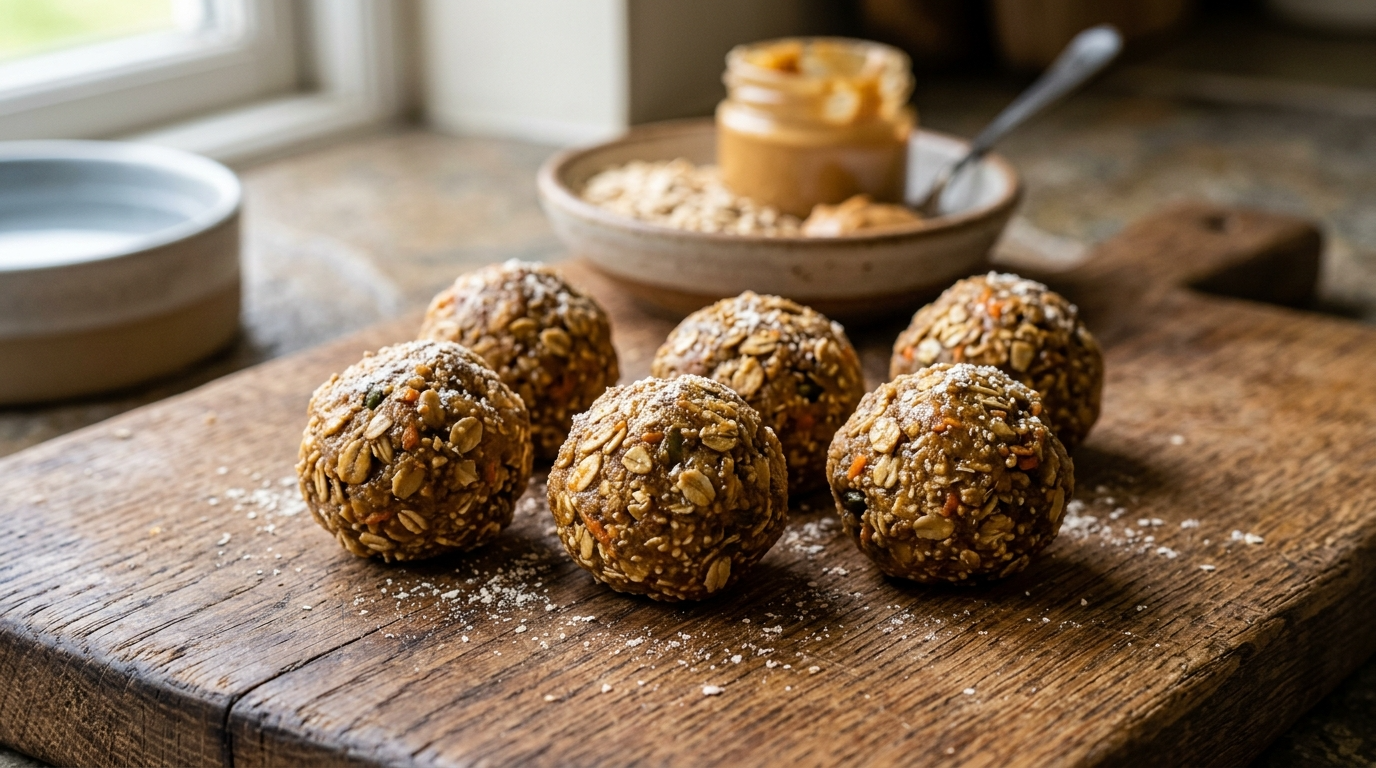
Peanut Butter and Oat Energy Bites
Ingredients and Dog-Safe Substitutions
Make these bites by mixing oats, peanut butter, and honey. Make sure the peanut butter is free from xylitol. If your dog can’t have peanuts, use sunflower seed butter or mashed banana instead.
Mixing, Shaping, and Chilling Directions
Stir the mix until it’s sticky. Shape into small balls. Put them on a tray lined with parchment paper and chill for an hour.
Portion Guidance and Best Uses as Training Rewards
These bites are great for simple dog treat recipes as rewards. They’re soft and tasty, perfect for training. Give them in small amounts to keep your dog’s calorie count right.
Pumpkin Coconut Snack Balls
Ingredients for a Soft, Fiber-Rich Treat
Mix pumpkin, coconut, and oat flour. Pumpkin helps with digestion, and coconut adds fiber. This mix makes the treats soft.
How to Form and Refrigerate the Balls
Make a dough with the mix. Roll into balls and store in the fridge. They stay fresh for five days.
Ways to Modify the Recipe for Sensitive Stomachs
For sensitive stomachs, use less coconut and more pumpkin. Swap oat flour for rice flour for easier digestion. Always check how your dog reacts to new foods.
Apple and Carrot Oat Bites
Preparing Fresh Produce Safely
Grate carrots and peel apples. Remove seeds and core from apples. Chop finely to help the treats stick together.
Combining the Ingredients Without Baking
Mix grated produce with oats and a binder like yogurt or banana. The fruit and veggies make the oats chewy. No baking is needed.
How to Keep the Bites Small and Easy to Chew
Use a melon baller or teaspoon for small portions. This is good for senior dogs or puppies. These simple dog treat recipes are soft and easy to swallow.
Banana and Greek Yogurt Drops
Choosing Plain, Unsweetened Yogurt
Choose plain, unsweetened Greek yogurt. It’s good for active dogs and has no xylitol or artificial sweeteners.
Freezing the Drops to Create a Firm Texture
Mash bananas and mix with yogurt. Drop by spoon onto a mat. Freeze for two to three hours until solid.
Serving Suggestions for Warm Weather
These frozen drops are great for hot days. They’re refreshing and keep your dog hydrated. Serve as a reward after a walk or playtime.
Frozen No-Bake Treats to Help Your Dog Cool Down
When summer gets hot, your dog might want something cool. These healthy dog snacks are a fun way to beat the heat. They keep your pup happy and hydrated. But remember, these treats are for fun, not to replace water or meals.
Blueberry Banana Frozen Bites
Blending the Fruit Into a Smooth Mixture
Start by blending fresh blueberries and ripe bananas. You want a smooth, creamy mix your dog can lick or chew. If it’s too thick, add a little water to help blend.
Freezing and Removing the Bites From Silicone Molds
Pour the mix into silicone molds for easy removal. Once frozen, these pet-friendly snacks come out easily. Store them in a freezer-safe bag for later.
Watermelon and Yogurt Frozen Cubes
Removing Seeds and Rind Before Preparation
Watermelon is great for hydrating, but safety first. Always remove seeds and green rind. These can upset your dog’s stomach or be a choking hazard.
Portioning the Cubes for Occasional Summer Snacks
Mix watermelon chunks with plain yogurt. Use an ice cube tray for small portions. Moderation is key to keep your dog healthy.
Chicken Broth and Vegetable Ice Treats
Selecting Low-Sodium, Onion-Free Chicken Broth
Choose a broth carefully. Avoid onions, garlic, or high sodium. Stick to dog-safe options for your pet’s health.
Adding Dog-Safe Vegetables and Freezing the Mixture
Add chopped, safe veggies like carrots or green beans to the broth. Freeze until firm. These savory ice treats are great for hot afternoons.
- Always check labels for hidden additives.
- Use silicone molds for easy cleanup.
- Keep portions small to avoid overfeeding.
- Store in airtight containers to prevent freezer burn.
Protein-Rich No-Cook Dog Treats for Satisfying Rewards
You can easily boost your pet’s nutrition with high-protein snacks that require no cooking at all. These no-cook dog treats provide a fantastic way to keep your furry friend motivated during training. They ensure they receive wholesome, muscle-building ingredients.

Chicken and Sweet Potato Training Bites
Using Plain Cooked Chicken as a Safe Protein
When preparing these bites, always ensure your chicken is fully cooked and completely unseasoned. Avoid any additives like garlic, onion, or excessive salt, as these are harmful to your dog. Using plain, shredded breast meat provides a lean protein source that most dogs find irresistible.
Combining Mashed Sweet Potato With Oats
Mix your cooked chicken with mashed, plain sweet potato to create a smooth, binding base. Adding rolled oats helps achieve the perfect consistency for rolling. This combination offers a nutritious balance of fiber and protein that keeps your dog feeling satisfied.
Making Tiny Portions for Frequent Training Sessions
Because these no-cook dog treats are so delicious, it is best to shape them into very small pieces. Tiny portions allow you to reward your dog frequently during training without overfeeding them. Consistency is key when teaching new commands, and these small bites make the process much smoother.
Salmon and Pumpkin Refrigerator Bites
Choosing Plain Canned Salmon With Minimal Added Salt
If you prefer using fish, select canned salmon that is packed in water with no added salt or oils. Always double-check the label to ensure there are no hidden preservatives or artificial flavorings. This ensures your pet gets the omega-3 fatty acids they need in a safe, healthy format.
Shaping the Mixture and Chilling It Until Firm
Combine the salmon with pureed pumpkin to create a thick, moldable dough. Once you have shaped the mixture into small cubes or balls, place them in the refrigerator to firm up. Chilling these no-cook dog treats makes them much easier to handle during your next training session.
Serving Amounts for Dogs With Different Calorie Needs
Always adjust the serving size based on your dog’s specific activity level, age, and overall health. While these treats are healthy, they should still fit within your dog’s daily calorie budget. Monitoring your pet’s weight helps ensure they stay happy and active while enjoying their homemade rewards.
Easy Dog Treat Ideas for Dental and Chewing Enrichment
Want to make your dog’s day more exciting? Try these easy dog treat ideas. They offer a fun, crunchy snack that keeps your dog busy. Snacks with different textures help your dog chew and stay sharp.
Crunchy Carrot and Apple-Fiber Bites
Preparing Firm Produce Into Manageable Pieces
Always chop carrots and apples into small pieces. Safety is your top priority. Make sure they’re small to avoid choking.
Creating a Refrigerated Texture Without Hard, Risky Chunks
Don’t give raw, hard veggies. Steam them lightly or soak them in water first. Then, chill them. This makes them softer and safer for your dog’s teeth.
Frozen Green Bean and Yogurt Treats
Using Plain Green Beans Without Seasoning
Green beans are a great, low-calorie snack. Use plain, fresh, or frozen ones. Make sure they have no added salt, garlic, or onion to keep your dog safe.
Making Small Frozen Portions for Slow Snacking
Mix green beans with plain, unsweetened yogurt. Freeze it in an ice cube tray. These refreshing bites are a slow snack that keeps your dog busy.
Why No-Bake Treats Should Not Replace Veterinary Dental Care
These snacks are great for fun, but they’re not a replacement for vet care. Regular veterinary dental examinations and cleanings are key for your dog’s health. Always check with your vet to make sure your dental care is right for your pet.
How to Customize Homemade Dog Treats for Your Pet
You can make special treats for your dog by changing simple recipes. This way, you make sure your diy dog treats fit your dog’s health needs and taste. It’s a great way to show you care.

Adjusting Ingredients for Food Sensitivities and Allergies
If your dog has food allergies, you can change ingredients to make them safer. For example, use coconut flour or mashed sweet potato instead of oats. This keeps the treats the right texture.
Watch your dog for any signs of an upset stomach when trying new ingredients. Customizing your diy dog treats helps avoid allergens like wheat or soy. This way, your dog gets treats that are good for them and taste great.
Making Softer Bites for Puppies and Senior Dogs
Puppies and older dogs might find hard snacks hard to chew. You can make your treats softer by adding more wet ingredients. Use plain yogurt, pumpkin puree, or unsweetened applesauce.
Another trick is to skip baking or dehydrating. Keep the mix moist and chill it in the fridge. This makes the treats gentle and chewy, perfect for your pet’s teeth.
Reducing Calories for Dogs Prone to Weight Gain
Keeping your dog at a healthy weight is important for their health. You can make snacks lower in calories by adding fiber-rich veggies like carrots or green beans.
Use low-calorie binders instead of high-calorie nut butters. Portion control is key to keep your dog’s daily calorie intake right. This way, they get a tasty treat without gaining weight.
Swapping Ingredients Without Adding Unsafe Human Foods
When trying new flavors, always think about your dog’s safety first. Never use ingredients like xylitol, chocolate, grapes, raisins, onions, or garlic. They are toxic to dogs.
Also, avoid using human foods with a lot of salt, sugar, or artificial additives. Use simple, whole-food ingredients to keep your homemade treats healthy for your dog.
Portion Sizes, Storage, and Freshness Guidelines
Keeping your pup healthy is more than just picking the right ingredients for homemade dog treats. It’s also about managing these snacks right. This ensures your furry friend gets the nutritional benefits without overeating.
Keeping Treats Within Your Dog’s Daily Calorie Budget
It’s easy to get carried away when rewarding your pet. But remember, moderation is key. Vets say treats should be no more than 10% of your dog’s daily calories.
Always think about these snacks when planning your dog’s meals. If you give more homemade dog treats during training, cut down on kibble at dinner.
Refrigerating Soft Treats in Airtight Containers
These snacks lack preservatives, so they need careful handling. Store soft, moist treats in an airtight container. This keeps their texture and prevents drying out.
- Keep containers in the coldest part of your fridge.
- Use glass or BPA-free plastic containers for safety.
- Ensure the lid is sealed tightly after every use.
- Consume refrigerated batches within 3 to 5 days.
Freezing Larger Batches for Longer Storage
If you make homemade dog treats in bulk, your freezer is your best friend. Freezing lets you keep snacks for weeks without worrying about spoilage.
To keep your freezer organized, follow these simple steps:
- Portion the treats into individual serving sizes before freezing.
- Place them in freezer-safe bags or containers.
- Clearly label each package with the date of preparation.
- Thaw only what you need for the next 24 hours.
Recognizing Spoilage, Mold, and Changes in Smell or Texture
Even with the best storage, you must watch for freshness. Always check your homemade dog treats before serving to ensure they’re safe.
If you see any of these signs, throw the batch out immediately:
- Visible mold or fuzzy spots on the surface.
- An off-putting or sour smell.
- A slimy or sticky residue on the exterior.
- Unexpected changes in color or hardness.
Never try to save treats that show these signs of decay. Your dog’s health is far more important than the effort spent making the batch. So, when in doubt, throw it out.
Serving No-Bake Treats as Training Rewards and Enrichment
You can make pet-friendly snacks into great training tools. Just change how you serve them. This turns a simple snack into a way to teach and keep your dog’s mind sharp.

Breaking Larger Bites Into Tiny Training Pieces
Speed is key when teaching new tricks. Smaller rewards help your dog eat fast. This keeps their focus on you, not on chewing.
- Crumble larger bars into pea-sized portions.
- Use a sharp knife to slice soft bites into thin strips.
- Keep a small pouch of these tiny pieces ready for rapid-fire rewards.
- Ensure each piece is small enough to prevent overfeeding during long sessions.
Using Frozen Treats in Food-Dispensing Toys
Keeping your dog happy and active is important. Use pet-friendly snacks in toys to make them forage. This keeps them busy for a long time.
Freezing treats in toys makes it harder for them to get the snack. This slow-engagement method helps your dog stay calm and supervised.
Pairing Snacks With Positive Reinforcement
When you give a treat, do it right away. Always say something nice or use a clicker. This tells your dog exactly what they did right.
This way, your dog learns faster and has fun. Positive reinforcement boosts their confidence and makes learning a joy.
Balancing Treats With Regular Meals and Daily Exercise
Homemade treats are great, but they must be part of a healthy lifestyle. Watch how many calories your dog eats. These pet-friendly snacks shouldn’t make them gain weight.
Adjust their main meals if you’ve given lots of treats. Remember, regular exercise and a healthy diet are key to your dog’s health and fitness.
Troubleshooting Common Problems With No-Bake Dog Treats
Don’t worry if things don’t go as planned in the kitchen. Most problems are easy to fix. Even experienced pet parents face minor issues when trying easy dog treat ideas for the first time. A few simple changes can usually save your batch and keep your pup happy.
What to Do When the Mixture Is Too Wet
If your dough is too sticky or wet, you need more dry ingredients. Add small amounts of rolled oats or oat flour to the mix. Patience is key here, so add a tablespoon at a time until it’s right.
How to Fix Treats That Crumble or Do Not Hold Their Shape
When your easy dog treat ideas are too dry or crumbly, you can fix it. Add a small amount of a natural binder. Plain yogurt, unsweetened applesauce, or extra peanut butter can help the ingredients stick together.
Improving Flavor Without Using Salt, Sugar, or Unsafe Seasonings
You can make your snacks taste better without harmful additives. Instead of salt or sugar, try cinnamon or mashed banana. These natural ingredients give a delicious flavor that dogs love, while keeping the snacks safe and healthy.
When to Stop Serving a Recipe and Contact Your Veterinarian
Most homemade snacks are safe, but watch for any bad reactions. If your dog vomits, has diarrhea, or shows signs of an allergy, stop giving them the treats right away. Always prioritize your pet’s health and call your vet if you think they ate something bad or seem very tired.
Conclusion
Making your own pet treats is a great way to bond with your dog. It lets you control what they eat. Just mix, chill, or freeze healthy ingredients to make quick snacks.
This method keeps your kitchen full of good food. It avoids the bad stuff found in many store treats.
Remember, safety is key when making treats. Always check labels to avoid xylitol, too much salt, or artificial sweeteners. Watch your dog’s calories to keep them healthy.
Store treats well in the fridge or freezer. This keeps them fresh for your dog.
Choose recipes that fit your dog’s needs. If they have food allergies, be careful with ingredients. Talk to your vet about new foods or special diets.
Your effort to make healthy snacks is good for your dog. It makes their meals safe and fun.


